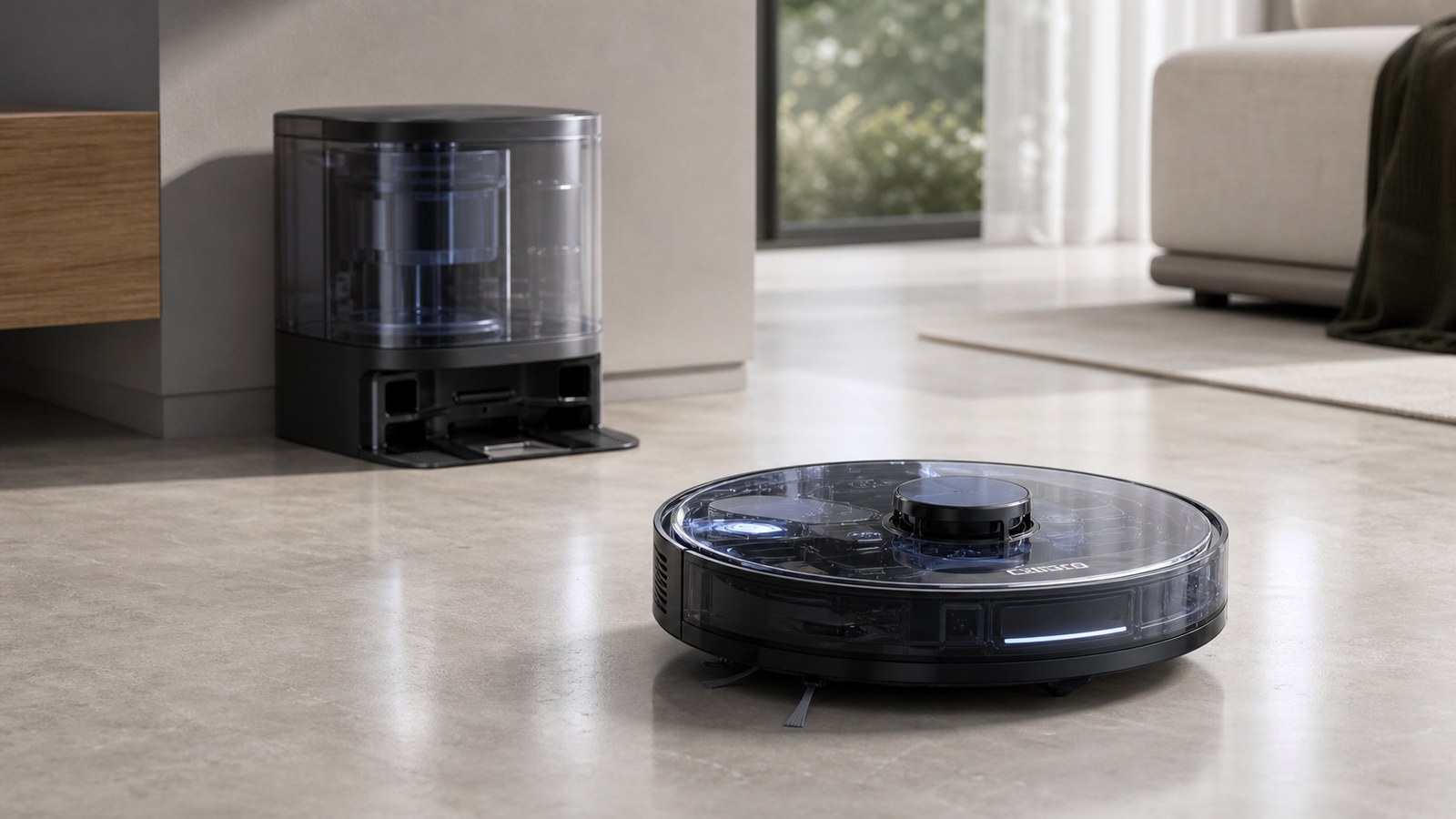
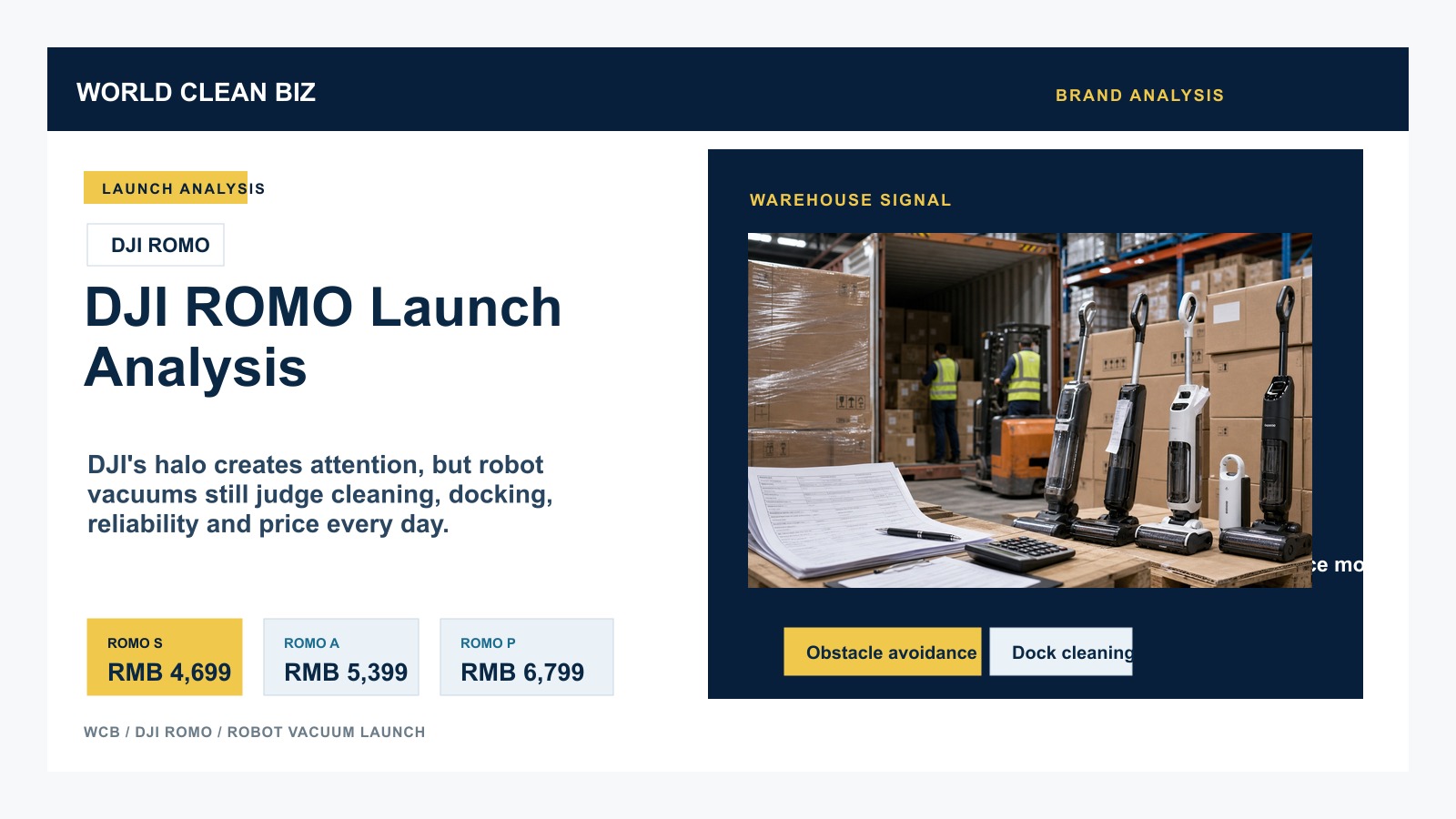
- DJI began developing robot vacuums in 2020, aiming to leverage its expertise in software and hardware for superior performance.
- The company postponed releases twice due to market competition from Roborock and Dreame, focusing on product refinement before launch.
- Expect DJI's robot vacuum to feature advanced AI and a powerful brushless motor, potentially outperforming current models.
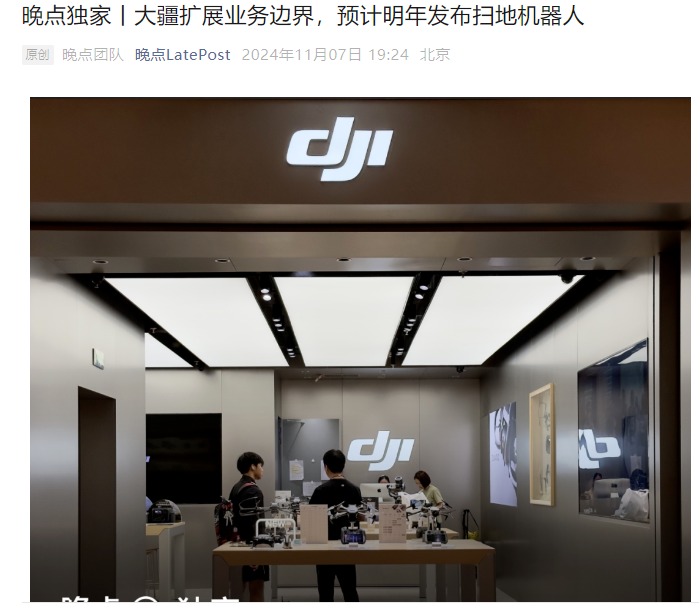
Recently, I came across an article published by LatePoint stating that DJI has set a release date for its robot vacuum cleaner, which is scheduled for 2025.
In 2021, I heard from some friends that DJI might enter the robot vacuum market. In my article "Robot Vacuum at a Crossroads in 2022," I mentioned this information as well.
Is DJI really coming? What form will its products take? And what impact will it bring to the industry?
LatePost is one of the few media outlets I trust for in-depth reporting, and you can follow them if you have time.
Below is the original text from LatePost. If you're interested, you can read the original report.
>DJI has been developing robot vacuums since at least 2020.
>
>The team size of DJI's robot vacuum division has grown to approximately 300 people, approaching that of some industry startups.
>According to our understanding, DJI has postponed the release of its robot vacuum twice. Once was last year, and another time in May this year. A DJI person said that Wang Tao decided not to sell the planned product after reviewing it and instead went for a second generation, "basically having to start over with the product."
>A source close to DJI stated that many of its new projects do not have the opportunity to be launched, "the same risk applies to robot vacuums," despite DJI's plan to launch a robot vacuum next year.
>DJI claims that the information regarding the size and role of the robot vacuum project team mentioned above is inaccurate.
From this information, we can draw several conclusions:
Firstly, DJI began developing robot vacuums in 2020. That was also the year when Narwal became a hit with its dual-disc self-cleaning robot vacuum. In 2020, all companies making robot vacuums were targets of investment interest. Therefore, it is quite normal for DJI to notice this market.
Additionally, there are some rumors that when Narwal was gaining popularity, it was most concerned about DJI's entry into the market.
Secondly, DJI has a team of 300 people. The core of the robot vacuum industry mainly consists of software and hardware. Generally, in Shenzhen, the software part is outsourced to companies like LD Robot or Amicro. Hardware components are made in-house. For a company like DJI, where software components are crucial, they would naturally want to control them themselves. Thus, this scale can be considered relatively good but not particularly large. At that time, the initial startup company Beetles had a similar team size of around 2-300 people.
DJI postponed the release of its robot vacuum in both 2023 and May 2024. Let's look at what significant events happened in the robot vacuum industry during these years that led to DJI’s postponement.
In 2023, a major event in the robot vacuum market was Roborock launching the P10 series, which brought the price of all-in-one dock robot vacuums down below 3,000 RMB. In 2023, Roborock dominated the market with its industry-low-priced robot vacuums. Therefore, when the P10 prices came out, DJI's product pricing was somewhat awkward. Even if a new model were released, it might not create much buzz, so they decided to postpone.
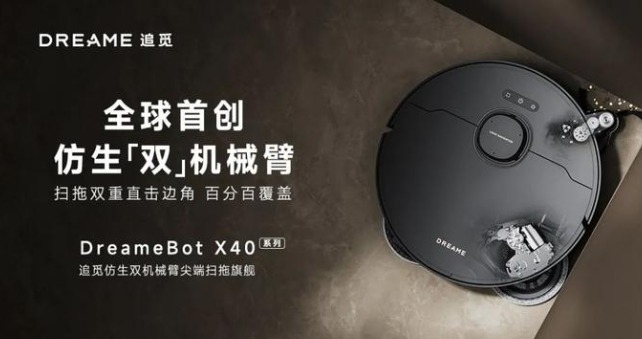
In May 2024, another reason for the postponement is that both Dreame and Roborock launched robot vacuums with mechanical arms, solving edge cleaning issues more effectively. DJI's product was still a conventional one without a mechanical arm. Facing the market of high-end products, this first release might not make much noise. For a company like DJI, if the initial launch fails to gain traction and sales, it would be challenging for them to continue burning money.
Based on the above information, we can draw some conclusions about DJI's robot vacuum product:
- First, DJI’s product will definitely be an all-in-one dock model. Given DJI's long-term accumulation in flight control technology, their robot vacuums should outperform current competitors in terms of cleaning coverage. However, this aspect might not stand out significantly.
With the recent surge in AI, it is possible that DJI will integrate AI to enhance its algorithms. DJI likely has a significant advantage in AI and algorithm development. However, when applied specifically to robot vacuum cleaning scenarios, consumers may not have a particularly noticeable perception of these improvements.
- Motors: Currently, ordinary robot vacuums use fans with performance under 4KPA. Some companies use brushless motors from vacuum cleaners to increase suction power, reaching up to 10KPA but at the cost of larger overall dimensions and size. I believe DJI might develop a brushless motor similar in size to a hair dryer, which would be slightly more expensive but significantly outperform competitors in terms of performance.
- Mechanical arms: DJI has already demonstrated strong and reliable mechanical capabilities in its drone products. Currently, robot vacuums face two pain points:
3.1 Edge cleaning. Dreame uses a mechanical arm, while Narwal employs a rotating disc that moves towards the edge to clean. Given that this feature is now a standard on high-end machines from DJI, if they do not include it, there will be significant marketing challenges. I believe DJI might adopt a mechanical arm solution as well, given its perceived "high-end" and "smart" appearance.
Crossing Thresholds
One significant issue with current robot vacuums is their inadequate threshold-crossing ability; even slightly higher thresholds can often trap the robot. Dreame's current approach involves raising mechanical legs to climb over thresholds. Personally, I believe a retractable track system would be a better solution. Of course, the specific technical challenges could be addressed by DJI’s experts.
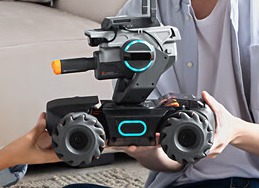
I remember being very impressed when DJI introduced RoboMaster T1 back then; the 360-degree rotating Mecanum wheels were particularly eye-catching and had a significant impact on the industry.
Pricing Considerations
The price point for a DJI entry into the robot vacuum market is unlikely to be below 4,000 RMB. DJI has never been a low-cost brand; by controlling the entire supply chain, it has achieved a significant competitive advantage in the drone industry over its rivals. However, in the robot vacuum sector, due to the relatively small scale of production and higher costs, I believe a price range around 4,000 RMB is reasonable.
How DJI Sees Itself in the Robot Vacuum Market
Firstly, as a latecomer, DJI has fewer product advantages compared to existing players. Over time, there will be even fewer cards for DJI to play. According to LatePoint, DJI has twice delayed the release of its robot vacuum cleaner; the 2025 launch cannot be further postponed. If the product fails to hit the market, it could severely impact the team, potentially leading to a significant loss of core talent. Without a competitive edge in terms of product innovation and market presence, such a situation would essentially amount to slow death.
Competitive Landscape
Competition in the robot vacuum sector is much more intense than in DJI's drone industry. Companies like Roborock, Ecovacs, Dreame, Xiaomi, and Narwal all have larger R&D teams (300+ members). This means that DJI’s R&D and product iteration capabilities are weaker compared to established leaders. As a startup, the core strategy is often to offer products at half the price of leading companies with better configurations and minor innovations. However, in the cleaning appliance sector, due to intense competition from these top players, any innovation by startups may be quickly adopted and scaled up by competitors before it can gain traction.
Sales Channels
Currently, DJI has a wide distribution network for its drones, available at airports, supermarkets, and other retail locations. In contrast, robot vacuums are sold through multiple channels including TikTok, traditional e-commerce platforms, and offline self-operated stores. The sales channels are highly fragmented, posing challenges for startups. For instance, leveraging TikTok requires substantial investment rather than just a one-time promotional push.
Brand Entry Strategy
Another dimension to consider is whether DJI will enter the market under its own brand (DJI) or as an investment in a new brand. Recently, DJI's invested brand AMflow launched an electric scooter priced at 36,888 RMB, which is reportedly highly competitive compared to foreign brands.
This strategy and pricing point suggest that DJI may be positioning itself for a strong entry into the robot vacuum market while leveraging its existing brand recognition and financial resources.
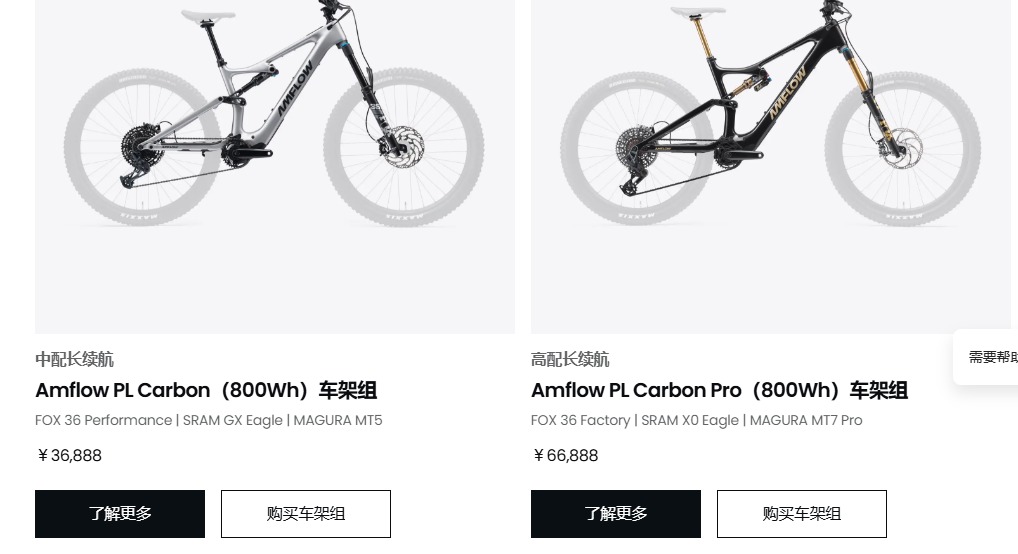
I personally believe that DJI's entry into the robot vacuum market is likely to follow a similar approach to Amflow. However, if they were to enter using an invested brand, the survival environment would be extremely harsh against the formidable industry giants.
Even if DJI were to enter with its own brand, I doubt it will significantly alter the competitive landscape of the industry in 2024 compared to 2022. Given that DJI has twice delayed product launches, it is clear there hasn't been a substantial disruption in terms of products. Achieving impressive sales figures would be extremely challenging.
Nevertheless, as a symbol of Chinese technological prowess, people still hold high hopes for DJI's entry into this market.
2025 will be an interesting year.