- Premium vacuum brands need more than high specifications; they need trust and design consistency.
- Chinese players must prove they can compete beyond value-for-money positioning.
- Motor capability, supply chain and brand storytelling all shape the premium opportunity.
Recently, a friend asked me how to defeat Dyson. I told him that we need to wait until Dyson's motor performance no longer holds an absolute advantage, and then other brands might have the chance.
With the development of cordless vacuums, the entire vacuum cleaner industry is witnessing new entrants continuously disrupting the existing landscape. Who could potentially become a premium brand in domestic vacuum cleaners?
The concept of a premium brand varies, but for me, it means defining this term based on specific price points. Currently, the range of prices for domestic vacuum cleaners spans from 1000 to 4000 yuan. Premium brands are those that can achieve significant sales volumes within the 1899-2299 yuan price segment while maintaining a reasonable profit margin. If a brand can sell substantial quantities in this price range, I believe it would be considered a premium domestic vacuum cleaner brand.
I was initially going to write about the strengths and weaknesses of various companies in the industry but decided against it because many of them have friends that I know. Writing too much might result in not being invited for dinner by some of these companies. Therefore, I will focus on a few companies that I believe could become premium brands:
- Ecovacs/Tineco. Mr. Qian from Ecovacs Group is known for his sales background but has shown exceptional strength in product innovation and grasping opportunities. He is highly respected by me. Remember around 2008, when we discussed Ecovacs' robot vacuum cleaners with some overseas clients, Mr. Qian refused to do private-label manufacturing, insisting on the Ecovacs brand despite its inferior performance at that time. Few people back then believed in the success of the Ecovacs robot vacuum project. However, Ecovacs persisted and successfully became the market leader in robot vacuums by riding the wave of e-commerce growth in China.
Recently, with the rise of cross-border e-commerce, Ecovacs has once again seized this opportunity to launch the Tineco brand internationally. In terms of timing, it seems that no other vacuum cleaner manufacturer can match Ecovacs' ability to seize opportunities.
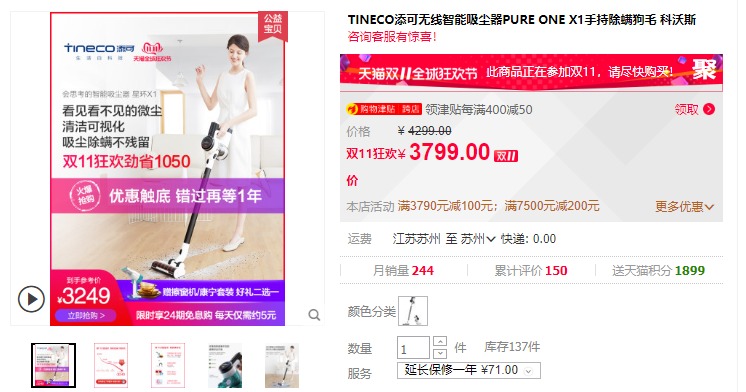
Currently, only Dyson can sell at price points above 3000 yuan in the domestic market. At around 2000 yuan, there is currently no brand that has established a foothold. The Tineco brand now has the potential to become the leading brand in this price segment. Previously, Tineco launched a vacuum cleaner with dust detection capabilities, and Dyson also introduced pressure-sensing vacuums. Both companies are moving towards smart features. Unfortunately, Tineco's initial pricing was around 4000 yuan, which is beyond the reach of most consumers except for Dyson. If Tineco could lower its price to between 1999 and 2299 yuan, it would likely see a significant increase in both sales volume and brand recognition.
- Roborock
Following its collaboration with Xiaomi to launch the first blockbuster product, a 1,599 yuan LDS LiDAR robot vacuum—Roborock has become a star player in the industry. Although early products under this partnership yielded low profits, they provided a growth environment for Roborock. Subsequently, Roborock launched its own branded "Roborock" robot vacuums, which outperformed competitors significantly in both profit and sales.
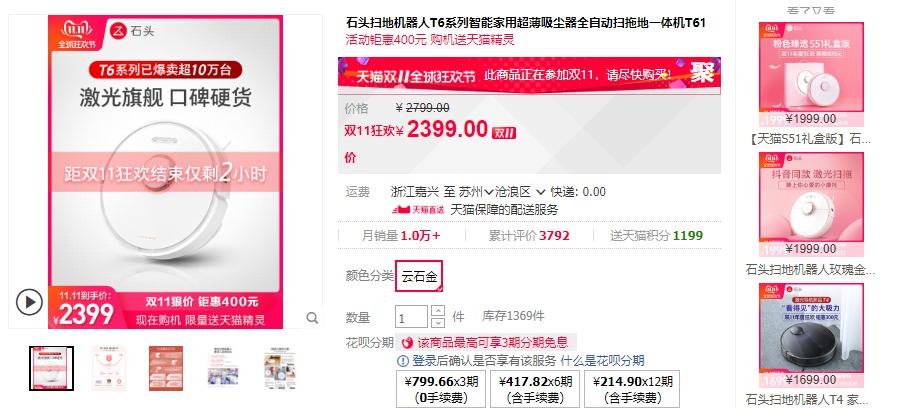
Since its listing on the STAR Market this year, Roborock has gained access to more capital for market expansion and R&D. Currently, it has made significant progress in both product technology accumulation and channel promotion.
Previously, Roborock also launched a Mi Home cordless handheld vacuum cleaner. According to industry insiders, sales of this vacuum cleaner may not have met the initial expectations. Therefore, the swift launch of its next star product will likely determine Roborock's position in the market.
- Dreame
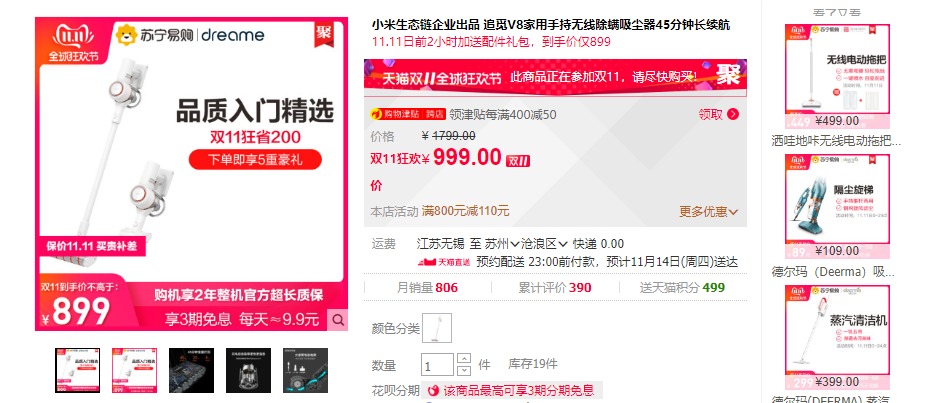
As a rising star within Xiaomi’s ecosystem, Dreame has been developing at a pace that closely rivals Roborock. Industry rumors suggest that Dreame achieved sales of 1 billion yuan in 2019 and may double its revenue in 2020. Following the success of its first product, the next star product will be a test of the company's capabilities.
Currently, Dreame’s cordless vacuum cleaners have firmly secured their position in the price range of 999-1299 yuan, making it difficult for other brands to compete at this level. Will Dreame follow Roborock by launching higher-end products and capturing higher price segments?
Roidmi
Roidmi, although part of the Xiaomi ecosystem, does not follow a cost-effective route from a business perspective. In terms of product design and innovation, Roidmi aims to capture the relatively higher-end price segment ranging from 1699 to 2299 yuan. This price range is currently being targeted by several strong companies. Currently, Roidmi may be at a disadvantage in terms of funding compared to these companies.
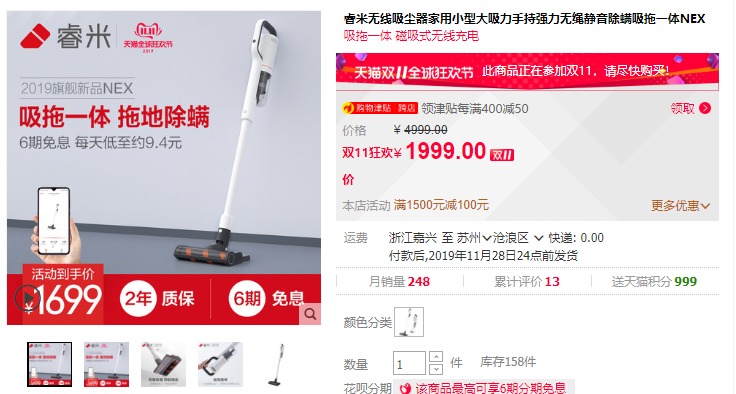
If Roidmi can continue to launch innovative products, it still has a chance to occupy a position in this price segment even if the quantity does not lead its competitors.
- SOEBOURNE
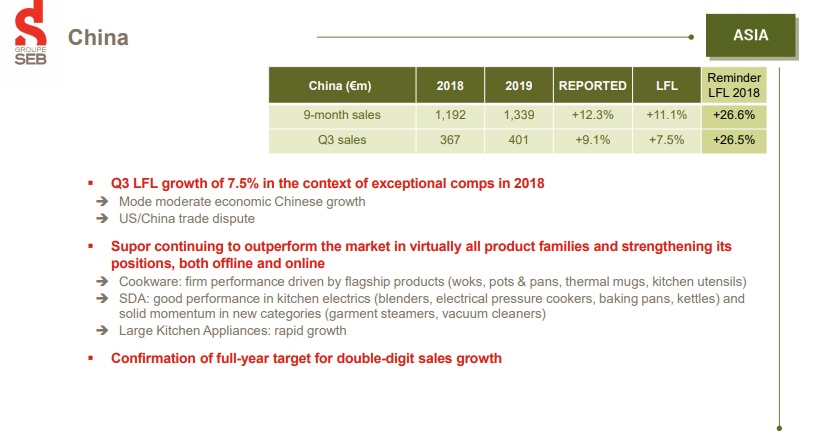
French SEB (Sébem Group) has seen significant growth over the past two years, with its Chinese SOEBOURNE division experiencing particularly rapid expansion. In terms of vacuum cleaners, SOEBOURNE's growth is also exceptionally strong. Having successfully transitioned from a kitchen appliance brand to a cleaning appliance brand, SOEBOURNE has made considerable progress.
Of course, SOEBOURNE currently faces intense competition in the cleaning appliances sector from traditional brands such as Joyoung, Midea, and Haier. However, if SOEBOURNE maintains its current growth momentum, it is not impossible for the brand to evolve into a major player in the cleaning appliance market.
To get a detailed analysis of other companies from me, feel free to invite me for a meal.