Independent Technical Reference

Combination Sweeper-Scrubber

Combination sweeper-scrubber architecture, hopper, dust control, wet recovery and buyer verification

This profile separates the dry sweeping and wet scrubbing subsystems, explains one-pass claim boundaries, and gives buyers a route, debris, utility and service verification framework.

Included
  • Integrated machines that sweep debris and scrub hard floors in one platform
  • Battery or engine-powered ride-on combination machines
Excluded
  • Two separate machines sold as a package
  • Road sweepers without wet scrubbing and recovery
  • Ordinary scrubbers with only a light pre-sweep accessory
  • Machines without a documented debris hopper

First published 2026-08-09 · Last verified 2026-08-09

This independent category reference is not model-specific purchasing, safety, dust-hazard, chemical or repair advice. Confirm the exact machine, powertrain, filters, floor, debris, regional conformity and service terms.
Official equipment reference
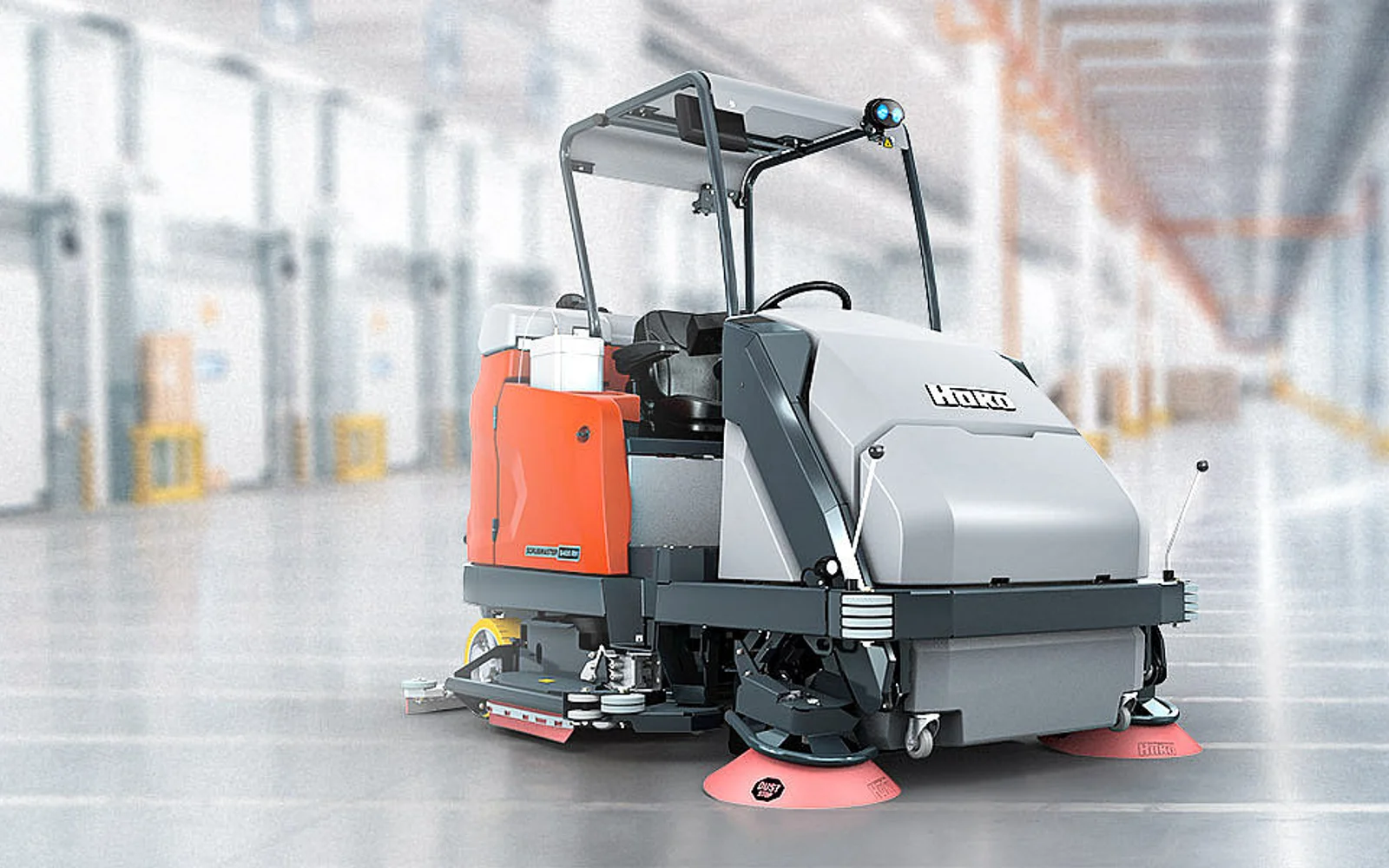
Hako Scrubmaster B400 RH combination sweeper-scrubber in a warehouse
Official Hako application image showing an integrated ride-on sweeping and scrubbing platform. Actual one-pass results depend on debris, floor, route and settings. Official image source
Combination Sweeper-Scrubber key facts
FactTechnical referenceScope boundary
Architecture boundaryFull dry sweeping and hopper plus full wet scrubbing and recovery on one chassisReviewed combination machines; no inference from a side brush alone.
One-pass boundaryOne platform can sweep and scrub, but achieved one-pass results remain debris- and site-dependentExact configuration, debris and floor.
Dust boundarySweep filtration and dust suppression are separate from wet recoveryNo hazardous-dust approval inferred.
Powertrain boundaryBattery, diesel, LPG and gasoline configurations have different indoor-use and utility implicationsExact regional product number.

WCB explanatory visual

Combination Sweeper-Scrubber working system

An original system map synthesized from reviewed operator manuals. It explains functional flow, not a universal machine architecture.

  1. 01

    Debris capture

    Side brooms and main sweeping brush

    Moves loose debris into the sweep chamber.

    EvidenceOfficial sources identify side and main sweeping brushes.

    ScopeBrush type and path are configuration-specific.

    Verified2026-08-09

    Sourcestennant-m17, nilfisk-cs7010, hako-b400

  2. 02

    Hopper loading

    Sweep chamber, conveyor or overthrow path and debris hopper

    Separates and stores swept debris.

    EvidenceManufacturers publish hopper systems and capacities.

    ScopeUsable capacity depends on debris density and fill limits.

    Verified2026-08-09

    Sourcestennant-m20, nilfisk-cs7010, karcher-b300

  3. 03

    Dust management

    Filter, shaker and/or suppression system

    Controls airborne dust created during dry sweeping.

    EvidenceOfficial pages list sweep filters and dust-control features.

    ScopeNot a hazardous-dust containment claim.

    Verified2026-08-09

    Sourcesnilfisk-cs7010, tennant-m17, hako-b400

  4. 04

    Wet scrubbing

    Solution tank, dosing and scrub deck

    Applies liquid and agitation after or with debris pickup.

    EvidenceOfficial sources document solution capacities and scrub systems.

    ScopeChemistry and deck are model-specific.

    Verified2026-08-09

    Sourcestennant-m20, nilfisk-cs7500, hako-b400

  5. 05

    Liquid recovery

    Squeegee, vacuum path and recovery tank

    Collects dirty solution and stores it for draining.

    EvidenceManufacturers publish recovery systems and tank data.

    ScopeTurns, floor joints and blade condition affect result.

    Verified2026-08-09

    Sourcestennant-m17, nilfisk-cs7010, karcher-b300

Equipment taxonomy

Main combination sweeper-scrubber formats

These formats describe operator relationship and task scale. None is a universal winner.

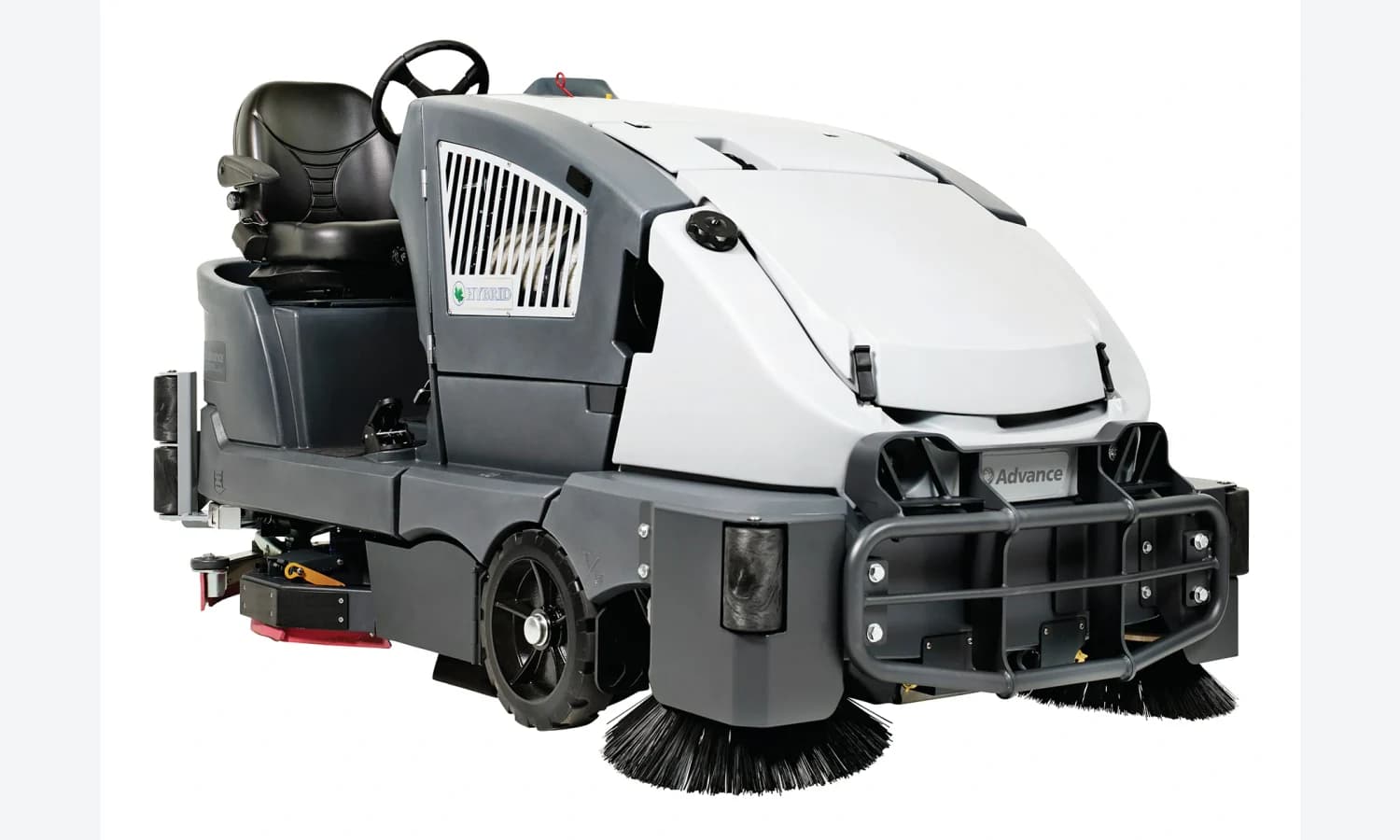
Nilfisk CS7010 combination sweeper-scrubber
Official field reference

Official Nilfisk product image illustrating side brooms, enclosed sweep section and rear wet-recovery architecture.

Buyer focusUse the format as a starting point, then compare the operating envelope, utilities, duty cycle, operator workflow, accessory system and the exact configured machine.

Official image source

Battery compact combination machine

Task scale
Congested warehouses and indoor logistics
Operator
Ride-on operator manages debris, water and charging
Space
Turning circle, doorway and charging area are critical
Limit
Compactness can reduce tank and hopper capacity.

EvidenceNilfisk positions CS7500 as compact and battery-powered.

ScopeCS7500 configurations.

Verified2026-08-09

Sourcesnilfisk-cs7500

Large battery industrial machine

Task scale
Large indoor industrial routes
Operator
Ride-on operator with hydraulic hopper handling
Space
Requires substantial turn, transport and service clearance
Limit
Nominal productivity excludes dumps, fills and edge work.

EvidenceTennant M17 and Hako B400 sources document large battery platforms.

ScopeNamed configurations.

Verified2026-08-09

Sourcestennant-m17, hako-b400

Engine-powered combination machine

Task scale
Heavy indoor/outdoor industrial work where approved
Operator
Ride-on operator manages fuel, exhaust and additional maintenance
Space
Ventilation, emissions, noise and fuel storage govern use
Limit
Engine availability does not establish indoor authorization.

EvidenceTennant M20 and Nilfisk CS7010 publish engine configurations.

ScopeExact fuel and jurisdiction.

Verified2026-08-09

Sourcestennant-m20, nilfisk-cs7010

Specification dictionary

What the performance metrics do—and do not—mean

Combination Sweeper-Scrubber performance metric dictionary
MetricPurchasing meaningReporting boundaryComparison caution
Sweeping and scrubbing pathsDefine different working widths of two subsystemsSide-broom and side-scrub options change valuesDo not use the widest sweep path as scrub width.
Hopper capacitySupports debris-dump planningNominal volume, sometimes source-defined usable loadVolume alone ignores debris density and discharge height.
Solution and recovery capacitySupports wet-cycle planningNominal tank volumesDoes not establish run time or water efficiency.
Area performanceSupports route sizingTheoretical or estimated manufacturer valueExclude dumps, fills, turns, transport and overlap before comparison.
Runtime or fuel dutySupports shift and utility planningBattery, fuel, settings and site dependentBattery runtime and engine tank endurance are not equivalent metrics.
Sweeping and scrubbing paths evidence

EvidenceOfficial sources publish multiple path definitions.

ScopeExact configuration.

Verified2026-08-09

Sourcestennant-m20, nilfisk-cs7010, hako-b400

Hopper capacity evidence

EvidenceManufacturers publish hopper data.

ScopeNamed machines.

Verified2026-08-09

Sourcestennant-m17, tennant-m20, nilfisk-cs7010

Solution and recovery capacity evidence

EvidenceOfficial pages publish tank capacities.

ScopeExact configuration.

Verified2026-08-09

Sourcestennant-m20, nilfisk-cs7500, karcher-b300

Area performance evidence

EvidenceOfficial pages publish source-defined productivity.

ScopeRetain each source label.

Verified2026-08-09

Sourcestennant-m17, hako-b400, karcher-b300

Runtime or fuel duty evidence

EvidenceManufacturers publish power configurations and selected runtime data.

ScopeExact pack and operating mode.

Verified2026-08-09

Sourcesnilfisk-cs7500, tennant-m20

Evidence + WCB interpretation

Application-fit matrix

Official application evidence does not establish automatic suitability. Each row shows what still needs to be tested.

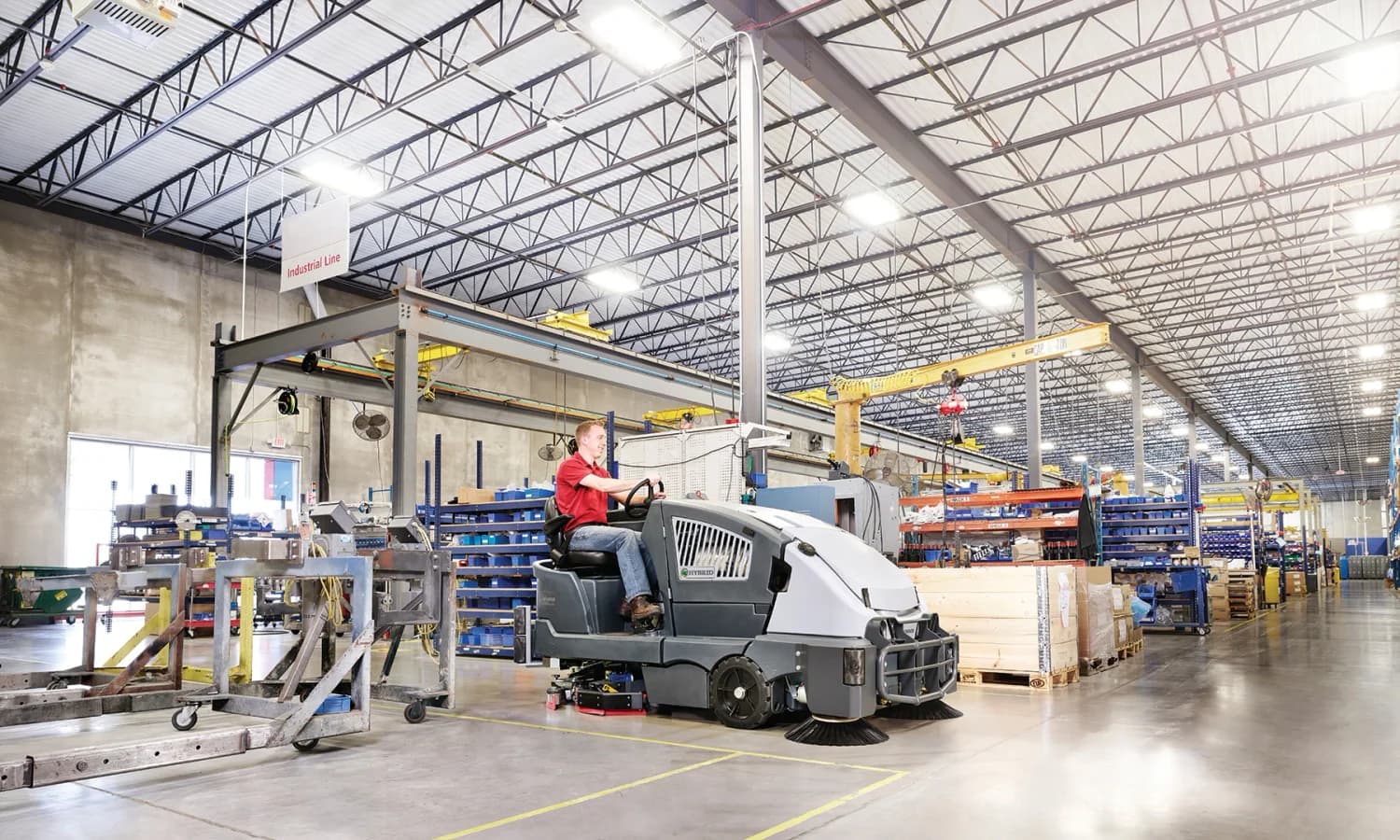
Nilfisk CS7010 operating in a manufacturing facility
Official field reference

Official Nilfisk application image. Route width, loose debris, dust, wet soil and traffic must be validated at the actual facility.

Buyer focusTreat the photographed setting as context only. Validate utilities, surface compatibility, operating space, operator controls, environmental conditions and the planned work process on site.

Official image source

Warehouse loose debris plus wet soil

EvidenceManufacturers position combination machines for warehouses and logistics.

ScopeDebris within hopper, brush and dust-control limits.

Verified2026-08-09

Sourcesnilfisk-cs7500, tennant-m17, hako-b400

WCB assessment

Fit depends on whether the dry and wet stages both meet the route requirement.

Basis
Integrated architecture and official application positioning.
Limitations
No universal one-pass result.
Buyer action
Trial representative debris and wet soil across a complete route.

Manufacturing facilities

EvidenceNilfisk, Tennant and Hako position reviewed machines for industrial floors.

ScopeNon-hazardous debris and approved floor/chemical.

Verified2026-08-09

Sourcesnilfisk-cs7010, tennant-m20, hako-b400

WCB assessment

Dust classification, oil, swarf, joints and traffic can change the required system.

Basis
Official industrial positioning.
Limitations
Hazardous use is not inferred.
Buyer action
Classify debris and approve dust, chemical and discharge controls.

Congested large indoor routes

EvidenceNilfisk highlights compact zero-turn CS7500 operation in dynamic areas.

ScopeExact route geometry and traffic.

Verified2026-08-09

Sourcesnilfisk-cs7500, nilfisk-cs7500-news

WCB assessment

Turning envelope and sightlines matter alongside nominal width.

Basis
Documented compact platform positioning.
Limitations
No site fit guarantee.
Buyer action
Conduct doorway, aisle, ramp, dock and egress route checks.

System component map

Component families and compatibility boundaries

Component families are labels only. No component link or cross-model compatibility is claimed.

WCB combination sweeper-scrubber verification map
WCB technical diagram

WCB map separating sweep and hopper, dust control, scrub and solution, and squeegee recovery or powertrain interfaces.

Buyer focusBefore substitution or service work, match the current manual, model and serial range, part number, physical interface, approved material or chemistry, and electrical configuration.

Evidence sourcesiec60335-72, tennant-m20, nilfisk-cs7010, hako-b400

Sweep brushes and hopper

Collect and retain dry debris.

Common variants
  • Overthrow sweep
  • Side-broom options
  • Hydraulic high-dump hopper
Critical checks
  • Debris type
  • Brush IDs
  • Hopper load and dump height
  • Wear access

EvidenceOfficial sources document sweep architectures and hoppers.

ScopeExact model.

Verified2026-08-09

Sourcestennant-m20, nilfisk-cs7010, hako-b400

Dust-control system

Manages sweep-generated airborne dust.

Common variants
  • Panel filter
  • Electric shaker
  • Dust suppression
Critical checks
  • Filter test basis
  • Seal integrity
  • Shaker cycle
  • Dust-safe servicing

EvidenceManufacturers publish model-specific dust features.

ScopeNo hazardous-dust approval inferred.

Verified2026-08-09

Sourcesnilfisk-cs7010, tennant-m17

Scrub and solution system

Applies liquid, chemistry and mechanical agitation.

Common variants
  • Cylindrical deck
  • Disc deck
  • Optional dosing or water-saving system
Critical checks
  • Deck width
  • Brush pressure
  • Chemical approval
  • Tank and dosing definitions

EvidenceOfficial sources document different scrub systems.

ScopeExact option pack.

Verified2026-08-09

Sourcestennant-m20, nilfisk-cs7500, hako-b400

Squeegee and recovery

Collects dirty liquid after scrubbing.

Common variants
  • Parabolic rear squeegee
  • Breakaway squeegee
  • Dual vacuum options
Critical checks
  • Blade material and ID
  • Turn recovery
  • Hose and tank cleaning
  • Drain access

EvidenceManufacturer sources describe recovery hardware.

ScopeExact configuration.

Verified2026-08-09

Sourcestennant-m20-manual, nilfisk-cs7010, karcher-b300

Powertrain and controls

Drives traction and both cleaning subsystems.

Common variants
  • Battery electric
  • Diesel
  • LPG or gasoline
Critical checks
  • Indoor approval
  • Battery or fuel system
  • Emissions and ventilation
  • Controls and service tools

EvidenceOfficial pages list model-specific power sources.

ScopeRegional SKU and site rules.

Verified2026-08-09

Sourcestennant-m17, tennant-m20, nilfisk-cs7500

Verified relationships

Related brands and representative models

Representative, not exhaustive. A link means the official source connects the named brand and model; it does not establish a factory, OEM or component-supplier relationship.

6 verified models
Representative combination sweeper-scrubber models
BrandModelSubtypeOfficial specification referenceMarket scopeVerifiedSource
TennantM17Battery ride-on sweeper-scrubber
  • integrated sweep and scrub
  • battery power
Tennant product page2026-08-09tennant-m17
TennantM20Engine-powered ride-on sweeper-scrubber
  • 110 L hopper on reviewed US version
  • integrated FloorSmart system
Tennant US product page2026-08-09tennant-m20
NilfiskCS7010Industrial combination sweeper-scrubber
  • dedicated dry sweep and wet scrub
  • multiple power configurations
Nilfisk US product page2026-08-09nilfisk-cs7010
NilfiskCS7500Compact battery combination sweeper-scrubber
  • zero-turn compact design
  • lithium-ion option
Nilfisk US product page2026-08-09nilfisk-cs7500
KärcherB 300 R I BpBattery ride-on sweeper-scrubber
  • integrated sweeping and scrubbing
  • ride-on battery platform
Kärcher international product page2026-08-09karcher-b300
HakoScrubmaster B400 RHLarge ride-on combination machine
  • integrated pre-sweep unit
  • hydraulic high-dump hopper
Hako global product page2026-08-09hako-b400

WCB decision support

Procurement decision matrix

No composite score or brand ranking. Each row identifies a comparison trap and the next verification action.

WCB assessment

Replace separate sweep and scrub passes

Verify
Completed debris removal and wet recovery in the actual route
Comparison trap
Accepting one-pass marketing without a representative trial
Assessment
Measure rework, hopper dumps, fills and edge work across a full shift.
Basis
End-to-end architecture.
Limitations
No independent ranking.
Buyer action
Run a controlled trial with representative debris and soils.
Engineering check
Confirm brushes, hopper, filter, deck, squeegee, tanks and powertrain.

EvidenceManufacturers document integrated systems but results are site-dependent.

ScopeActual debris, floor and route.

Verified2026-08-09

Sourcestennant-m20, nilfisk-cs7010, hako-b400

WCB assessment

Control industrial dust

Verify
Debris classification, filter system and servicing exposure
Comparison trap
Treating a panel filter as hazardous-dust approval
Assessment
Specify the dust requirement before choosing the machine.
Basis
Dust control and dust hazard are different boundaries.
Limitations
No hazardous-area suitability inferred.
Buyer action
Obtain dust classification and applicable compliance evidence.
Engineering check
Verify filters, seals, suppression, emptying and PPE method.

EvidenceOfficial sources document ordinary sweep dust systems.

ScopeNon-hazardous use unless exact approval exists.

Verified2026-08-09

Sourcesnilfisk-cs7010, tennant-m17

WCB assessment

Choose battery or engine power

Verify
Shift duty, utilities, ventilation, emissions and service capability
Comparison trap
Comparing runtime without power-system boundary
Assessment
Select powertrain through a site utility and risk assessment.
Basis
Powertrain changes operating constraints.
Limitations
No universal preference.
Buyer action
Model full-shift energy or fuel demand and downtime.
Engineering check
Confirm battery or engine, charger or fuel system, ventilation and fire controls.

EvidenceManufacturer sources publish different power options.

ScopeExact regional configuration and site.

Verified2026-08-09

Sourcestennant-m17, tennant-m20, nilfisk-cs7500

Engineering validation

Checks before parts, configuration or service decisions

This checklist narrows verification work; it is not a compatibility guarantee or repair manual.

01

Subsystem identity

Sweep, dust, scrub and recovery parts have separate configuration boundaries.

Required actionRecord exact deck, hopper, filter and squeegee part numbers.

EvidenceOfficial sources list model-specific systems.

ScopeNo cross-family compatibility inference.

Verified2026-08-09

Sourcestennant-m20-manual, nilfisk-cs7010

02

Route and dump geometry

Machine size and hopper discharge can constrain use.

Required actionMeasure aisles, turns, doors, ramps, transport and dump point.

EvidenceManufacturers publish dimensions and hopper systems.

ScopeExact machine and site.

Verified2026-08-09

Sourceshako-b400, tennant-m20

03

Dust and chemical controls

Dry debris and wet chemistry create different exposure and disposal requirements.

Required actionApprove dust, chemical and wastewater methods.

EvidenceOfficial systems include filtration and solution recovery.

ScopeActual debris, chemistry and jurisdiction.

Verified2026-08-09

Sourcesnilfisk-cs7010, iec60335-72

04

Powertrain and service

Battery and engine variants require different infrastructure and skills.

Required actionConfirm utilities, spare parts, training and service SLA.

EvidenceManufacturers publish multiple power configurations.

ScopeExact regional SKU.

Verified2026-08-09

Sourcestennant-m17, tennant-m20, nilfisk-cs7500

Standards boundary

Safety and performance references

IEC 60335-2-72:2021

JurisdictionInternational

Version2021

ApplicabilityParticular safety requirements for commercial floor-treatment machines with or without traction drive.

EvidenceIEC publishes the scope.

ScopeConfirm regional adoption and exact conformity.

Verified2026-08-09

Sourcesiec60335-72

ISO 3691-1:2011

JurisdictionInternational

Version2011

ApplicabilitySafety requirements and verification for self-propelled industrial trucks within its stated scope; applicability to a specific machine requires manufacturer and conformity review.

EvidenceISO publishes the standard scope.

ScopeNot automatically applicable to every sweeper-scrubber.

Verified2026-08-09

Sourcesiso3691

Technical developments

Selected changes in combination sweeper-scrubber systems

  1. Nilfisk introduced CS7500

    Nilfisk announced its compact combination sweeper-scrubber after customer-led development.

    EvidenceOfficial Nilfisk news records the launch.

    ScopeLaunch-date product positioning.

    Verified2026-08-09

    Sourcesnilfisk-cs7500-news

  2. IEC floor-treatment safety edition published

    IEC published the 2021 edition of IEC 60335-2-72.

    EvidenceIEC catalogue records the edition.

    ScopeInternational base standard.

    Verified2026-08-09

    Sourcesiec60335-72

Evidence record

Sources

First published 2026-08-09 · Last verified 2026-08-09 · Last material modification 2026-08-09

  1. standard

    IEC 60335-2-72:2021

    IEC

    Open official source

    Accessed 2026-08-09 · Published 2021-06-23

  2. standard

    ISO 3691-1:2011

    ISO

    Open official source

    Accessed 2026-08-09

  3. manufacturer

    Combination Sweeper Scrubbers

    Nilfisk

    Open official source

    Accessed 2026-08-09

  4. manufacturer

    M17 Battery Ride-On Sweeper-Scrubber

    Tennant

    Open official source

    Accessed 2026-08-09

  5. manufacturer

    M20 Ride-On Sweeper-Scrubber

    Tennant

    Open official source

    Accessed 2026-08-09

  6. manual

    M20 Operator Manual

    Tennant

    Open official source

    Accessed 2026-08-09

  7. manufacturer

    CS7010 Combination Sweeper-Scrubber

    Nilfisk

    Open official source

    Accessed 2026-08-09

  8. manufacturer

    CS7500 TPPL AM

    Nilfisk

    Open official source

    Accessed 2026-08-09

  9. manufacturer

    Nilfisk Launches Product Designed with Customers

    Nilfisk

    Open official source

    Accessed 2026-08-09 · Published 2025-03-10

  10. manufacturer

    B 300 R I Bp

    Kärcher

    Open official source

    Accessed 2026-08-09

  11. manufacturer

    Scrubmaster B400 R Series

    Hako

    Open official source

    Accessed 2026-08-09