Autonomous floor scrubber navigation, safety, docking, proof-of-work and buyer verification
This profile separates cleaning hardware from autonomy, site approval, docking and fleet-data claims so buyers can validate the complete operating system.
Included
Purpose-built autonomous scrubber dryers
Operator-taught or mapped commercial scrubbers with documented autonomous operation
Excluded
Domestic robot mops
Manual scrubbers without an autonomous mode
Dry-only robot vacuums
Hazardous-location use without exact approval
First published 2026-08-09 · Last verified 2026-08-09
This is an independent category reference, not safety approval or model-specific purchasing advice. Validate the exact machine, software release, mapped site, supervision plan, regional conformity and service terms.
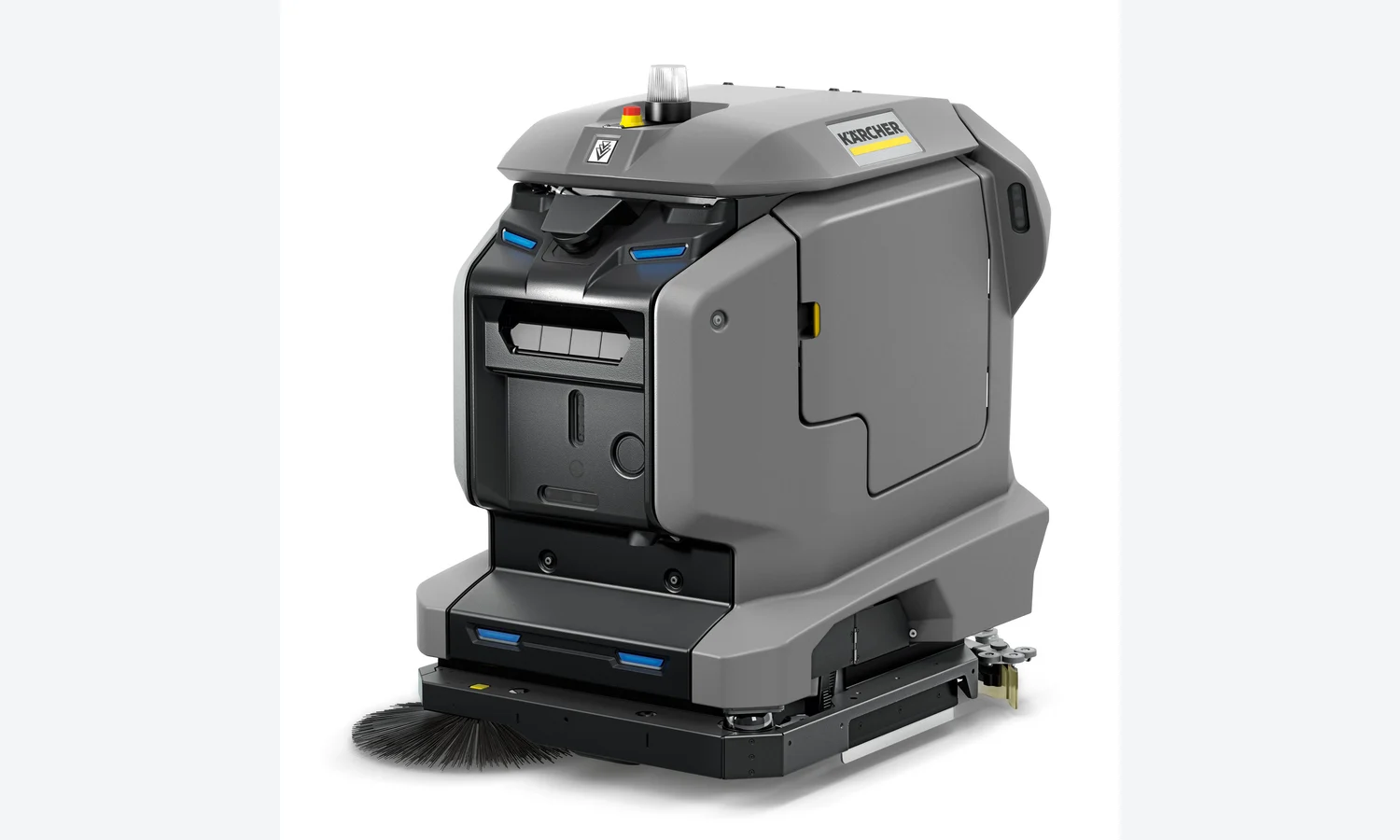
Official equipment reference
Official Kärcher application image of KIRA B 50. A real deployment still requires site mapping, risk assessment and an exception-handling process. Official image source
Autonomous Floor Scrubber key facts
Fact
Technical reference
Scope boundary
System boundary
Cleaning machine plus autonomy stack plus approved site process
Reviewed models only; autonomy does not remove human responsibility.
Navigation
Mapped or taught routes with model-specific localization and obstacle response
Exact software and sensor configuration.
Docking
Charging is common; water refill, draining and rinsing are optional and model-specific
Do not infer full-service docking from automatic charging.
Productivity
Theoretical, practical and autonomous-route coverage are different metrics
Named values retain each source boundary.
WCB explanatory visual
Autonomous Floor Scrubber working system
An original system map synthesized from reviewed operator manuals. It explains functional flow, not a universal machine architecture.
01
Site setup
Mapping, route teaching and operating zones
Defines where and how the robot may clean.
EvidenceOfficial sources describe mapped or taught cleaning plans.
These formats describe operator relationship and task scale. None is a universal winner.
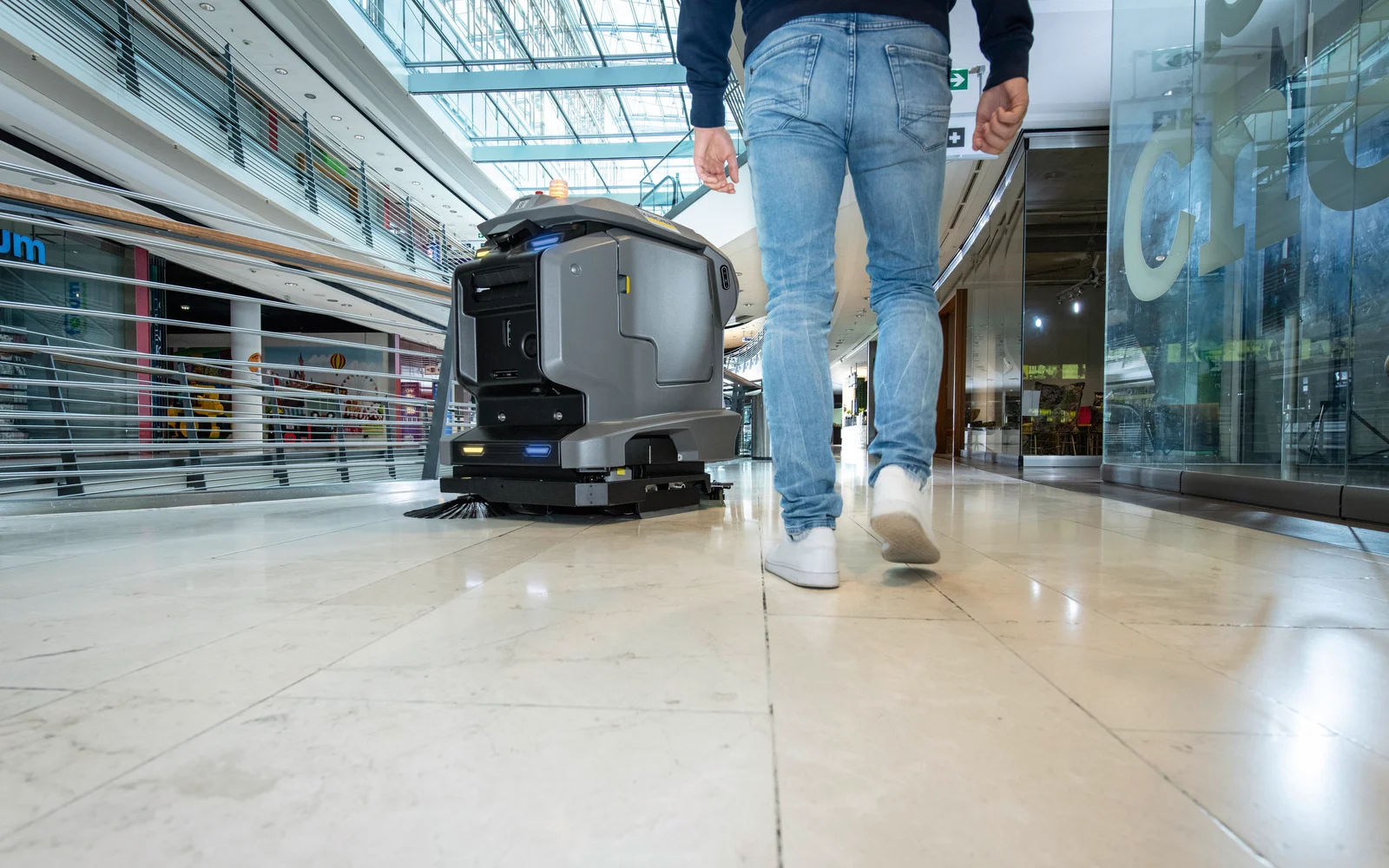
Official field reference
Official Kärcher product image showing sensors, scrub deck and recovery hardware on one autonomous platform.
Buyer focusUse the format as a starting point, then compare the operating envelope, utilities, duty cycle, operator workflow, accessory system and the exact configured machine.
Official application evidence does not establish automatic suitability. Each row shows what still needs to be tested.
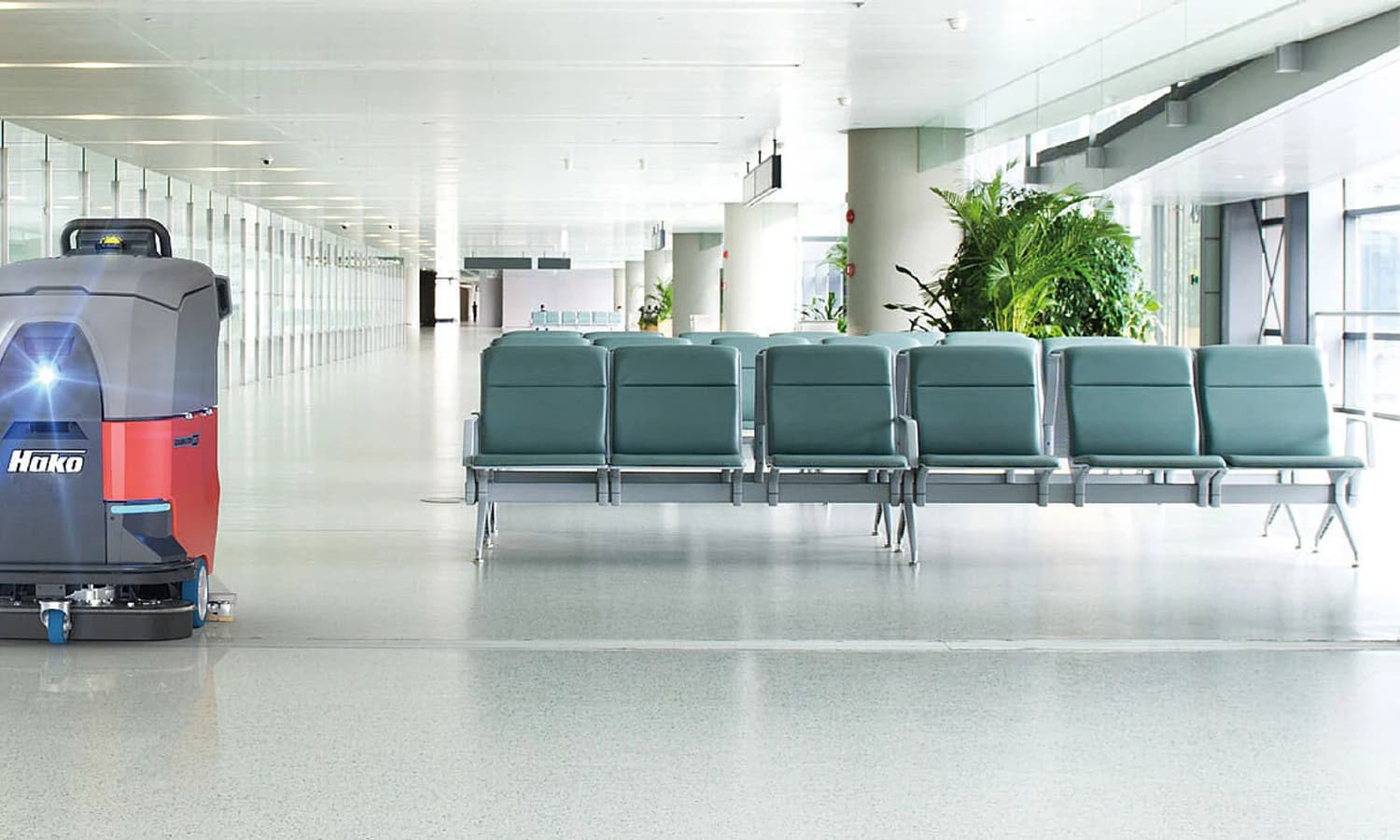
Official field reference
Official Hako application image illustrating an open public route; traffic, glass, obstacles and handover rules remain site-specific.
Buyer focusTreat the photographed setting as context only. Validate utilities, surface compatibility, operating space, operator controls, environmental conditions and the planned work process on site.
Shift value depends on replenishment, recovery, exceptions and proof-of-work together.
Basis
Complete support workflow.
Limitations
Unattended operation is not assumed.
Buyer action
Document every planned human touch and response-time owner.
System component map
Component families and compatibility boundaries
Component families are labels only. No component link or cross-model compatibility is claimed.
WCB technical diagram
WCB map separating cleaning hardware, perception and navigation, safety controls, and charging or docking interfaces.
Buyer focusBefore substitution or service work, match the current manual, model and serial range, part number, physical interface, approved material or chemistry, and electrical configuration.
Representative, not exhaustive. A link means the official source connects the named brand and model; it does not establish a factory, OEM or component-supplier relationship.