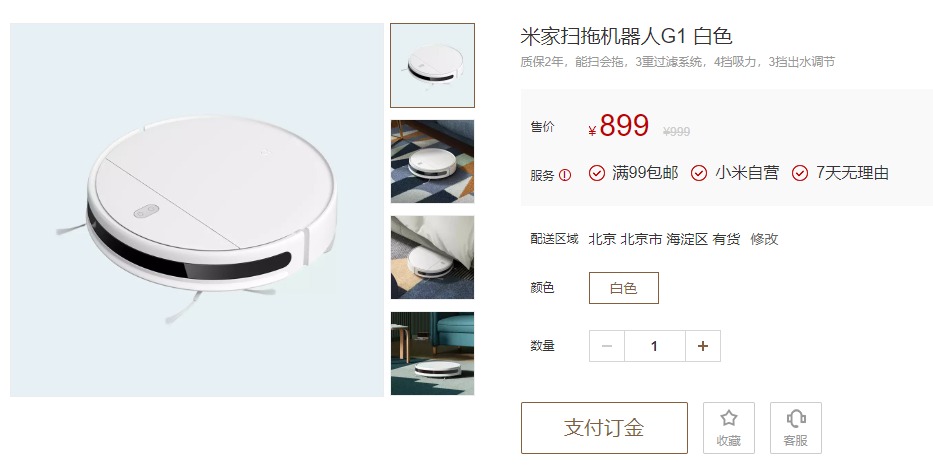
- The Xiaomi ecosystem changed Chinese manufacturing by combining talent, capital, traffic, design and value for money.
- Its low-margin model created a long-term profit and innovation dilemma for ecosystem companies.
- The author argues Xiaomi needs to move beyond low price and adjust its ecosystem mechanism.
Xiaomi ecosystem history.
Core principles.
Star companies.
- Ninebot
- ZMI
Current difficulties: no star companies have appeared for many years.
- The era of incremental markets has ended.
- Chinese brands have risen, and there are no longer obvious foreign brands to benchmark against.
- The talent dividend has ended.
- The Xiaomi.com traffic dividend has ended.
The leader's paradox, or the innovator's dilemma.
- After Xiaomi became the leader in many categories, it could no longer continue its previous playbook.
Changes in the external environment.
- The livestreaming era has arrived.
The real benchmark for the Xiaomi ecosystem is Costco. But in China, it cannot charge membership fees, so this path does not work.
Because the Costco model does not work, Xiaomi can only follow the normal product model of a normal company.
Xiaomi's core playbook of “value for money” has not failed; it is just not as useful as before.
- There are no longer super blue-ocean markets. Now there are individual niche markets.
The era of incremental markets has ended, and competition is more intense than before. Competitors' capabilities have also improved substantially.
The current competitive situation:
- The foreign brands used as benchmarks are still there.
- Previously backward Chinese manufacturers have risen.
- Early Xiaomi ecosystem companies have rebelled and left the ecosystem.
- Current ecosystem companies are weaker.
- Cross-border e-commerce has risen, and capital has entered in large amounts.
Keywords for the Xiaomi ecosystem in consumers' minds:
- Value for money.
- Good quality.
- Attractive design.
Possible paths forward:
- Change the route of “value for money as the only priority.”
- Emphasize the concept of being honest and generous to consumers.
- Increase R&D investment and make the Mijia brand feel more technological.
- Change the internal horse-racing mechanism and reduce internal friction.
- Liberate ecosystem companies.
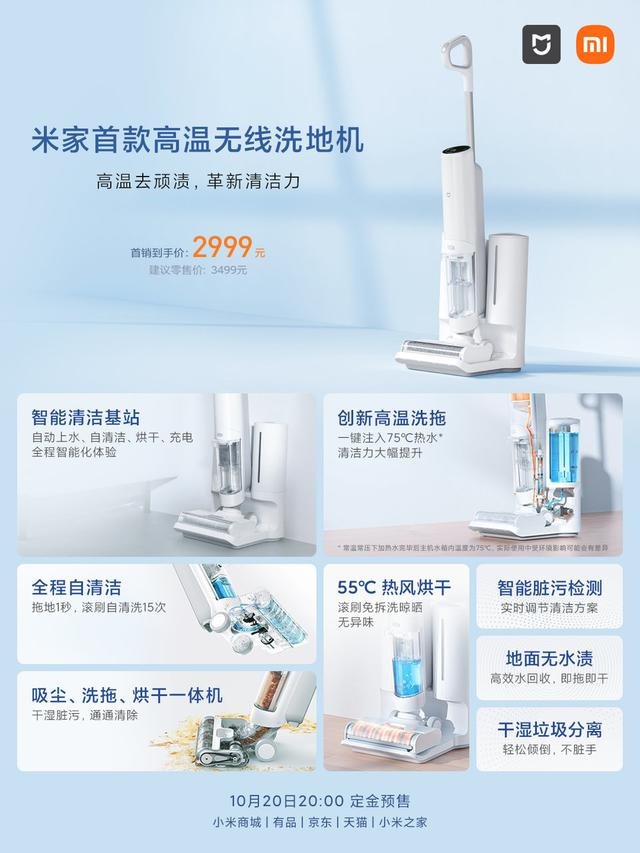
One can see Xiaomi's change: the pricing strategy of the Mijia high-temperature hard floor washer is not low price, but high configuration without low price.
In November 2021, I went to Tianjin on a business trip to give Debon Securities a presentation on the cleaning-appliance industry. After I arrived at the hotel, I found that my rule of always losing or leaving behind power banks on business trips had once again shown its power. This time, I had forgotten both my power bank and charger. Without much hesitation, I immediately took a taxi to a nearby Xiaomi Store, planning to buy a 10,000 mAh power bank with built-in charging cable and charging head, so I could reduce backpack space. When I arrived at the Xiaomi Store, I found that although products of this type were everywhere on Taobao, the Xiaomi Store did not have them.
The power banks in the Xiaomi Store were still as cheap as the one I bought five or six years earlier: a 10,000 mAh power bank was only RMB 69. So I bought a power bank, an Apple cable, and a charger. Xiaomi's prices were still as trustworthy as ever, but the product was clearly not what I wanted. On the way back to the hotel, I thought again about the Xiaomi ecosystem products I had bought over the years. I found that in the early days of the Xiaomi ecosystem I bought many products: air purifiers, power banks, phones, rice cookers—basically everything I could buy, I bought Xiaomi. But in recent years, I have rarely bought Xiaomi ecosystem products. Why?
The reason may be that the Xiaomi ecosystem has become less cool in recent years.
The Xiaomi ecosystem began in 2013 and is now close to ten years old. As a member of the manufacturing industry, the Xiaomi ecosystem changed Chinese manufacturing. Around 2013, foreign brands still had high prices, while Chinese manufacturing was still synonymous with copycat products and low-end goods. The Xiaomi ecosystem appeared suddenly, changing Chinese manufacturing and the fate of many people.
Young consumers who are used to the rise of domestic brands may not understand how much consumers trusted imported brands back then. At that time, imported brands meant design, good quality, and functionality. Domestic brands meant copycats and low prices. For those of us in foreign trade, export products generally had better quality standards and materials, while domestic products were worse. The reason was simple: in the domestic market at that time, low-priced products were easier to sell.
The Xiaomi ecosystem appeared at this moment. I remember that when a Romoss power bank cost more than RMB 100, Xiaomi's power bank was only RMB 49 or RMB 69 and had a better design. Later air purifiers and other products all followed the route of high design and high value for money. Soon the Xiaomi ecosystem produced a wave of star companies: ZMI, Ninebot, Viomi, Huami and others, all of which had a huge impact on existing markets.
The core companies Xiaomi invested in early were all talented teams in their respective fields. With a little capital and order support, these people could perform a dimensionality reduction attack on manufacturing. This was the first talent dividend of the Xiaomi ecosystem: the supply of core talent was relatively abundant.
After the Xiaomi ecosystem had disrupted industry after industry, people discovered that capital plus talent could have such huge power. Then other capital also began competing for talent, and core talent was no longer so easy to obtain.
At that time, the Xiaomi ecosystem had several advantages:
- Products were cheap and good. Because Xiaomi had strong built-in traffic, the traffic from Youpin and Xiaomi.com was almost free for ecosystem companies. Once a product was listed on Youpin and Xiaomi.com, sales were guaranteed.
- Strong design. Xiaomi single-handedly made minimalist design the most popular design style in the industry.
- Xiaomi ecosystem traffic dividend. In the early Xiaomi ecosystem, Xiaomi's style was to find a strong team in each industry, invest in it, and then nurture its growth with orders.
External advantages:
- Xiaomi phones were booming and constantly creating sales miracles for domestic phones. The more Xiaomi phones sold, the more potential customers the Xiaomi ecosystem had, and the more products it could sell.
- Chinese manufacturing was in a transition period. Those years were the last highlight moment for foreign consumer brands, and many domestic brands were about to start attacking them.
- Chinese people's incomes began to rise. After satisfying basic needs, people began pursuing a better life, so better brands and better-looking products became popular.
At the same time, the weakness of the Xiaomi ecosystem was equally obvious, and it may have been the problem that has long troubled it:
It does not make money.
Xiaomi often requires ecosystem companies' gross margins to stay within 10% to 15%, and this profit must be shared between the ecosystem company and Xiaomi. In dealings with many ecosystem friends, the sentence I heard most often was: we do not make money on this product; we are just making friends.
If products do not make money, are companies doing charity? Of course not. For Xiaomi, the ecosystem belongs to its strategy of interconnecting everything. Whether it makes money does not matter. As long as Xiaomi has enough interconnected products, even a loss-making business can be done.
For early Xiaomi ecosystem companies, although product gross margins were low, Xiaomi's product volumes were large and there were not many marketing or R&D costs. They could quickly grow sales, raise capital in the capital markets, and then list.
This looked like a win-win. Xiaomi invested in ecosystem companies and earned the appreciation of those investments, while implementing its IoT strategy. Ecosystem companies received large orders very early, could achieve large sales in a short time, win capital recognition, and list.
Win-win.
At a certain stage, yes.
Just as romance always ends, the relationship between Xiaomi and ecosystem companies is like a romance. It cannot last forever. At some point, both sides either register the marriage or break up.
Every ecosystem company wants to marry Xiaomi and become Xiaomi's one and only in a category. But that is impossible. To use an imperfect analogy, Xiaomi is like an ancient emperor with three thousand beauties in the harem. These beauties can receive rewards and live without worries. The only problem is that they can be loyal only to the emperor and cannot expect to receive exclusive favor.
During the years when Xiaomi phones advanced rapidly, Xiaomi's own e-commerce channels also obtained large amounts of free traffic from Xiaomi phone users. In those years, entering the ecosystem was equivalent to adding insurance to sales. But once Xiaomi's traffic growth reached a ceiling, everyone discovered that the cake was not enough to divide.
Xiaomi's dream is interconnection of everything. To realize this dream, it must accommodate as many ecosystem companies as possible and expand the number of IoT devices. Even in the same track, Xiaomi may introduce different ecosystem companies to check and balance one another. The originally limited traffic becomes even less sufficient.
Under such circumstances, the interests of both sides naturally diverge.
Xiaomi's orders and traffic allowed ecosystem companies to grow quickly. After recognizing that they could not become Xiaomi's only choice, capable ecosystem companies no longer wanted to be just a chess piece for Xiaomi. They wanted to firmly control their own development.
Early ecosystem companies such as Huami and Roborock leaving the ecosystem one after another are evidence of this.
But the Xiaomi ecosystem's problems are not only internal. More importantly, the external environment began to change.
- The decline of foreign brands. In the early days, a clear feeling when buying Xiaomi ecosystem products was that they were excellent value: the same configuration as foreign brands at only half the price. Recently, although Xiaomi's products are still cheaper than similar products, the discount no longer feels so large. This means the anchor Xiaomi used for comparison has disappeared.
- The rise of domestic competitors. In the early days, Xiaomi faced many copycat manufacturers with terrible quality and poor design. In recent years, domestic brands have basically caught up with Xiaomi in product quality and design. These new-generation domestic peers, which have fought Xiaomi head-on for years, react faster, innovate faster, and may even be more aggressive. Xiaomi ecosystem companies no longer have much advantage over them.
- Traffic redistribution. A core logic behind large ecosystem orders was cheap, high-quality traffic from phone users. Compared with Taobao and JD, which spend large amounts on traffic every year, the ecosystem had a natural advantage. But in recent years, with 5G networks spreading and short video and livestream channels rising, companies represented by Douyin and Kuaishou are disrupting Taobao and JD, let alone the Xiaomi system.
- Private-domain traffic. As traffic costs keep rising, many brands have started building private-domain traffic, such as WeChat personal accounts and small and medium livestreamers. Unfortunately, because Xiaomi ecosystem companies price products too honestly, they do not have enough profit to give to private-domain terminal sales.
- The rise of cross-border e-commerce. As Amazon expanded overseas, Chinese sellers kept growing abroad. Some aggressive companies even reached RMB 2 billion in cleaning-brand sales in two or three years. Most Xiaomi ecosystem companies follow a blockbuster-product strategy and do not have enough SKUs to meet different customer needs.
At the same time, Xiaomi's domestic pricing has become an obstacle to overseas-market pricing. Even Xiaomi's proud minimalist design is not the mainstream in overseas markets.
- Big blue oceans have disappeared, and small niches have risen. Unlike ten years ago, for Xiaomi every market it had not entered was a big blue ocean. As industries developed, big blue oceans disappeared, leaving only small lakes. These markets have small order volumes and are not suitable for Xiaomi's current blockbuster-product strategy.
I have always had a thought: the Xiaomi ecosystem's benchmark is Costco in the United States. Costco attracts consumers to buy memberships through low-margin products and excellent service. Goods do not make money; they are a traffic source. Membership fees become the main profit. After years of exploration, the Xiaomi ecosystem is clearly not suitable for this model.
Since the membership-fee model is unsuitable, the Xiaomi ecosystem should return to a normal business model: products themselves should have reasonable profit. This can support company promotion and development.
At the end of last year, Xiaomi released the Mijia high-temperature hard floor washer. At first, many people in the industry guessed whether Xiaomi would price it around RMB 1,500. The actual retail price was more than RMB 3,499, and according to supply-chain data, its sales were still good.
The launch of this hard floor washer shows that Xiaomi has begun internally trying not to use low price as an important product indicator.
As the Xiaomi ecosystem reaches ten years of development, Xiaomi once again stands at a crossroads. This crossroads may lead ecosystem companies toward the next decade.
My personal opinions:
- De-emphasize the low-price strategy. Xiaomi has always given people the feeling of strong value for money and that one cannot go wrong choosing it. But value for money does not mean low price, and value for money does not mean no profit.
- In the early stage, the Xiaomi ecosystem relied on talent and supply chains from the phone industry and others to carry out dimensionality reduction attacks on traditional industries. But in recent years, Xiaomi seems to have much less technological innovation. Rumor has it that the Xiaomi ecosystem will increase R&D investment next.
- Update the internal horse-racing mechanism. As Xiaomi ecosystem companies keep growing and increasing, vertical business overlap among them is inevitable. A horse-racing mechanism helps select the most suitable company to take on a product. But according to reports, Xiaomi's ecosystem horse-racing mechanism is harsher: if Company A proposes some product ideas or plans, the company that ultimately implements them may not be Company A. For Xiaomi, choosing the most suitable company is of course most important. From another perspective, however, ecosystem companies compete with each other. If their ideas go to competitors, it is a huge blow. This mechanism harms innovation to some extent.
- Xiaomi's products currently on sale mainly have two types. One is the Mijia brand, the most important project for all Xiaomi ecosystem companies. Once a company gets a Mijia project, it is equivalent to receiving a takeoff permit. The second is other companies' own brands sold on Youpin. This part is not very different from companies selling independently on other platforms.
Mijia-brand sales volume is large, but requirements are strict and product-development cycles are relatively long. Between Mijia and companies' own brands, could Xiaomi set up another layer, perhaps “Mijia Certified”? As long as products meet Xiaomi quality standards, their appearance and functions could be decided independently by companies. Xiaomi would only need to ensure final quality meets standards. This could encourage companies to innovate and allow consumers to vote.
Xiaomi stands at the crossroads.