- In a few days, the U.S. election will begin. The plot of the U.S. election has been full of ups and downs in the past few months, from Trump being attacked by.
- First of all, I make a very bold judgment: This time Trump takes office, the Sino-US trade war started by him may come to an end.
- I have written many articles about the Sino-US trade war in the past few years.

In a few days, the U.S. election will begin. The plot of the U.S. election has been full of ups and downs in the past few months, from Trump being attacked by gunmen to Biden withdrawing from the election. Harris once surpassed Trump after taking office, and then recently due to Harris' various performances, Trump has completely overtaken him and has a clear advantage. Currently, my personal judgment is that Trump will come to power with a large proportion of votes.

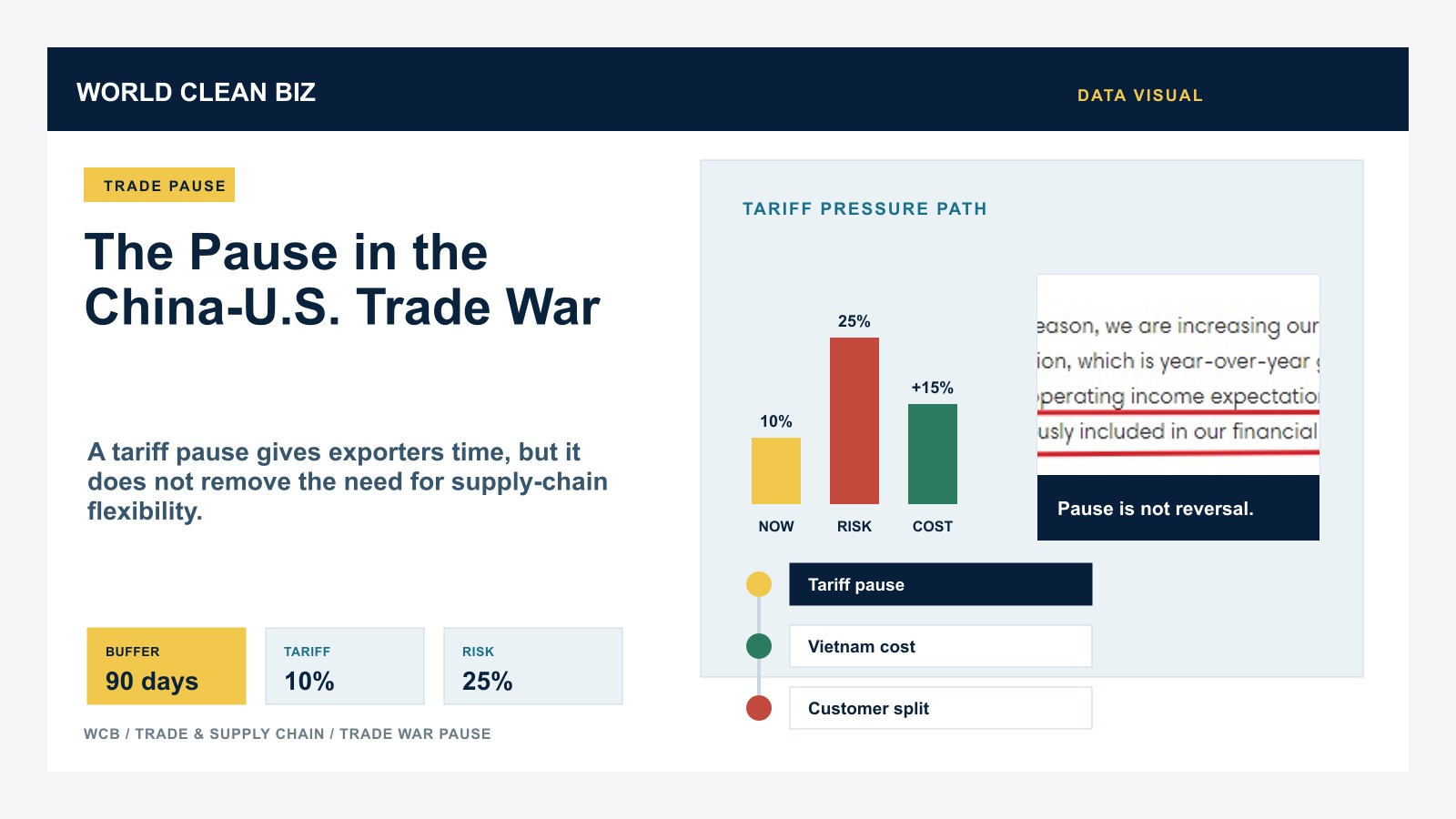
First of all, I make a very bold judgment: This time Trump takes office, the Sino-US trade war started by him may come to an end. In other words, the intensity of the previous trade war will be significantly reduced.
I have written many articles about the Sino-US trade war in the past few years. I have also explained in detail the impact of the trade war on cleaning appliances in previous articles.
Here I will briefly talk about the current situation.
After several years of hard work, basically all major cleaning appliance manufacturers related to North American customers have set up factories in Southeast Asia.
After repeated efforts, each brand prepared for the worst. Regardless of whether they wanted to or not, they took their suppliers to build factories in Southeast Asia.
Brand:
Shark: Shark’s internal strategy should be relatively obvious. The top management’s requirement is to transfer 100% to Southeast Asia within 2-3 years.
TTI: TTI saw a large industrial park in Vietnam a few years ago, and previously requested 100% transfer to Southeast Asia. By the time the actual operations have been carried out in the past few years, 50% of the business should still be in China, and there is no way to transfer it according to the original plan.
Bissell: Bissell has also asked several of their main suppliers to visit factories in Southeast Asia. At present, order production should be relatively smooth.
IRobot: Although IRobot's order decline is quite serious now, they have also found some companies to produce overseas.
OEM side:
Due to customer threats, there will be no orders if we don’t go to Southeast Asia to build factories. After several years of pulling and pulling, basically the OEMs of the above factories have built factories in Southeast Asia. Some have rented factories, some have bought land early, and some have built joint venture factories with local companies. In short, it is the Eight Immortals crossing the sea, each showing its magical powers.
Generally speaking, if we simply regard the construction of factories in Southeast Asia as an investment, most factories should lose money. There are a lot of initial expenses, additional equipment, etc. And the orders of overseas factories are transferred from domestic ones, and there is not much increase. Considering this aspect, they are losing money.
Parts supply chain end:
After several years of development, some core parts suppliers have also established factories overseas to support customers. In order to meet localization requirements, the industrial chain is also constantly improving.
So the current status quo is that in the past few years of development, the industrial chain of clean appliances in Southeast Asia has been continuously improved, and it should be said that it has initially met the order needs of North American customers. So can we think that Southeast Asia can replace China's clean appliance industry chain?
Currently, the clean appliance industry chain in Southeast Asia still has the following problems:
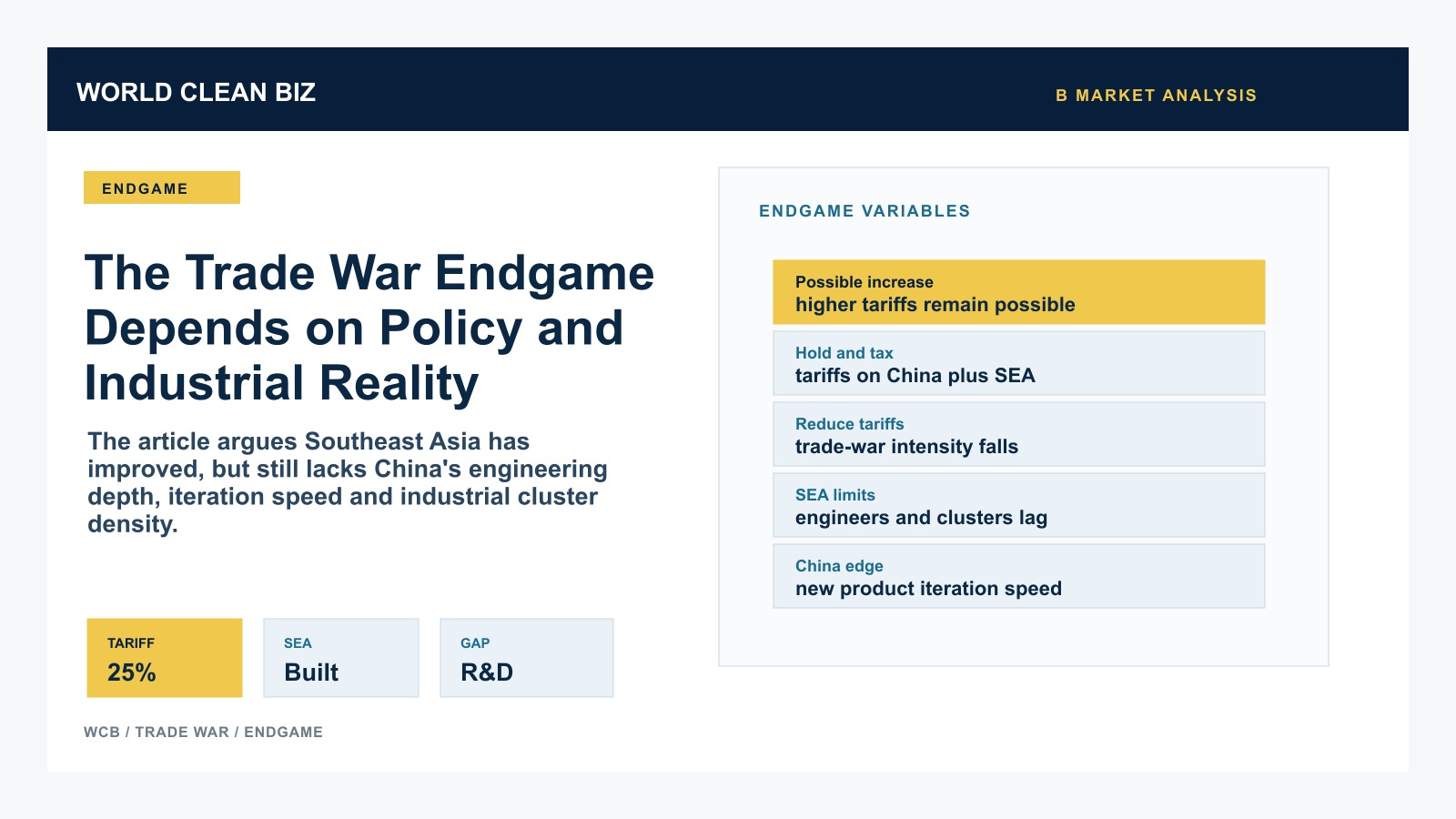
- At present, production efficiency has begun to be on par with domestic levels, and labor costs in some countries (Vietnam) are rising. At the same time, the number of engineers in these countries is relatively insufficient, and further research and development cannot be carried out in the short term. It will take at least 5-10 years to form an industrial chain research and development similar to the domestic scale, and manufacturing integration will take at least 5-10 years.
- A notable feature of previous transfers of textile and other industries is that overseas labor costs are very low and have a very large price advantage compared to domestic ones. However, in the early stage of this clean appliance industry chain transfer, the actual product cost is 8-10 points more expensive than domestic ones. Even so far, it is only the same. From the perspective of the entire industry chain, in the next few years, excluding tariff factors, Southeast Asia is unlikely to form a price advantage over China.
- The industrial chain is constantly iterating, and new products and new technologies are constantly emerging. With regard to the rapid updates and iterations of this part of the industrial chain, it is unlikely that suppliers in Southeast Asia can keep up in the short term. The machines currently shipped overseas are basically older, relatively simple and large-volume machines.
- The customers are too single. Currently, only a few major customers in the North American market require transfer, and other countries do not have similar requirements (and are unlikely to have them). This results in insufficient orders to Southeast Asia, and they are scattered in different countries (Indonesia, Vietnam, etc.). It is impossible to form an industrial cluster. Once these customers do not place enough orders, it is very likely that the local cleaning appliance industry will disappear directly.
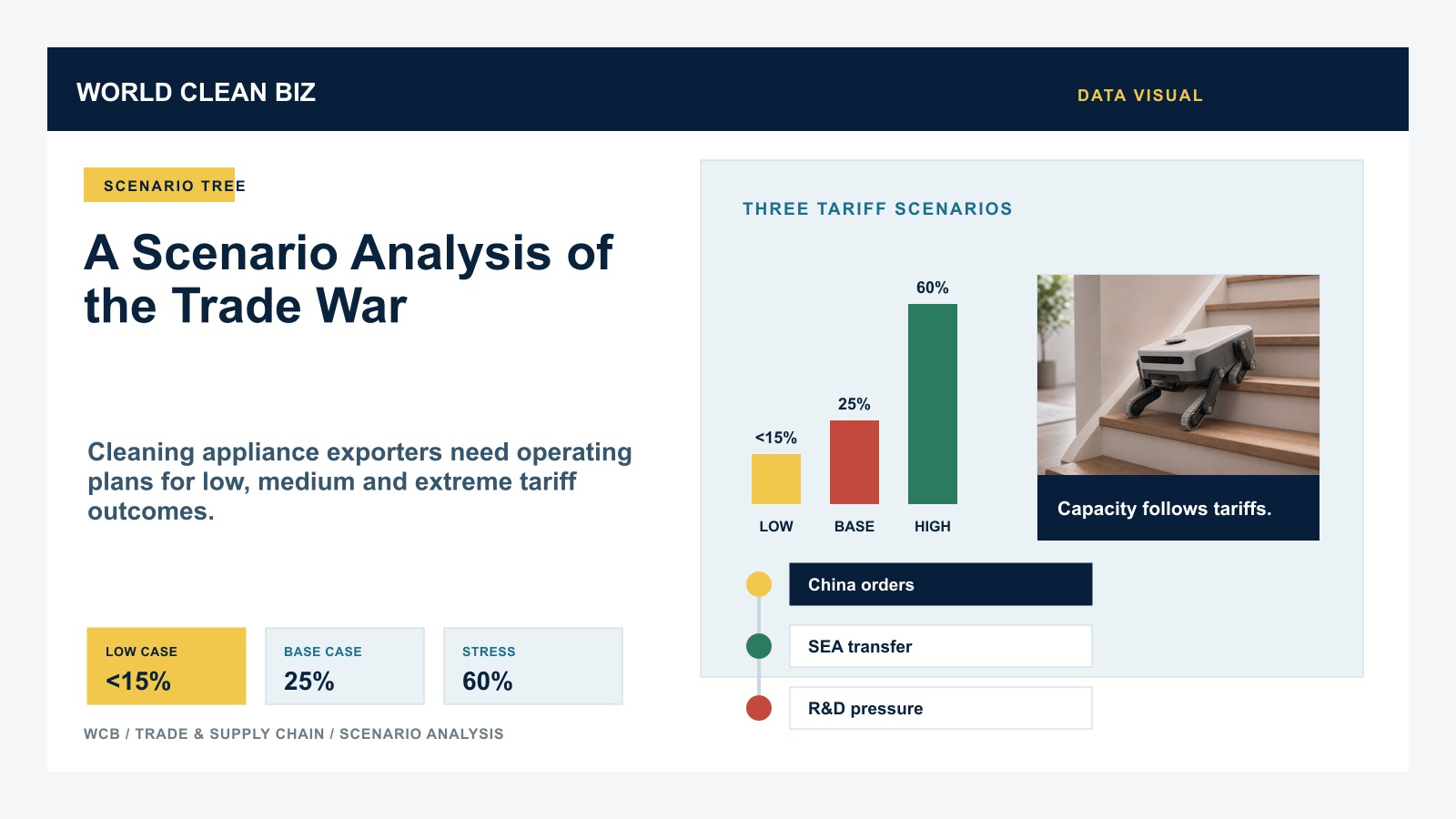
- Over-reliance on tariff policies. The current tariff on cleaning appliances is 25%, and there are rumors that it will need to be increased to 60% or even 100%. From the perspective of supply chain security, all brands must be prepared for this. However, judging from the development of the trade war in the past few years, the trade war has not had a serious impact on various industries in China. All the resulting increased costs have been added to ordinary people in the United States. If the tariff policy is no longer maintained or increased, the overseas industrial foundation will no longer exist.
So if Trump takes office, how will the subsequent plot develop?
Possibility 1: Tariffs will continue to increase to 60% or even higher. I personally think this possibility is very low. Adding higher tariffs will only lead to higher daily costs for the American people. Moreover, Trump’s previous policy is to hope that manufacturing will return to the United States, not to Southeast Asia or Mexico. So I think the possibility of further increasing tariffs should be very low.
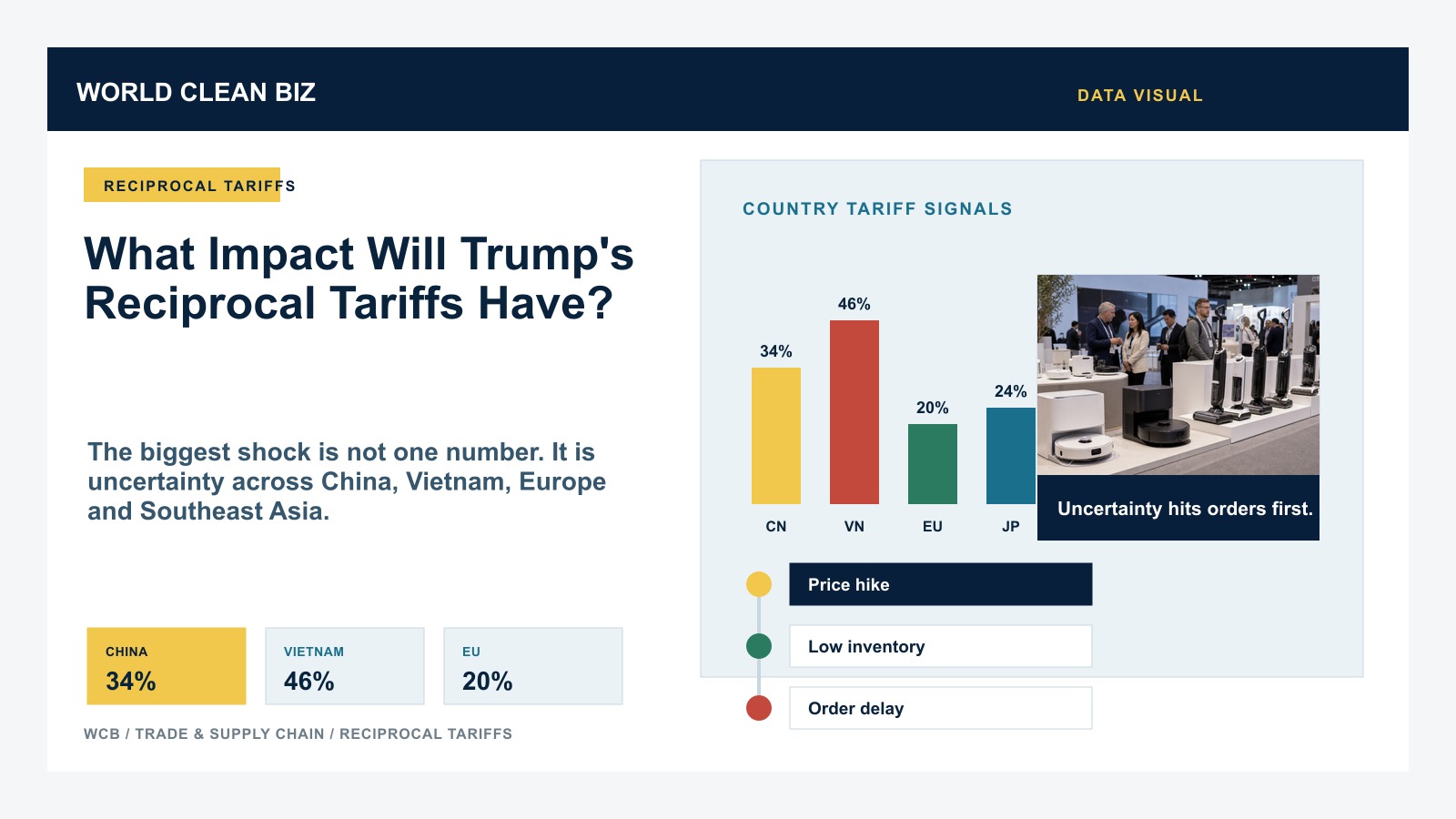
Possibility 2: Maintain the existing tariffs and levy tariffs in Vietnam, Mexico and other places. Maintain the existing tariff level (25%) for products exported from China while increasing tariffs in Vietnam, Mexico and other places. The current 25% tariff level has been reached by everyone There is a tacit understanding that all the increased policy costs have been absorbed in the early stage. As long as the 25% tariff level is maintained, the U.S.'s tariff revenue can be increased. At the same time, partially increasing the tariffs in Vietnam, Mexico and other places can also beat these little guys. This will allow these countries to further pay for the United States from their pockets.
Possibility 3: Reduce or even abolish additional tariffs. Originally, I thought this option was less likely. However, the international situation has changed too much recently, and I think this possibility is the highest.
The Russia-Ukraine war has been going on for four years, and the war between Israel and Palestine has been going on for almost a year. The United States is deeply involved in these wars. Moreover, these guys are not as obedient as before, and rebels keep popping up. If the United States has no way to solve the problems in these regions in the short term, it can be expected that the prestige of the United States will continue to decline. And these are more important things than imposing tariffs on China's vacuum cleaner industry.
Another variable is Elon Musk. Musk is undoubtedly the most famous entrepreneur and business leader in the United States and even the world. He founded Tesla, Starlink, and Space X and others are leaders in various industries who have changed the entire world. Musk was deeply involved in the election of Trump. If Trump can really win, Musk can be said to have contributed to his support, and his contribution can be compared to Lu Buwei, who supported the King of Qin. Musk has always preferred China's high efficiency. The Tesla factory in Shanghai, China, went into mass production in less than a year. It can be said that the Shanghai factory saved Musk.
From this perspective, Musk will have a very strong influence on Trump's China policy in the future, and he has always opposed increasing tariffs on China's automobile industry. So I personally feel that if Trump really comes to power, under Musk's influence, it is very likely that China and the United States will quickly reach a number of cooperation within half a year (China purchases Boeing aircraft, etc.), and Trump will declare victory in the trade war. Then he will end the trade war in the name of lowering the cost of living for the American people.
Will that have any impact on those of us in the industry?
For those of us in the industry, life has to go on no matter whether tariffs are increased or not. We can only take it one step at a time. If the innocence really collapses, these big guys will hold it up.