- "We are digging a hole. Xiaomi has released a new product, and the price is still so low. Do we still want to survive in this.
- >As a member of the hard-working manufacturing industry, I hear information related to Xiaomi every day.
- Everyone knows Xiaomi very well, but when I communicate with my friends in the industry, they still have some misunderstandings about what Xiaomi's ecological chain companies.
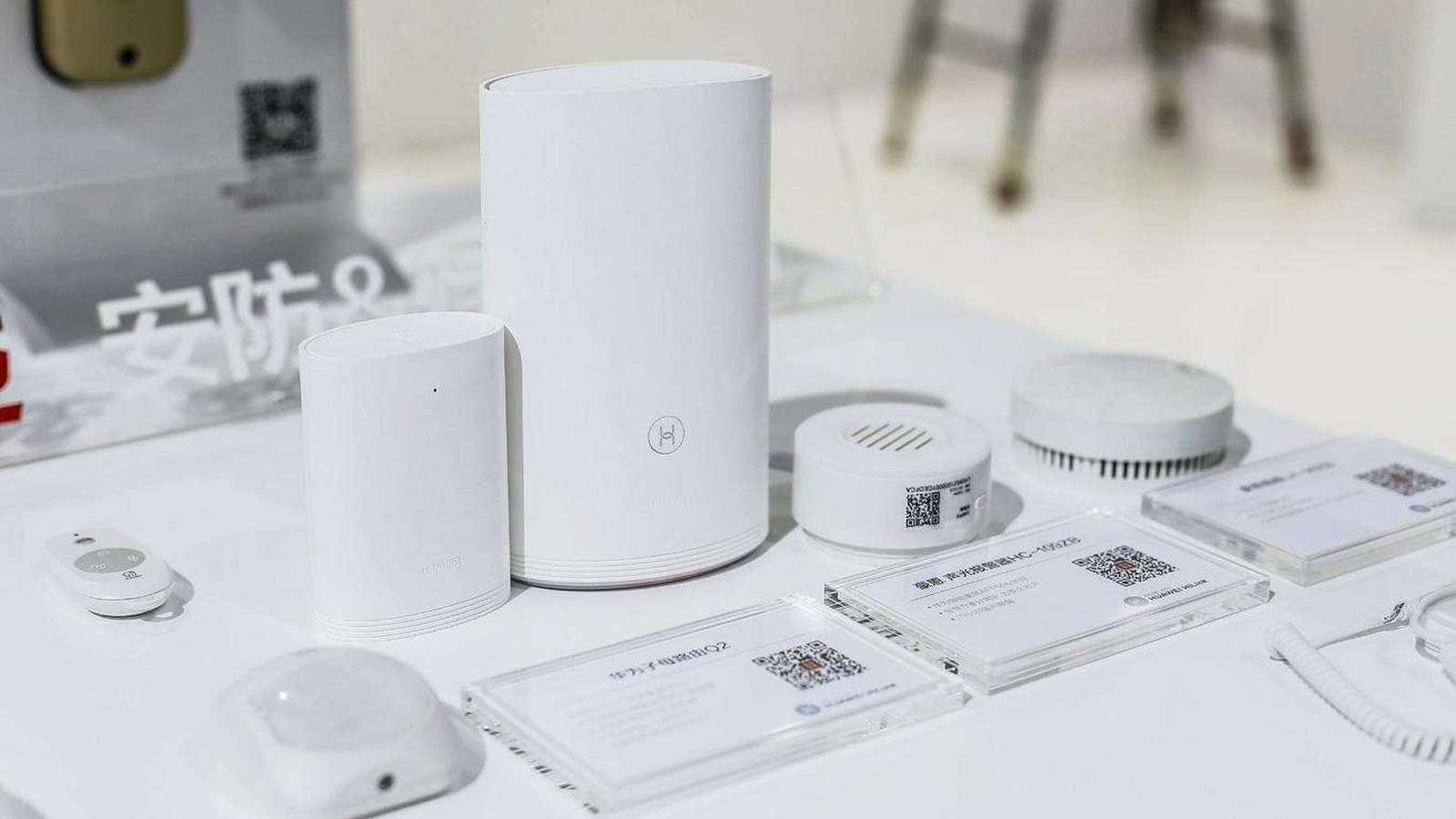
"We are digging a hole. Xiaomi has released a new product, and the price is still so low. Do we still want to survive in this industry?"
>As a member of the hard-working manufacturing industry, I hear information related to Xiaomi every day. Industries that have entered the Xiaomi ecological chain are closely following the news of the Xiaomi series. Companies that have not yet entered the Xiaomi ecological chain industry are on tenterhooks every day, worrying about when Xiaomi will enter and steal their jobs.
Everyone knows Xiaomi very well, but when I communicate with my friends in the industry, they still have some misunderstandings about what Xiaomi's ecological chain companies are, let alone ordinary consumers.
"Use investment methods to find the best teams, and use Xiaomi's platform and resources to help companies make the best products and quickly deploy the Internet."
To put it simply, Xiaomi invests in some capable talents in various industries, and then relies on Xiaomi's own size to support these invested companies in product ID design, quality control and sales. This allows these companies to accumulate very high potential energy in the early stages of product launch and become an instant success.
Most of the products in Xiaomi's ecological chain are sold on "Xiaomi Youpin", and the best ones will be sold on Xiaomi's official website under the "Mijia" brand.
At present, the performance of Xiaomi's ecological chain is quite outstanding. It can be said that it is overwhelming everywhere it goes, and traditional enterprises are all frightened by it. There are already many such articles on the Internet, so we will not elaborate on it here.
As an industry member who has been invaded by Xiaomi's ecological chain, how to "survive" under Xiaomi's iron heel is a topic I am more concerned about. It would be better if we could regain a little bit of ground.
Is this possible?
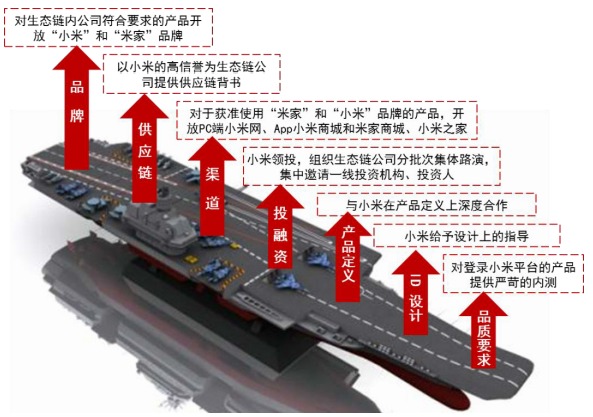
1.Quality requirements.
I have dealt with friends from Xiaomi many times and the requirements of Xiaomi ecological chain companies are also very strict, which can be said to be among the top requirements in the industry. This will increase the difficulty and cost of production. If the product can maintain a relatively large sales volume, the quality will become a bonus, which will create a positive cycle for the product's reputation and sales. .However, once the sales volume is insufficient, the strict requirements will make the product useless to the supplier, which will increase the OEM cost and reduce the supplier's cooperation. Luo Yonghao's Smartisan mobile phone was because of constant nitpicking in many details, which made Foxconn's support for it worse. In the end, repeated product delays led to the current situation.
In addition, previous successful companies in the Xiaomi ecological chain deliberately exaggerated their strict control of product quality during publicity. This also gave some companies some illusions that our products can be successful if they do perfect quality control. However, for a successful product, quality is only a basic requirement, as well as product ID design, functions, and publicity and promotion. Even among the quality requirements, some requirements are contradictory, and the essence of making a product is a process of constant choices and compromises.
The quality of Xiaomi products exceeds the market average, and it is difficult for most companies to surpass Xiaomi ecological chain companies in this area. In this regard, it can only be said to be as close as possible to Xiaomi companies. Xiaomi companies’ investment and control in product quality is unquestionable, but sometimes they may fall into a vicious cycle of excess quality. Assuming that the market evaluation is If the score is 70, the Xiaomi series may hope to reach 99. If it reaches 99, the cost will be huge for the enterprise and the harvest will be little. If the product quality standard is lowered to 85, the difference may be difficult for ordinary consumers to detect, but the production cost will be reduced a lot and the production cost will be greatly reduced.
2. Product ID design.
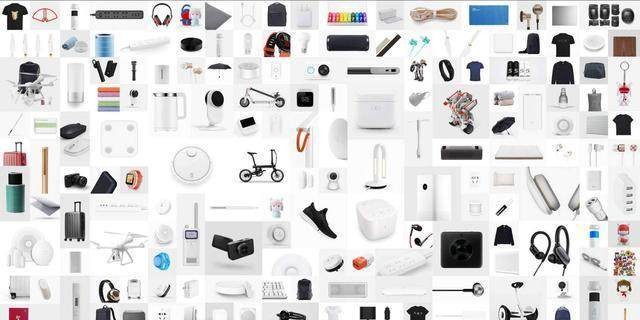
Xiaomi is very strict about the product design of the ecological chain and has a veto power. If the ecological chain companies did not have the help of Xiaomi, many ecological chain companies would not be able to design products of the current level.
Minimalist style is the symbol of Xiaomi's ecological chain (it can be seen as the benchmark MUJI), and it may also be a shortcoming. Minimalist style is just a category in each design style. The fixed design style determines the consumer group, and may also determine the upper limit of the market. The same question is, for a product, several products can all choose minimalist style as a series. Does that company regard minimalist style as the company's standard and direction?
Another question is: If there are 3-5 companies in Xiaomi's ecological chain producing the same product, and if they all have the same minimalist style, how should consumers make choices? Of course, for Xiaomi, no matter whose product you buy, Xiaomi has invested in it. But for the enterprises in the ecological chain, it may be a matter of life and death.
For traditional companies, they can release products with similar minimalist style to Xiaomi series, while keeping the price about the same. This will interfere with the product positioning in the minds of consumers and break Xiaomi's exclusive positioning of "minimalist style". At present, Xiaomi's ID design far exceeds the market, but once traditional companies get close to Xiaomi in design, Xiaomi companies will lose a big selling point.
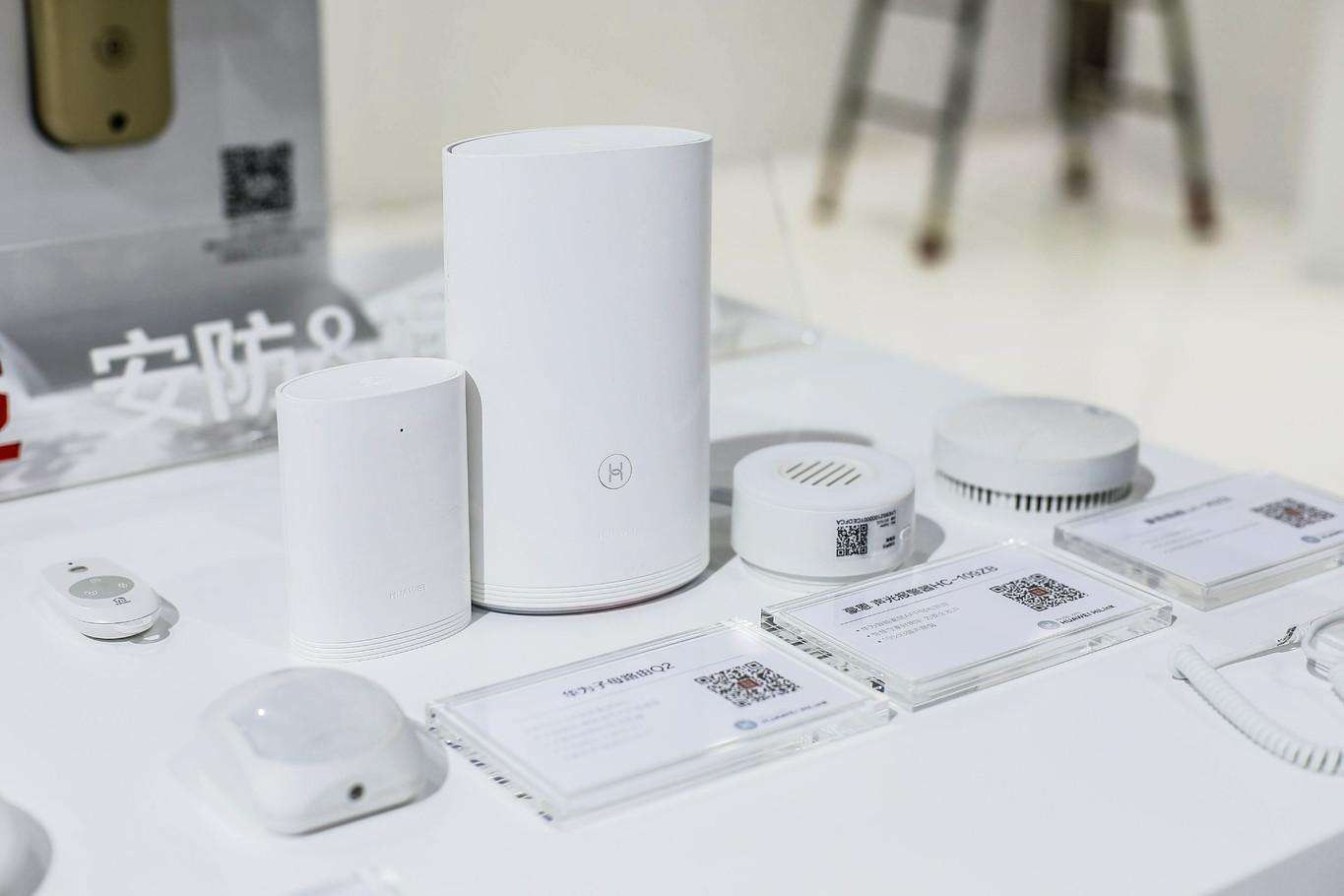
The picture below shows the products of Huawei Smart Selection. If the products of both parties are mixed together, I believe no one can easily distinguish the products of Xiaomi and Huawei's ecological chain.
3.Channel.
Xiaomi's sales channels are the core of these. The crowdfunding of Xiaomi Youpin/Xiaomi website can enable ecological chain companies to obtain huge pre-sale orders at the beginning of the product launch, and at the same time, subsequent websites can bring considerable sales to the products. It can be said that many Xiaomi ecological chain companies rely on Xiaomi's channels to survive.
A serious problem is that the number of mobile Internet users has stopped growing and has begun to enter the existing market. The number of ecological chain companies invested by Xiaomi is constantly increasing, which makes the ecological chain companies compete fiercely for channel resources. If they do not seize the core resources of Xiaomi's channels, it may be a matter of life and death for the ecological chain companies.
Due to the cost-effective positioning of the Xiaomi series, the gross profit margin of Xiaomi channels is very low, only about 15%. This means that if the company uses other channels at the current price, it will not be able to sell because there is not enough gross profit for the platform and distributors. Generally, the profit margin of private brands at the retail end is around 40-50%. If the profit margin is 15%, there will be no resources to invest in product research and development.
Due to its own gross profit and other reasons, Xiaomi cannot give the channel party a reasonable profit. In this way, the cooperation between the channel party and Xiaomi is a simple sale. It is basically a buying and selling relationship. The channel dealer/agent will not consider issues such as brand maintenance. Xiaomi's loss to Oppo and Vivo in mobile phones shows that it is not enough for its own voice to be loud, but also for its partners to be loud enough.
If the channel dealers are given reasonable profits, the channel partners can help spread the brand's voice higher and further. At the same time, the partners must be given corresponding ammunition, such as a product with a similar configuration and price as the Xiaomi series to attract traffic and compete. After the traffic is attracted, other styles of products can be recommended to win higher gross profits.
By establishing in-depth relationships with partners, we can achieve the goal of jointly defending against enemies.
4.Supply chain.
Xiaomi's supply chain is out of reach for traditional manufacturing companies. Large companies in many industries cannot even directly cooperate with Xiaomi's supply chain. The reason is also very simple. Xiaomi itself is a company with sales of more than 100 billion, while many leading companies in the traditional manufacturing industry have annual sales of only a few billion, and there is a serious imbalance in size.
Ecological chain companies rely on Xiaomi's supply chain to obtain high-quality products and prices, thereby creating better products. At the same time, ecological chain companies can obtain the best price/technical support from foundries and downstream supply chain companies. This is very rare for start-up companies.
But what is the relationship between supply chain companies, ecological chain companies and Xiaomi?
Supply chain enterprises--->Ecological chain enterprises--->Xiaomi Company.
Xiaomi provides ID design and sales channels, while supply chain companies are responsible for product realization and subsequent engineering realization, mass production and after-sales. The main role played by ecological chain companies is early product definition and project management (Xiaomi also participates in most of them). So why doesn't Xiaomi directly cooperate with supply chain companies (foundries), which can reduce costs by another 8-10% and push the ultimate cost-effectiveness one step closer?
Huawei Smart Selection is currently following this model, cooperating directly with leading companies in the industry.

Of course, Xiaomi may not necessarily cooperate directly with the supply chain, but if it really starts to take this step, where should the ecological chain companies go?
>The following are quoted from financial reports:
>Three years ago, Liu De invested in a startup company, thinking that it would be easier to manage and more flexible from scratch. Now he doesn't think so and has begun to focus on the hidden champions in the industry. "Regardless of cost control or industry control, these companies are more mature and have no brand baggage." They don't even need management.
5.Brand
At present, companies in the Xiaomi ecological chain generally start selling under their own brands on Youpin. If the products do well, they will be selected by Xiaomi and labeled with the Mijia brand. Once the products are labeled with the Mijia brand, the sales volume of the products can be 10 times greater than before. The current model of most ecological chain companies is to strive for the Mijia brand, increase sales, increase sales to a certain level, and then start to promote another brand and sell through other channels to gain profits.
Similar to the "Mijia" brand and its own "Roborock" brand robot vacuum, Wanmo and Xiaomi's headphones are the same.
One shortcoming of this model is how to achieve a balance between product positioning and price between its own brand and the Mijia brand. For example, Wanmo's own brand headphones are sold on Xiaomi.com, but the same product is only one-third more expensive because of a different brand. There are comments from outsiders that Wanmo is trying to take advantage of the hot spots.
If its own brand products surpass or catch up with Xiaomi's similar products in other channels, it will be equivalent to creating a new competitor for Xiaomi, which may not be the result Xiaomi wants.
Once the Xiaomi ecological chain's own brand sales achieve good results (higher gross profit, stronger performance), there is no guarantee that a new brand will not appear in the Xiaomi ecological chain enterprises to seize the market with the original low gross profit method.
To give a simple example, Roborock's first-generation vacuum cleaner "Mijia" robot vacuum is sold for 1699, with a gross profit margin of about 16%. Roborock's own "Roborock" brand sweeping and mopping all-in-one robot is sold on other platforms for 2799, with a gross profit margin of about 45%. In this case, will there be another low-margin sweeping and mopping all-in-one robot that competes with Roborock within the Xiaomi ecological chain?
6.Track.
As we all know, the track standard chosen by Xiaomi Ecological Chain is the Ant Market. There are no big brands or original leaders in the industry whose products are very expensive. In this way, Xiaomi Ecological Chain companies can enter the market with the ultimate cost-effectiveness by adopting the same configuration as the big brands.
Therefore, there are several prerequisites for Xiaomi ecological chain companies to enter the market and sell well:
- The market is relatively chaotic, and there is no leading well-known brand. Xiaomi enters as an endorsed ecological chain enterprise and can easily seize the market. For example, ZMI, which makes power banks.
- The leading brands in the market have high prices. For example, when Roborock entered the robot vacuum market, the market prices of big brands such as IRobot Ecovacs were 3-4000. Roborock entered the market at a price of 1699 and instantly detonated the market.
However, if the market is occupied by traditional brands and there is no room for large premiums, it will be difficult for Xiaomi ecological chain companies to detonate the market. Once the explosive product strategy fails, follow-up efforts will be very limited. This may be why Xiaomi-based star companies have appeared in the past few years, but in the past two years, few ecological chain companies have made very dazzling achievements.
7. Pricing.
In a mature market, such an opportunity is uncommon. Even if it occurs, there may only be a window of a few months. Requiring exceptions as the norm will lead to unrealistic increases in consumer expectations.
Similarly, users who pay attention to cost-effectiveness have no loyalty to the brand. Back then, because of the pursuit of profits, 360's Xiaoyi camera took away a large amount of the market with lower prices, forcing Liu De to invest in three more camera companies to equalize the market share.
8.Publicity and Promotion
Xiaomi ecological chain companies generally do very little market promotion (profit margin issue), and often rely on Xiaomi's own channels. The reduction in publicity and promotion has led to a reduction in self-brand awareness outside the Xiaomi system, thus further reducing sales outside the system.
Enterprises can promote their products through other social media channels, such as Xiaohongshu, Douyin, etc., to seize the public opinion position. On the one hand, this kind of promotion is conducive to the establishment of the brand, and at the same time, it can bring sales to channel partners and bind them more deeply with partners.
Dyson, the giant in the vacuum cleaner industry, invests hundreds of millions in promotion expenses in the Chinese market every year, and the result is that Dyson ranks first in sales in the vacuum cleaner industry. The cost-effectiveness of the Xiaomi series has not affected Dyson.
9.After-sales service.
After-sales service is also a problem for Xiaomi ecological chain companies. You can see on the Internet that many consumers complain about problems and seek after-sales service. Many times, robots reply. The feeling given to consumers is that they are very cold. The reason may be that there is not enough energy to spend on after-sales.
10.Product research and development.
The technology research and development capabilities of most Xiaomi ecological chain companies still need to rely on foundries and supply chains, making it difficult to carry out forward-looking product development. Therefore, we see that the core of most Xiaomi ecological chain products lies in ID design (minimalist style), quality control and more expensive materials. To put it simply, they still focus on cost-effectiveness.
In the past, the price-performance ratio was 1 yuan to buy something that cost 2 yuan. Xiaomi's price-performance ratio was 10 yuan to buy something that cost 20 yuan. The price-performance ratio is based on different customers.
This approach is very effective, but the problem is that the moat for this is too low. If all core technologies come from partners, there is no way to prevent external and internal Xiaomi competitors from using the same technology to achieve the same functions.
It took me a long time to write. Among the more than 100 companies invested by Xiaomi Ecological Chain, there are star companies such as Viomi, Smartmi, and Roborock, as well as a large number of poorly managed companies (we can’t even remember their names). Each of these companies has its own characteristics, and the term "Xiaomi Ecological Chain Enterprise" cannot simply be used to represent all companies.
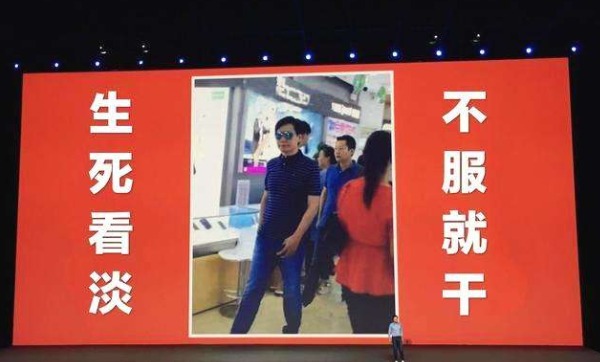
Finally, I ended with Mr. Lei’s famous saying, “Be indifferent to life and death, and if you don’t accept it, do it.”