- A swimming pool for a middle-class American family did not require much technological imagination in the past.
- Pool workers come regularly, professional stores sell equipment, and cleaning robots with cables slowly crawl along the bottom of the pool.
- Wireless makes swimming pool robots closer to consumer electronics.
A swimming pool for a middle-class American family did not require much technological imagination in the past.
Pool workers come regularly, professional stores sell equipment, and cleaning robots with cables slowly crawl along the bottom of the pool. The industry is big and quiet. It does not constantly produce new product launches like mobile phones, robot vacuums or electric vehicles, and it rarely appears in the financing stories of Chinese startups.
Now, this slow business is broken.
Wireless makes swimming pool robots closer to consumer electronics. Users can place orders on Amazon, see products at Costco, Walmart, and Home Depot, and may also be inspired by a short video. The capabilities that Chinese companies are familiar with—rapid iteration, supply chain compression, online sales, and price range coverage—suddenly have an impact on this old industry.
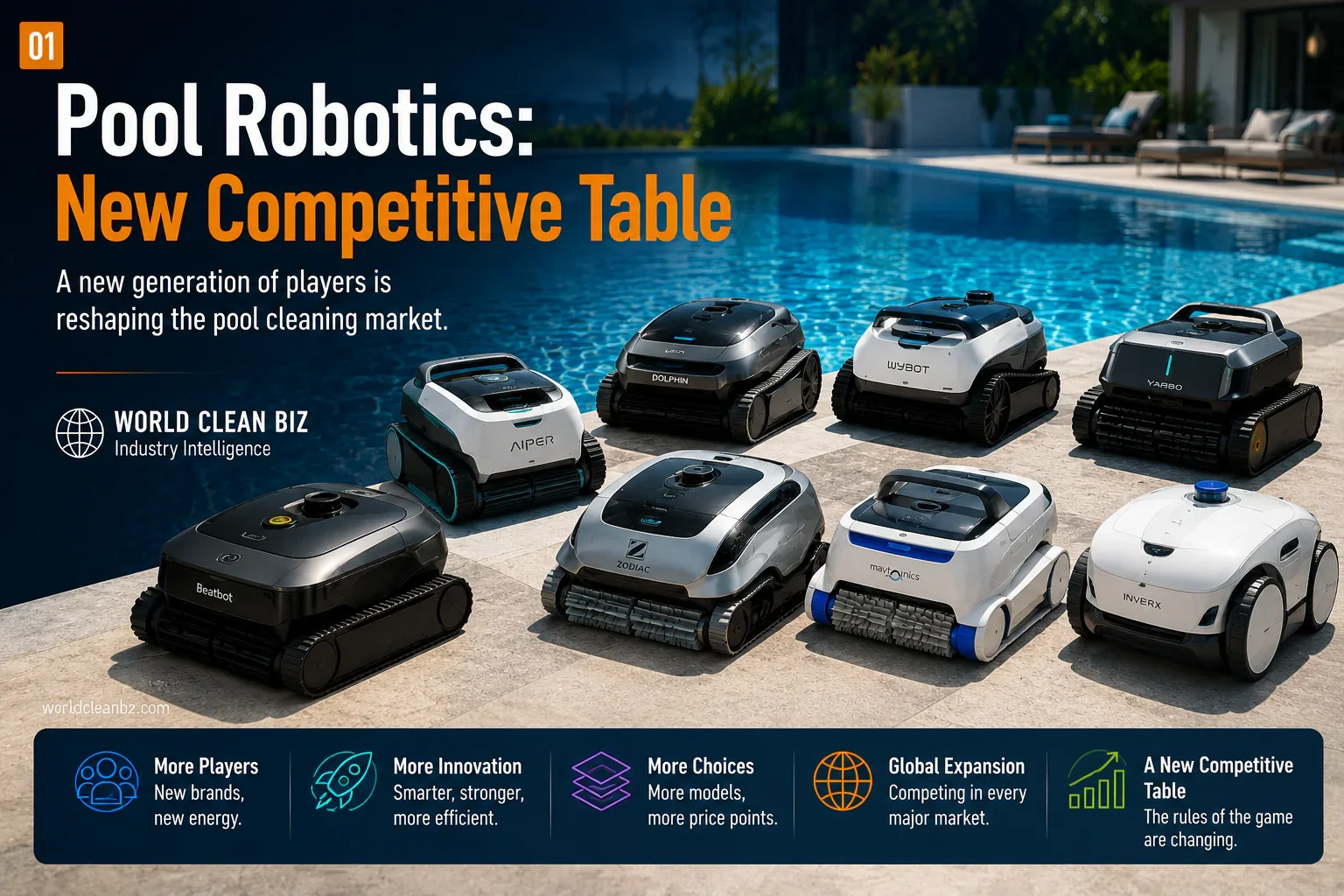
As a result, an originally quiet card table became crowded. The old king wants to hold on to the channel, the new brand wants to steal users, manufacturers want to come to the forefront, and robot vacuum and lawn mower robot companies are also eyeing the backyard. Swimming pool robots began to move from a professional equipment industry to a melee about products, channels, capital and services.
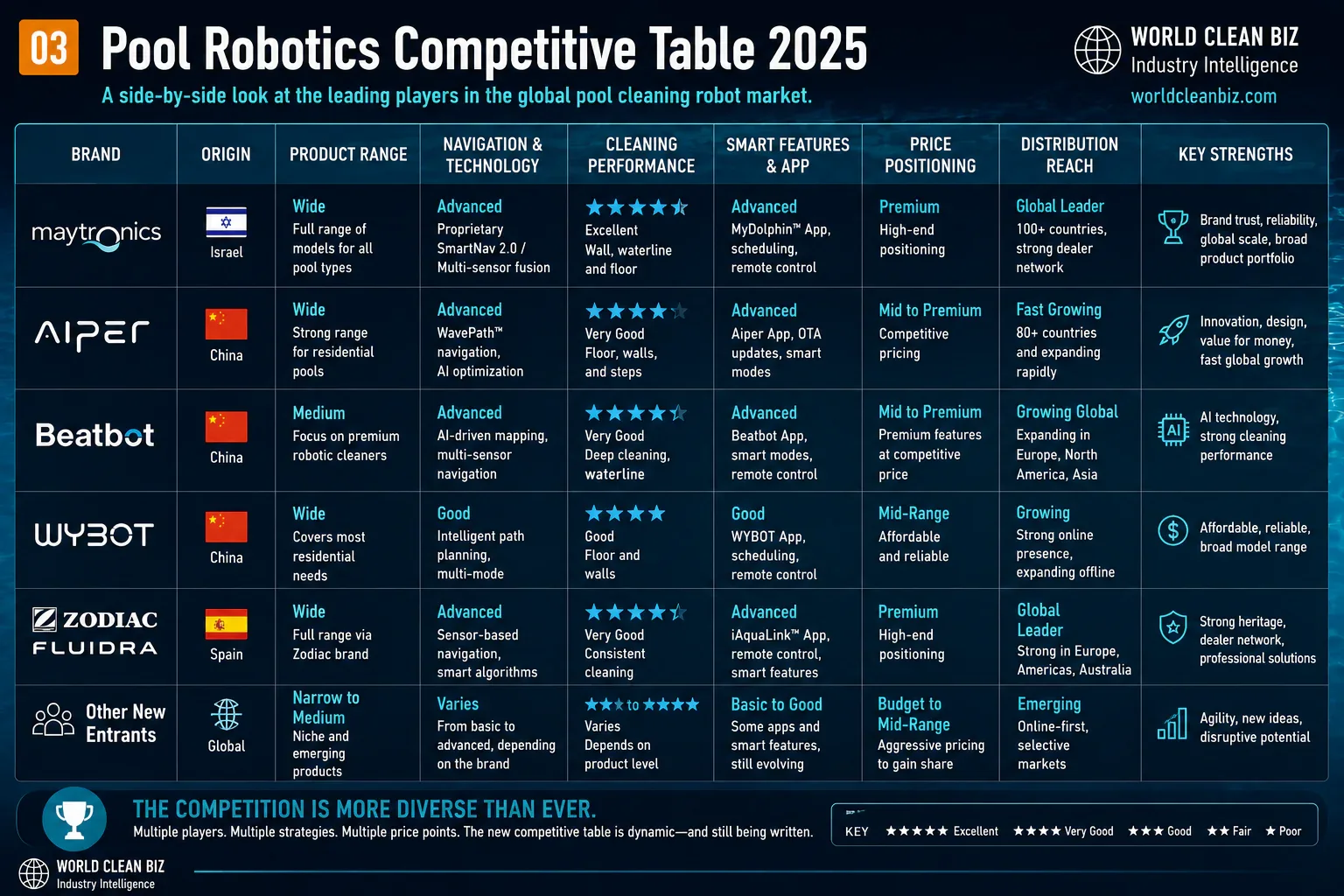
The complexity of this change is that the companies at the poker table do not come from the same system. Traditional swimming pool equipment companies focus on channels and service networks, new Chinese brands bring consumer electronics play, and cleaning robot and outdoor robot companies regard swimming pools as part of the backyard robot ecosystem. They are both making swimming pool robots, but they are betting on different futures.
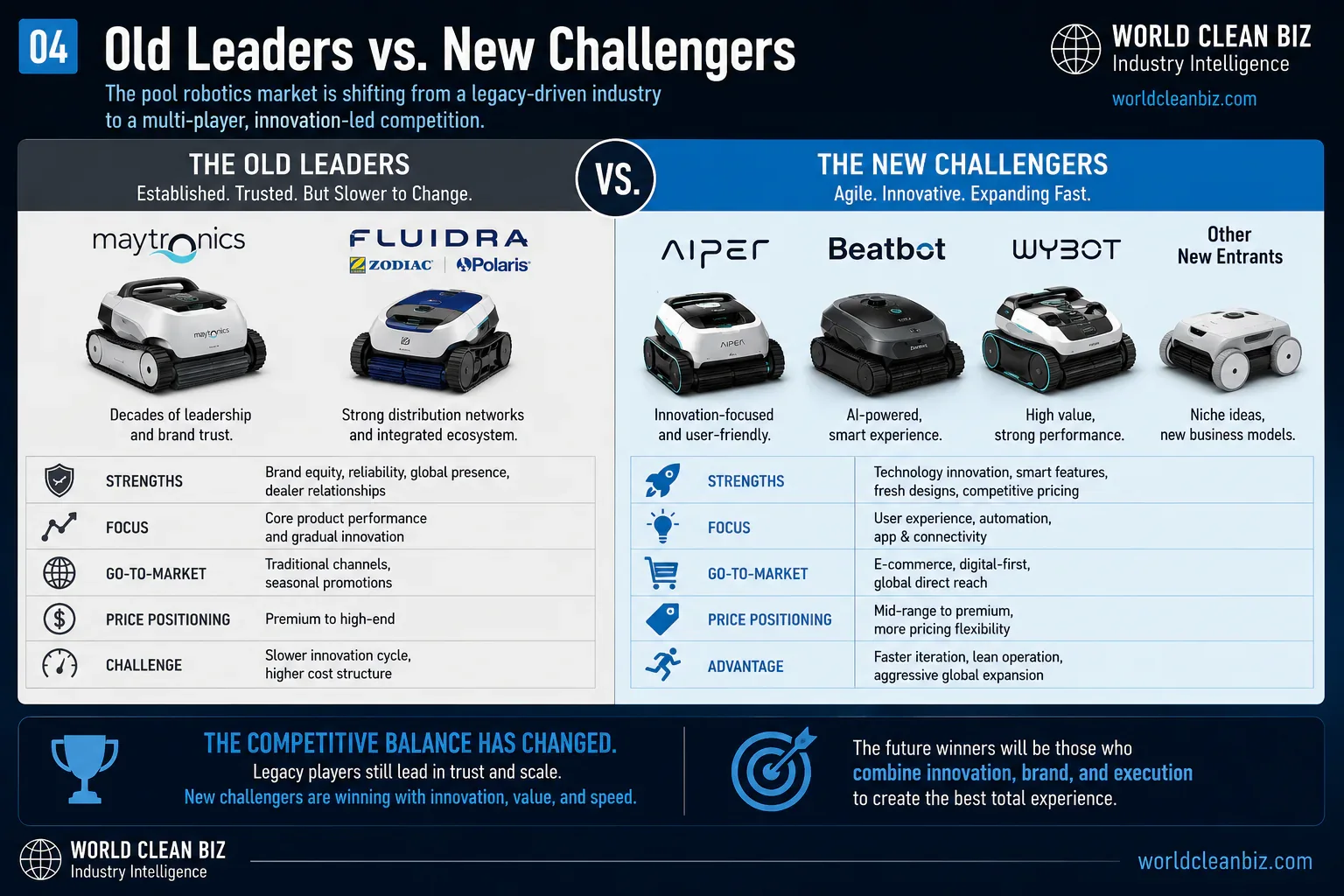
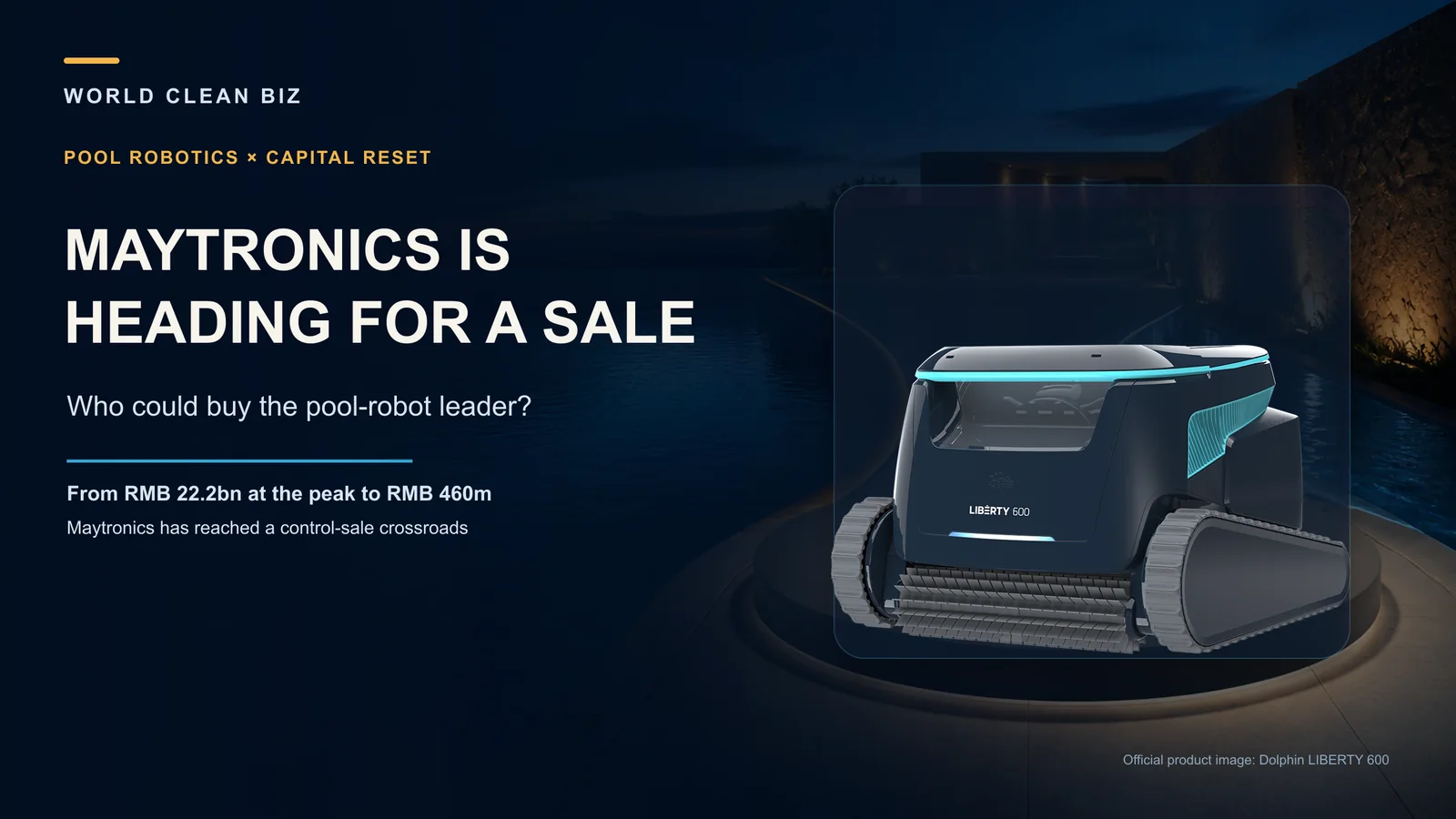
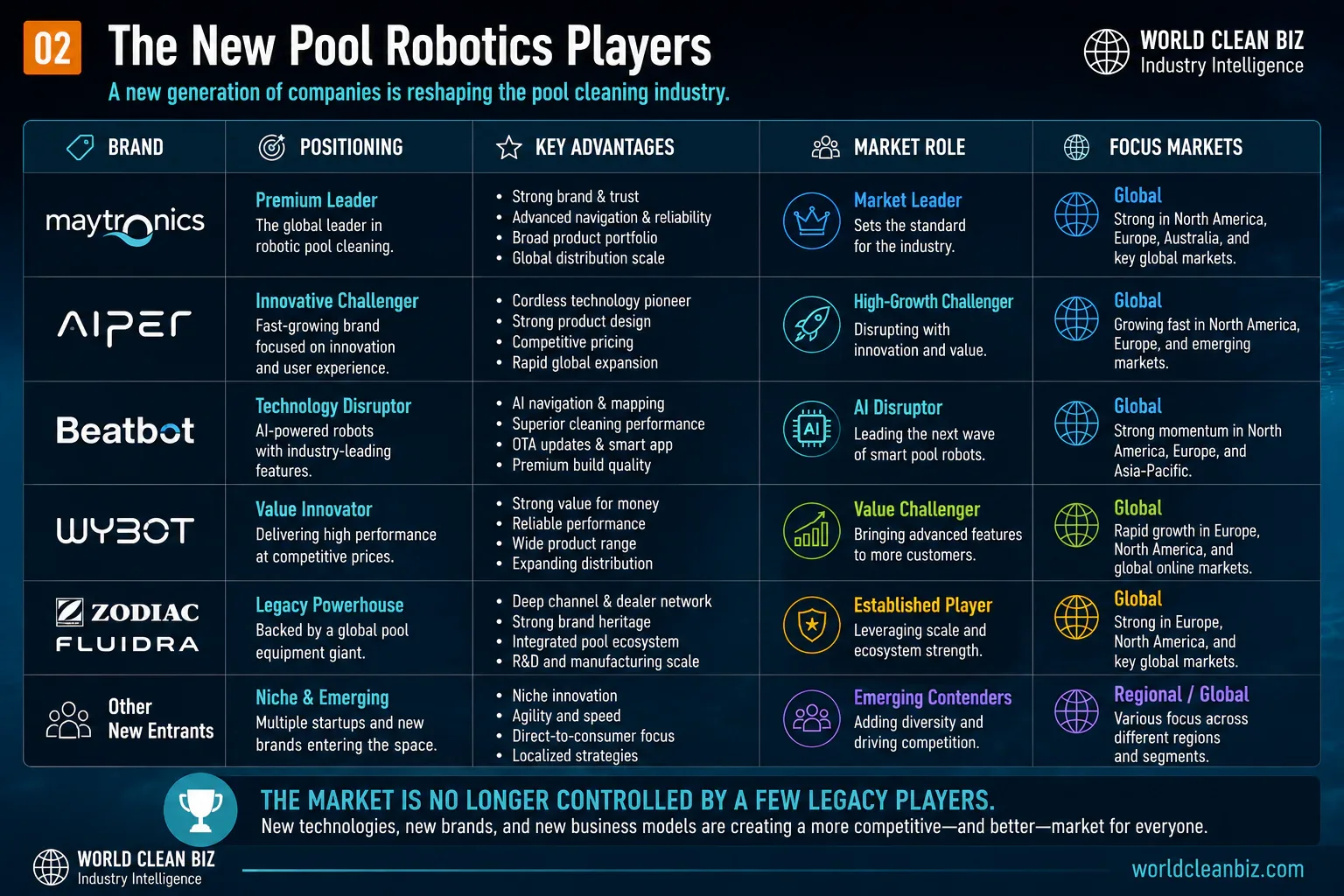
Maytronics/Dolphin are the old kings. In the pool robot industry, Dolphin has long been an unavoidable name. Dolphin is the first time many users are introduced to swimming pool robots. Maytronics also relies on this brand to establish a deep foundation in professional channels and service networks. But the old king's life was not as comfortable as in the past. In 2025, Maytronics' revenue will be approximately 3.40 billion yuan (1.406 billion Israeli new shekels). What is even more glaring is that the gross profit margin of private swimming pool robots will drop from 36.5% in 2024 to 23.9% in 2025. Behind these numbers is the increasing number of competitors. Aiper, Beatbot and WYBOT have made head-on attacks from different directions and taken away part of the market share: Aiper is using wireless and retail channels to enter, Beatbot is pursuing high-end intelligence, and WYBOT is relying on manufacturing and cost capabilities to move forward. At the same time, robot companies such as Dreame, Roborock, Nine, Mammotion, etc. have also released or developed similar products, and their funding, product and supply chain capabilities are not weak. The pressure faced by Maytronics has changed from a single new brand challenge to the simultaneous entry of multiple types of players. It now has new management with backgrounds in supply chain, finance and global operations, and is beginning to emphasize inventory, cash flow and a return to core business. The old king is still there, but it has to reprove its defensive capabilities against a more crowded table.
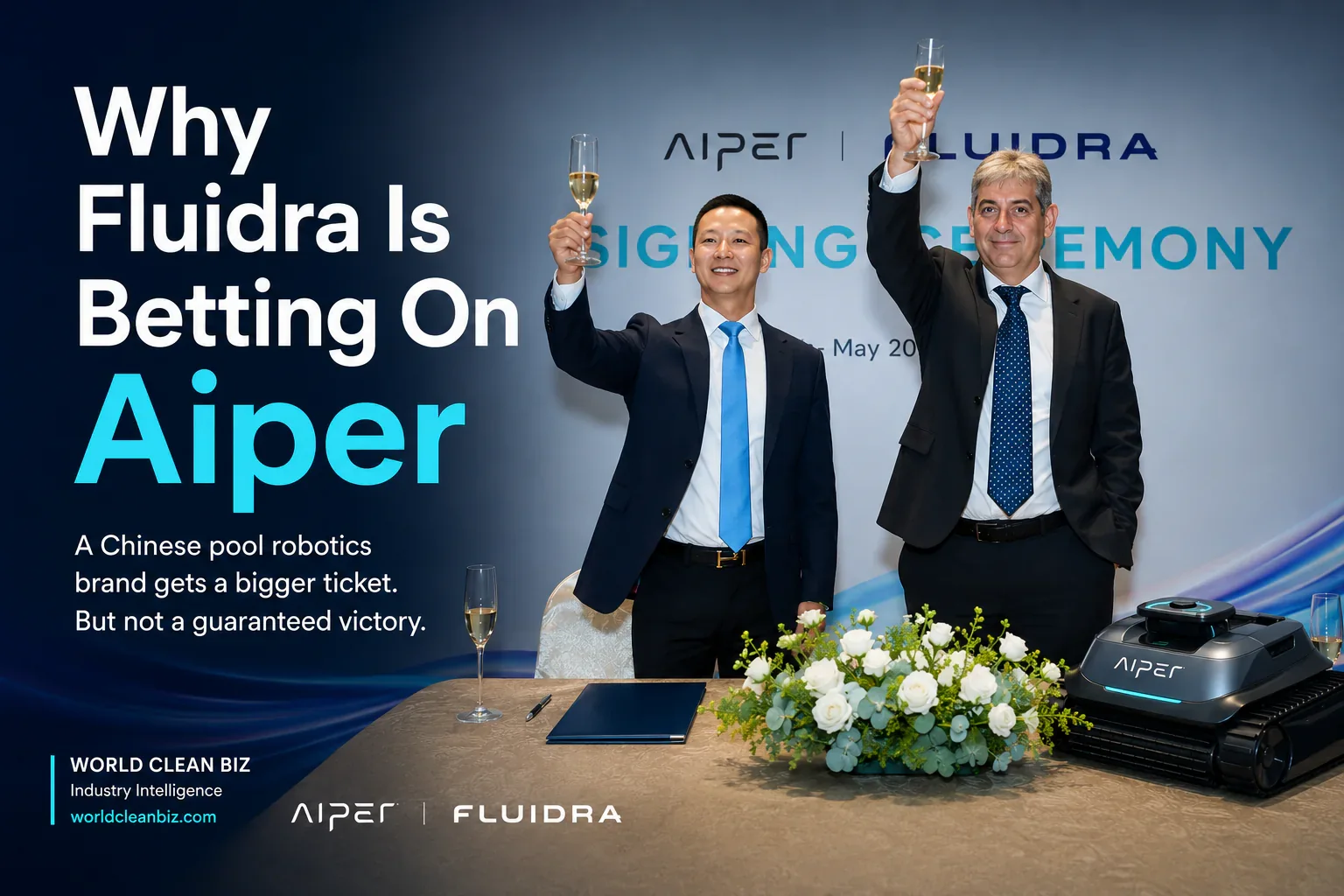
Fluidra is a channel empire. Users may not remember the name Fluidra, but they have probably used the pumps, filters, heaters, disinfection equipment, pool covers, cleaning accessories and commercial pool solutions in its system. In 2025, Fluidra's sales were approximately 17.21 billion yuan (2.184 billion euros). What makes it truly valuable is the long-term relationships it has with dealers, pool service providers, and existing pool users. The long-term business of a swimming pool is in the ongoing maintenance, repairs and renovations. Fluidra invested approximately 680 million yuan (US$100 million) in 2025 to buy a 27% stake in Aiper. This move is very similar to a traditional channel empire giving itself a new engine: it has channels, and Aiper has wireless robots and consumer brand speed.
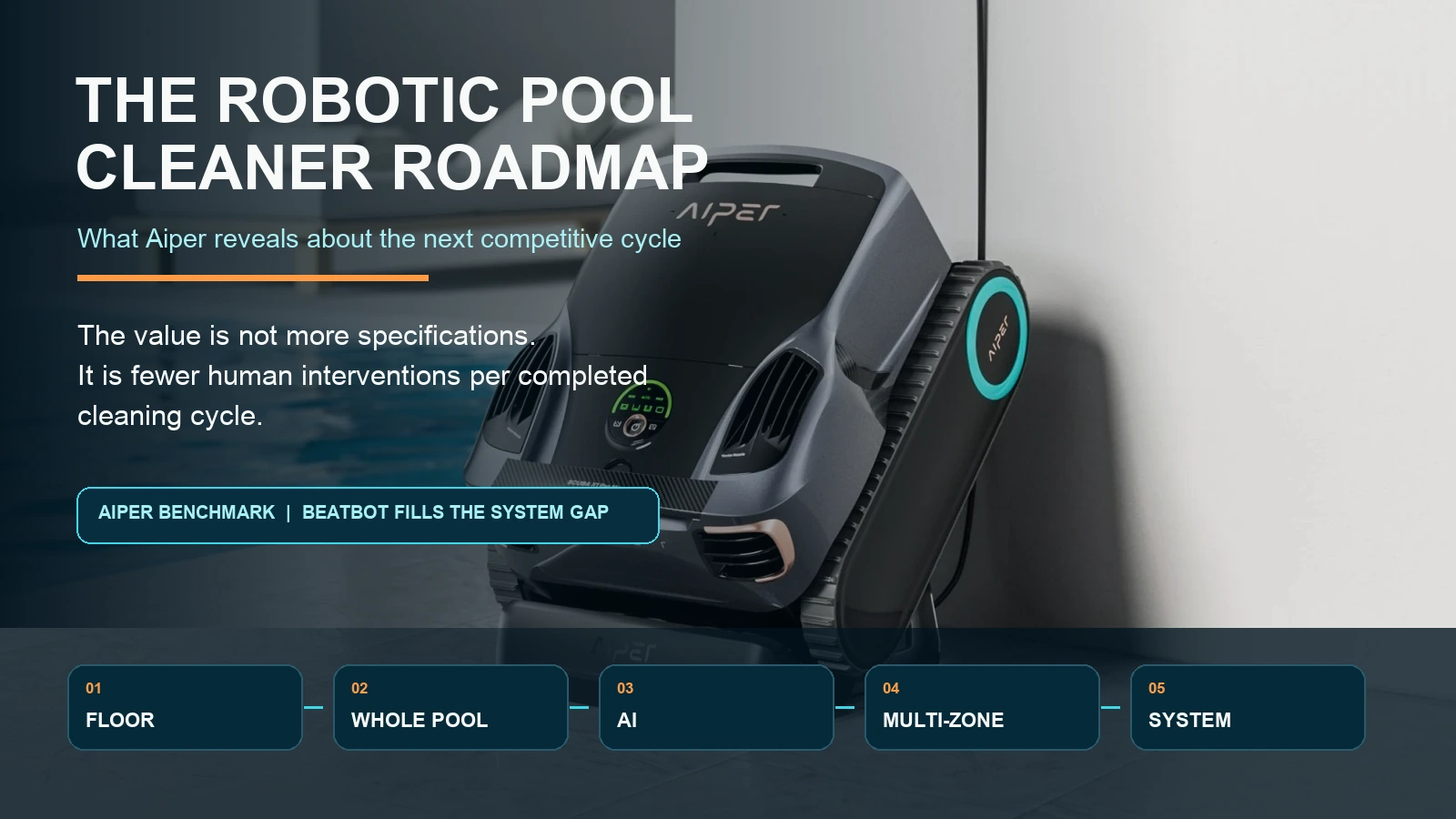
Aiper / Aiper Intelligent is the wireless challenger. Dolphin represents the old order, and Aiper brings new ways of playing: wireless, one-click start, online sales, large retail channels, and rapid iteration. Fluidra disclosed that Aiper's sales in 2024 will be approximately 1.33 billion yuan (US$195 million), a year-on-year increase of 75%; Aiper's official website states that it has entered more than 57 countries and regions and more than 10,000 retail stores. Its products have also expanded from pool bottom cleaning to pool wall, waterline and surface cleaning. Judging from the number of shipments and market volume, Aiper is already ahead of most new entrants and is also regarded as the strongest challenger to Maytronics. Founder Wang Yang’s thinking is very focused: find a scenario that is sufficiently segmented and has the opportunity to be the best in the world, and then allocate resources to it. In public interviews, he called European and American swimming pool stores "nodes of trust." This statement is worth taking seriously, because the swimming pool robot still has to enter the service and trust network in the end. Aiper now has first-mover advantages, financial support, and a foundation of online and offline channels. The next year is a critical window period for it to consolidate its leading position. While many new entrants are still busy with lawn mowing robots, robot vacuums or other fields, Aiper needs to turn its shipment leadership into brand recognition, channel trust and industry leadership as soon as possible. Here is its challenge: after sales start, battery, waterproofing, safety and after-sales will all be amplified. The CPSC has issued Aiper-related product recalls in 2023 and 2025, which will test the brand's credibility over the long term.
Beatbot is a high-end startup. Beatbot Innovation initially chose the high-end market and did not start with low prices and volume. According to industry information previously compiled by Denny, Beatbot’s first-year sales were approximately 500 million yuan, and it has made a name for itself in the high-end swimming pool robot market. It tells a different story: a stronger water pump, more complex motion control, and more intelligent mapping navigation, packaging the swimming pool robot into a high-end technology product. Founder Wang Shengle is the former co-founder of Dreame. Many people in the industry call him "Da Le". He is young, direct, and dares to make bets. He has also experienced a lot of pressure: Beatbot's early products were priced high and could not be sold for a time. It also had an inventory of hundreds of millions of yuan, and later relied on independent websites to get through. Capital is also on his side. Beatbot will complete approximately 1 billion yuan in financing in 2025, and plans to invest approximately 500 million yuan in lawn mowing robots in the next two years. Beatbot’s biggest advantage now is that it has established a firm foothold in the high-end swimming pool robot market and has received sufficient financial support. The current influx of giants has not really regarded swimming pool robots as the main battlefield, and Beatbot still has a window period of about one year. It needs to take advantage of this time to turn high-end sound volume into more stable channels, product reputation and scale. When the market share of lawn mower robots becomes clear next year, more robot companies will reallocate resources, and swimming pool robots will face greater pressure. For Beatbot, the high-end market has opened up, and the next step is to prove that it can turn a stage lead into a long-term position.
WYBOT is manufacturers coming to the forefront. Wangyuan Technology does not have a strong consumer brand voice like Aiper and Beatbot. It is more like a hard role in the pool robot supply chain. From 2023 to 2025, Wangyuan's revenue will increase from 378 million yuan to 812 million yuan, and its profit will increase from 60.85 million yuan to 100 million yuan; its products have entered 60 countries and regions around the world. According to China Insights Consultancy, Wangyuan is the top three swimming pool cleaning robot supplier in the world and the first in China based on self-made product shipments and GMV in 2024. Its focus is on manufacturing, engineering, cost and shipping capabilities. The control of the company has the flavor of a family business, with Fu Guilan serving as chairman and general manager, and Yu Qian serving as vice chairman and technical director. In April 2026, Wangyuan once again submitted a listing application to the Hong Kong Stock Exchange. For this company, going public is just a stage. The bigger test is to transform from a manufacturer into a global brand.
Aiper, Beatbot, and WYBOT represent the three earliest paths taken by Chinese challengers: brand volume, high-end financing, and manufacturing to brand. They are all challenging the old order, and the lessons they have to make up are different. Aiper needs to build trust in professional channels, Beatbot needs to verify high-end scale, and WYBOT needs to move from supply chain capabilities to brand capabilities.
The bigger variables come from cleaning robot and outdoor robot companies. They enter the market with capital, algorithms, supply chain and category expansion experience, but swimming pool robots may not necessarily replicate the logic of robot vacuums or lawn mowing robots.
Dreame is an offensive giant. Dreame's size has entered the discussion range of 30 billion yuan, and its robot vacuum, hard floor washer, vacuum cleaners, hair dryers and overseas businesses are all expanding. It's no surprise that it makes its way into pool robots. At CES 2026, Dreame released the Zircon2 series of swimming pool robots, which emphasize intelligent sensing, autonomous recharging, side cleaning and full pool cleaning. What really makes Dreame's peers nervous is its consistent offensive method: financing, marketing, supply chain, product definition and multi-category promotion at the same time. It has completed approximately 3.6 billion yuan in financing, with a valuation of approximately 17 billion yuan; Dreame’s CVC has also completed the first phase of Shaoxing’s tens of billions industrial fund. Founder Yu Hao has a radical style. Dreame has expanded its boundaries from cleaning appliances to mobile phones, cars, major appliances and other directions. Swimming pool robots have not yet become Dreame’s main battlefield. Once it decides to continue investing, the competitive intensity of this category will be increased.
Ecovacs is a test sample of an established service robot company. Ecovacs's total revenue in 2024 will be 16.542 billion yuan, and it is one of the earliest companies in China's service robot industry. It has funds, brand, channels and after-sales system, so it is not surprising to pay attention to swimming pool robots. In 2024, Ecovacs invested 25 million yuan in Zhicheng Power to deploy swimming pool cleaning robots; subsequently Zhicheng Technology/Zhicheng Power announced its bankruptcy. This case illustrates one thing more neutrally: for a complex category such as swimming pool robots, it is difficult to complete the position just by investing in external teams. If a company really wants to compete on this track for a long time, it will eventually have to do the hard work of product definition, waterproof structure, battery safety, supply chain, overseas channels, and after-sales maintenance. Qian Dongqi, the founder of Ecovacs, has worked his way from vacuum cleaner trading and OEM to service robots. In recent years, Qian Cheng has taken on a more important role in the home robot business. Ecovacs has organizational resources and long-term experience in making robots. What is really worth watching behind it is whether the swimming pool robot will be transformed from an external layout into a project with continuous investment internally.
Roborock is a consistent player. Roborock has ranked first in the industry in the robot vacuum track. It is a company with strong product definition and operating efficiency among Chinese cleaning robot companies. In 2024, Roborock's revenue will be 11.945 billion yuan; in the first three quarters of 2025, revenue will be 12.066 billion yuan, a year-on-year increase of 72.22%. It is characterized by a restrained rhythm. It usually waits until it sees product opportunities clearly, and then uses relatively restrained SKUs and stable product capabilities to enter. As for swimming pool robots, Roborock is certainly worthy of attention, but its pace may not be particularly advanced. Industry confirmation shows that Roborock has developed a swimming pool robot and will launch it as soon as 2027. At the same time, Roborock has been a little late in the yard robot track. Now it has to launch the lawn mowing robot product line, and the priority of the swimming pool robot may be further back. For Roborock, the issue is not capacity, but resource priority. After players such as Aiper, Beatbot, and WYBOT have accelerated their grabs for position, it remains to be seen whether it is still willing to invest enough resources into this relatively segmented, more after-sales-focused new scenario.
Wildland No. 9 is a backyard ecological player. Ninebot’s sales in 2024 will be 14.196 billion yuan, of which robot business revenue will be 895 million yuan. Wildland’s current public focus is mainly on intelligent lawn mowing robots. Users confirmed that Nine has developed a swimming pool robot, which may be launched soon. Wang Ye, the founder of Nine, once said that Nine started as a robotics company, and later moved into consumer hardware from categories such as balance vehicles and electric two-wheelers. Wildland CEO Ren Guanjiao strikes me as more stable and more like a long-term hardware company: pushing forward products, channels, supply chains and organizations bit by bit at its own pace. Denny's information mentioned that Wildland's millionth machine has been offline. For Wildland, swimming pool robots are a product line that cannot be abandoned, because European and American backyards naturally have lawn, swimming pool and courtyard maintenance needs at the same time. But at the moment, the emerging lawn mower robot market has a higher priority. Whether Wildland can be the first in the field of lawn mower robots is related to its position in the backyard robot ecosystem, and even whether the company can truly stand firm. Swimming pool robots can become a follow-up ecological extension, but the toughest battle ahead is still lawn mowing robots.
Mammotion is a radical product startup. Mammotion has switched from garden robots to swimming pool robots. There is no reliable public statement on the company’s total sales, and unverified figures will not be used in this article; however, in the field of lawn mower robots, the industry generally regards Mammotion as a first-tier startup company. In terms of swimming pool robots, Mammotion has released SPINO E1 and launched products such as SPINO S1 Pro in an attempt to include swimming pools in the courtyard robot portfolio. Founder Wei Jidong is a former DJI product manager. Industry friends speak highly of his product capabilities. Mammotion also has a strong product founder style: quick decision-making, dare to make bets, and strong control over product definition. In the past few years, Mammotion’s aggressive play has allowed it to achieve results in the robotic lawn mower track. It dares to launch new products quickly and seize the global market in advance. The swimming pool robot is attractive to Mammotion because lawns, courtyards, and swimming pools originally belong to the same European and American backyards; but in the next year, its more important task is to consolidate its leading position in the lawn mowing robot industry. Swimming pool robots can become an extension of the product portfolio, while lawn mower robots are still the main battlefield that Mammotion must defend.
While Chinese companies continue to pour in, traditional swimming pool equipment companies will not stand still. They may not be the best at creating consumer brand buzz, but they have professional channels, dealer relationships and system sales capabilities.
Hayward is the legacy equipment gatekeeper. In 2025, Hayward's net sales were approximately RMB 7.63 billion (USD 1.122 billion). Its products cover pumps, filtration, heating, disinfection, automation, lighting, cleaning equipment, etc. Pool robots are just one part of a complete pool product portfolio. Hayward already has robotic cleaning products such as AquaVac and TigerShark, including AquaVac 250Li cordless, AquaVac 650 Wi-Fi, etc. As a listed company on the U.S. stock market, Hayward has the ability to continue investment and mergers and acquisitions; its company style is more traditional swimming pool equipment and professional manager system, focusing on channels, dealers, and system sales. Hayward’s advantage is a complete pool equipment portfolio and professional channels. Its shortcoming is that the volume and wireless speed of consumer brands are not as good as new players such as Aiper and Beatbot. It is worth watching whether it will continue to compete with its own product lines, or whether it will supplement its wireless robot capabilities through cooperation, investment, and acquisitions.
BWT/Aquabot are professional market players. The overall sales volume of BWT Group is not used here for the time being. However, BWT Robotics/Aquabot has a clear presence in swimming pool robots: public information states that it has more than 30 years of experience in the field of robotic swimming pool cleaning systems as an OEM, and its customer network covers more than 25 countries. It does not rely on the popularity of consumer brands like Aiper and Beatbot, but more like a professional equipment company: focusing on engineering experience, commercial scenarios, and reliability. Its product line covers residential and commercial swimming pools, including F1, Essential, Aquabot, BATbrown cordless, Neptune, ULTRAMAX commercial, etc. If the consumer market continues to tilt towards low-priced wireless phones, BWT will need to hold on to the professional market where services are more important and reliability requirements are higher.
On the surface, swimming pool robots are an independent new category. In the long run, they will be merged into the larger competition of courtyard robots.
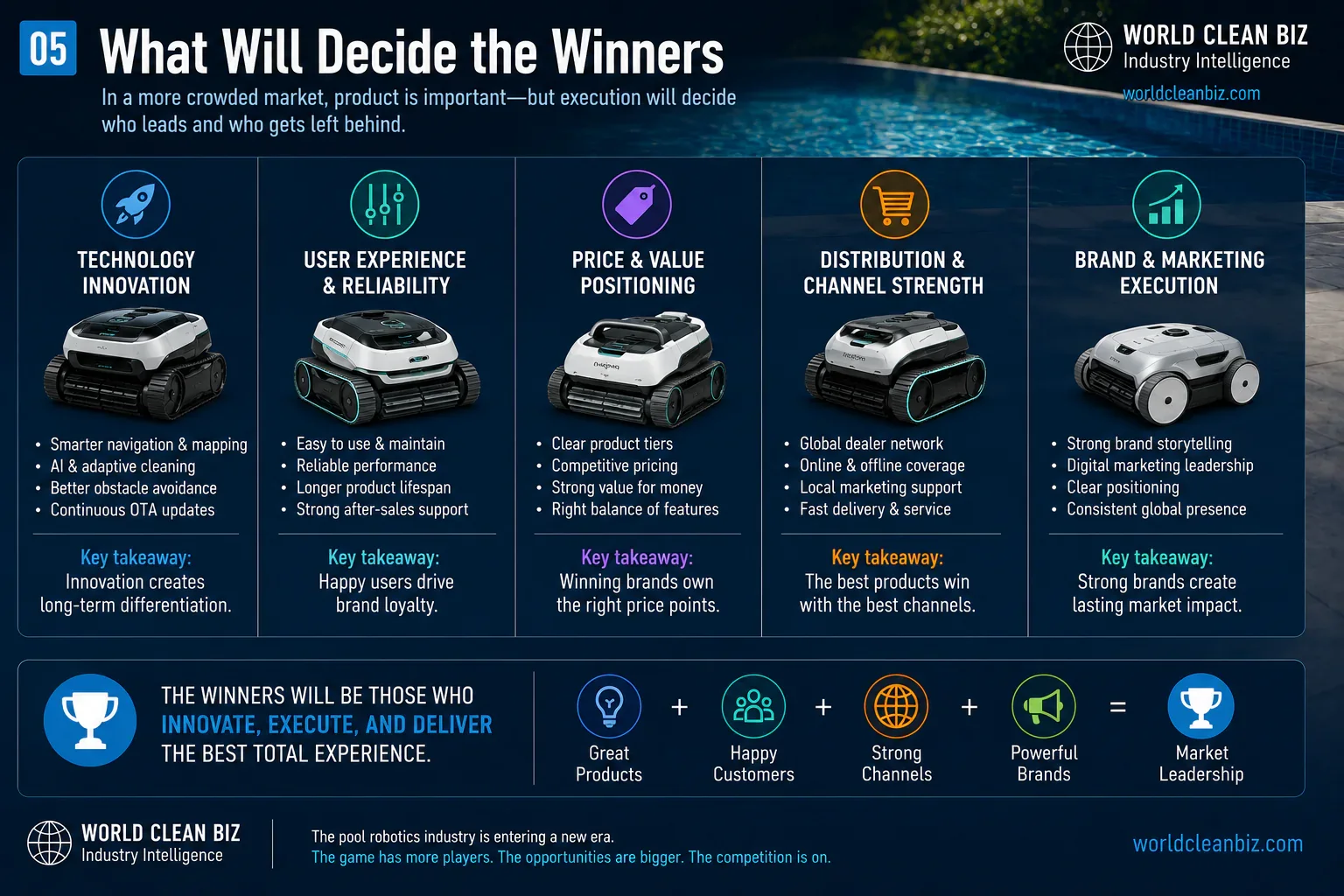
In the past, companies like Maytronics were able to grow alone in the relatively specialized, relatively closed market of pool cleaning. Next, it will be difficult for this environment to continue to exist. Swimming pool robots, lawn mowing robots, and yard cleaning robots are gradually being put into competition in the same European and American backyard scene. What users buy will also change from a single device to a complete set of backyard automation solutions.
This will change the ultimate company size in the industry.
If the fields of lawn mower robots and swimming pool robots gradually merge, leading companies will have the opportunity to achieve tens of billions of sales in the future. At that stage, the market will not accommodate too many brands. Whether it is old kings like Maytronics or new forces such as Aiper, Beatbot, WYBOT, Mammotion, Nine, Roborock, and Dreame, there is a high probability that only 3-4 companies will really stay in the end.
The time window is also narrowing.
It can be expected that the head-on competition between players of swimming pool robots and lawn mower robots will begin in 2027, and the results will gradually be seen in 2028. Now there may only be a window period of about one year left for players in the swimming pool robot industry.
In this year, Aiper will turn its shipment leadership into the industry's top position; Beatbot will turn high-end sound volume into a stable scale; WYBOT will prove that manufacturers can really come to the forefront; Maytronics will hold on to professional channels and brand awareness; yard and cleaning robot companies such as Wildland, Mammotion, Roborock, and Dreame will have to decide the priority of swimming pool robots in their product layouts.
Stars Shine is only the first half.
The next thing that really determines the ranking will be whether the company can stabilize product reliability, channel order, global after-sales and capital efficiency in the long term in the backyard robot track composed of swimming pools and lawns. The industry will eventually move from a battle over pool robots to a merger battle among the top companies in garden robots.
Sources
- Structure card: `20-Writing System/03-Article Outline/To-be-Written Outline/2026-05-30_Swimming Pool Robot Stars_Structure Card.md`
- Detail card: `20-Writing System/03-Article Outline/To-be-Written Outline/2026-05-30_Swimming Pool Robot Stars_Detail Card.md`
- Information supplement: `30-Material Pool/99-Pending/2026-05-30_Pool Robot Stars Brilliant Information Supplement.md`
- Aiper / Fluidra draft: `20-Writing System/04-Draft/To be written/2026-05-30_Aiper’s ambition.md`
- Maytronics 2025 Annual Report Data Processing: `30-Material Pool/99-Pending/2026-05-29_Maytronics 2025 Annual Report Data Processing.md`
- Fluidra 2025 Annual Report Data Processing: `30-Material Pool/99-Pending/2026-05-30_Fluidra 2025 Annual Report Data Processing.md`
- Beatbot Innovation interview and exchange notes with Denny: `10-Industry Knowledge Map/02-Product/2026-Q2/20260509_Beatbot Lei Feng Network_Product.md`
- Wangyuan Technology Brand Card: `10-Industry Knowledge Map/01-Brand/Wybot Technology (Wybot).md`
- Dreame founder interview information: `10-Industry Knowledge Map/01-Brand/2026/20260420 Dialogue with Dreame Yu Hao My Real World_Brand.md`
- Lawn mowing robot industry draft: `20-Writing System/04-Draft/Under Modification/2026-05-24_Who will be crowned the new king of the lawn mowing robot industry.md`