Key Points
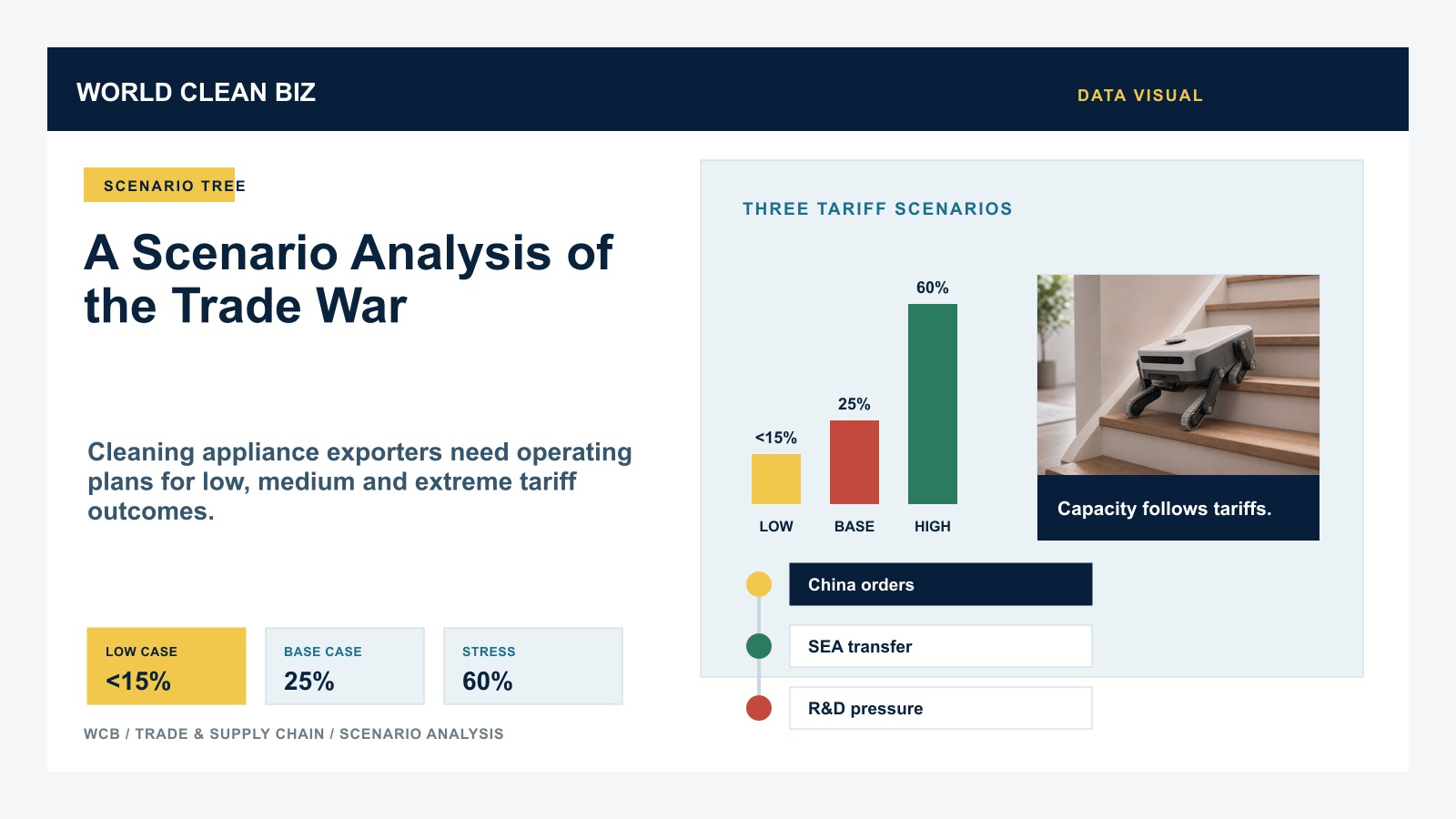
- Reciprocal tariffs would increase uncertainty for export-oriented appliance companies.
- Suppliers may need to prepare alternative production and pricing scenarios.
- The biggest impact may come from customer behavior before tariffs are finalized.
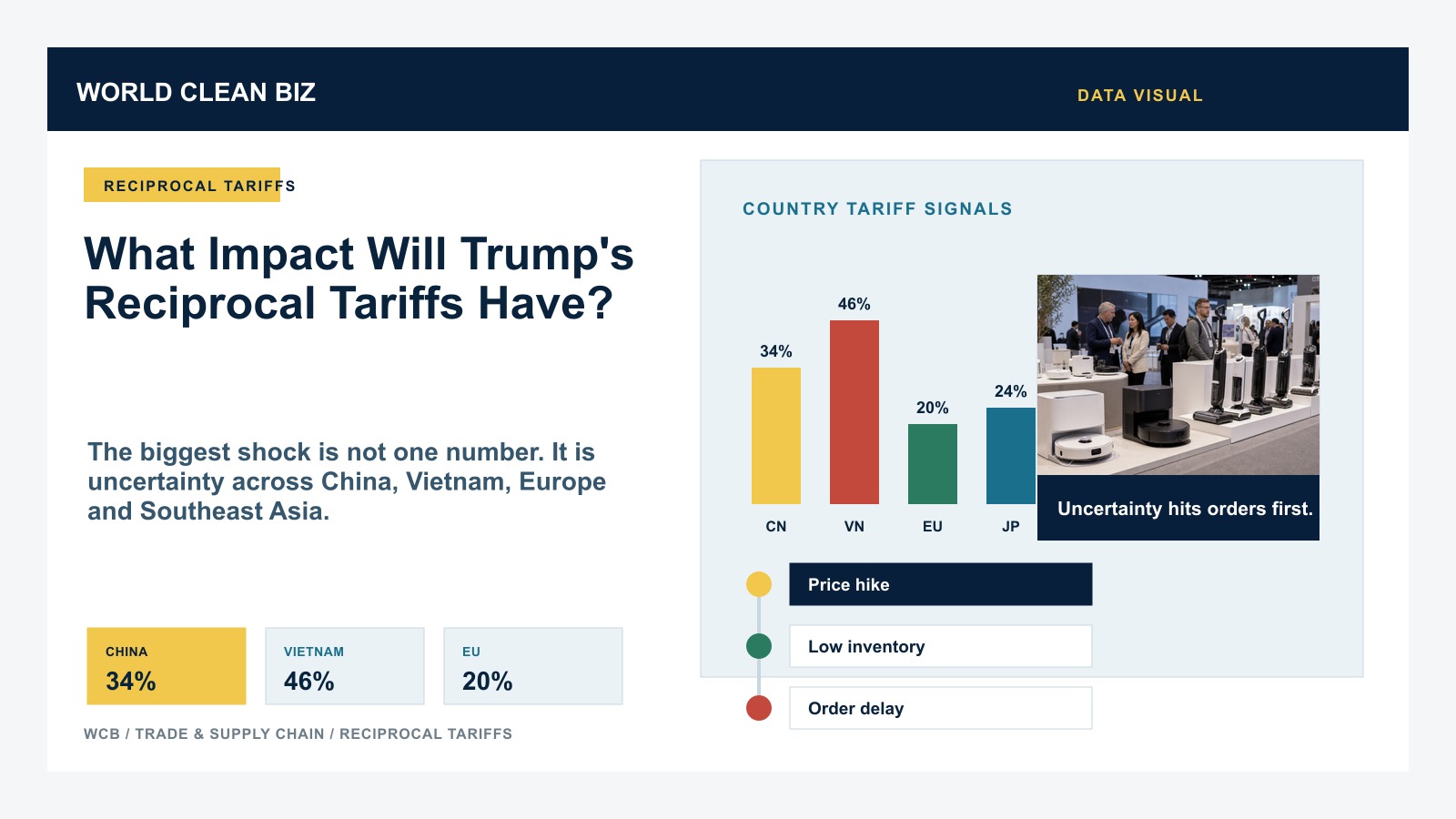
On the morning of April 2nd, Trump announced reciprocal tariffs on major global economies.
Among them, China is at 34%, the EU at 20%, Vietnam at 46%, Japan at 24%, Indonesia at 32%, and Malaysia at 24%.
Additionally, there are claims that China had a 20% tariff before, which would add up to 54% with this new 34%. Another claim is that during the Section 301 period, the US added a 25% tariff on products from China. Therefore, the current Chinese tariff could be as high as 79%.
Trump also threatened to impose an additional 25% tariff on oil sellers from Venezuela, making it unclear what the exact current tariff rate is for China.
What impact will this have on cleaning appliances?
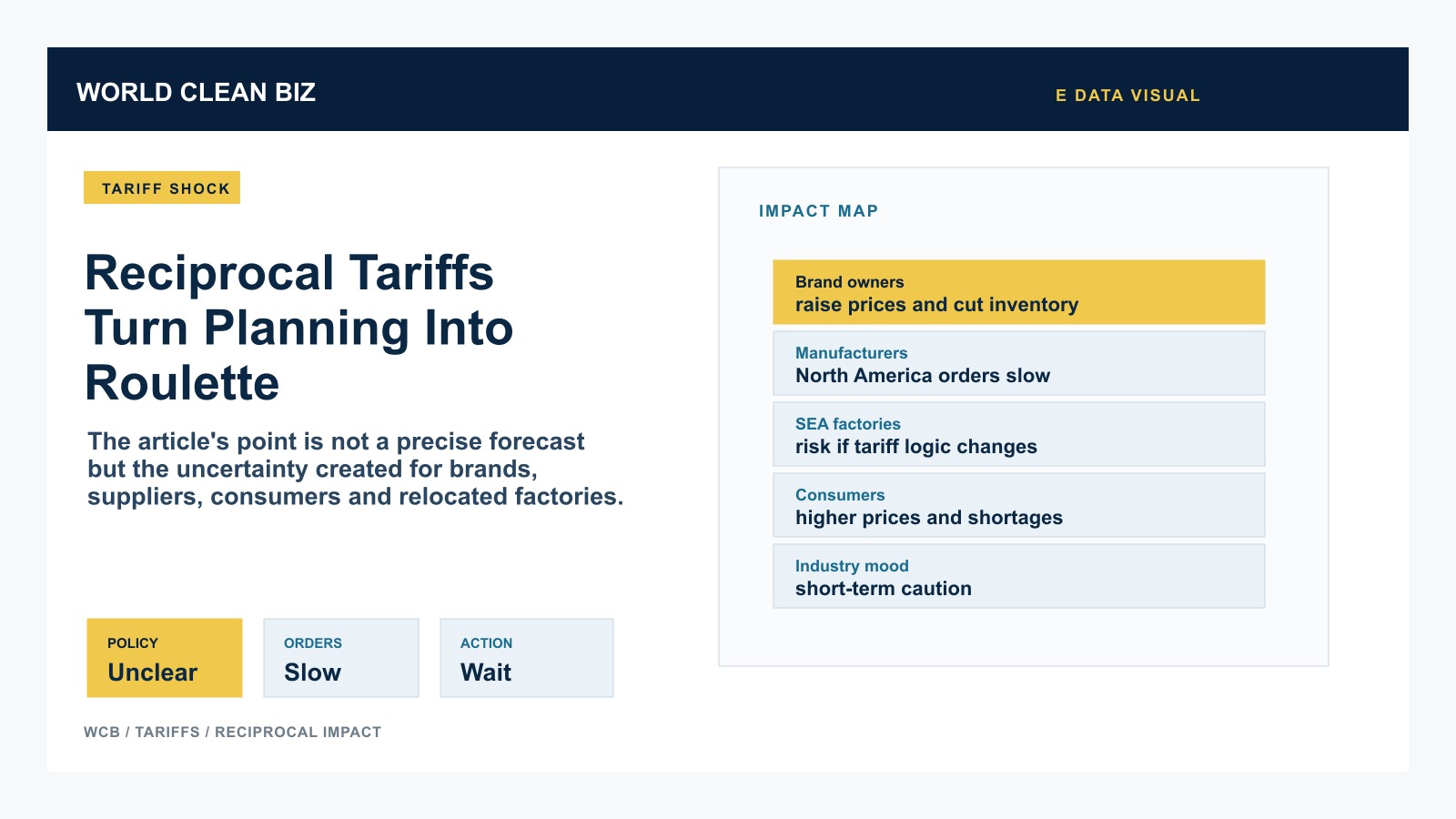
- For brand owners, profits in the cleaning appliance sector are already low, and there's no possibility of transferring these costs to suppliers. Cost increases are inevitable, so a significant price hike in the near term would be the best choice. This way, previously shipped inventory can still yield some profit. In the coming months, due to policy uncertainties (which could lead to substantial increases or decreases), reducing order quantities and maintaining lower inventory levels is the optimal strategy.
- For downstream manufacturers, orders from North America are expected to significantly decrease in the short term. Additionally, suppliers moving operations to Southeast Asia face more challenges; if Trump reduces tariffs on China or increases them on Vietnam, it could have a devastating impact on these relocated industries. Their initial investments of millions or tens of millions may be wasted.
- For American consumers, they will face significant price hikes and shortages of daily necessities. However, this is irrelevant as Trump has undoubtedly won.
- The US tariff policy, which originally targeted China but now applies universally, is beneficial for China. Traditional US allies are already struggling to cope, leaving no time or energy to join the US in confronting China. Currently, China is the only country capable of countering the US on tariffs. Moreover, given Chinese companies' adaptability and execution capabilities, chaos presents more opportunities.
- As industry professionals, the current situation feels like playing Russian roulette; those who are hit will be eliminated. There's no room for analysis or response, so doing nothing in the short term might be the best choice.