- Hamilton Beach’s 2018 report shows a small-appliance company built around mass retail, e-commerce and commercial channels.
- Customer concentration, especially large retailers, was a central feature of the company’s business structure.
- The report highlights brand portfolio management and channel dependence as key factors in small-appliance performance.
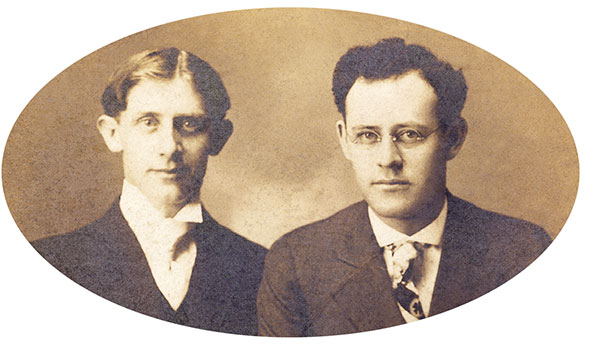
Hamilton Beach was first established by Louis Hamilton and Chester Beach in 1900. In 1990, NACCO acquired the Hamilton Beach Company from Glen Dimplex.
In 2017, NACCO split Hamilton Beach Company and listed it independently in the United States with the stock market code HBB.
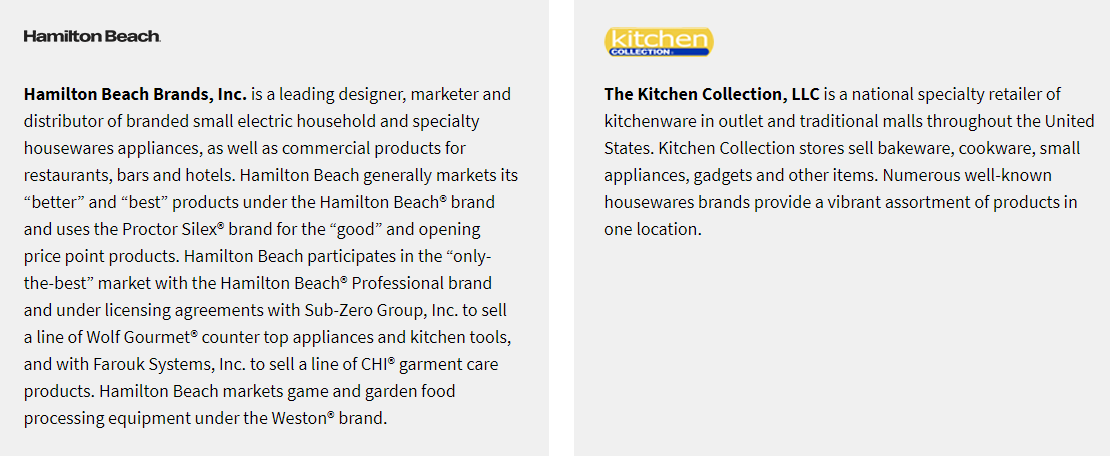
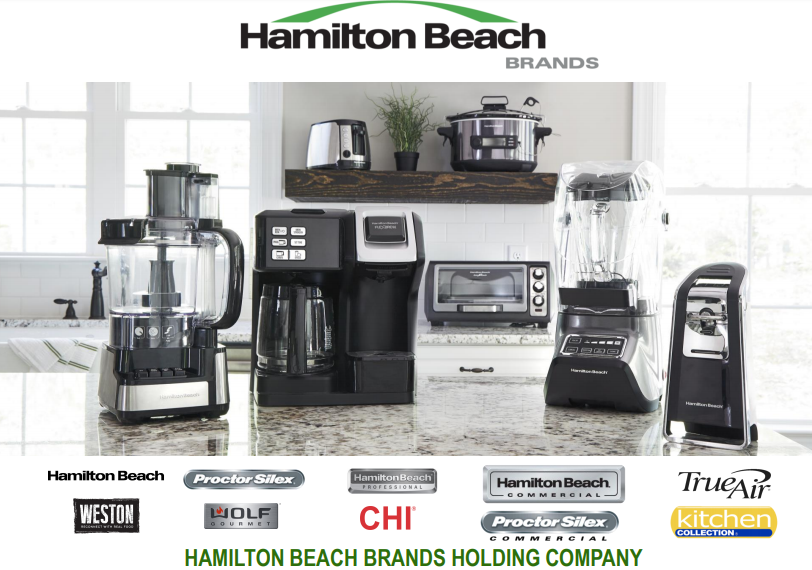
At present, Hamilton Beach Company mainly operates small household appliances business, and the overall business is divided into two major parts:
Hamilton Beach Brands (small appliance brand) and Kitchen Collen (kitchen appliance sales channel/store)
---------------
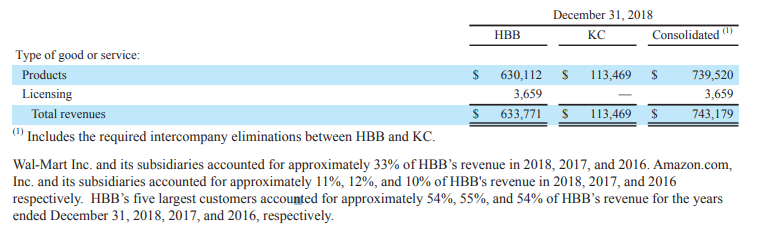
Customers Consumer and commercial sales in North America are generated predominantly by a network of inside sales employees to mass merchandisers, e-commerce retailers, national department stores, variety store chains, drug store chains, specialty home retailers, distributors, restaurants, bars, hotels and other retail outlets. Wal-Mart Inc. and its subsidiaries accounted for 2 approximately 33% of HBB’s revenue in each of 2018, 2017 and 2016. Amazon.com, Inc. and its subsidiaries HBB’s five largest customers accounted for approximately 54%, 55%, and 54% of HBB’s revenue for the years ended December 31, 2018, 2017 and 2016, respectively.
Consumer and commercial sales in North America are primarily generated by a network of internal sales employees, which include mass wholesalers, e-commerce retailers, national department stores, various chain stores, drugstore chains, specialty home retailers, distributors, restaurants, bars, stores, telecommunications and other retail stores. Walmart and its subsidiaries accounted for 2% and 33% of HBB's revenue in 2018, 2017 and 2016, respectively. Amazon and its subsidiaries accounted for 11%, 12% and 10% of HBB's revenue in 2018, 2017 and 2016, respectively. As of December 31, 2018, 2017 and 2016, HBB's five largest customers accounted for 54%, 55% and 54% of HBB's revenue, respectively.
Product Design and Development HBB incurred $11.0 million, $10.4 million and $9.7 million in 2018, 2017 and 2016, respectively, on product design and development activities. Key Suppliers and Raw Material HBB’s products are supplied to its specifications by third-party suppliers located primarily in China. HBB does not maintain long-term purchase contracts with suppliers and operates mainly on a purchase order basis. HBB generally negotiates the purchases from its foreign suppliers in U.S. dollars. During 2018, HBB purchased 99% of its finished products from suppliers in China. HBB purchases its inventory from approximately 53 suppliers, one of which represented more than 10% of purchases during the year ended December 31, 2018. HBB believes the loss of any one supplier would not have a long-term material adverse effect on its business because there are adequate supplier choices available that can meet HBB’s production and quality requirements. However, the loss of a supplier could, in the short term, adversely affect HBB’s business until alternative supply arrangements are secured. The principal raw materials used by HBB’s third-party suppliers to manufacture its products are plastic, glass, steel, copper, aluminum and packaging materials. HBB believes adequate quantities of raw materials are available from various suppliers
In 2018, 2017 and 2016, HBB's product design and development expenses were US$11 million, US$10.4 million and US$9.7 million, respectively. Key Suppliers and Raw Materials HBB's products are supplied according to its specifications by third-party suppliers primarily located in China. HBB does not enter into long-term purchasing contracts with suppliers and conducts business mainly on the basis of purchase orders. HBB typically negotiates purchases with foreign suppliers in U.S. dollars. In 2018, HBB purchased 99% of its finished products from Chinese suppliers. HBB purchases finished goods from approximately 53 suppliers, including one supplier that purchased more than 10% of its inventory during the year ended December 31, 2018. HBB believes that the loss of any one supplier will not have a material adverse long-term impact on its business because there are sufficient supplier options to meet HBB's production and quality requirements. However, the loss of suppliers could adversely affect HBB's business in the short term until alternative supply arrangements are obtained. The main raw materials used by HBB's third-party suppliers to produce its products are plastic, glass, steel, copper, aluminum and packaging materials. HBB believes that each supplier can provide sufficient quantities of raw materials.
-------------------
KC operated 189 retail stores as of December 31, 2018. The stores sell kitchenware from a number of highly recognizable name-brands, including Hamilton Beach® and Proctor Silex®. KC sales accounted for 15.3%, 17.4% and 19.4% of the Hamilton Beach Holding’s annual revenue in 2018, 2017 and 2016, respectively.
As of December 31, 2018, KC operated a total of 189 retail stores. The stores sell kitchenware from many well-known brands, including Hamilton Beach® and Proctor Silex®, among others. In 2018, 2017 and 2016, KC sales accounted for 15.3%, 17.4% and 19.4% of Hamilton Beach Holdings' annual revenue, respectively.
Product Sourcing and Distribution KC purchases all inventory centrally, which allows us to take advantage of volume purchase discounts. KC purchases its inventory from approximately 176 suppliers, one of which represented approximately 25% of purchases during the year ended December 31, 2018. No other supplier represents more than 10% of purchases. KC believes that the loss of any one supplier would not have a long-term material adverse effect on its business because there are adequate supplier available that can meet KC’s requirements. However, the loss of a supplier could, in the short term, adversely affect KC’s business until alternative supply arrangements are secured. KC currently maintains its inventory for distribution to its stores at a distribution center located near its corporate headquarters in Chillicothe, Ohio.
Product Purchasing and Distribution KC purchases all inventory centrally, which allows us to take advantage of volume purchase discounts. KC purchases inventory from approximately 176 suppliers, one of which accounted for approximately 25% of purchases during the year ended December 31, 2018. No other supplier accounts for more than 10% of purchases. KC believes that the loss of any one supplier will not have a material adverse long-term impact on its business because there are sufficient supplier options to meet KC's requirements. However, in the short term, the loss of suppliers may adversely affect KC's business until other supply arrangements are secured. KC currently maintains its inventory at a distribution center near the company's headquarters in Chillicothe, Ohio, for delivery to its stores.
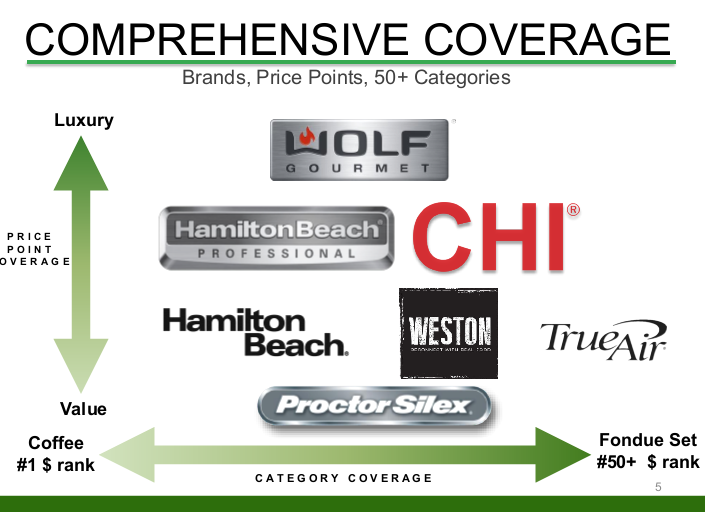
The price range and positioning of each brand under Hamilton Beach.
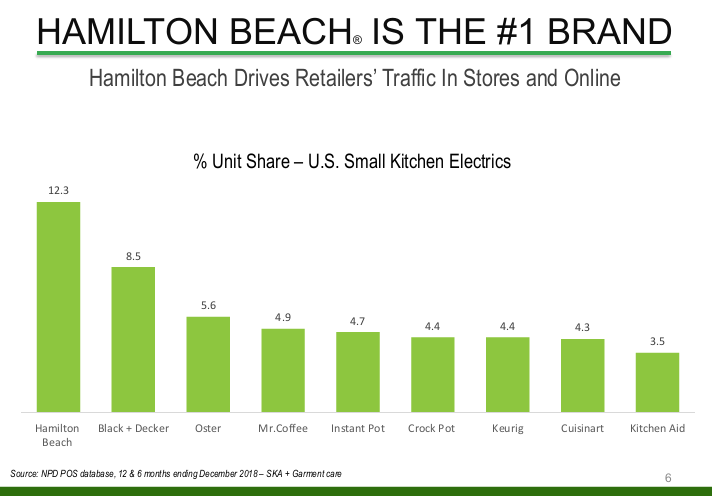
Comparison of store and web traffic between Hamiton Beach and other competitors.
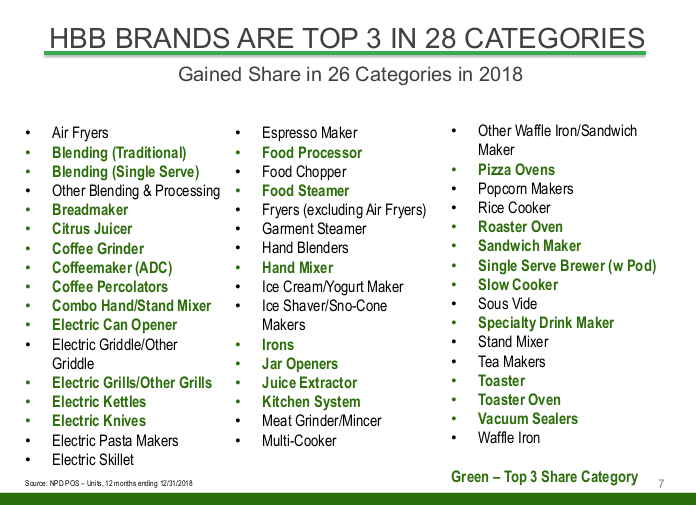
HBB brand occupies the top three positions among 28 small home appliance categories
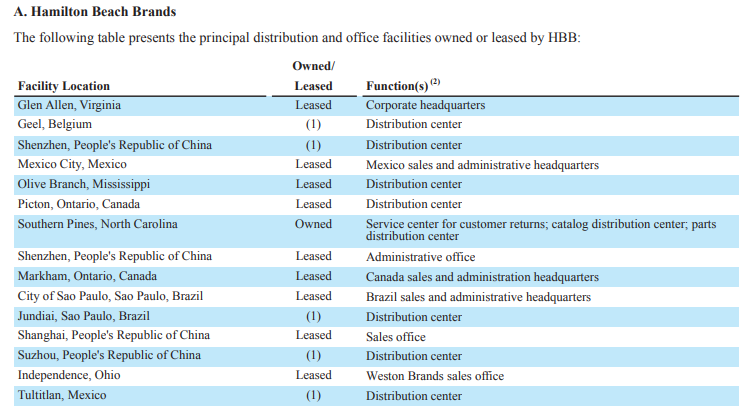
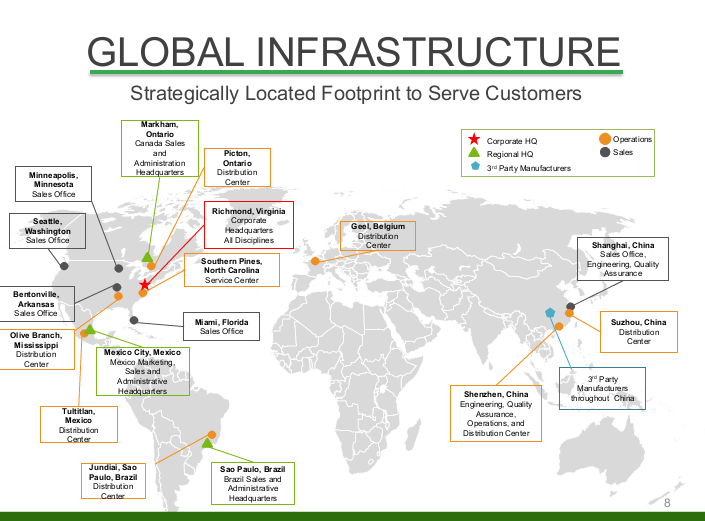
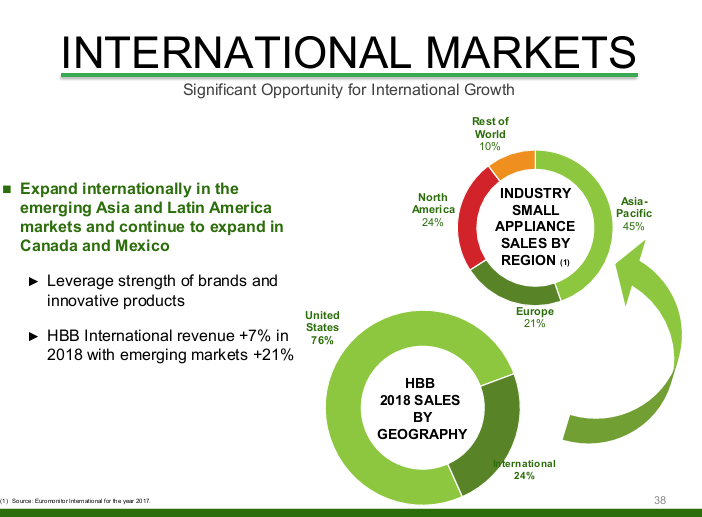
HBB's locations and roles in various regions around the world:
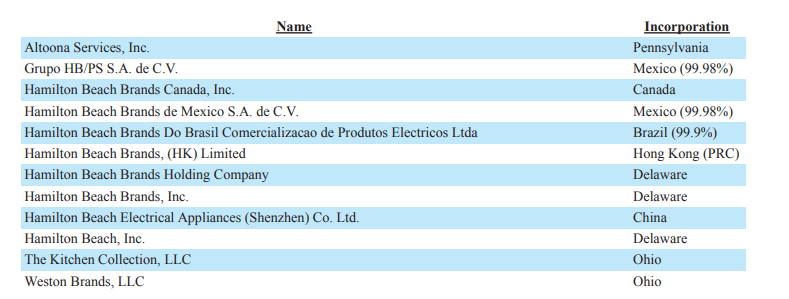
Branch name:
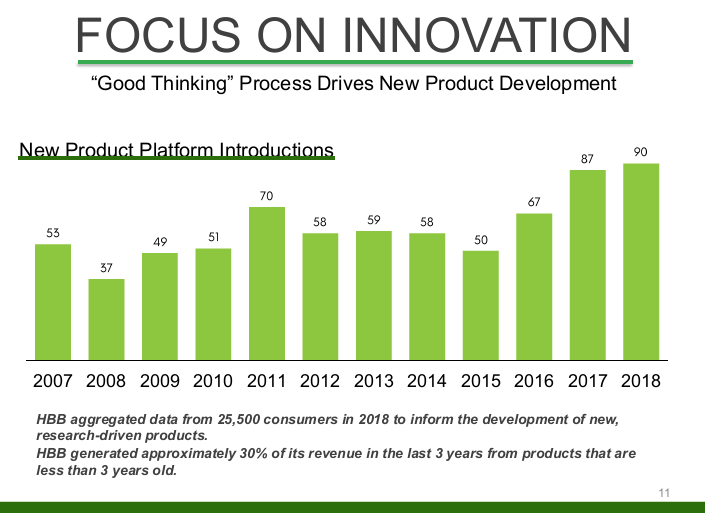
Number of new product developments per year
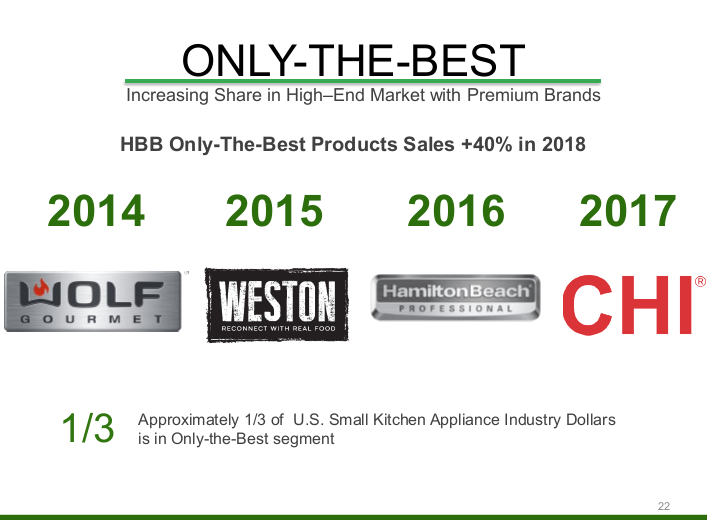
Only-The -Best product strategy.
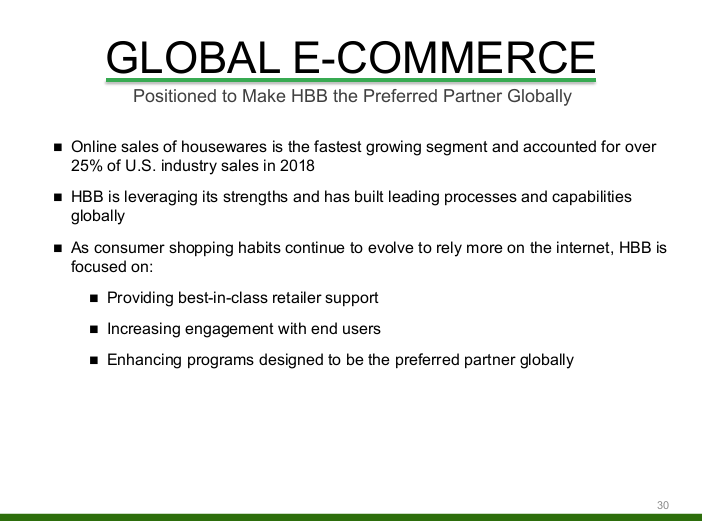
Global e-commerce helps HBB become an industry leader
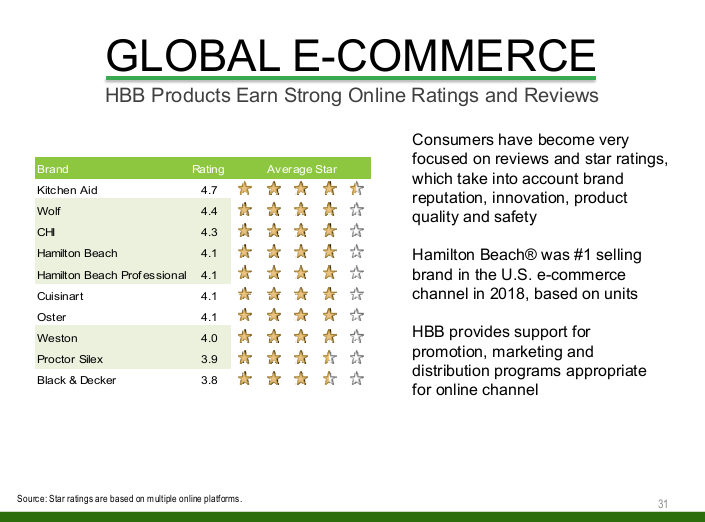
Evaluation of HBB products in e-commerce
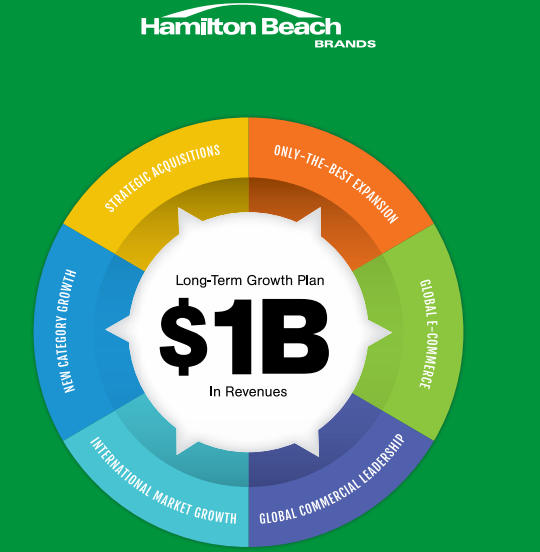
HBB's long-term goal is to achieve sales of US$1 billion.
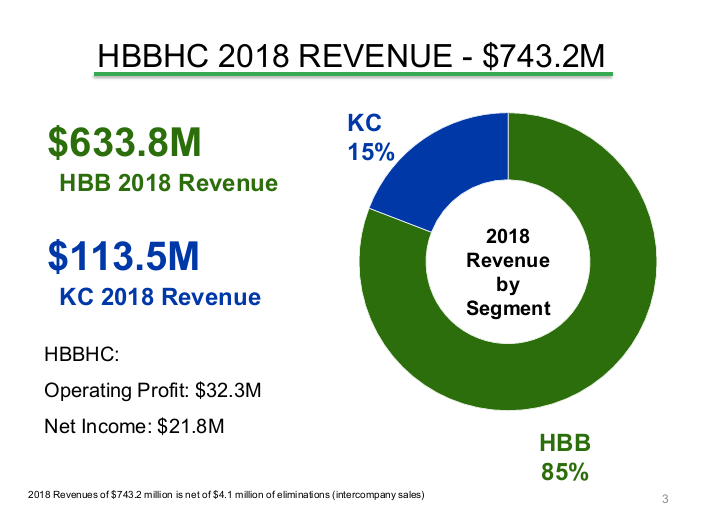
Sales in 2018 were US$743 million, of which HBB was US$633.8 million and KC was US$113.5 million.
Global market strategy.
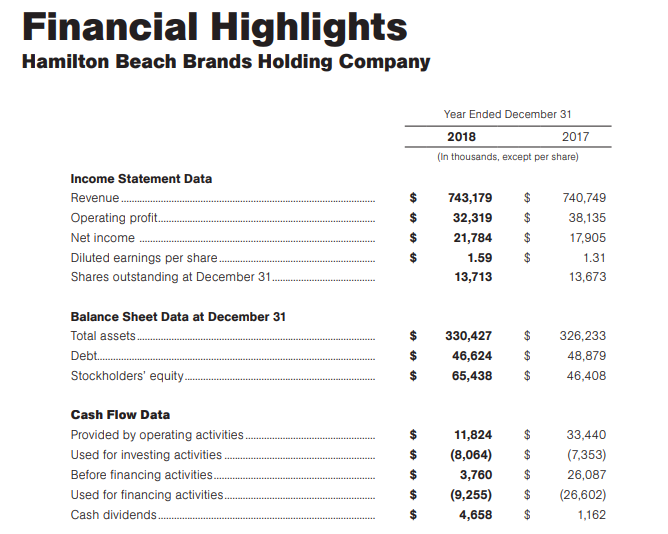
Sales in 2018 were US$743 million and operating profit was US$32.31 million
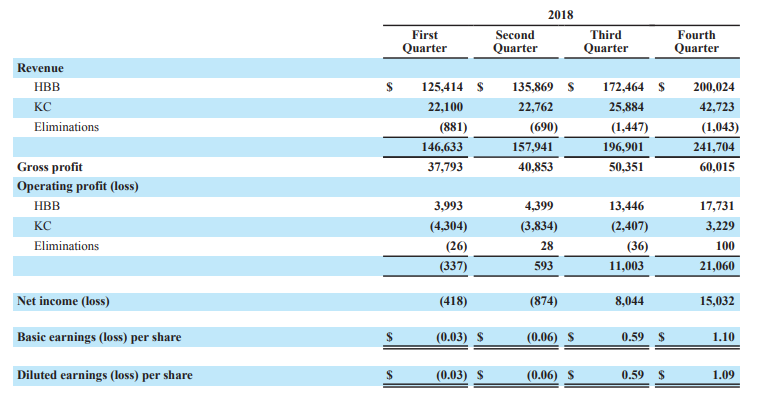
Sales distribution by quarter in 2018:
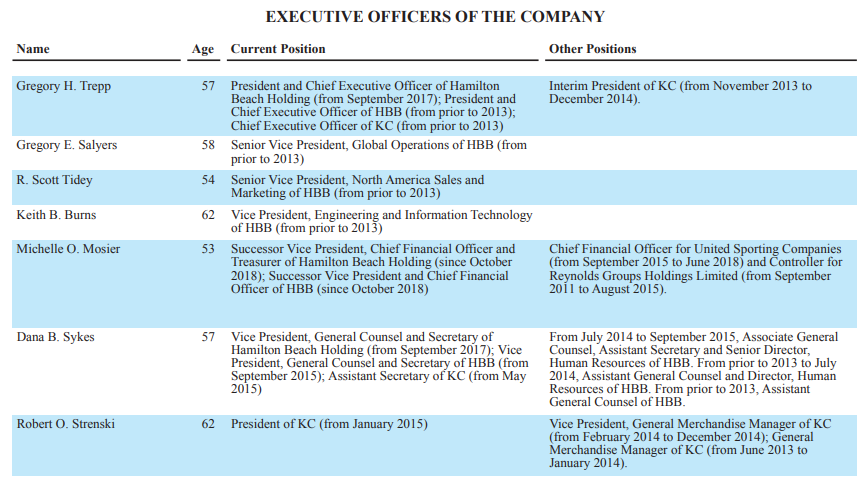
List of core executives of the company:
Among the income, the distribution of product sales income and licensing income is as follows:
Stock quantity:

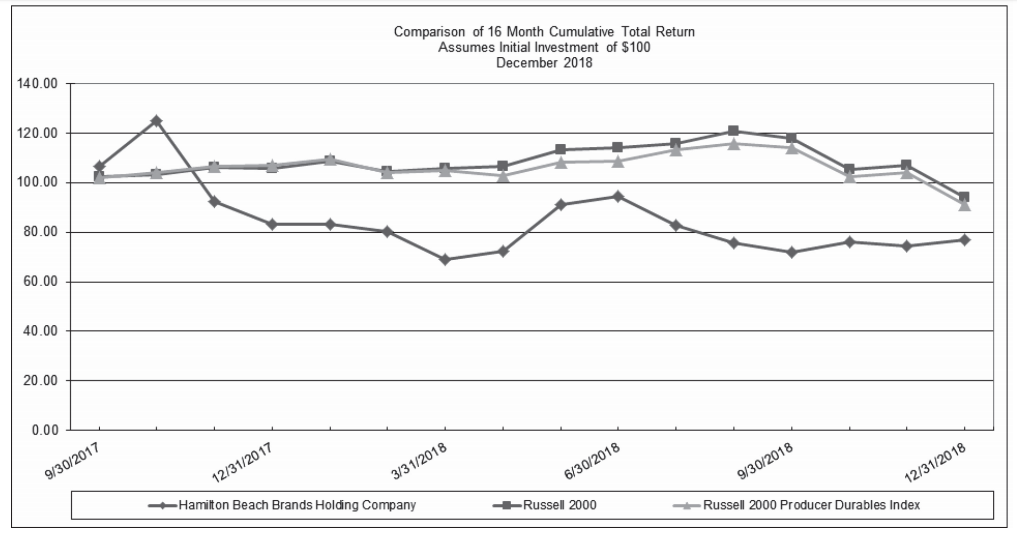
Comparison of HBB and Russell 2000 other company indices.