- The FCC’s new category is based on where advanced robots are produced, not on the nationality of the brand.
- Existing FCC-authorized models can remain on sale, while next-generation foreign-made products face a new authorization barrier.
- Robot vacuums and robotic lawn mowers are directly exposed; underwater pool robots occupy a relatively safer but still unsettled position.
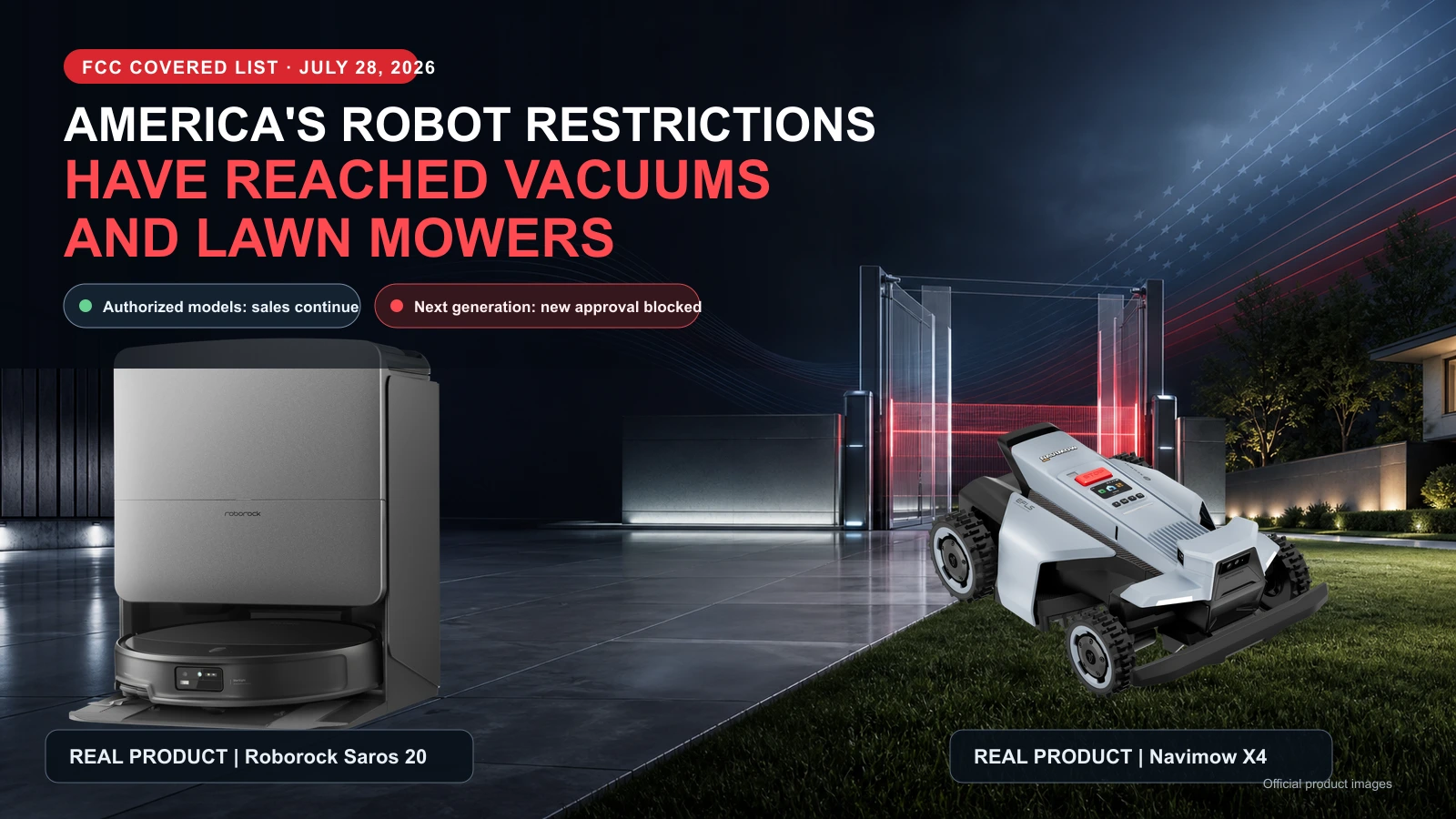
On July 28, the US Federal Communications Commission updated its Covered List to include foreign-produced power inverters and “advanced robotic devices.”
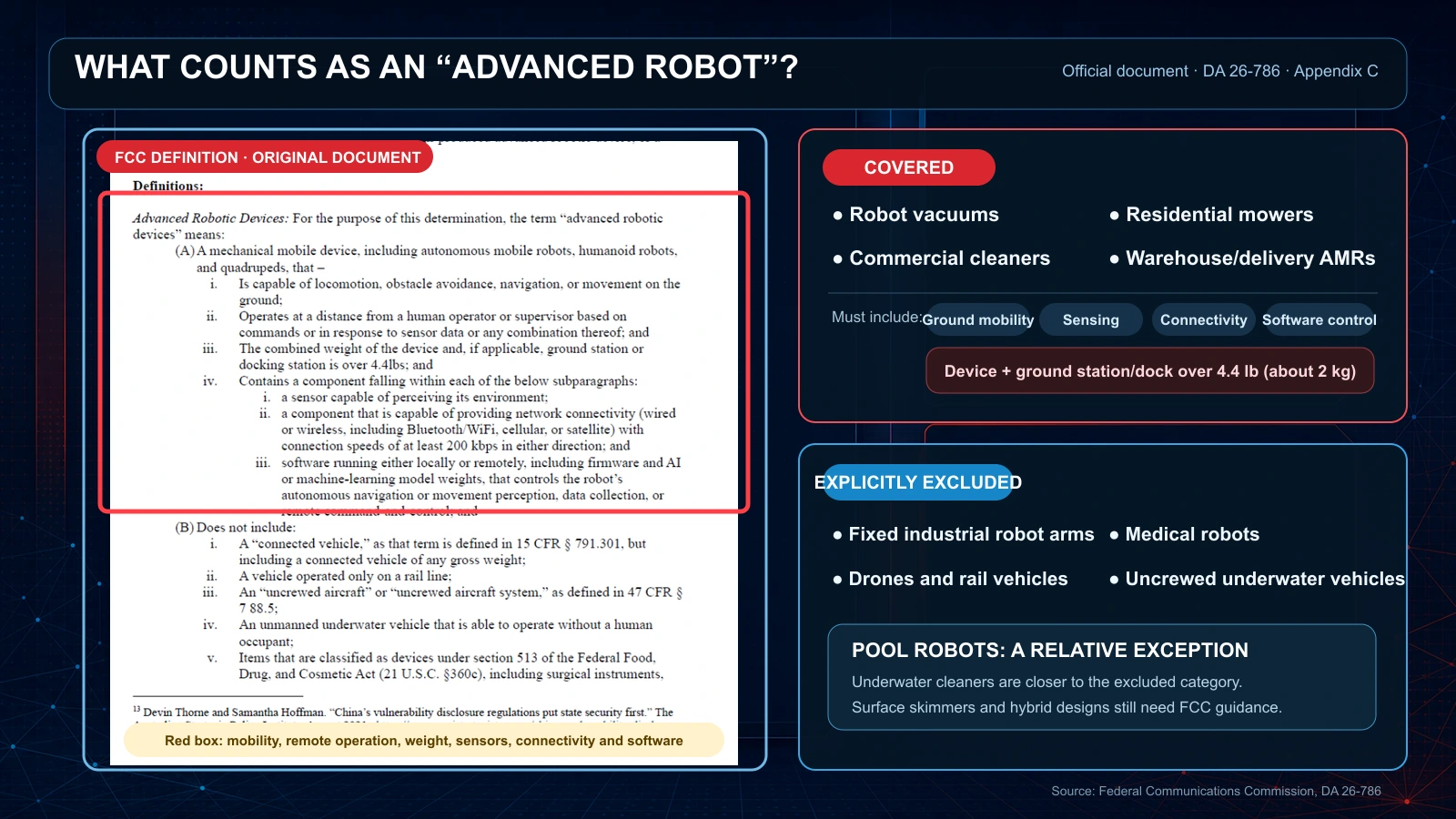
The announcement immediately brings humanoids, quadrupeds and autonomous warehouse robots to mind. But the FCC’s definition reaches far beyond those machines. Any robot that can move across the ground, avoid obstacles or navigate, uses environmental sensors and network connectivity, and relies on software to control movement, perception or data collection can fall within the category.
Robot vacuums, robotic lawn mowers and commercial cleaning robots meet nearly all of those conditions.
The FCC is not targeting one Chinese company. It is targeting relevant robots produced anywhere outside the United States. An American brand that still relies on Asian manufacturing does not receive an automatic exemption. The FCC notice states explicitly that the new category is identified by place of production, not by entity.
That changes the rules for bringing mobile robots into the US market.
Chinese robotics companies were already dealing with tariffs, distribution and data compliance. They now face a more immediate question: can the next generation of products still obtain FCC equipment authorization?
The FCC sets several specific conditions for an advanced robotic device.
The machine must be capable of ground movement, obstacle avoidance or navigation, and it must be able to operate at a distance from its human operator or supervisor. The robot and its ground station or dock must weigh more than 4.4 pounds, or roughly 2 kilograms. It must also have environmental sensors, network connectivity and software that controls navigation, perception, data collection or remote operation.
A robot vacuum equipped with LiDAR or cameras, connected to an app over Wi-Fi and able to map a home and return to its dock is difficult to place outside that definition. The same is true of a robotic mower using RTK, vision or LiDAR navigation. Commercial floor-cleaning robots, delivery robots and warehouse AMRs sit even more squarely inside the category.
The FCC expressly excludes fixed industrial robot arms, medical robots, connected vehicles, drones and rail vehicles. Uncrewed underwater vehicles are also excluded, leaving an important opening for robotic pool cleaners.
The update does not immediately remove robots that are already on sale in the United States.
The Covered List directly affects new FCC equipment authorizations. Models that have already been authorized can, in principle, continue to be imported and sold. Existing FCC IDs and already-certified product platforms therefore become more valuable in the short term.
Companies cannot simply reuse an old model number and FCC ID for a new product. If a robot changes its wireless module, motherboard or other critical hardware, the company must determine whether the change still falls within the original authorization under the FCC’s equipment modification rules. The practice of pushing several hardware generations through one platform in two or three years may be much harder to maintain in the US market.
The effect is particularly clear in robot vacuums.
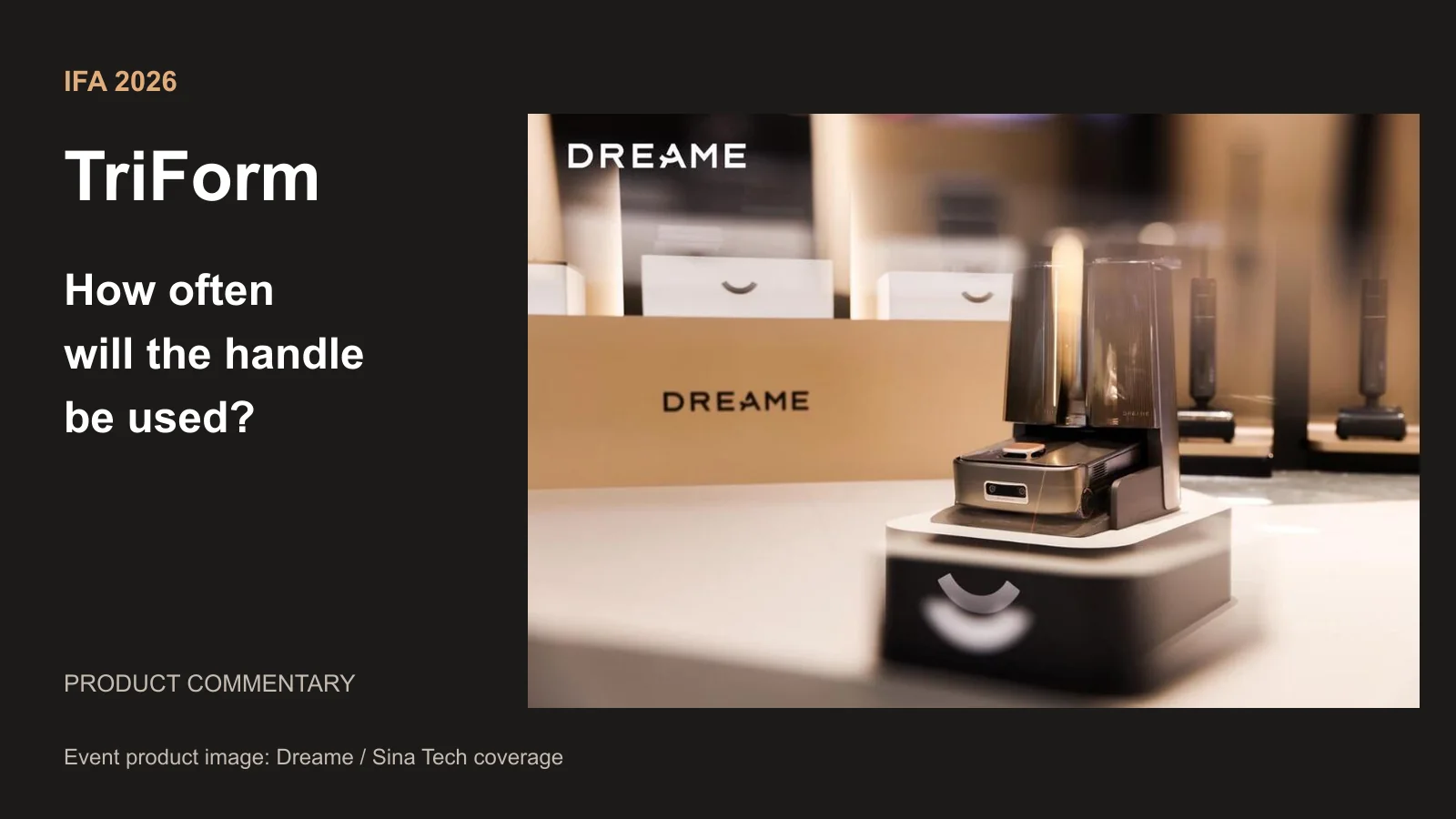
Global smart-vacuum shipments reached 24.12 million units in 2025, up 17.1%. Roborock, Dreame and Ecovacs have become some of the fastest product developers in the industry. All-in-one docks, robotic arms, obstacle-crossing mechanisms and AI recognition continue to move into new generations, and the United States is one of their most important premium markets. IDC’s figures show that Chinese brands are now leading product development across several home-cleaning robot categories.
The FCC rule does not immediately take away their ability to sell existing products. It bears down on the next product cycle.
In the short term, already-authorized models from Roborock, Dreame, Ecovacs, iRobot and Shark all benefit. Retailers will have more reason to keep mature products on shelves for longer, while inventory that is already in warehouses and distribution channels becomes more valuable.
An American brand is not the same thing as American production. iRobot has disclosed that its products are made by contract manufacturers in Southern China, Vietnam and Malaysia. SharkNinja says it owns no factories and that its main suppliers are based in China. The companies’ own SEC filings for iRobot and SharkNinja show that both American consumer brands remain dependent on Asian manufacturing.
The FCC rule does not automatically help iRobot or SharkNinja hold back Chinese brands. As long as production remains outside the United States, their next robot vacuums face the same barrier.
Matic, which assembles its robots in the United States, sits in a relatively favorable position. The company says its machines are designed and assembled in Mountain View, California, while their components come from around the world. That is not enough to show that Matic qualifies under the US “domestic end product” standard referenced by the FCC. It only shows that the company already has an American assembly route. Matic’s product page does not disclose enough supply-chain information to determine its domestic-content share.
The impact on robotic lawn mowers may be even greater.
Global robotic mower shipments reached about 1.99 million units in 2025, up 63.8%. Wire-free models accounted for 1.32 million units, an increase of 182.4%. Segway Navimow, Mammotion, Dreame and Ecovacs are rolling out new products quickly, while robotic mowers have become one of the fastest-growing outdoor robotics categories in the United States.
These machines commonly use RTK, cameras or LiDAR for navigation. They weigh far more than 2 kilograms and connect through an app. They fall almost completely within the FCC definition.
Existing authorized models can still be sold, giving products that have already cleared certification and entered the US market a longer life. Brands, platforms and major hardware revisions scheduled for the next few quarters face the greatest uncertainty.
Moving production from China to Vietnam, Malaysia or Mexico does not solve the problem. The FCC uses the term “foreign-produced,” not “China-produced.” Southeast Asian manufacturing can change tariff exposure and supply-chain risk, but it does not automatically change a product’s status under the Covered List.
Robotic pool cleaners may emerge as relative beneficiaries of the policy.
The FCC expressly excludes uncrewed underwater vehicles. Most robotic pool cleaners that operate underwater are closer in form to that excluded category. The product cycles of Aiper, Beatbot, Wybot and Maytronics may therefore face less direct disruption than those of robot vacuums and lawn mowers.
The FCC has not yet issued a specific interpretation for consumer pool robots. A robot that cleans the pool floor is not identical to a surface skimmer, and products that move both on and below the water create another classification question. Pool robots look like a relatively safer category, but it is too early to say that every product is exempt.
If that interpretation is eventually confirmed, robotics companies may direct more resources toward pool cleaning. Global shipments of robots for in-ground pools reached 2.747 million units in 2025, and cordless models accounted for 55%. Chinese companies already moving quickly into the category would retain one US market where they can continue to update products at a normal pace.
Robot-vacuum and robotic-mower companies do not have many options.
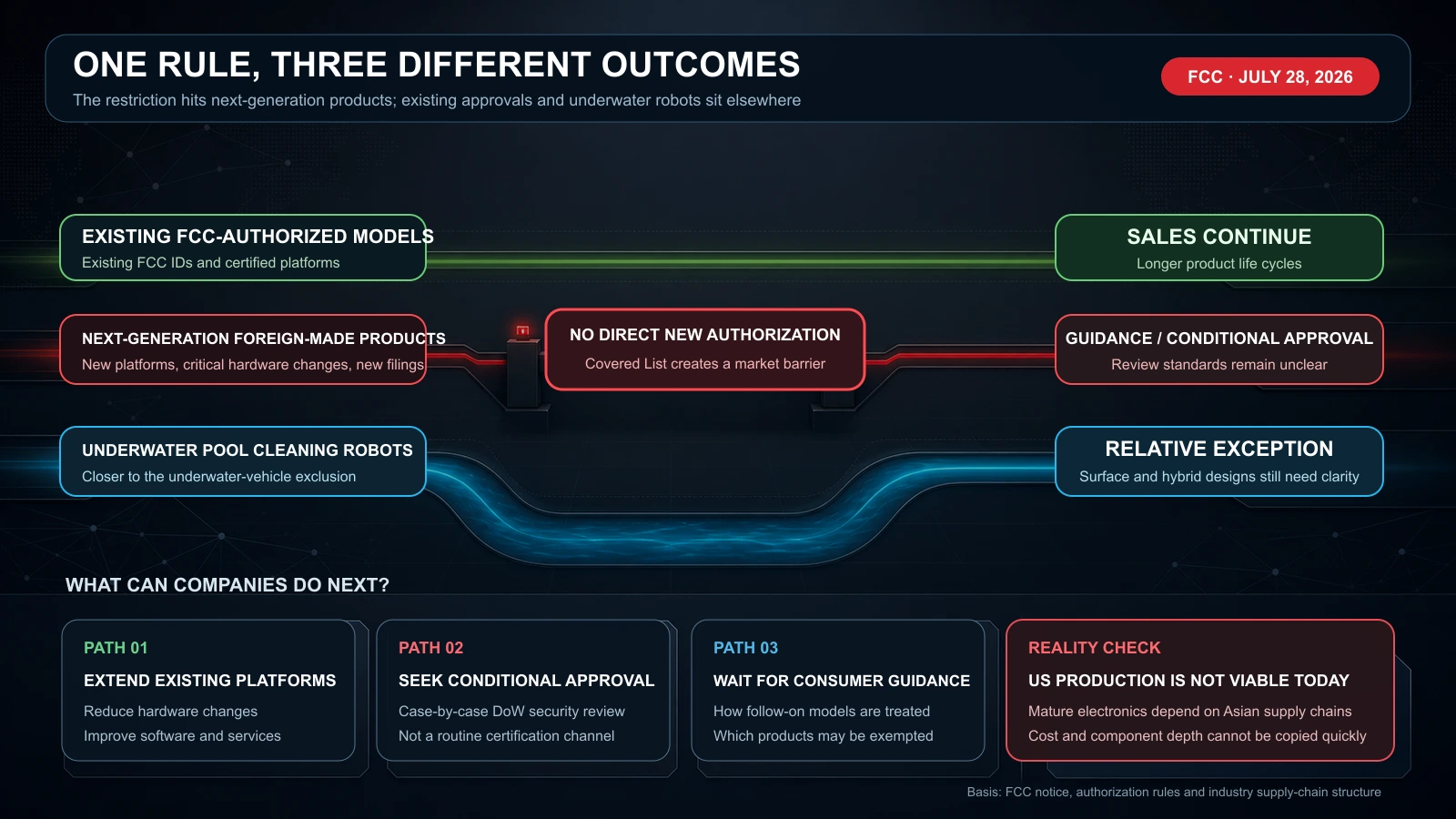
The most practical response is to extend the life of existing authorized products and continue improving software, algorithms and services without triggering a new authorization. Companies that have relied on frequent hardware changes to drive sales will need a more stable platform for the United States.
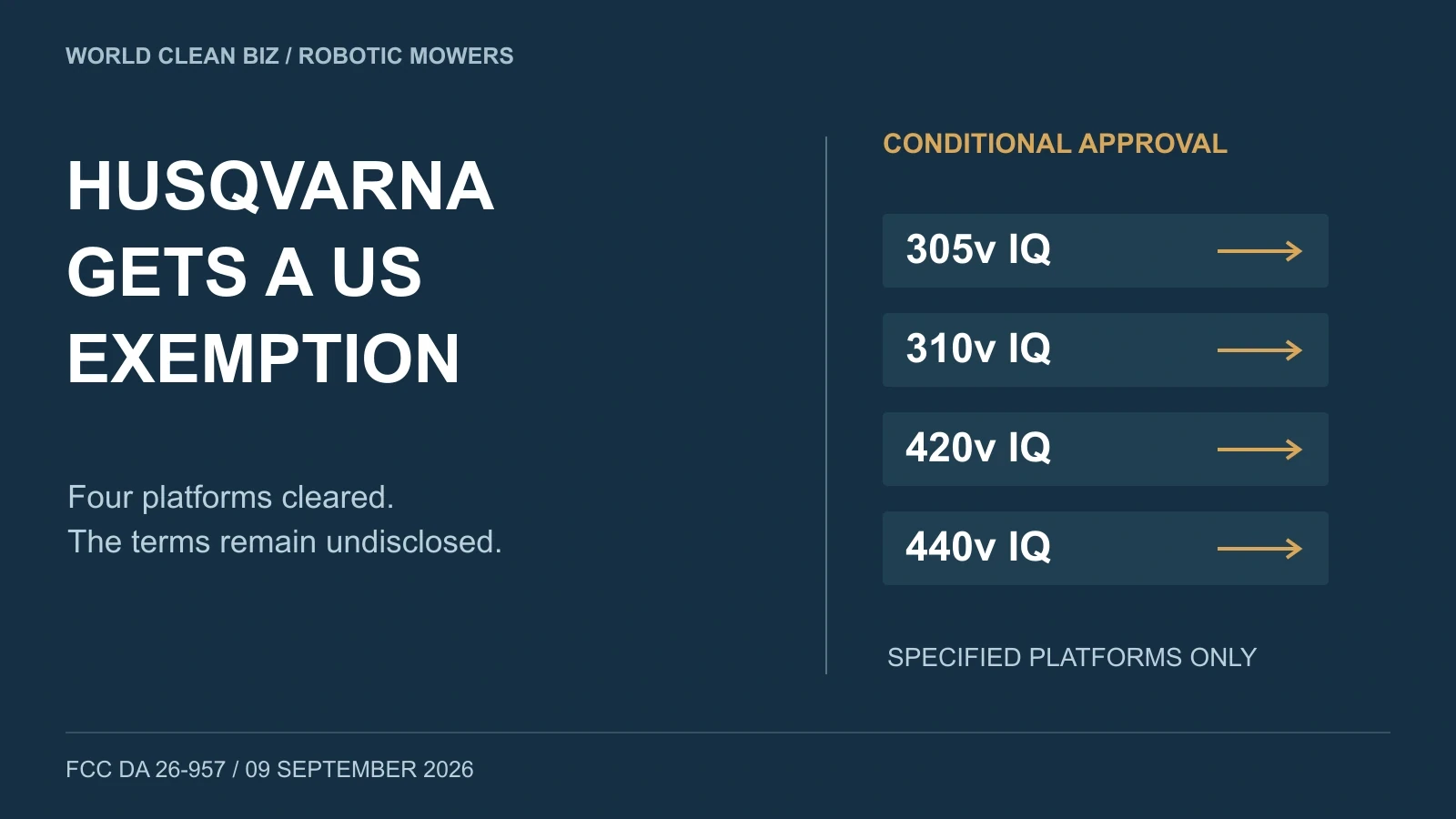
The second route is Conditional Approval. The FCC allows foreign-produced advanced robots to undergo a security review by the US Department of War. If the department determines that the device does not present an unacceptable national-security risk, it can receive a conditional exemption from the Covered List. Companies will need to submit information covering their supply chain, cybersecurity, data handling and remote-control capabilities. Approvals may also carry time limits or localization requirements. This is closer to a case-by-case review than a routine certification channel that can be replicated across a product line.
The third route is to build genuine manufacturing capacity in the United States.
The FCC’s definition of “foreign-produced” is tied to the domestic-end-product standard under the Buy American Act. Under the current general rule, a product must be manufactured in the United States and meet the applicable domestic-content test. The general threshold is 65% for products delivered from 2024 through 2028, rising to 75% in 2029, although component calculations and rules for commercial off-the-shelf products add further complexity. The current US regulation means that packaging, labeling or performing simple final assembly in the United States does not automatically solve the FCC authorization problem.
For robot vacuums and residential robotic mowers, however, this route is not realistic today.
These products are built around a mature Asian supply chain. Motors, batteries, sensors and motherboards must be coordinated quickly and at low cost. Rebuilding that system in the United States would raise costs sharply, while a complete component and manufacturing base would be difficult to find in the near term.
Matic’s California assembly operation proves that American production is not entirely impossible. It does not prove that the model can support the prices and volumes required by mainstream brands. For mature consumer electronics selling hundreds of thousands or even millions of units a year, moving production wholesale to the United States is not viable under current cost and supply-chain conditions.
Switching to an American cloud provider, storing data in the United States, using American chips or setting up an American brand company does not change where the product is made. Those measures may reduce some security concerns during review, but they cannot replace the production-location test.
Companies could also redesign products to fall outside the FCC definition by removing network connectivity, environmental perception or remote operation, or by keeping the robot and dock below 2 kilograms. For a modern robot vacuum or lawn mower, that would amount to abandoning mainstream functionality. The commercial value would be limited.
The first effect of the FCC rule will not be a wave of products disappearing from shelves. It will be fewer new products and longer lives for old ones.
Companies may keep a separate hardware platform for the United States and slow their update cycles. Retailers will place more value on models that have already cleared authorization. Smaller brands will struggle to absorb the cost of Conditional Approval or American production. Companies with mature products and established distribution will have a short-term advantage over those that depend on constant launches.
There is still a wide gap between the rule and the industrial reality. The United States is imposing a higher market-access standard on foreign-produced robots without having a complete domestic supply chain capable of taking over production of these mature consumer electronics. If the current language is applied in full, the impact will reach not only Chinese brands but also iRobot and SharkNinja, both of which depend on Asian manufacturing.
That makes the FCC’s implementing guidance more important than the Covered List itself. The treatment of follow-on models, possible exemptions for consumer robots and the standards for Conditional Approval all require further explanation.
Based on how US trade policy has played out over the past several years, this restriction will most likely prove to be more bark than bite. It will raise the cost of entering the US market and slow the development and authorization of some new products, but it is unlikely to bring a mature robotics supply chain back to the United States.
Which products will ultimately be allowed through, and how companies will adapt to the new barrier, remain to be seen.