- De’Longhi grew from an Italian family company into a global appliance group.
- Coffee machines became the group’s most iconic category.
- The article records key acquisitions and brand developments in De’Longhi’s history.
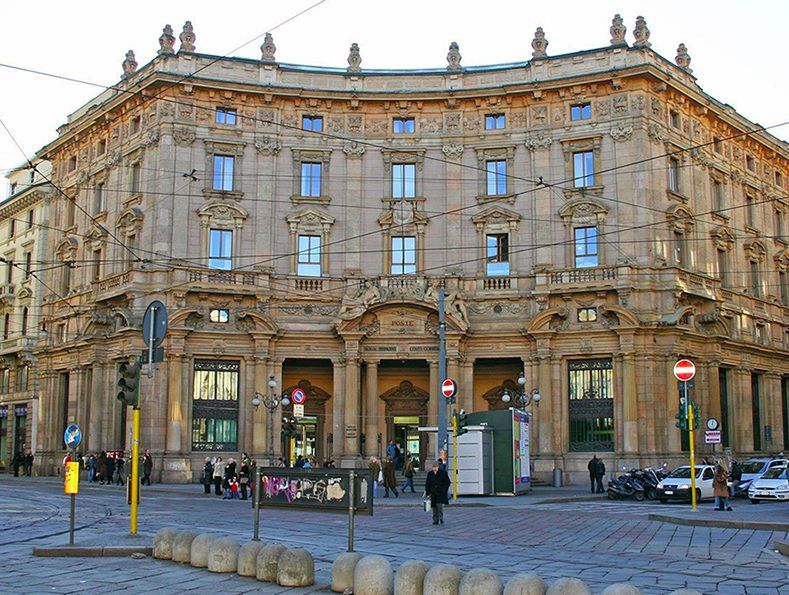
The big news in the coffee world in 2018 is that Starbucks has reopened a flagship store in Italy. Starbucks, which was once dismissed by Italian coffee shops in the past, is making a comeback again. Will it be able to regain some ground in the coffee kingdom of Italy this time?
Italians love drinking coffee so much, so it is not surprising that coffee machine handles appear in Italy. The Italian century-old company De'longhi Group was established in 1902 by the De'longhi family and has a history of 116 years.
In 1979, the company acquired Supercalor, a manufacturer of heating appliances.
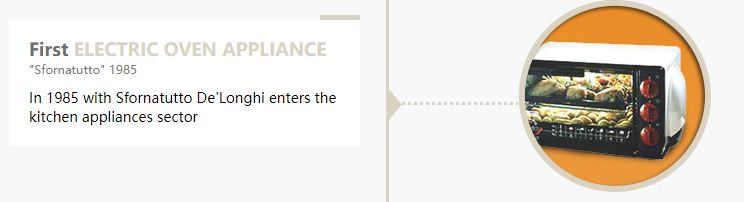
In 1985, De’Longhi made its first attempt to launch the Sfornatutto, a home appliance.
In 1986, the company acquired Elba, a manufacturer of freestanding cookers and built-in ovens and stoves.
In 1986, the company acquired Radiators, a company that manufactured hydronic water heating units for central heating systems.
In 1987, the company acquired Ariagel, a manufacturer of air conditioners.
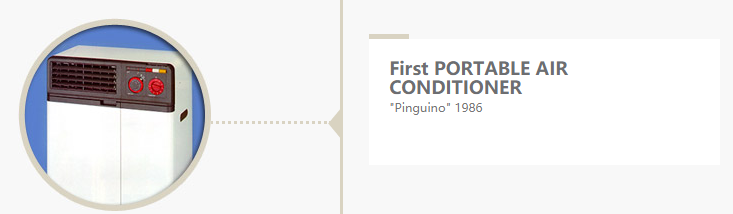
In 1986, De’Longhi developed the Pinguino, a portable, installable and ready-to-use air conditioner introduced to homes around the world.
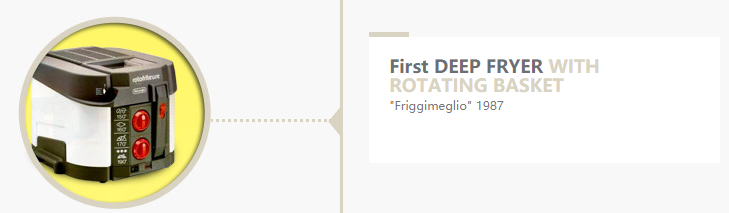
In 1987, De’Longhi launched the Friggimedlio electric fryer product.
In 1989, the company acquired Vetrella, a manufacturer of floor care products.
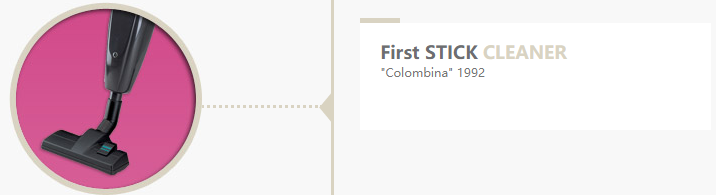
In 1992, the first push rod vacuum cleaner, Colombina, was launched
In 1994, Climaveneta joined the De’Longhi Group.
In 1995, the company acquired Simac Micromax, a manufacturer of clothes-ironing products and food-processing appliances.
In 2001, De’Longhi Group was listed in Milan, Italy.
During the same period, De’Longhi established branches in major countries in Europe and other continents, including De’Longhi in the United States (1988), De’Longhi in France (1990), De’Longhi in the Netherlands (1993), De’Longhi in Germany and De’Longhi in Japan. In addition, De’Longhi also established De’Longhi Moscow Office (1995), De’Longhi Shanghai Office (1996), De’Longhi Canada Office (1997) and De’Longhi Belgium Office (1999).
In 2001, the company acquired the famous British small home appliance brand Kenwood and Kenwood's Ariete brand. After acquiring Kenwood, De’Longhi began to use Kenwood's manufacturing base in Qingxi, Dongguan
In 2012, the company acquired the permanent license for the Braun brand on small home appliances from Procter & Gamble, which still owns the Braun brand.
At present, De’Longhi Group has 4 major brands:
De’Longhi,Kenwood,Braun,Ariete

The product lines of the four brands are as follows:
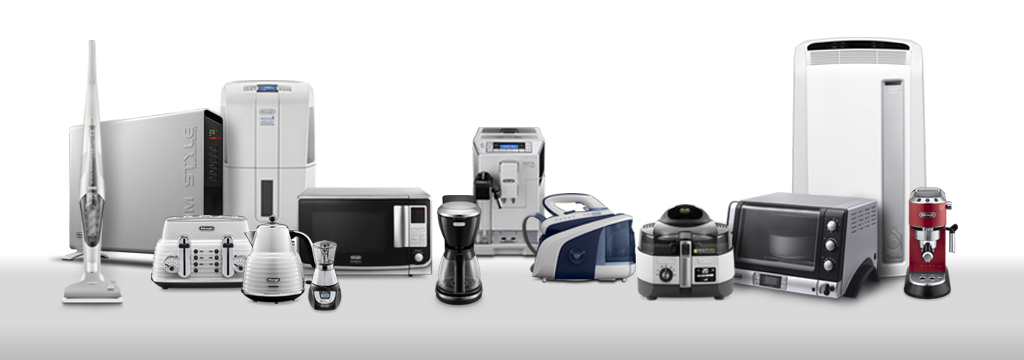
High-end brand De’Longhi ranks first in the field of high-end coffee machines
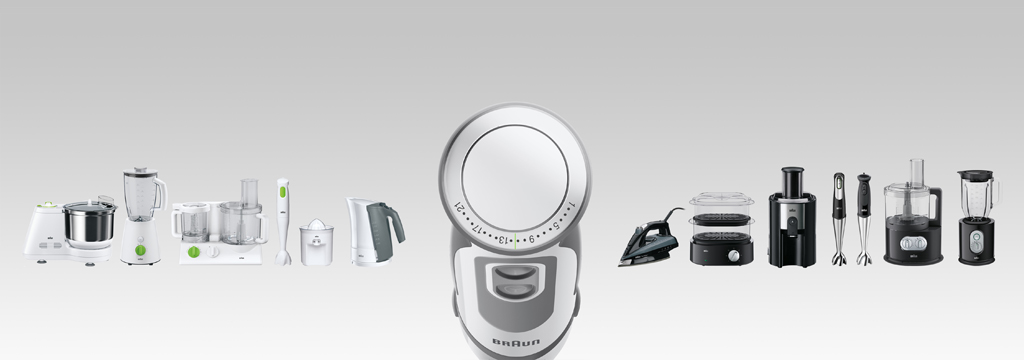
Braun brand small appliances, Braun brand small appliances are the world leader in hand blenders.
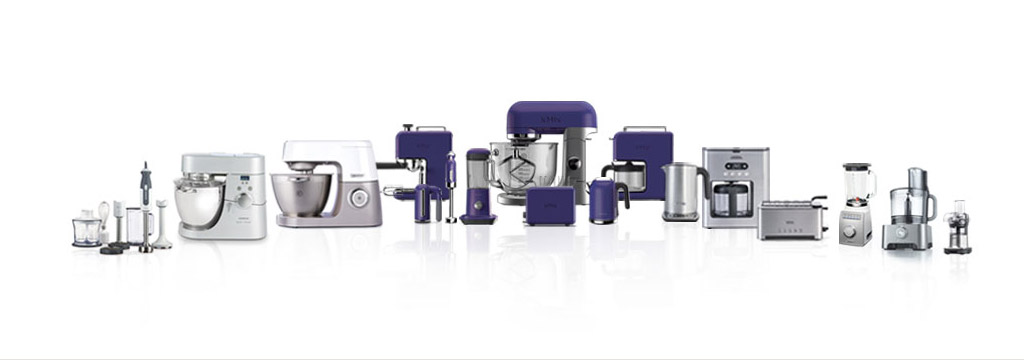
Kenwood, a mid-range small home appliance brand.
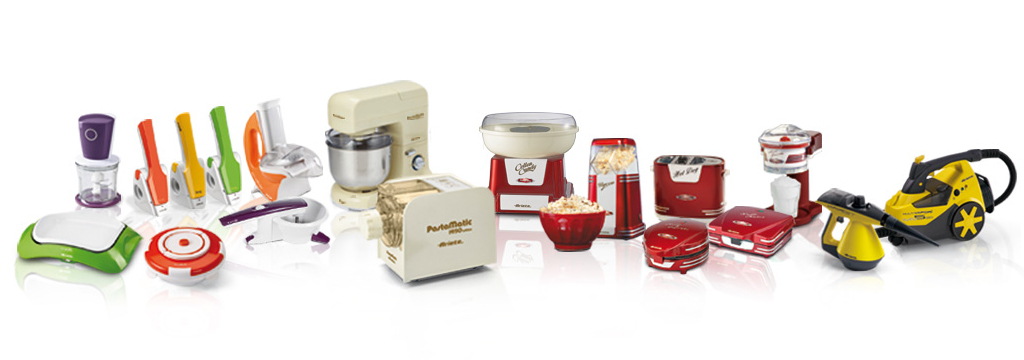
Ariete, a mid- to low-end brand, has the following product lines:
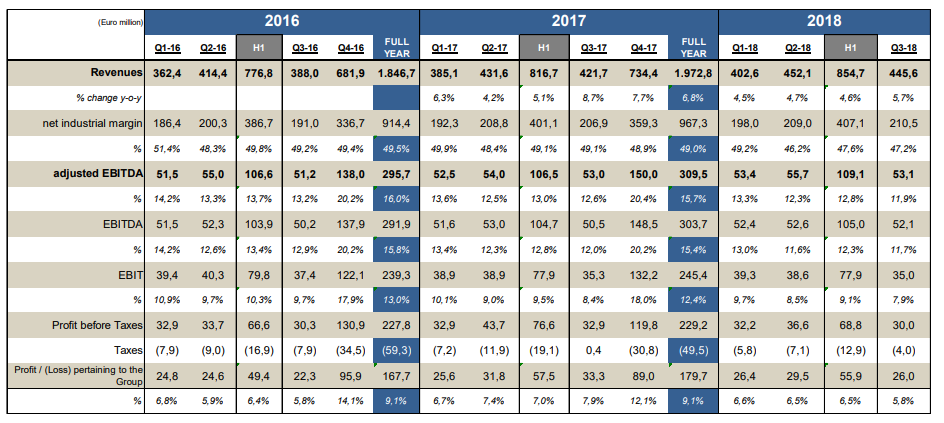
The current annual sales of De’Longhi Group are approximately 2 billion euros, and sales in the first nine months of 2018 were approximately 1.3 billion euros.
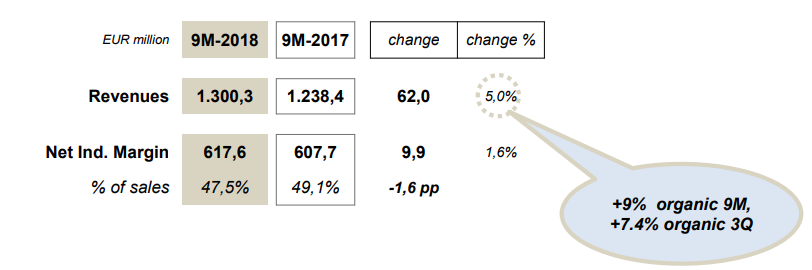
The current market distribution of the group is that Germany accounts for 12%, followed by the North American market at about 11%, the Italian local market at 10%, the Russian, Ukrainian and CIS markets at 8%, and China at 4%.
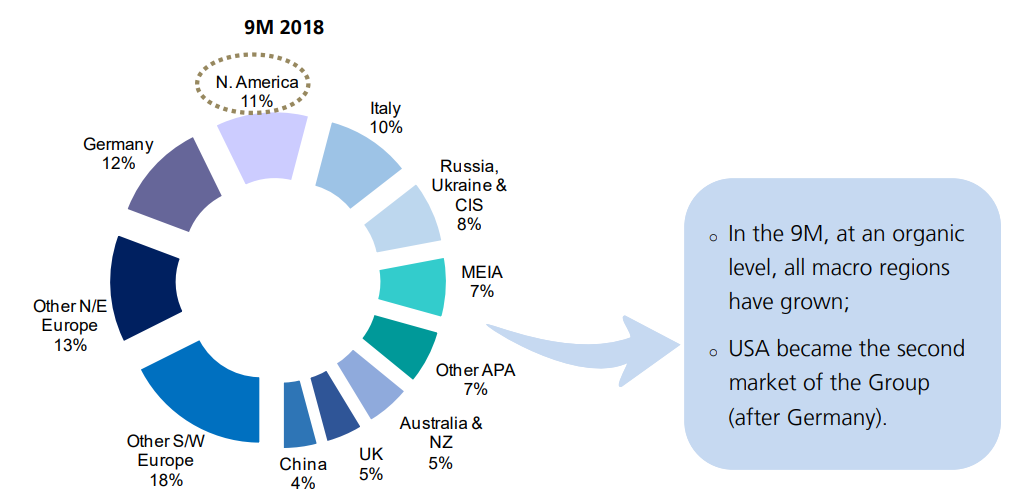
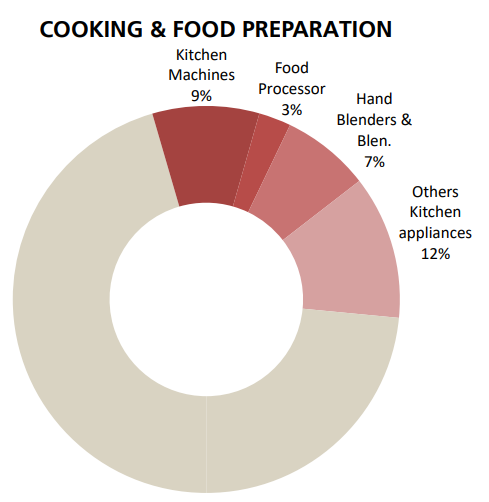
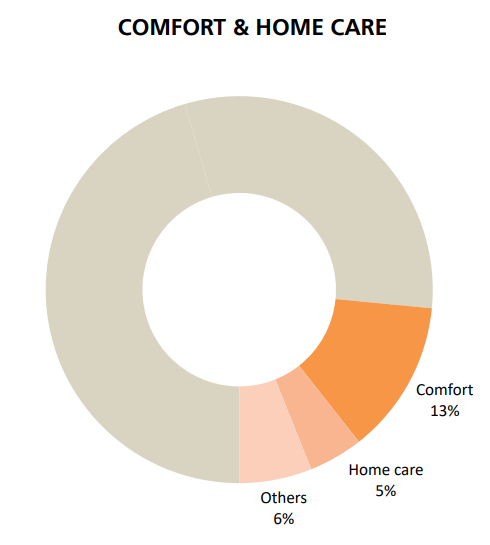
Broken down by product line, coffee machines accounted for 46% of the group's sales, food preparation/cooking products accounted for 31%, and comfort and home care accounted for 23%.
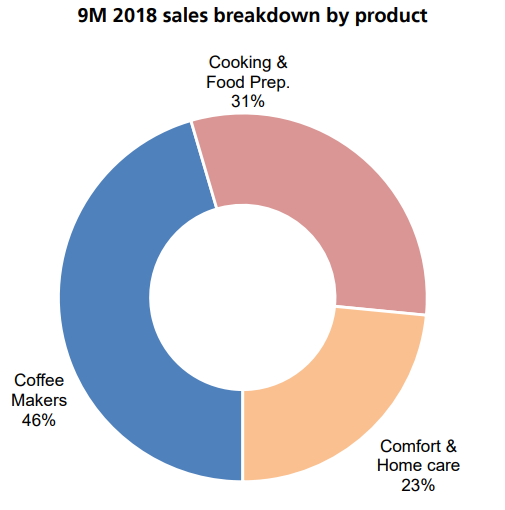
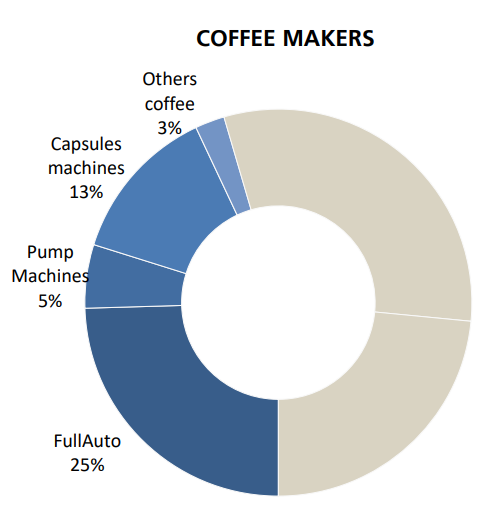
In addition to Dolce Gusto products, the group's coffee machines are all growing, and Dolce Gusto has negative double-digit growth. Business proportion: Full Auto 25%, Pump Machines 5%, Capsules Machines 13%
Among food preparation/cooking products, kitchen machines accounted for 9%, food processing machines accounted for 3%, blenders 7%, and other kitchen products 12%.
In the Confort/Home Care product line: Confort accounts for 13%, home care accounts for 5%, and others account for 6%
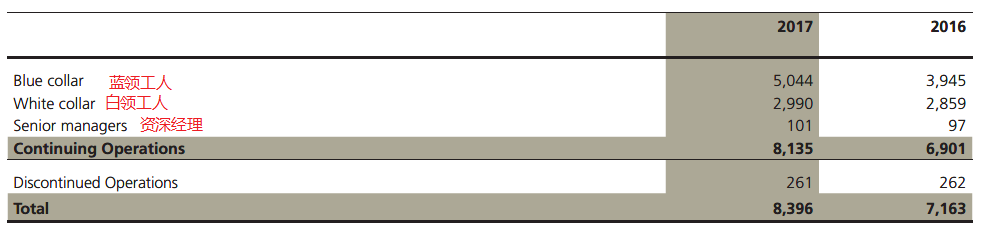
In terms of human resources, there are a total of 8,396 employees, including 5,044 blue-collar workers, 2,990 white-collar workers, and 101 senior managers.
The financial data from 2016 to 2018 is as follows