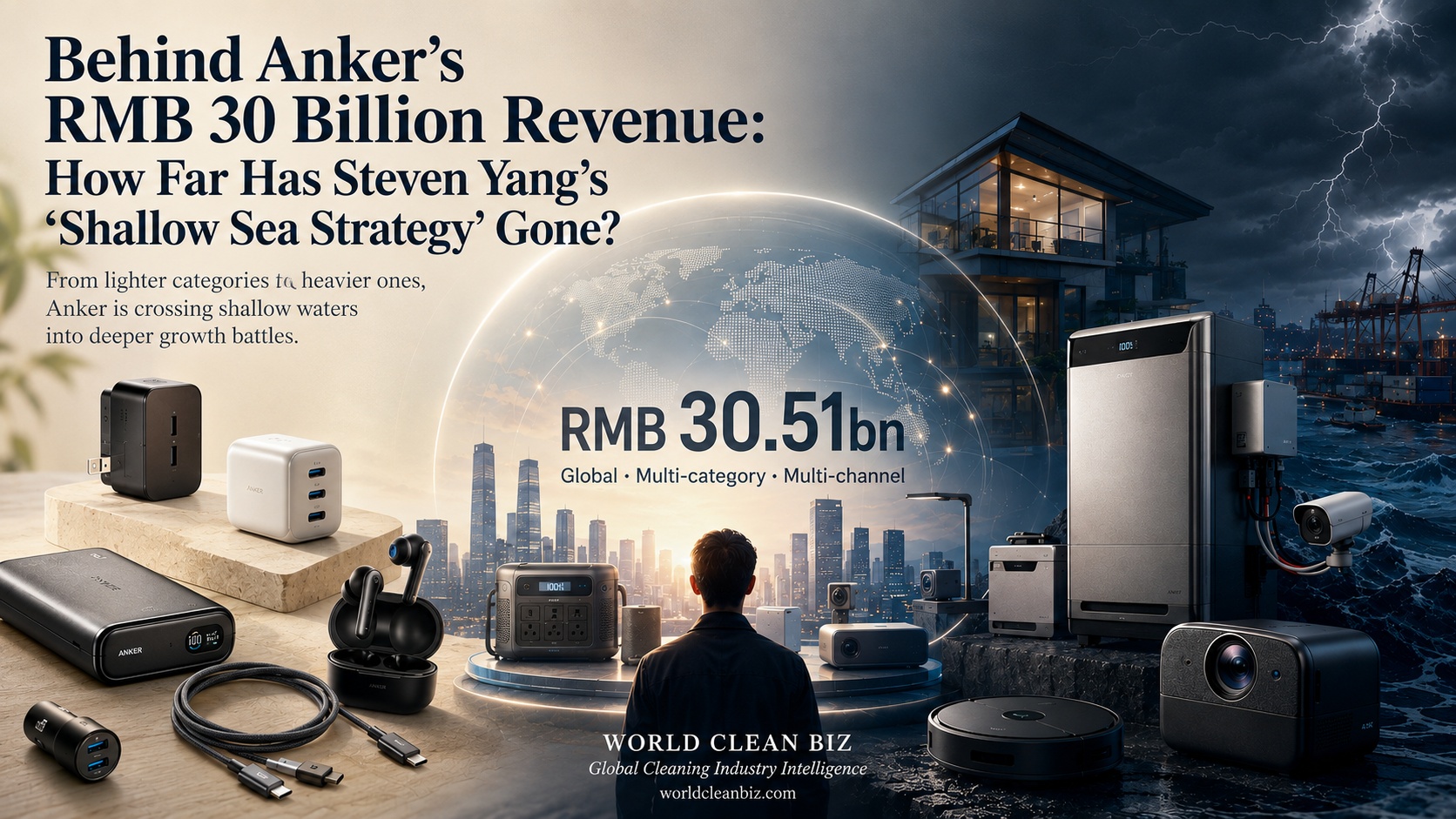
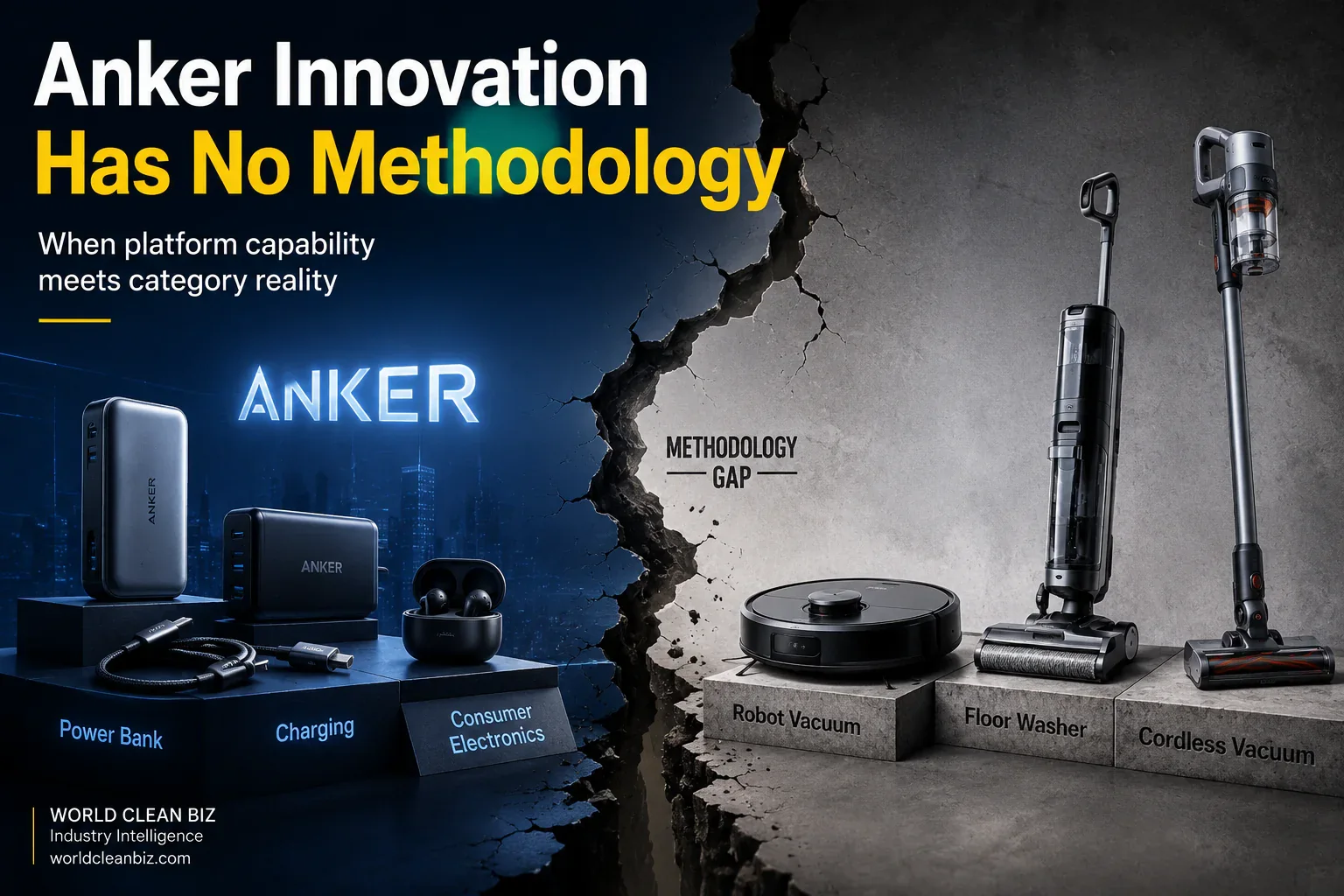
- Yang Meng frames Anker’s next stage around shallow-sea opportunities rather than deep, capital-heavy battles.
- The article argues that talent, incentives and platform design matter more than capital alone.
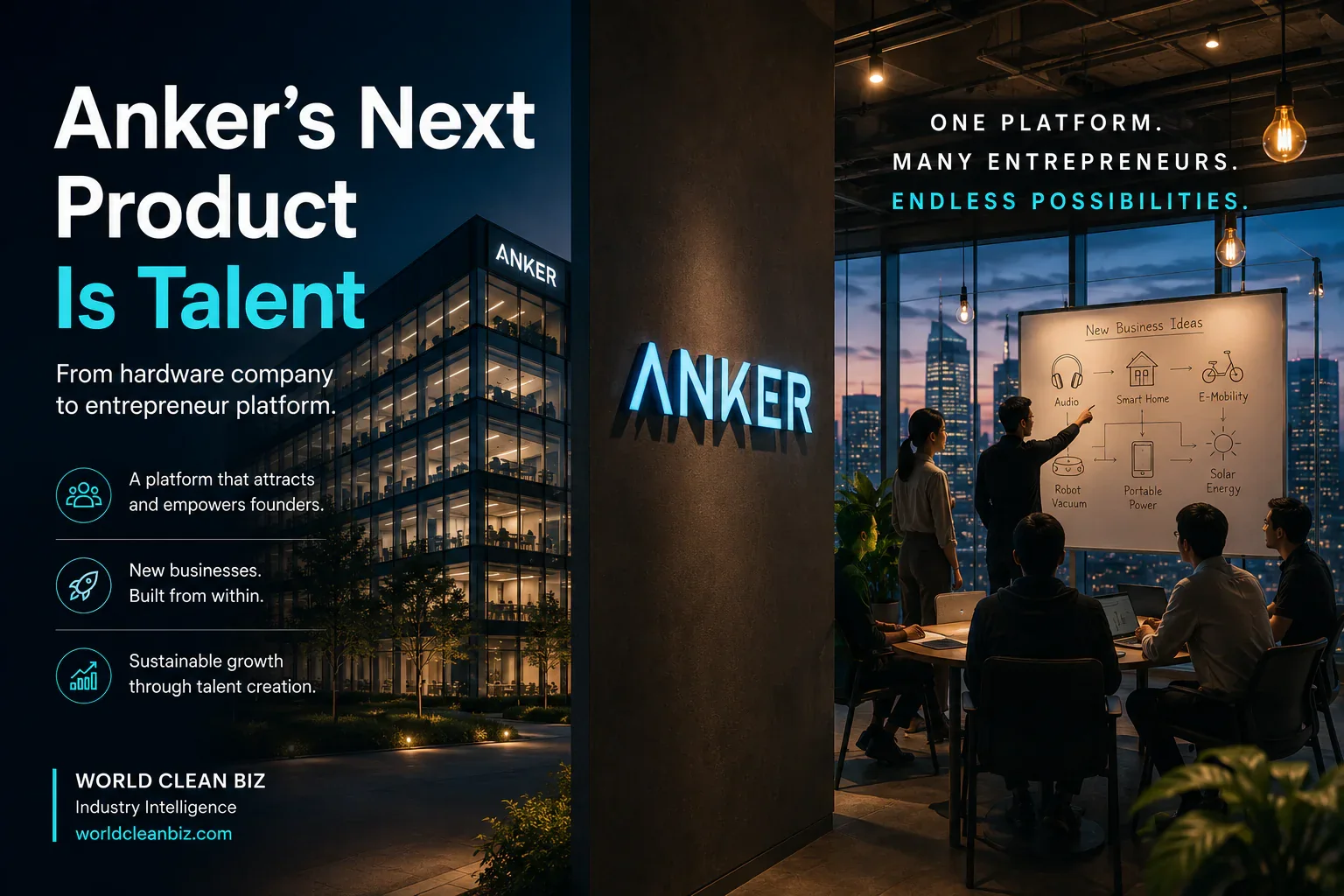
- Anker’s future expansion depends on whether it can attract category leaders and let them build independently.
Yang Meng's shallow sea strategy special topic discusses the boundaries of Anker's shallow sea strategy.
https://mp.weixin.qq.com/s/_UR1bLRPp3Rc3raBC2gWWg
Today I saw an article on Huxiu.com interviewing Anker founder Yang Meng. The article has more than 15,000 words.
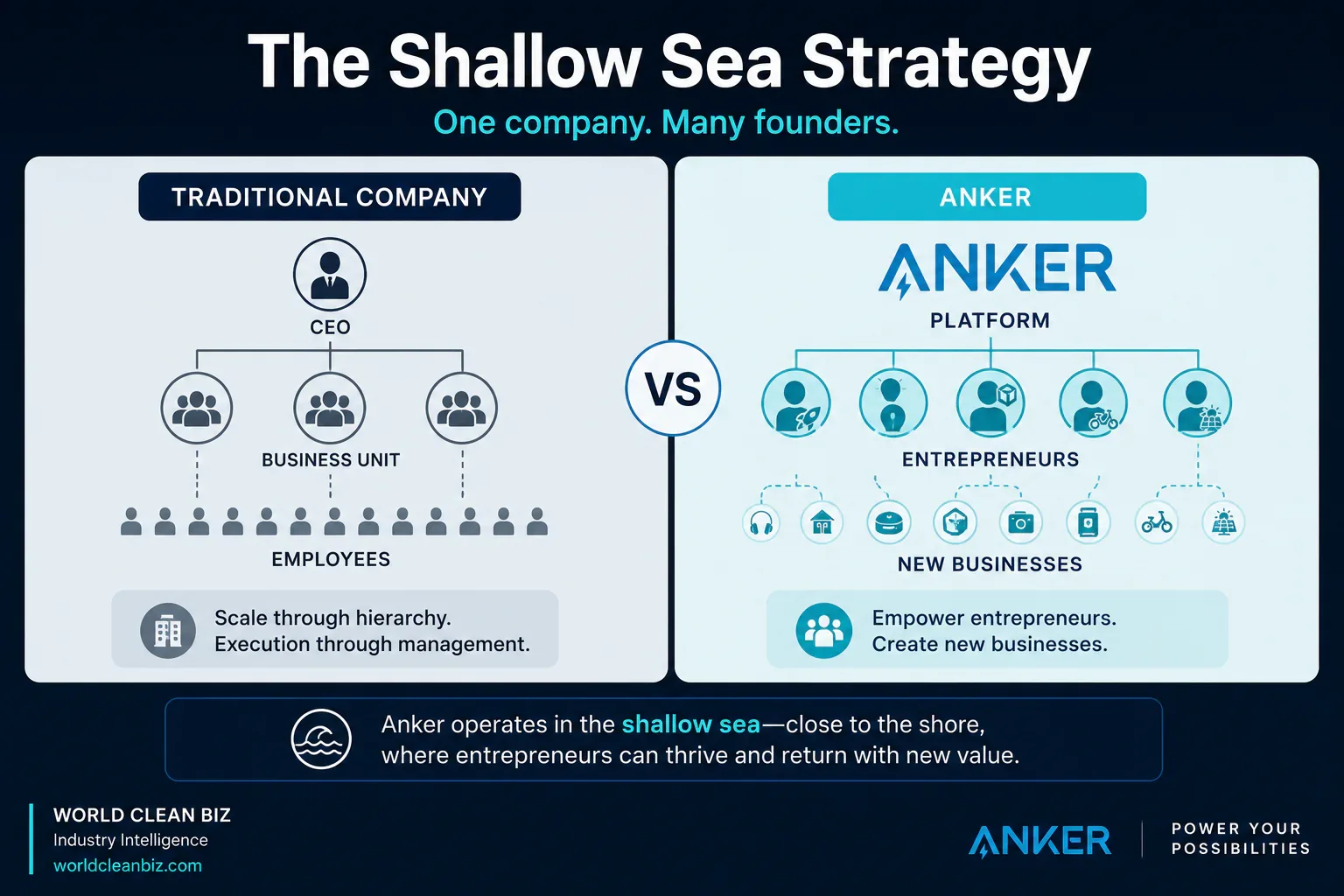
This interview systematically reviews the past and present of Anker's "Qianhai Strategy" in the past few years.
The shallow sea strategy is a strategic theory proposed by Anker founder Yang Meng before 2020.
He divided consumer products into deep sea and shallow sea. The deep sea is the market of computers, automobiles and CPUs with a single scale of hundreds of billions of dollars. Qianhai is a multi-billion or ten billion dollar market for drones and robot vacuums.
Then, blue whales focusing on the deep sea grew out of this type of terrain, such as Apple Tesla, Great White Shark, which leads in 1-10 shallow sea categories, typical companies such as Dyson, and a third group of killer whales that have successfully integrated a large number of shallow sea categories, such as Procter & Gamble, Texas Instruments, Anta, etc.
Among the world's top 500 companies, there are only blue whales and killer whales. Based on this situation, Anker wants to become the killer whales in shallow seas.
Then from 2020 to 2022, Anker began to comprehensively promote the shallow sea strategy, and the product line expanded to up to 27. However, 20 of these 27 product lines cannot beat their opponents and are not competitive in the market. When Yang Moe's imaginary shallow sea strategy could not be realized due to human factors, he collapsed and fell into a severe depression.
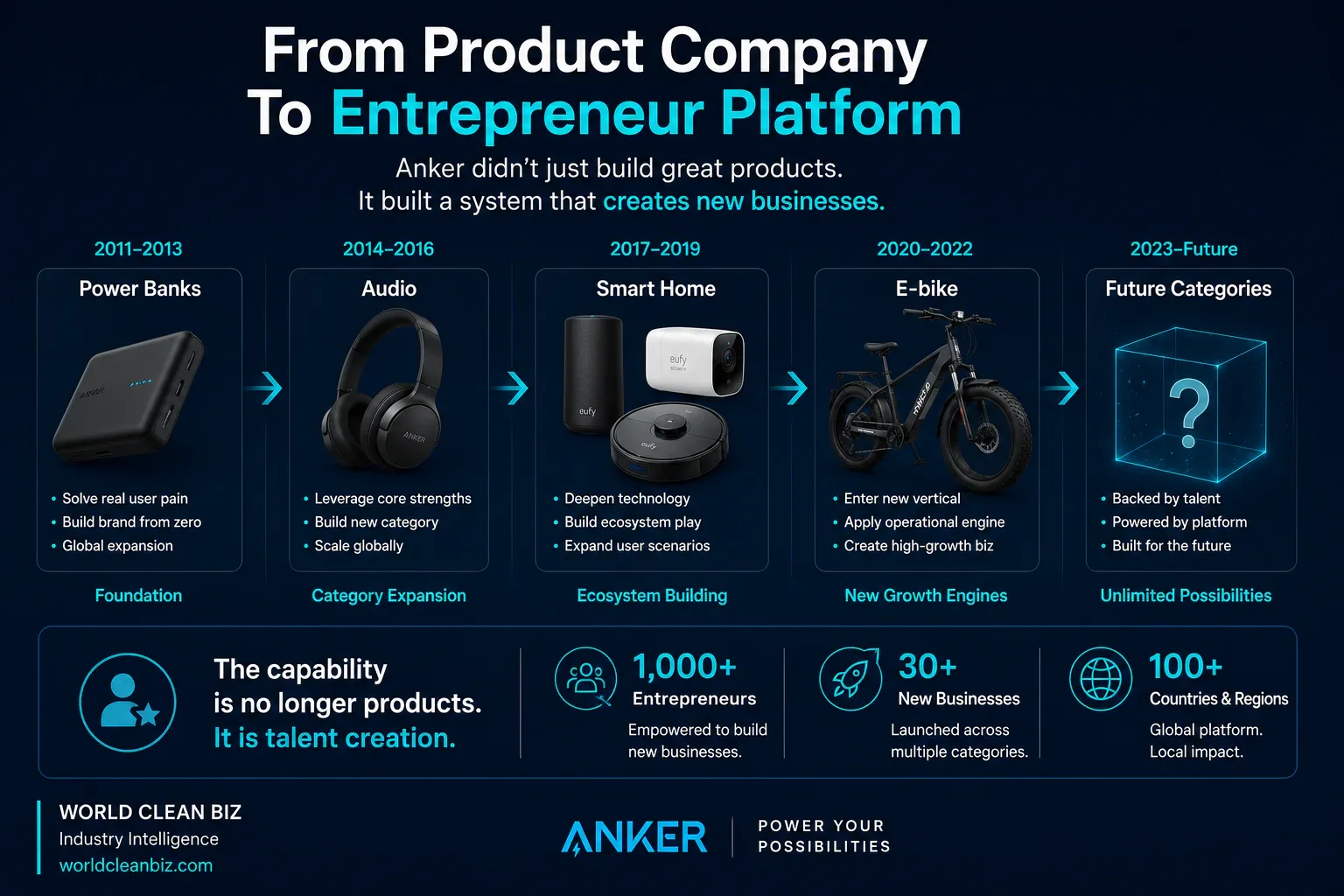
After experiencing a series of darkest moments, Anker also began a series of self-rescue measures:
The first is hemostasis and contraction.
Cut product lines from 27 to 17. All businesses that are not on the main track will be cut off without the ability to use Anker's existing technology.
Then came the rectification movement.
Unify organizational thinking and unify values. First, more than half of the first-level department heads were replaced, and then the middle levels were affected to cultivate new forces. There was some loss of personnel during this process, but it also unified the values of the entire company.
Third, focus on the three major directions of focus (energy, audio and video, home automation), dig deep and build an underlying shared technology platform.
During that time, Yang Meng fell into the darkest moment and relied on time and meditation to get out of it. Later, I gained a new understanding of shallow sea strategy. In the past, I was too focused on the logic of things and ignored human judgment. Now we need to first judge whether the person is right and whether the values are consistent, and then look at the business.
In the future, Anker's platform will depend on how to attract talents and compete with unicorn companies. Anker's goal is to leave 70% of distributable profits to entrepreneurs and 30% to the company. Over 25 years, more than 800 people will earn an annual salary of one million.
At the same time, Anker has the ability to support some businesses that have suffered strategic losses for several years. For example, the robot vacuum business lost nearly 1 billion from 2021 to 2025, and only started to make profits in 2025.
This is a very exciting interview. You can see the struggles and confusions experienced by top entrepreneurs, from being full of confidence to falling into the abyss and then back to the top.
What surprised me was that the failure of Asami's strategy in 2022 actually caused Yang Meng to fall into severe depression. The most terrifying thing for entrepreneurs is not failure, but the collapse of belief. Later, I still rely on time to get out. Most things are not a big deal. Time can heal all wounds. The big guys are like this, so it’s no big deal for us little shrimps.
As a small entrepreneur, I strongly agree with many of Yang Meng’s views. No matter when and where, all kinds of opportunities are always there, and whether a thing can be successful does not depend on the amount of funds and resources, but on the core leaders. If you find the right person, the probability of success is half as much.
In the future, Anker's success will depend on talents, and attracting talents will depend on platforms and money. 70% of the profits from future projects will be given to entrepreneurs. If you find the right people and the money is distributed, your business will naturally grow. Huawei, China's most successful company, relies on a lot of money to continuously attract talents to become China's strongest technology company.
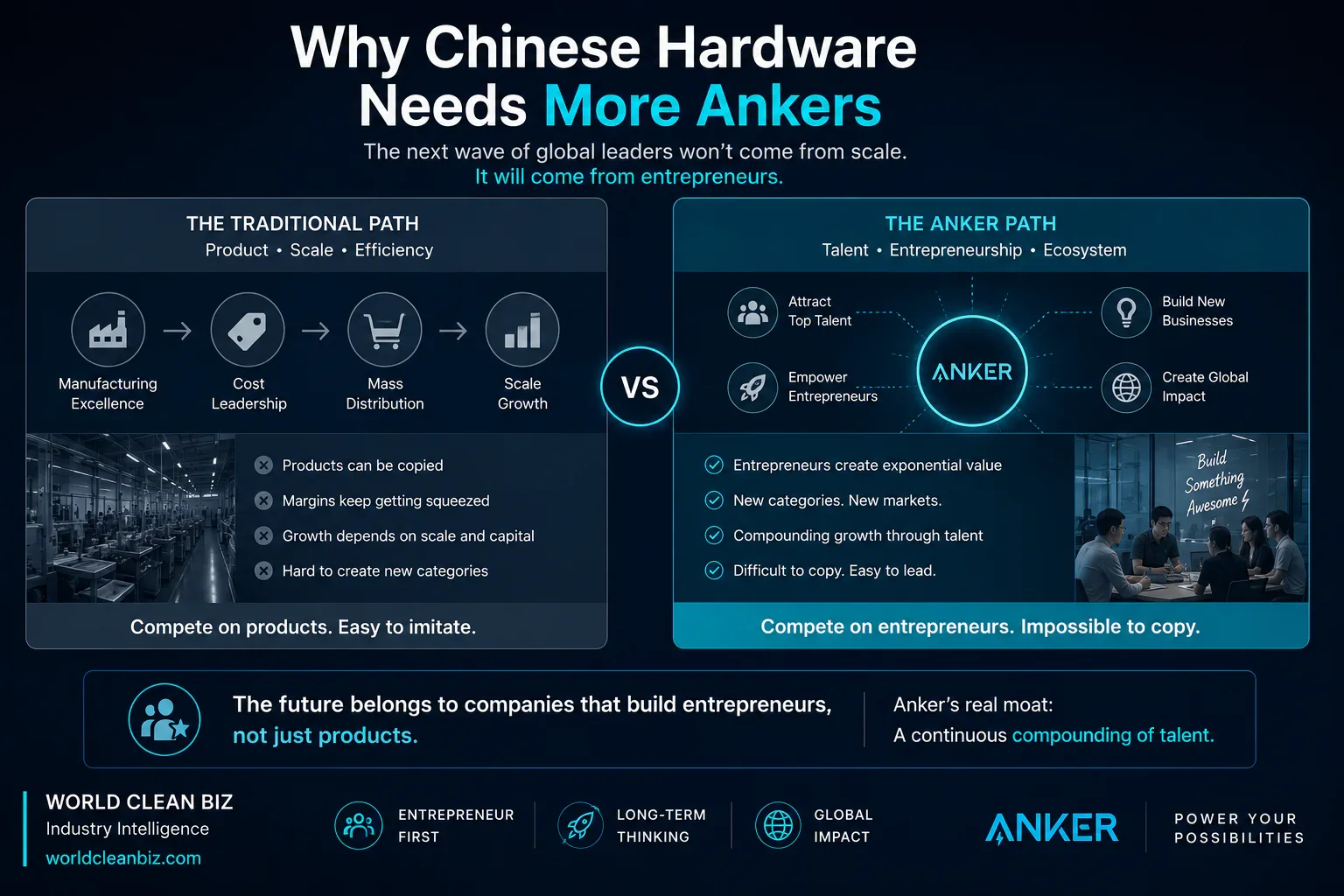
Values are a very ethereal thing, and many people regard values as a tool for brainwashing. From a management perspective, when a company reaches a certain size, people cannot communicate with each other frequently due to physical distance, and everyone's understanding and judgment of the same simple thing will be greatly biased. At this time, values are the simplest tool to build consensus.
I hope to have the opportunity to interview Yang Meng in person in the future and learn from top entrepreneurs. If anyone knows Yang Meng, please help me forward this article to him.