- Anker’s cross-border success came from brand and channel capability, but that does not automatically create category innovation methodology.
- Cleaning appliances expose different requirements from consumer electronics, including product judgment, supply chain depth and after-sales pressure.
- The article argues that Anker needs stronger category-specific leadership rather than relying only on its existing platform advantages.
On August 24, 2020, Anker Innovation went public on the A-share market, entering as the first stock of cross-border e-commerce with a market value that soared to over 5 billion yuan.
2020 was a year when cross-border e-commerce exploded. Countless entrepreneurs with dreams started their businesses in Shenzhen Longhua Bantian area, relying on just one computer and grew into companies with annual sales ranging from several million to even hundreds of millions. As my friend put it, before 2019, doing business on Amazon was like picking up money; a few products sent to the Amazon warehouse would generate orders without much effort in operations. Some skilled individuals managed to achieve revenues in the billions by simply fine-tuning their operations or through basic order stuffing.
At that time, companies such as "Bantian Five Tigers" and "South China City Four Young Men," including Shuizhu, Aoji, and Global Easy Purchase, were among the giants. However, Anker Innovation stood out in the cross-border e-commerce industry with a distinct approach. In 2019-2020, the most effective strategy was "listing" or "dumping," which involved listing large quantities of SKUs to naturally filter out products that performed well and then increasing their stock. The advantage of this method was that products that emerged through natural traffic were generally of good quality and had potential for becoming bestsellers, thus avoiding the uncertainty of manual product selection. Additionally, because it was a "dumping" strategy, the number of orders placed was not high, making cost and inventory management more manageable.
However, there was a fatal flaw in the dumping approach: since it involved large-scale listings, the quality and functionality of selected products were not primarily considered; the main task was to constantly add and remove listings. Most of the products received were unsuitable for the local Amazon market. The success of the dumping strategy was due to the industry's early stage, where there weren't many players or products. Once faced with meticulously crafted products, those using the dumping approach would quickly fail.
Therefore, sellers following the dumping strategy naturally progressed to a more refined "high-quality" flow. By studying customer reviews and addressing pain points, they carefully developed each product. Today, this high-quality approach is the mainstream on Amazon. However, these companies realized that years ago, another industry player had achieved sales of over 10 billion yuan through a high-quality strategy and listed on the A-share market.
In 2020, Anker Innovation became an object of study for all Amazon sellers. Many of my friends joined Anker at this time, proudly telling me, "Denny, did you know? Our company has a strong methodology from marketing to product development. We have a 24-hour Amazon review capture system that automatically monitors our products and reviews, sending real-time analysis to us. We are already laying out in cleaning appliances, and our disruptive innovation products will exceed your expectations." At this time point in 2020, Anker's Eufy robot vacuum was selling very well overseas, with over a million units sold annually. Therefore, when they told me that another bestseller would come from the cleaning appliance sector, I believed them and looked forward to it.
At the product development level, Anker adhered to the VOC (Voice of Customer) approach, continuously refining products based on genuine customer feedback to meet their needs. While this theory is not particularly new, most companies focus on creating products based on customer demand. In the early days when Amazon was less popular, few companies could directly collect and implement real consumer experiences. From this perspective, Anker's product development methodology had a certain level of leadership.
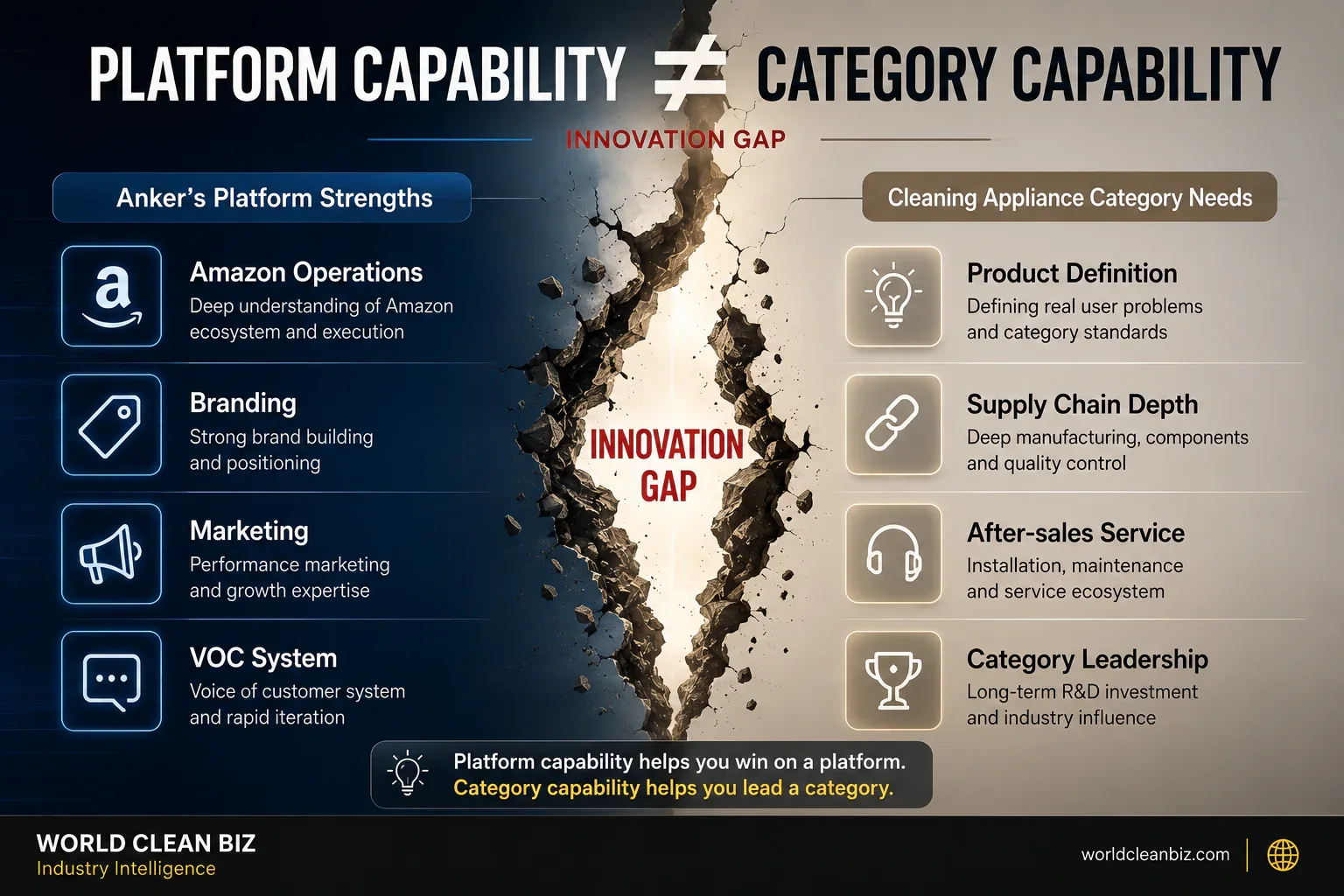
After its successful listing, Anker Innovation proposed the "Shallow Sea Strategy," replicating its business model across other industries. As a result, the company's team grew from over 1,600 to more than 4,000 members in a short period. However, with the passage of time, it was discovered that this strategy did not yield expected results in other industries. Often, promising directions faced competition from industry unicorns and failed to succeed.
At one point, I remember Anker Innovation establishing a large office in Suzhou, recruiting many teams focused on developing vacuum cleaners, hard floor washers, and other products. Meanwhile, they also brought in the high-end Eufy Mach team in Shenzhen for more advanced product development. Below are some original quotes from Yang Meng, founder of Anker Innovation, during an interview with 36Kr. I believe his words were very sincere, so here they are:
Yang Meng: We cut down on ten product lines including lawn mowers, handheld cleaning devices, and electric bicycles. Although we tried to absorb these colleagues into mature product lines, over 200 people ultimately left. It was painful and difficult to see the hard work and dedication of those who joined us for new categories, only to be asked to leave after a couple of years.
At that time, some teams were in Suzhou, and when I bid farewell to my colleagues there, one colleague said something that stuck with me: "Steven (Yang Meng's English name), your company does seem to have money. But why did you choose this path? Why didn't you just keep us here doing what we know best instead of bringing us in for new categories and then asking us to leave after a couple of years?" He said, "I put my heart into building my team, using all my connections, even going out at midnight to recruit former colleagues. The results were not good, I was hurt, and you must have been too. Why did you do this?"
Yang Meng: Yes. In Suzhou, many companies had their own buildings. At the time, we were sitting in a hotel below a company that made cleaning products. He said to me, "Steven, why don't you just buy your own building with this money?"
Around 2021-2022, when I first saw some of Anker's products like the QuickClean and the Eufy Mach cordless steam product, my initial impression was that there might be issues with their product definitions, making sales unlikely. In 2022, Anker disbanded its Suzhou R&D center, and after spending hundreds of millions on research and development, the Eufy Mach team also largely dissolved.
We discussed this issue with many friends at the time. Why did Anker Innovation achieve such success in products like power banks and even in robot vacuums, but struggle to replicate similar successes in hard floor washers and vacuum cleaners?
The reasons are as follows:
- Anker has always been very focused on user feedback, using a VOC system that far outperformed the early factory-style product development approach of "brainstorming." However, by 2021-2022, this focus on addressing consumer pain points had become a standard in many industries. From this perspective, Anker's product development framework was no longer leading.
- The special nature of cleaning appliances. By deeply analyzing Anker's product lines, we found that most of its successful products were those it had been working on for years, where the competition was relatively weak. However, over the past few years, billions of dollars have flooded into the cleaning appliance market, with both established giants and new tech companies like Xiaomi, Roborock, and Tineco entering the fray. This influx of capital has increased the competitive intensity in the cleaning appliance sector by tenfold or more, meaning there are many more competitors now.
- Research and Development Investment. Initially, startup teams could gain a product edge by addressing industry consumer pain points. However, in the face of established giants, these ideas were quickly replicated into their own product systems. Over the past few years, whenever any startup company achieved some highlights, the giants would swiftly copy and surpass them. This is something Narwal should be well aware of. The continuous burning of substantial funds for startups is unsustainable. As a result, Anker's cleaning appliance team was unable to proceed with further updates after their first major product did not achieve sales success.
- Intense Competitive Environment. Cleaning appliances have seen massive investments over the past few years, but it can be said rather brutally that no one has made money in the domestic market. The harsh environment and significant marketing expenditures have rendered fleeting innovations by startups virtually worthless. Moreover, Anker's proud overseas Amazon channel did not yield the expected success for its products either. Many Amazon sellers have learned from Anker’s methodologies and delved into the supply chain to undercut both Anker's prices and costs.
- Branding. Anker (Anker) is a well-known brand in the 3C industry, owing to years of investment and consistent reputation building. However, for cleaning appliances, the Eufy brand has weaker recognition compared to established brands. It also lacks significant advantages over other cross-border e-commerce brands. In this context, if price differences are substantial, consumers will still tend to choose cheaper products. Consequently, on the overseas Amazon market, Eufy's products have consistently been more expensive and have had relatively poor sales.
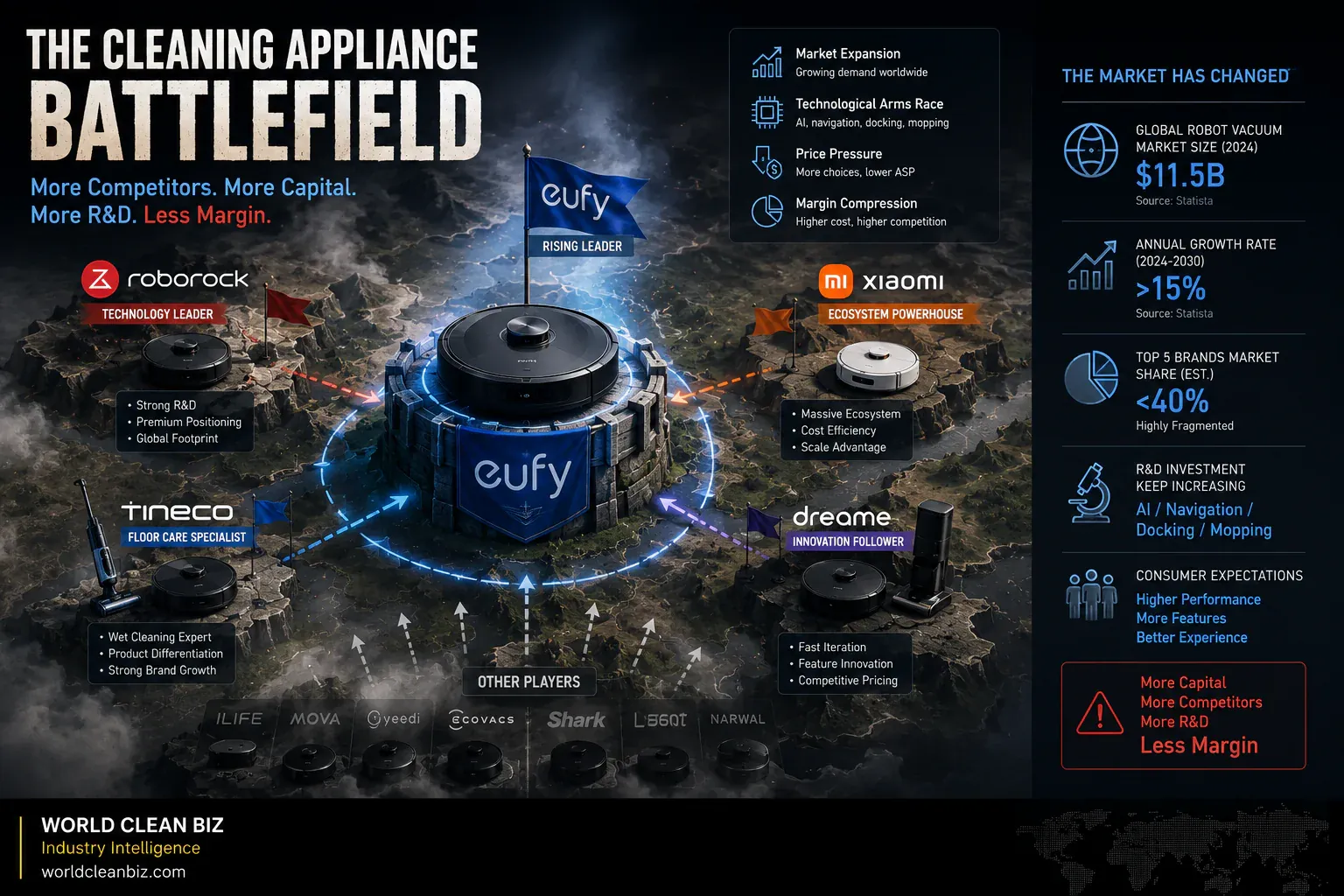
After experiencing a painful 2022, Anker Innovation has released its new annual report for the first three quarters of 2024, with revenues reaching 16.4 billion yuan. It is expected that breaking the 20-billion-yuan mark this year will not be an issue.
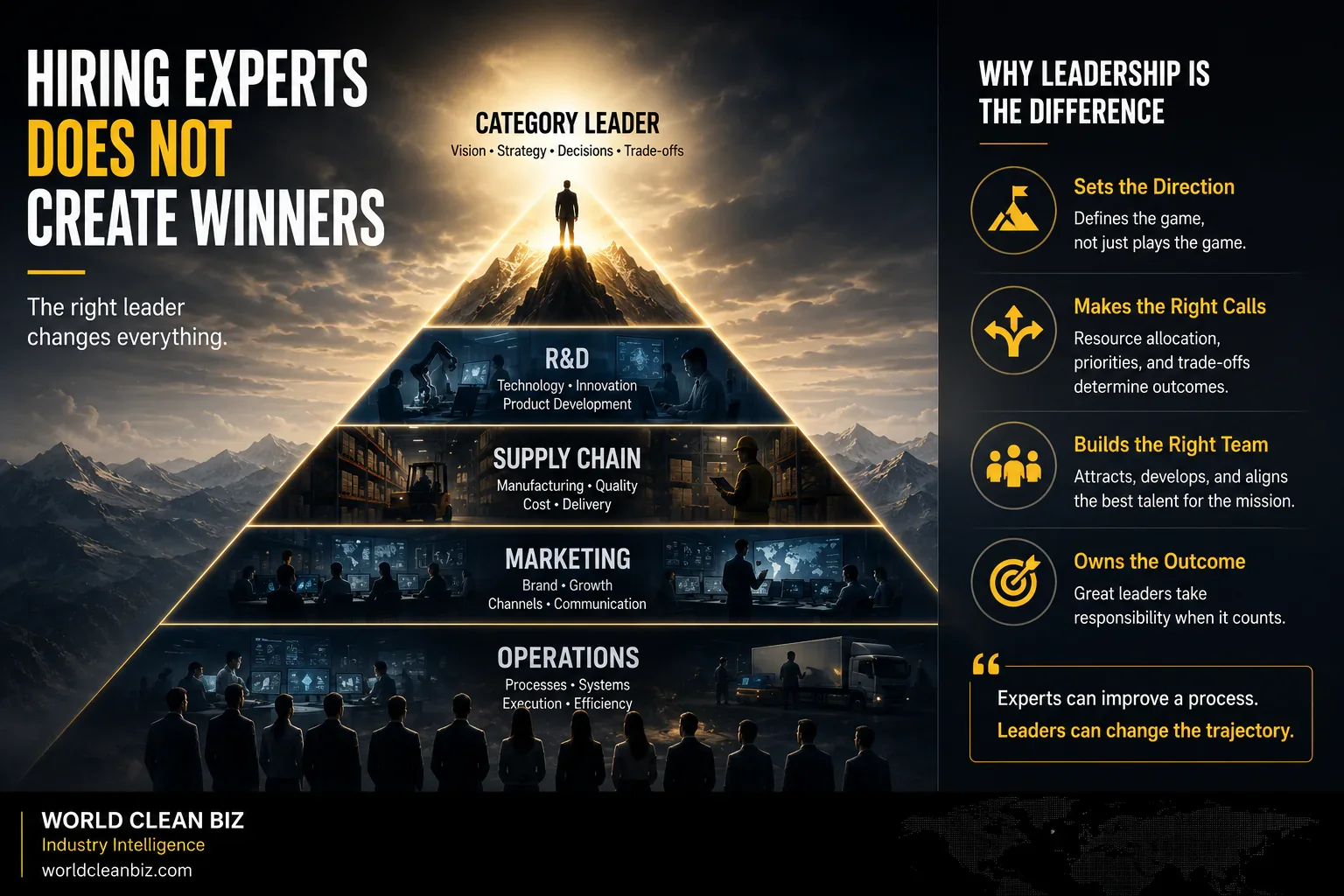
In the latest video interview, Yang Meng also updated Anker's approach.
- Anker's shallow sea strategy is correct; there are still numerous business opportunities in the market that Anker can explore. Anker's current product line has a limited ceiling, and if it does not expand into other categories, further development will be constrained. In the future, Anker could become a company like Texas Instruments, where each entered product line might not be particularly large, but when becoming the industry leader in that category, it would still be profitable. Anker's company aims to become a platform-type entity in the future.
- In the past, Anker's hiring focused on industry experience, which is not inherently wrong. However, just like the Big Dipper Seven-Star Formation in the Quanzhen Sect, the effectiveness varies depending on who executes it. The success of a category lies with top talent; if the top leader (top position) is not strong enough, the chances of success are low. Currently, Anker still has significant market opportunities but lacks the right talent to lead them.
- Dividing the Pie. This concept was not mentioned in previous interviews with Anker. With talent on board, how to distribute rewards became crucial. As Jack Ma said, enough money can turn non-talents into talents. Anker has internally refined some mechanisms for distributing rewards, ensuring that those who create more value receive greater benefits.
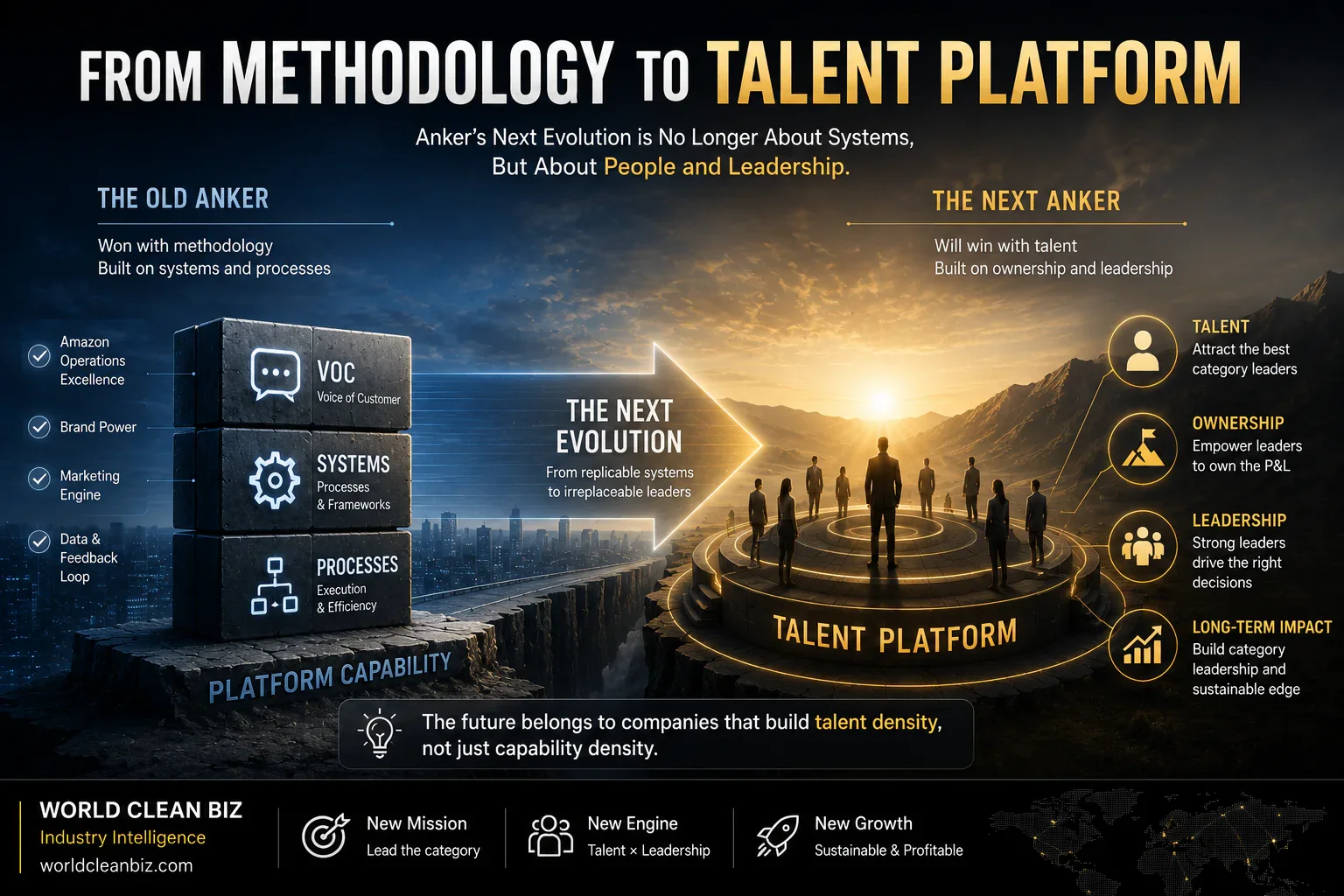
Anker's early methodology enabled the company to achieve leadership positions in multiple industries and successfully go public. Now, can Anker's new generation approach lead the company to an even brighter future? For professionals in the cleaning appliances industry, we also hope that Anker will once again enter this field and bring about more changes.