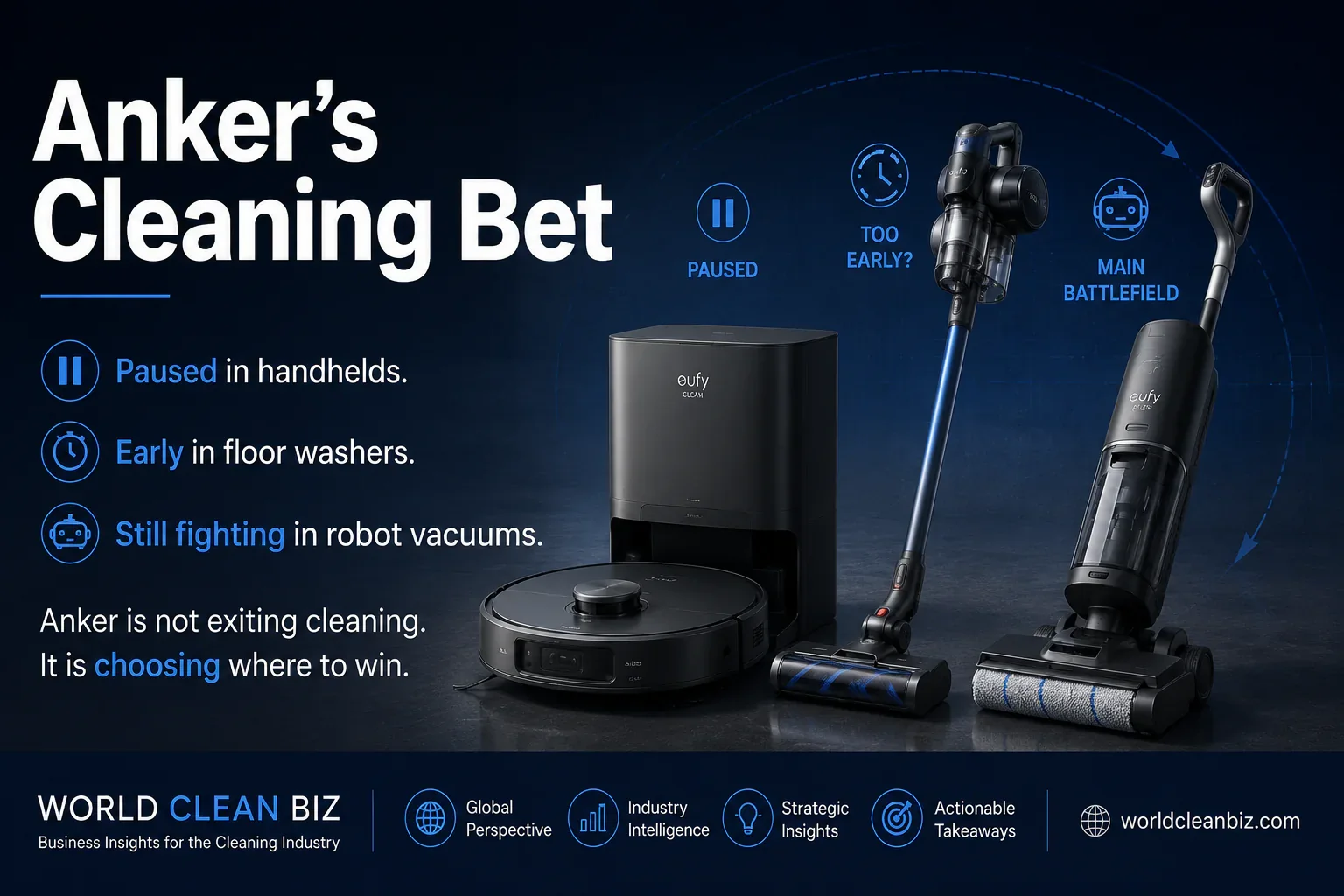
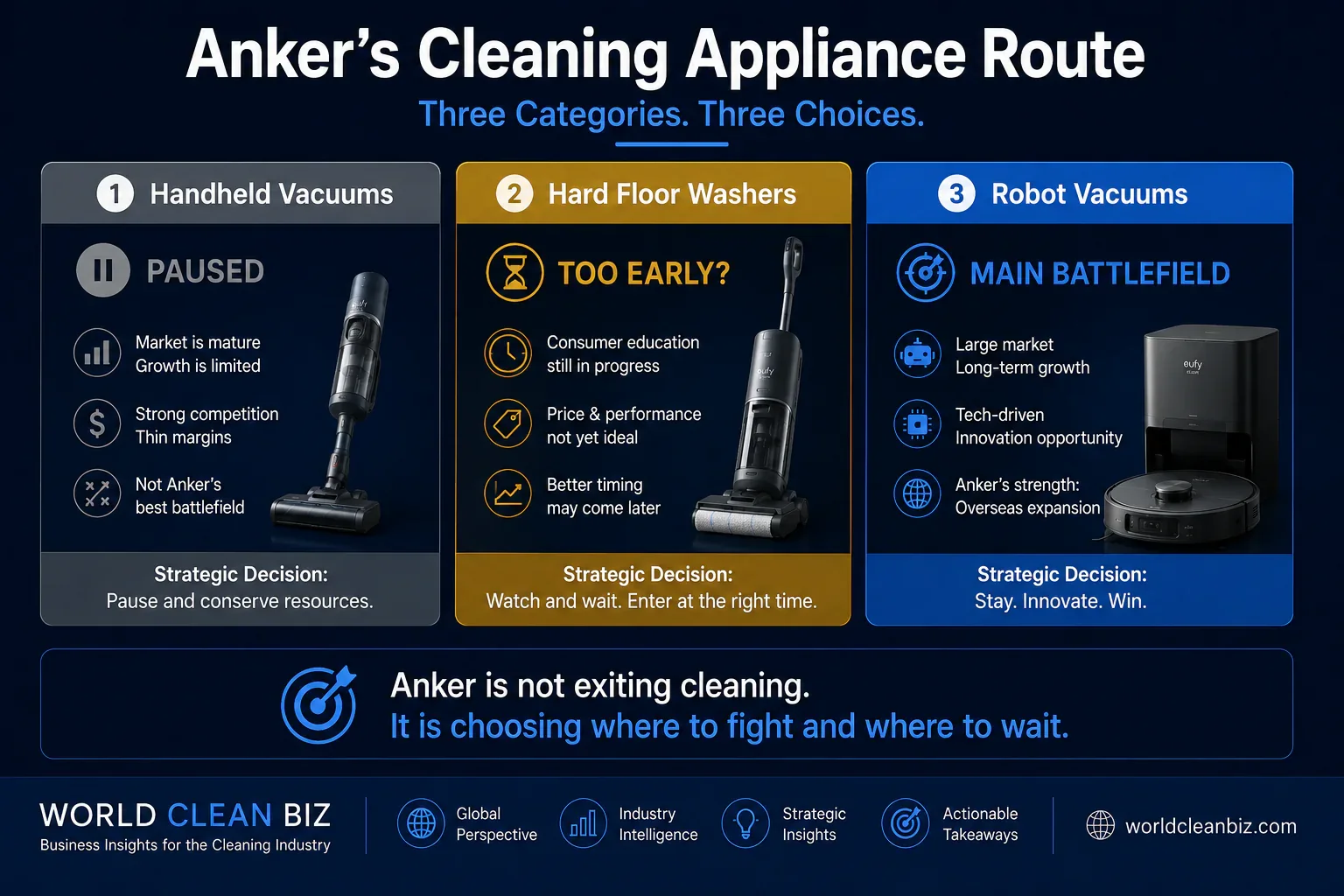
- Anker appears to have paused handheld vacuums while waiting for new opportunities.
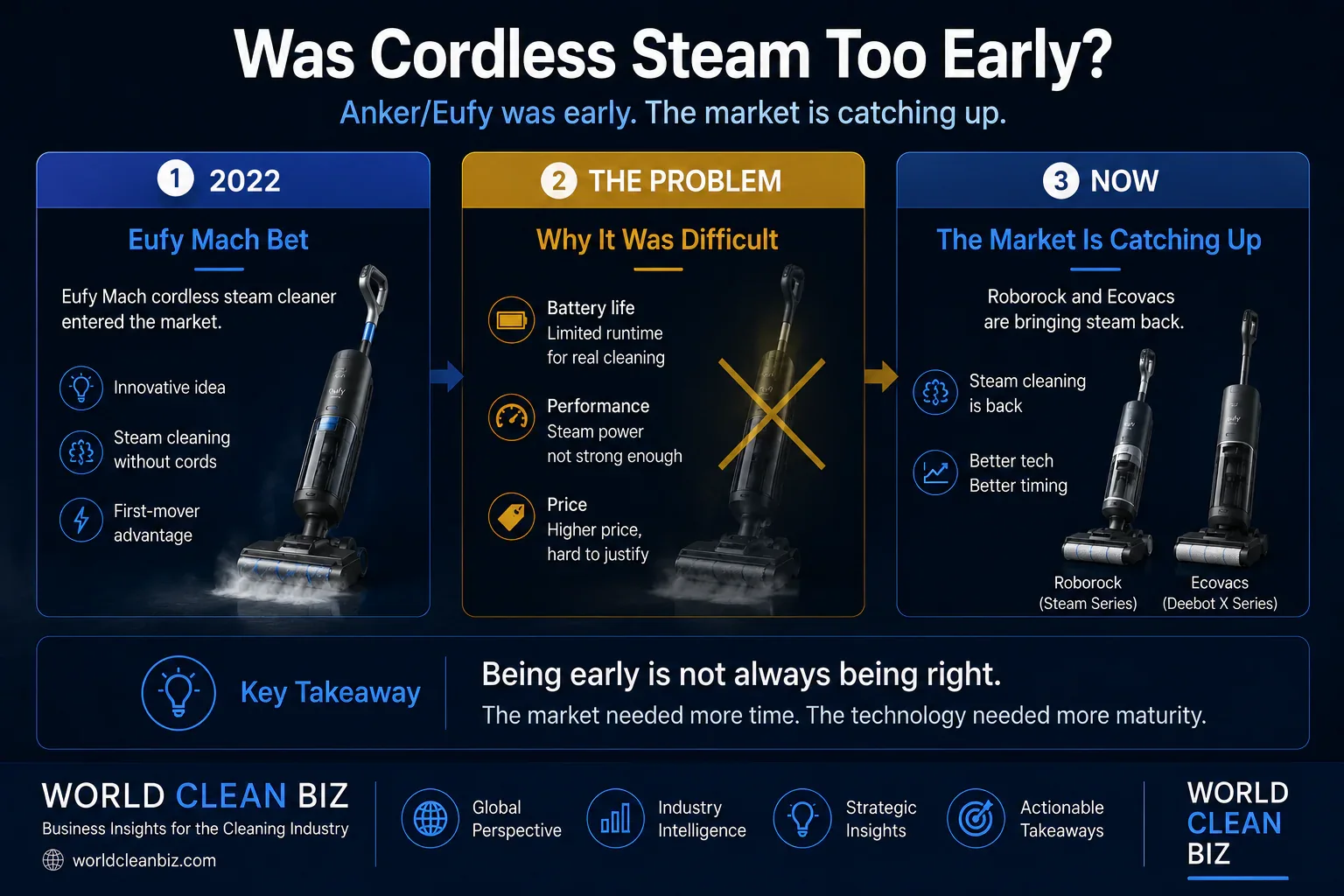
- Its Eufy Mach hard floor washer bet may have been too early for cordless steam.
- Robot vacuums remain Anker’s stronger cleaning-appliance line, but competition overseas is intensifying.
Anker Innovations has always been a leader among Chinese companies going overseas. Whether in sales capability or product capability, it is among the best in the industry. A few years ago, during the hard floor washer wave, Anker invested heavily in hard floor washers and created the Eufy Mach brand.
But in another cleaning-appliance product line, robot vacuums, Anker has always been relatively successful, selling more than one million units every year. Some time ago, I heard from friends that Anker Eufy's robot vacuum business was doing well. So in this video, let us look at Anker's overall cleaning-appliance business and what future directions it may have.
First, let us look at Anker's vacuum cleaner product line.
Small car vacuum and handheld product line:
At present, on Amazon only one small car vacuum is still on sale, while other handheld vacuum cleaners have basically been taken down. On the official website, the cleaning category contains only robot vacuums. The small car vacuum has also been sold for around four to five years, and it looks as if Anker does not plan to update it with new products. At present, the selling prices of car vacuums and handhelds are already very low, and the entry barrier is not high. In this category, Anker may not necessarily compete better than other Shenzhen e-commerce companies. Therefore, I think temporarily giving up in the short term is a wise choice. The future cleaning-appliance market is still very large. I think Anker has only paused temporarily and is waiting for a new opportunity before returning.
Hard floor washer product line:
The Eufy Mach hard floor washer series that Anker previously spent heavily to build chose cordless steam as its breakthrough point in hard floor washers around 2022. But at that time, the market technology was not mature. Cordless steam had poor performance and use experience, and the price was high. I wrote an article back then explaining why I was not optimistic about cordless steam products. But this year, Roborock, Ecovacs and others have begun pushing cordless steam again. Battery life and use results seem to have improved, and sales are also good. Sometimes this is how it works: if one is too far ahead of the market, one becomes a martyr. Entering the market on the eve of a technology explosion is a major test of a product leader's judgment.
I looked at Eufy Mach's hard floor washers. They are currently not sold in North America and have some sales in Europe, but the volume is not large.
At present, robot vacuum technology and product functions are merging with hard floor washers in large amounts. So I think Anker should still keep a hard floor washer team internally and wait for the right time to come back out.
Robot vacuum product line:
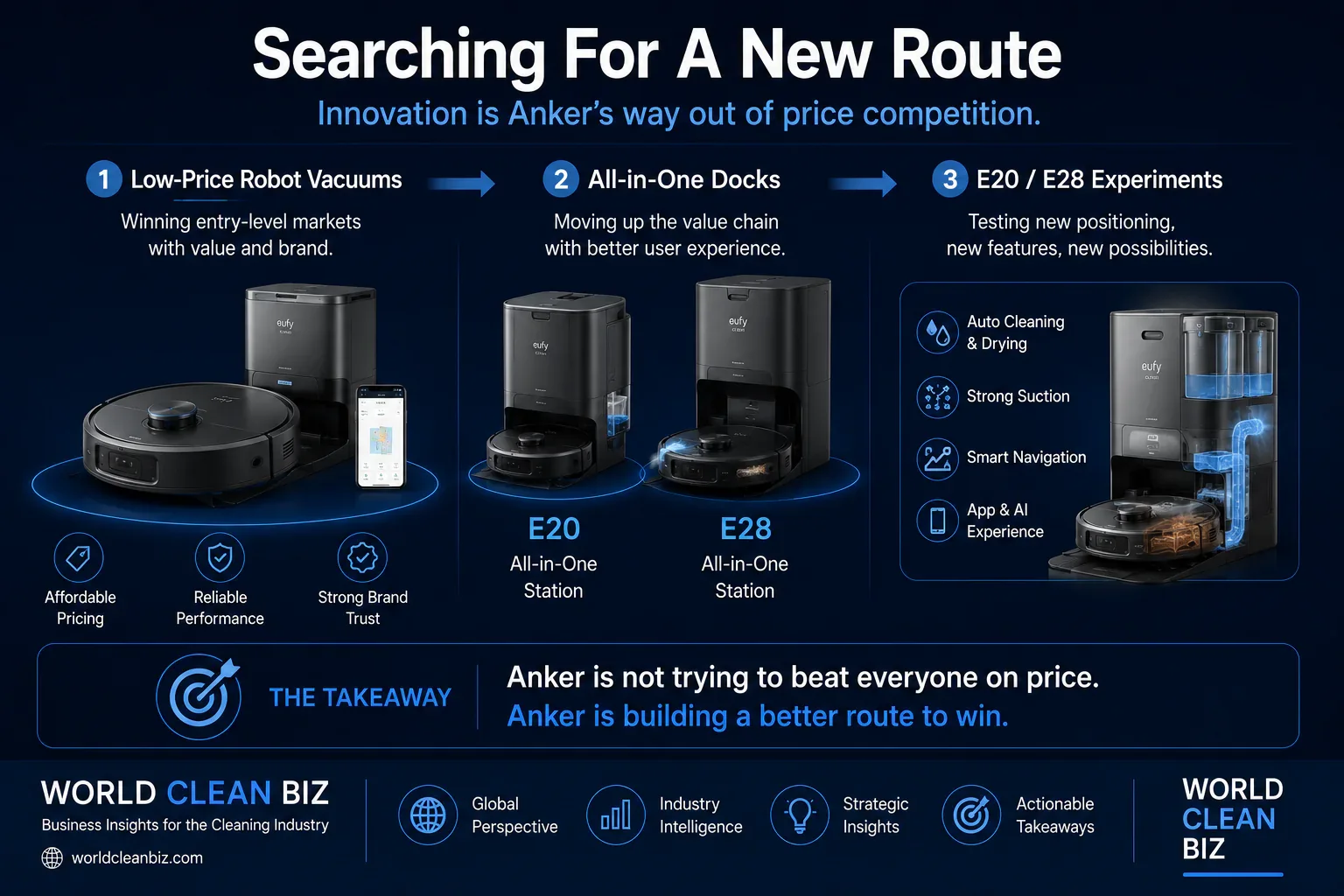
In the past, Anker's product line leaned toward the price route. It used many inertial-navigation solutions and made relatively cheap products. Later, after all-in-one docks rose, Roborock, Dreame, and Ecovacs made a lot of money. It is said that after Anker's robot vacuum team changed leaders, it became more aggressive and bolder in product innovation.
At present, the overall shape and lines of its robot vacuums are very bold and already have a clear style of their own. Other brands' docks are either hard-edged, or rounded like Narwal and Roborock P20. Anker's E series and S series combine hard and rounded styles, making them relatively recognizable.
From the product configuration, every product line is fully loaded. This is the advantage of a large company. Small companies make choices; large companies want everything.
The C series consists of products with entry-level stations, such as the standalone auto-empty stations C10 and L60, and the entry-level all-in-one dock C20. Prices in this series are currently very low: standalone auto-empty stations are only USD 249 and USD 299, while the entry-level all-in-one dock C20 is only USD 449. The era of USD 899 and USD 999 all-in-one docks feels gone forever; prices continuously moving downward is inevitable.
The E series also uses all-in-one docks. In this series, Anker has made many innovative attempts. For example, the E20 integrates a vacuum cleaner into the robot vacuum main unit. Add a hose and floor brush, and it becomes a vacuum cleaner. I remember this product form was first mass-produced and sold by Haier several years ago.
The E28 is even more aggressive: it integrates a fabric cleaner with the dock's water tank.
To be honest, when we make products, we have also thought about these ideas. Functionally, they are not difficult to realize. But when it really comes to opening molds, one does not dare to proceed, because of one question: will consumers buy it? With tens of millions of RMB in mold investment, people generally do not dare to take risks. Following giants is the safest approach.
Then there is the S series. The S series is even bolder in shape. The whole dock is made very tall and narrow, somewhat like a computer tower. Visually, it is different from the docks of all current brands. In functionality, it should be similar to other all-in-one machines, using a roller mop on the main unit for fresh-water self-cleaning.
After sorting through Anker's cleaning-appliance product line, here are some of my personal views.
- In the short term, Anker probably will not spend too much energy on handheld vacuum cleaners. This product line is too competitive, and Anker's previous sales performance was not very good. There are too many giants and brands in the market. Even as strong as Anker is, it cannot find a suitable entry point in the short term.
- Hard floor washers. I think cordless steam products may still need three to five years before they can truly ship in large volumes. In the next two to three years, the European and U.S. hard floor washer markets may explode. Personally, I feel Anker will not be absent from overseas markets. Many technologies in robot vacuums and hard floor washers are now continuously merging, so Anker may not give up the hard floor washer product line. Tineco's performance in China has already proven that the ceiling for hard floor washers is high. If European and U.S. markets explode, the hard floor washer war that erupted in China several years ago may repeat overseas. Overseas markets are Anker's strong territory. I think Anker is waiting for a suitable time to re-enter overseas hard floor washers.
- Traditional steam products had been declining for a long time. Starting last year, possibly because of social media, they became popular again. Will the combination of cordless plus steam become hot again in the future? I think this is highly probable, provided product function and price reach a balance point. Anker has accumulation in cordless steam. Whether it can keep optimizing and launch more useful cordless steam products may be the key.
- Robot vacuums. Anker's E28 and E20 product innovations are indeed something few brands dare to attempt simultaneously. Innovative companies always deserve respect. But from an actual sales perspective, products that integrate vacuum cleaners and fabric cleaners generally do not sell very well. There is one problem: the retail price of a vacuum cleaner or fabric cleaner is only about USD 100. Integrating them together does not create enough perceived value and instead brings more complaints in actual use.
On Amazon, E28 and E20 sales look ordinary. The best-selling products are still low-priced ones.
- I feel Anker probably will not enter the domestic market. Whether in hard floor washers or robot vacuums, the shares of several leading companies are basically stable. At the same time, domestic competition on price and other dimensions is too intense, and people do not make much money. There is no need to participate in this involution for now. Overseas markets are Anker's advantageous territory; it can quietly make money there. However, several giants have now begun increasing overseas layouts. Dreame, Roborock, Ecovacs and Tineco are not only entering major channels, but even opening independent stores, more aggressively than in domestic channels. This will inevitably affect Anker's sales.
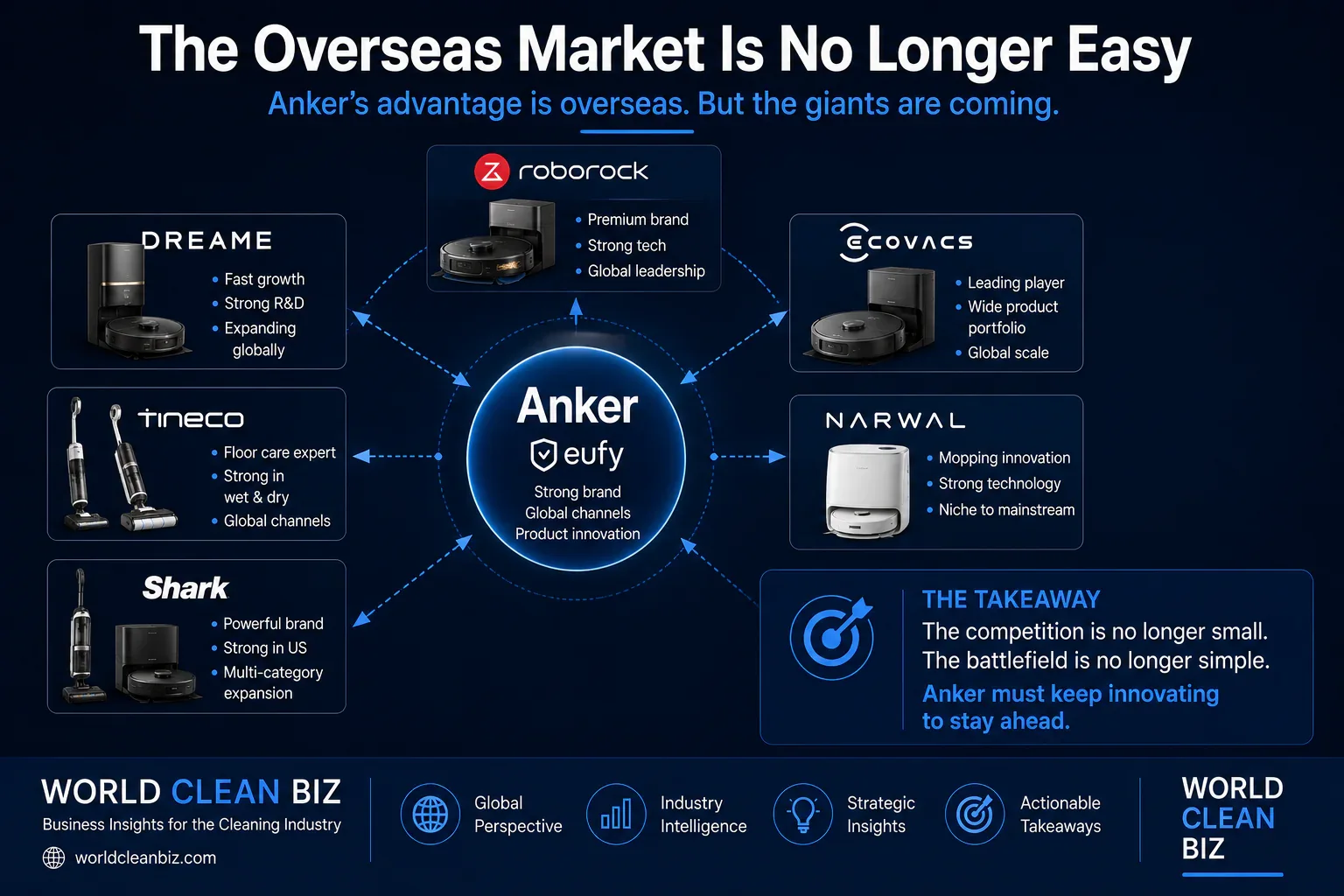
- In the early years, Anker's robot vacuums sold well overseas because of brand, product strength and channels. Another side reason was that at that time the main North American brand was iRobot, with very high prices, and the rest were brand customers of Shenzhen OEM factories. After iRobot sued 13 companies, many brands did not dare to sell in North America. Anker and Ecovacs were not sued, which to some extent helped Anker clear away competitors. Compared with iRobot at that time, Anker's products had advantages and could reach the million-unit level. But since all-in-one docks became hot overseas, several domestic giants have already gone out: Roborock, Dreame, Ecovacs, Narwal, and Shark are all very strong. Anker's products do not have much advantage against them. Its current attempts at several different innovative forms are preparation to see whether it can explore a new route. How to compete head-on with these giants is probably a problem Anker must face soon.
- In North America, tariff issues have artificially created some barriers. Anker followed its supplier Grand-Pro fairly early to establish factories in Southeast Asia. But as Trump's tariff policy changes, it may make Southeast Asian costs similar to China's. How everyone adjusts supply chains at that time remains unknown. This is probably another variable.
Anker has already successfully built some product playbooks and profit-distribution mechanisms. Personally, I think this mechanism should support it in reaching several tens of billions of RMB in sales. If you are interested, you can read my earlier article “Anker Has No Methodology.” We also look forward to seeing whether Anker can create a new world in cleaning appliances.