- Deerma’s challenge reflects a broader limit of the value-for-money model in complex floorcare categories.
- Robot vacuums and hard floor washers require R&D, after-sales control and channel profit, not only low prices.
- Deerma’s remaining opportunity may be in overseas mass-market channels and clearer subcategories.
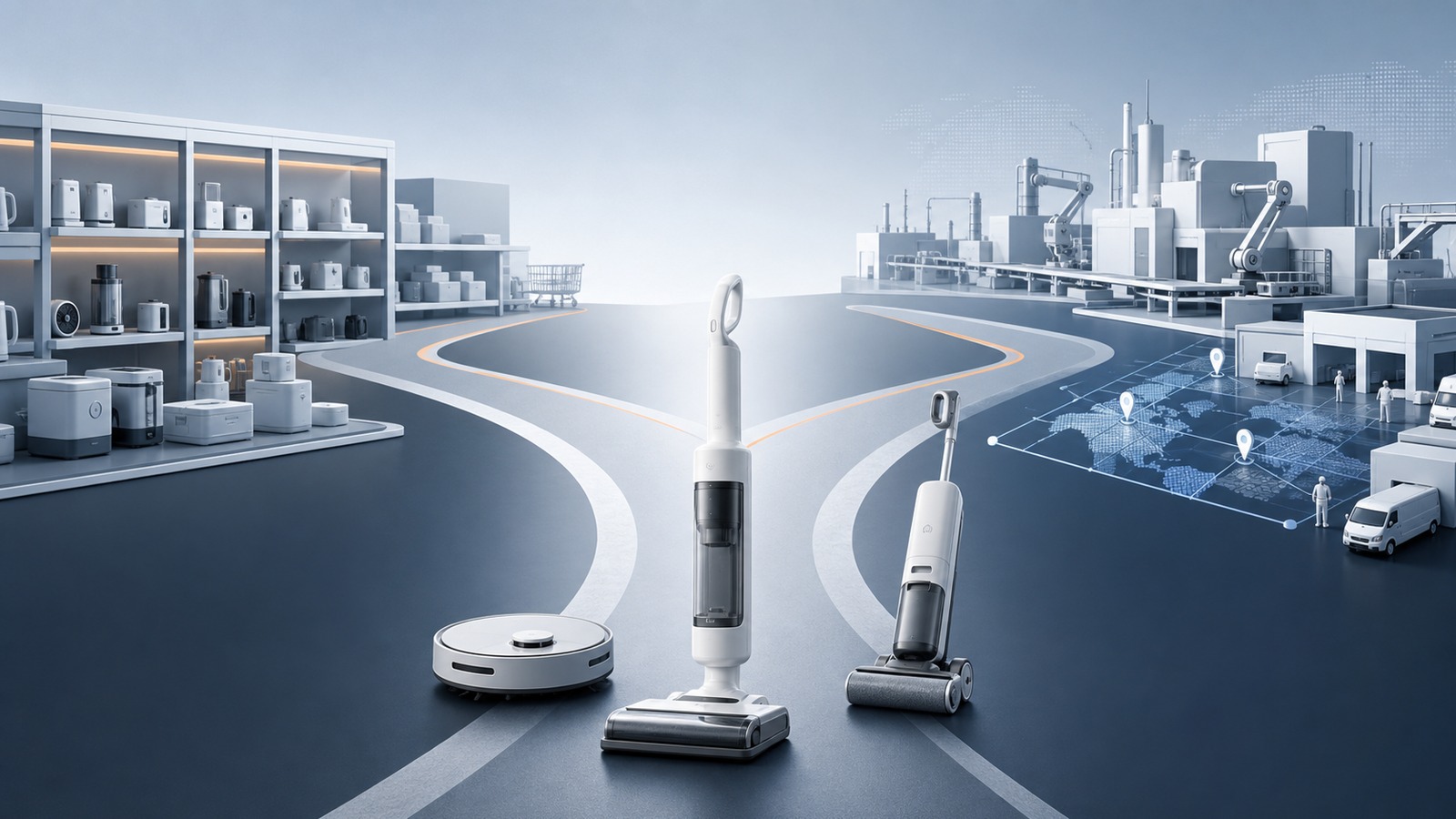
Value-for-money was one of the most effective strategies in Chinese consumer hardware over the past decade. Xiaomi used high specifications, low prices, and strong traffic to reshape many categories. A group of ecosystem and small-appliance companies benefited from that logic. Deerma was one of them.
Before working with Xiaomi, Deerma was already known for design, low price, and e-commerce execution. After joining the Xiaomi ecosystem, it gained more product projects and strengthened its online-channel capability. In the ordinary small-appliance era, this model worked well: identify mass demand, design a good-looking product, keep the price low, and sell quickly online.
But floorcare did not continue along the same small-appliance path. Robot vacuums and hard floor washers became the two core categories, and both turned into complex hardware businesses. The winners were not simply the companies that could make cheaper products. They were the companies that could invest in R&D, control after-sales costs, protect channel margins, and build clear category recognition.
Deerma’s problem is not only a company-specific problem. It is a sign that the value-for-money strategy has reached its limit in China’s main floorcare categories.
The hard floor washer boom created a false sense of opportunity
In 2020, Tineco’s hard floor washer became one of the most important breakout products in China’s cleaning appliance industry. At that time, many executives from large companies said similar things to me: “Denny, the hard floor washer is our company’s strategic direction. We must seize this opportunity.”
This was not the excitement of one company. It was the reaction of an entire industry. Small-appliance companies, vacuum cleaner companies, motor suppliers, OEM factories, and e-commerce operators all looked at the category. Many internal projects did not begin by asking whether the company had the capability. They began by asking whether missing the next Tineco would be a strategic mistake.
Hundreds of billions of RMB entered the cleaning industry in recent years, and the investment wave reached a high point after Dreame raised RMB 3.6 billion, roughly $532 million.
Deerma also joined that wave seriously. It built a research team of dozens of people in Suzhou, with relatively high salary levels. That move was important because Suzhou is one of China’s densest clusters for floorcare R&D talent and supply chains. Deerma is based in Guangdong, where the small-appliance supply chain is strong, but the talent density for robot vacuums and hard floor washers is far lower than in Suzhou.
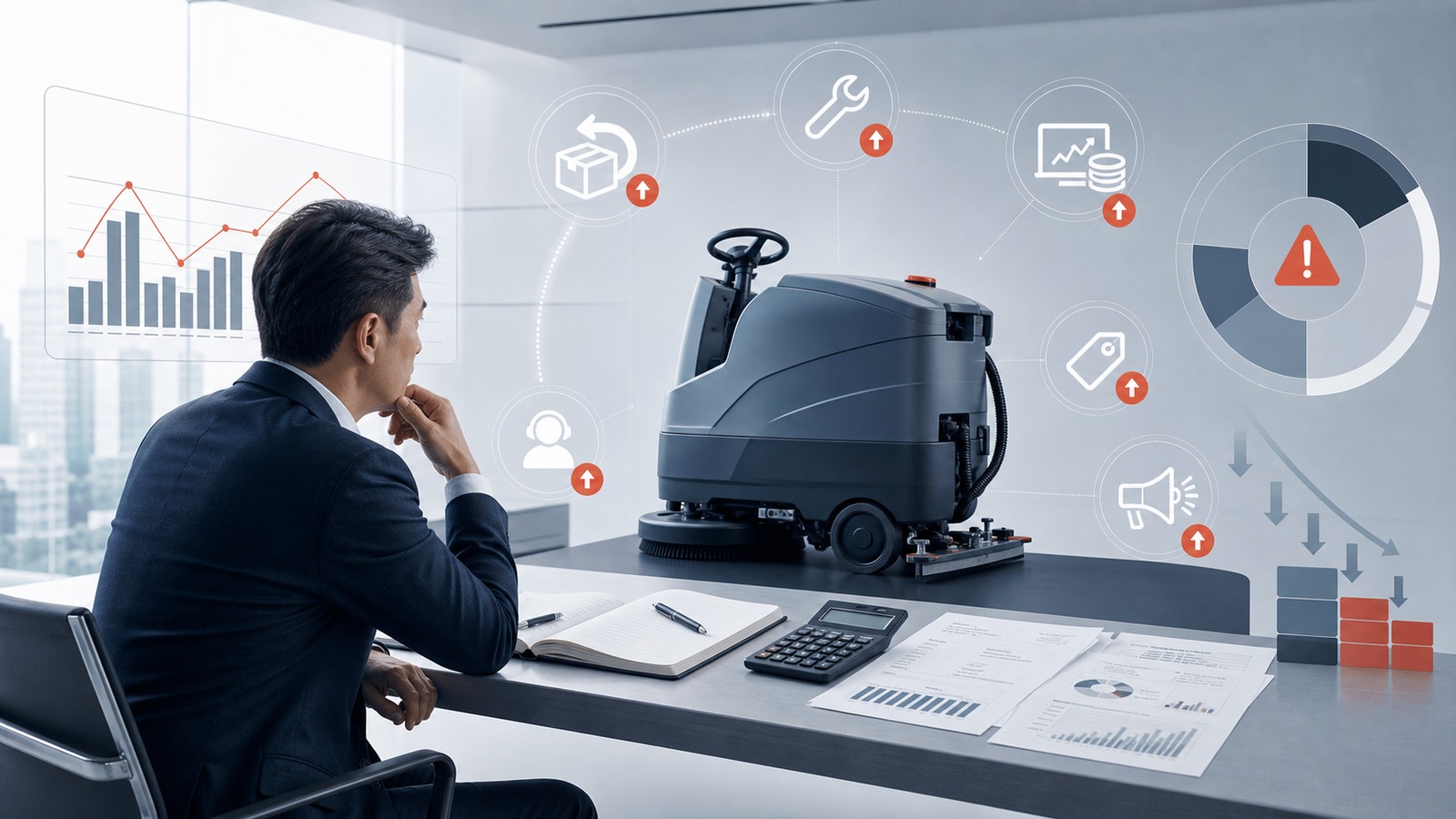
Deerma tried to open the low-price band
Deerma’s strategy was clear. It wanted to use the value-for-money model it understood to capture the low-price hard floor washer market.
At that time, Tineco and Dreame were mainly competing above RMB 2,000. Deerma launched several hard floor washer models, including corded products priced around RMB 800 and cordless models just above RMB 1,000. The strategy was not unreasonable. If hard floor washers were going to become as widely adopted as robot vacuums, the low-price band would eventually open.
The category also created a seductive profit illusion. A founder running a company with more than RMB 1 billion in annual sales once came to me and said he wanted to enter hard floor washers. He calculated that a Tineco product sold for more than RMB 3,000 while the bill of materials was below RMB 1,000. If he sold at RMB 2,000, he believed he could make RMB 1,000 per unit. Selling 200,000 units would mean RMB 200 million in profit.
That calculation missed the real operating costs: platform commissions, promotion spending, after-sales service, repair, and return rates that could exceed 30 percent. I told him that if he wanted to build a real hard floor washer brand, the starting threshold would be at least RMB 100 million, or about $15 million.
This is the part many outsiders miss. Hard floor washers look like high-ticket, high-margin products. But once price competition starts, and once return, repair, marketing, and after-sales costs are included, the financial model becomes much harder.
The gap with the leaders became visible
By 2026, the industry gap had become clear. Dreame’s revenue had entered the RMB 30 billion range. Roborock was close to RMB 20 billion. Ecovacs was also close to RMB 20 billion. Deerma’s 2025 annual report showed total revenue of RMB 3.432 billion, about $507 million. Its home environment category, which is related to cleaning appliances, generated RMB 1.234 billion, about $182 million, down 10.78 percent year over year, with a gross margin of 20.70 percent.
That means Deerma does have a cleaning appliance business. But compared with the leaders, it looks more like a small-appliance company with a cleaning segment than a floorcare platform company.
The main table in China’s floorcare market became very narrow. Robot vacuums are largely held by Ecovacs, Roborock, and Dreame. Hard floor washers mainly produced Tineco, Dreame, and Roborock as the leading brands. Deerma had products, but it did not gain category definition power.
Low price gave Deerma a chance to enter, but it did not automatically create category recognition. It also could not replace R&D, service, and long-term investment.
Xiaomi’s own change makes the same point. Xiaomi created the value-for-money playbook, and the RMB 1,499 Mi robot vacuum once changed the entire robot vacuum price structure. But after floorcare moved into all-in-one docking stations, AI obstacle avoidance, roller mops, robotic arms, premium flagships, and overseas channel competition, Xiaomi’s presence weakened.
The value-for-money model requires traffic and channel profitability. Floorcare is a high-after-sales, high-service, high-explanation-cost category. If channels cannot make enough money, they will not sell the products consistently. Even Xiaomi could not maintain its early dominance. That shows the structural boundary of the model.
The lesson from UWANT
UWANT offers a useful contrast. Like Deerma, it started from e-commerce capability and later entered cleaning appliances with outside investment support. It also invested in hard floor washers early. But the product that truly worked was not the hard floor washer. It was the mite-removal vacuum.
The mite-removal vacuum fits e-commerce companies better: direct demand, strong demonstration effect, lower product complexity, and more controllable service pressure. UWANT did not succeed because it understood hard floor washers better. It succeeded because it found a category closer to its capability boundary.
That is the lesson for Deerma. Value-for-money and e-commerce capability have not disappeared. They are just not well suited for fighting head-on in robot vacuums and hard floor washers. They work better in clearer, lower-complexity subcategories.
The remaining opportunity is overseas
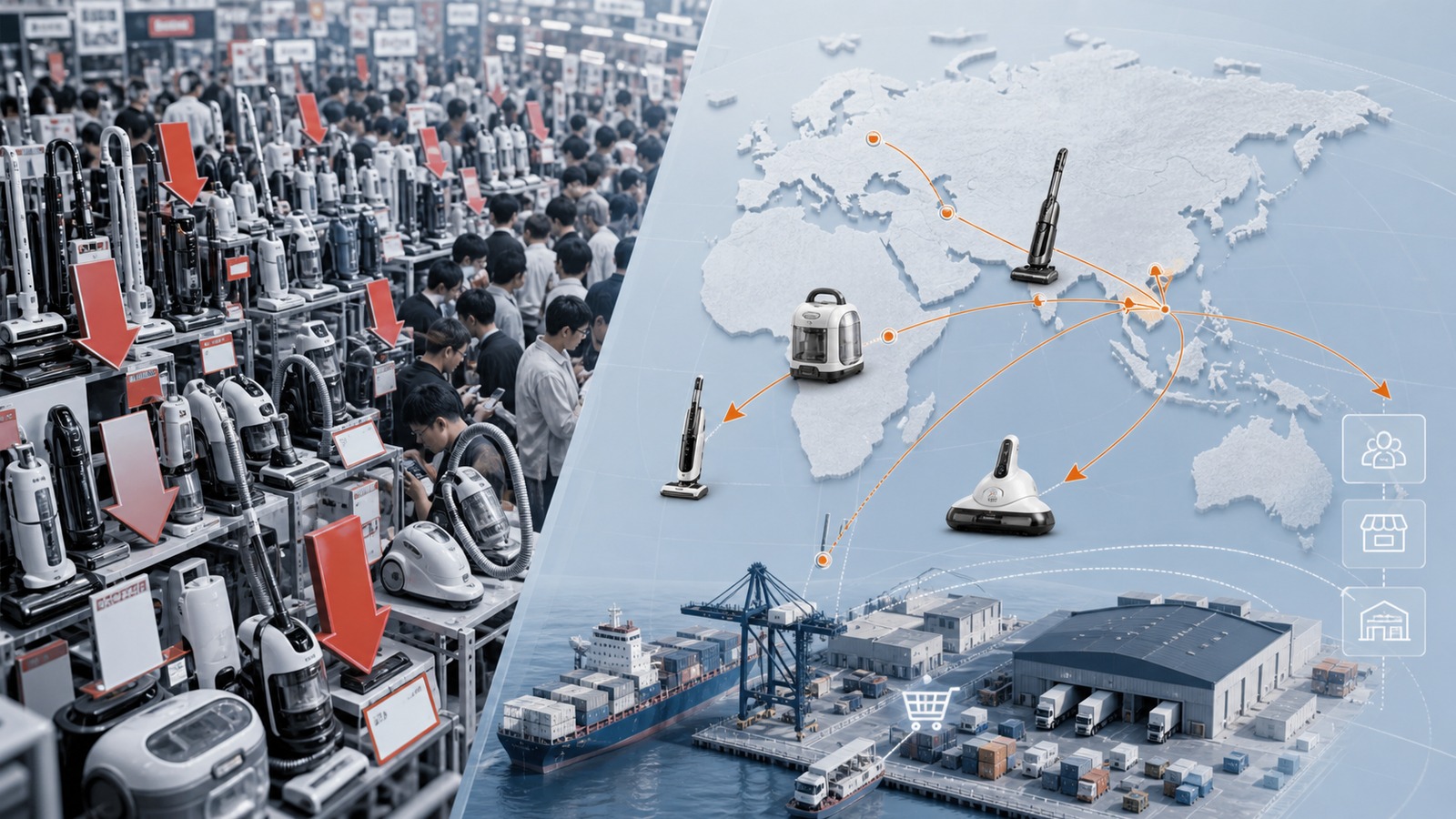
Deerma’s future opportunity in cleaning appliances may lie outside China. The domestic market is already too competitive. The leading structure in robot vacuums and hard floor washers is largely formed. Middle and low price bands are under heavy price pressure. Platform costs are high, and channel margins are thin.
Overseas markets are less crowded. Many cross-border e-commerce brands have avoided China’s most intense price wars and found room on Amazon, independent websites, regional channels, and local dealer networks. Even leading floorcare companies such as Dreame, Roborock, and Ecovacs have relied heavily on overseas markets for better margins and cash flow, which then support domestic competition.
For Deerma, the opportunity is not in premium intelligent cleaning. It is more likely in overseas mass-market products: basic vacuum cleaners, entry-level hard floor washers, fabric cleaners, and mite-removal vacuums in Southeast Asia, Eastern Europe, the Middle East, Latin America, and other regions.
But overseas expansion is not simply moving low-price domestic products abroad. It requires local channels, product adaptation, certification, after-sales support, and brand building. Deerma’s real test is whether it can turn value-for-money from low-price selling into a complete operating model that includes channel profit, service, and repeat purchase.
Figures cited above are based on Deerma’s 2025 annual report and Denny’s industry notes. RMB conversions use a June 8, 2026 reference rate of USD 1 to CNY 6.7656 for readability.