Independent Technical Reference

Wet & Dry Vacuum

Wet and dry vacuum types, filtration boundaries, pickup systems and buyer verification

This technical profile explains commercial wet/dry vacuum architecture, mode changes, representative models, specification boundaries and procurement checks without treating motor power or container size as universal performance measures.

Included
  • Commercial canister wet-and-dry vacuum cleaners
  • Wet pickup and ordinary dry-debris collection where permitted by the exact machine manual
Excluded
  • Hazardous-dust or explosive-atmosphere use without exact certification
  • Fire, hot ash, flammable-liquid or unattended flood recovery
  • Domestic shop vacuums and fixed central extraction systems

First published 2026-08-08 · Last verified 2026-08-08

This is an independent category reference, not model-specific purchasing, hazardous-material, electrical-safety or repair advice. Confirm the current manual, exact filter and accessory configuration, local compliance and service terms before use.

Official equipment reference
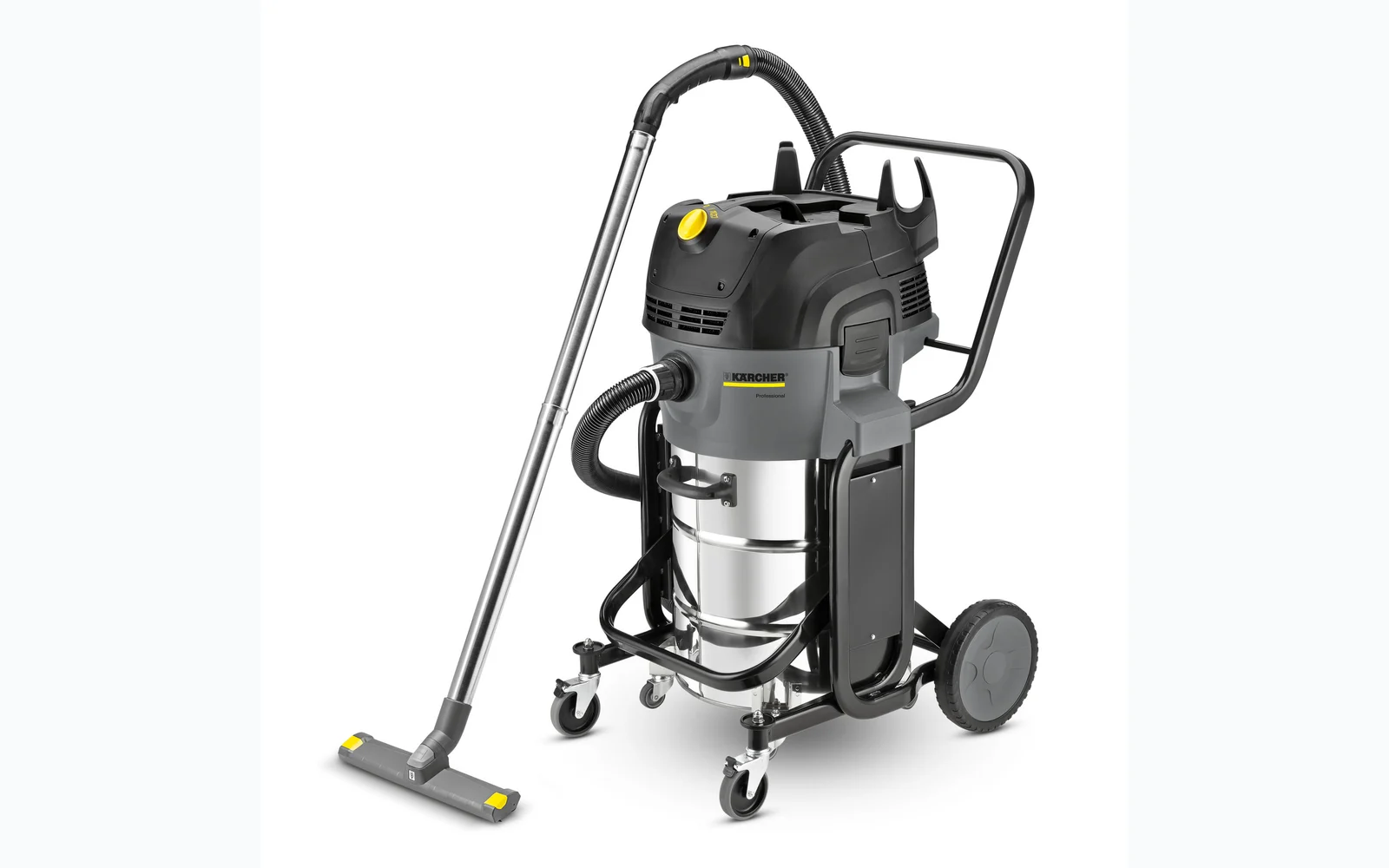
Kärcher NT 55/2 Tact² Me I commercial wet and dry vacuum cleaner
Official Kärcher product image of the NT 55/2 Tact² Me I, used as a real-equipment reference. Filter class, pickup mode and approved materials remain exact-configuration questions. Official image source
Floor scrubber key facts
FactTechnical referenceScope boundary
Operating modesWet pickup, dry pickup or both, subject to exact configurationNamed commercial machines; filters, bags and accessories may change between modes.
Air pathPickup tool, hose, container separation, filter and vacuum motorFunctional synthesis of reviewed canister machines.
Hazard boundaryWet/dry capability does not prove hazardous-dust, combustible-dust or flammable-liquid approvalGeneral procurement boundary; exact certification and local rules control.
Container and usable capacityNominal container volume is not automatically usable liquid volumeNamed configurations and manufacturer definitions.

WCB explanatory visual

How a floor scrubber works

An original system map synthesized from reviewed operator manuals. It explains functional flow, not a universal machine architecture.

  1. 01

    Surface pickup

    Floor tool, squeegee tool or nozzle

    Collects dry debris or liquid at the task surface.

    EvidenceManufacturer manuals list mode-specific floor tools and accessories.

    ScopeOnly tools approved for the exact model and substance.

    Verified2026-08-08

    Sourcestaski-vacumat-manual, tennant-vwd

  2. 02

    Transport

    Hose, tubes and couplings

    Carries material and airflow to the container.

    EvidenceOfficial documentation identifies hose and tube systems and maintenance checks.

    ScopeDimensions and antistatic properties are model-specific.

    Verified2026-08-08

    Sourcesnilfisk-vl500-brochure, taski-vacumat-manual

  3. 03

    Separation and storage

    Container, inlet and deflector

    Separates and retains collected material.

    EvidenceOfficial sources describe container capacities and wet-pickup arrangements.

    ScopeNamed products; foam and liquid behavior can change usable capacity.

    Verified2026-08-08

    Sourcestennant-vwd, nilfisk-vl500-brochure

  4. 04

    Motor protection and filtration

    Float, wet filter, dry filter or bag

    Protects the motor and filters exhaust air according to the selected mode.

    EvidenceManuals describe float shutoff and different filter or bag configurations.

    ScopeExact mode and filter set; no universal filter class is implied.

    Verified2026-08-08

    Sourcestaski-vacumat-manual, karcher-nt55

  5. 05

    Airflow generation

    Vacuum motor and controls

    Creates pressure difference and airflow through the pickup system.

    EvidenceOfficial specifications publish motor, airflow or vacuum values for named machines.

    ScopeSource metrics are not automatically comparable across methods.

    Verified2026-08-08

    Sourcestennant-vwd, karcher-nt48, taski-vacumat22

Equipment taxonomy

Main floor scrubber formats

These formats describe operator relationship and task scale. None is a universal winner.

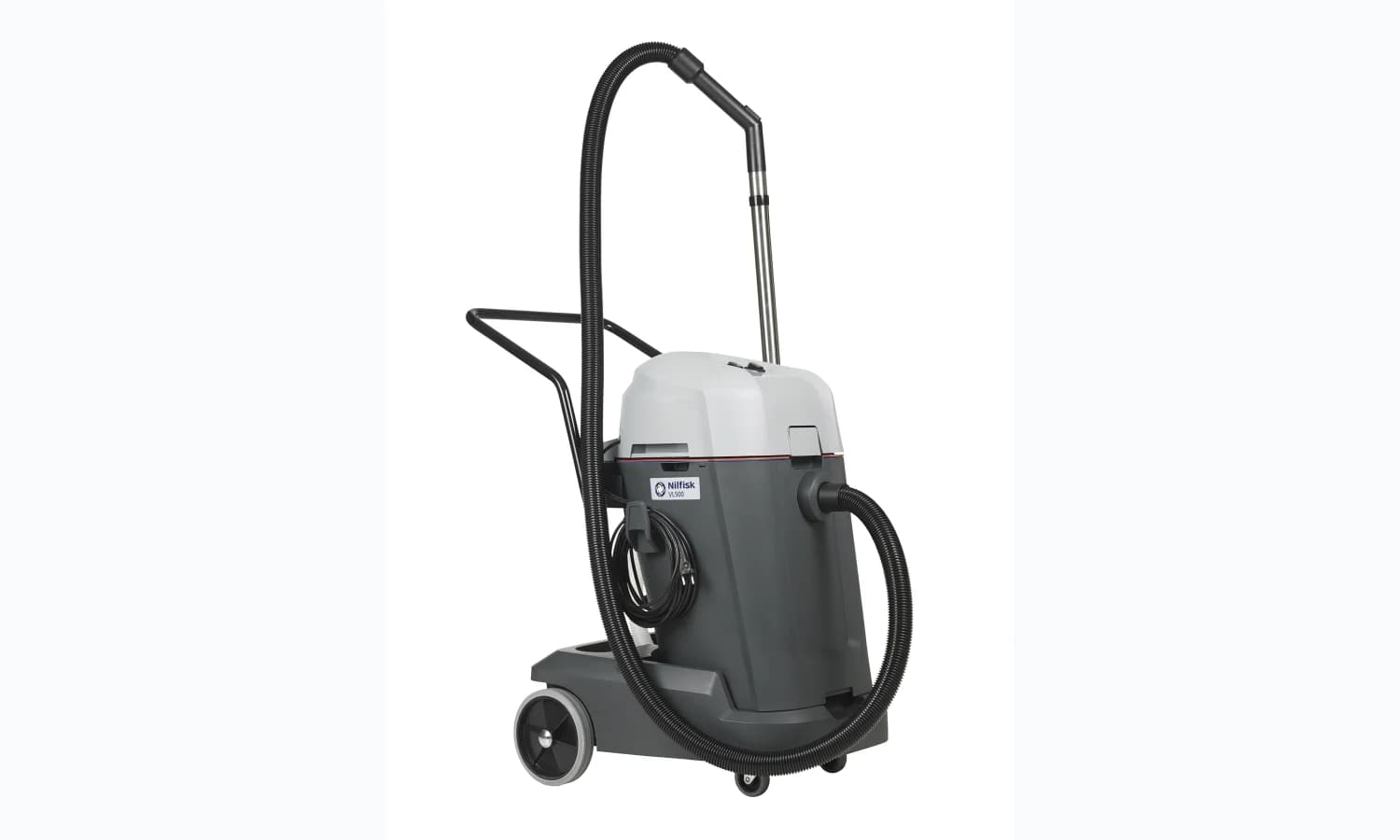
Nilfisk VL500 commercial wet and dry vacuum
Official field reference

Official Nilfisk image illustrating a larger canister format. Container volume does not by itself establish airflow, filtration or usable liquid capacity.

Buyer focusUse the format as a starting point, then compare route width, turning space, tank cycle, operator travel and the exact configured machine.

Official image source

Compact single-motor canister

Task scale
Spot work and smaller facility routes
Operator
Operator moves a portable canister and hose
Space
Compact storage but requires cable and hose management
Limit
Smaller container and accessory storage may increase stops.

EvidenceTennant V-WD-9 and TASKI vacumat 22 are documented compact commercial formats.

ScopeNamed models.

Verified2026-08-08

Sourcestennant-vwd, taski-vacumat22

Medium canister

Task scale
General commercial wet and dry pickup
Operator
Trolley or caster-mounted canister follows the operator
Space
Requires transport and storage clearance
Limit
Container size does not determine pickup performance.

EvidenceNilfisk and Kärcher publish mid-size commercial models.

ScopeNamed configurations.

Verified2026-08-08

Sourcesnilfisk-vl500-35, karcher-nt48

Large or dual-motor canister

Task scale
Longer or heavier commercial tasks within approved duty
Operator
Larger wheeled machine with hose and tools
Space
Greater mass and footprint; draining and transport need planning
Limit
Additional motors do not establish suitability for hazardous substances.

EvidenceKärcher NT 55/2 and TASKI vacumat 44T are documented higher-capacity or dual-motor products.

ScopeNamed regional configurations.

Verified2026-08-08

Sourceskarcher-nt55, taski-vacumat44

Filter-class or application-specific configuration

Task scale
Tasks requiring stated filtration or antistatic features
Operator
Operational method depends on certified configuration
Space
Accessories and disposal workflow can expand the system
Limit
A family name or similar appearance cannot substitute for exact certification.

EvidenceOfficial sources distinguish configurations and published filter-related features.

ScopeExact product number, filter and accessory set.

Verified2026-08-08

Sourceskarcher-nt55, iec-wet-dry

Specification dictionary

What the performance metrics do—and do not—mean

Floor scrubber performance metric dictionary
MetricPurchasing meaningReporting boundaryComparison caution
AirflowAir volume moved under the manufacturer's test boundaryMay be stated per motor, at turbine or for the machineCompare only compatible measurement points, units and configurations.
Vacuum or water liftPressure-difference characteristic of the suction systemUnits and measurement methods varyVacuum alone does not represent pickup at the floor tool or under loading.
Container and liquid capacitySupports stop, drain and handling planningGross container size may differ from liquid or dust capacityDo not compare unlike capacity definitions.
Motor input powerElectrical input and site-load planningInput power is not pickup efficiency or cleaning performanceDo not rank machines by watts alone.
Sound, dimensions and massSupports occupied-space, transport and storage decisionsSound method and machine state must be matchedAccessories and collected liquid increase operational envelope and handling load.
Airflow evidence

EvidenceOfficial specifications publish airflow for named models.

ScopeManufacturer-stated values.

Verified2026-08-08

Sourceskarcher-nt48, karcher-nt55, taski-vacumat22

Vacuum or water lift evidence

EvidenceOfficial specifications publish vacuum values for reviewed models.

ScopeNamed configurations.

Verified2026-08-08

Sourceskarcher-nt48, karcher-nt55, taski-vacumat22

Container and liquid capacity evidence

EvidenceOfficial sources publish container and, for selected models, wet/dry capacity boundaries.

ScopeNamed source terminology.

Verified2026-08-08

Sourcestennant-vwd, nilfisk-vl500-brochure, karcher-nt48

Motor input power evidence

EvidenceOfficial specifications state rated or maximum input power.

ScopeRegional electrical configurations.

Verified2026-08-08

Sourcesnilfisk-vl500-35, karcher-nt55, taski-vacumat22

Sound, dimensions and mass evidence

EvidenceOfficial sources publish sound, dimensional and mass data for selected models.

ScopeNamed configurations.

Verified2026-08-08

Sourcestennant-vwd, nilfisk-vl500-brochure, taski-vacumat22

Evidence + WCB interpretation

Application-fit matrix

Official application evidence does not establish automatic suitability. Each row shows what still needs to be tested.

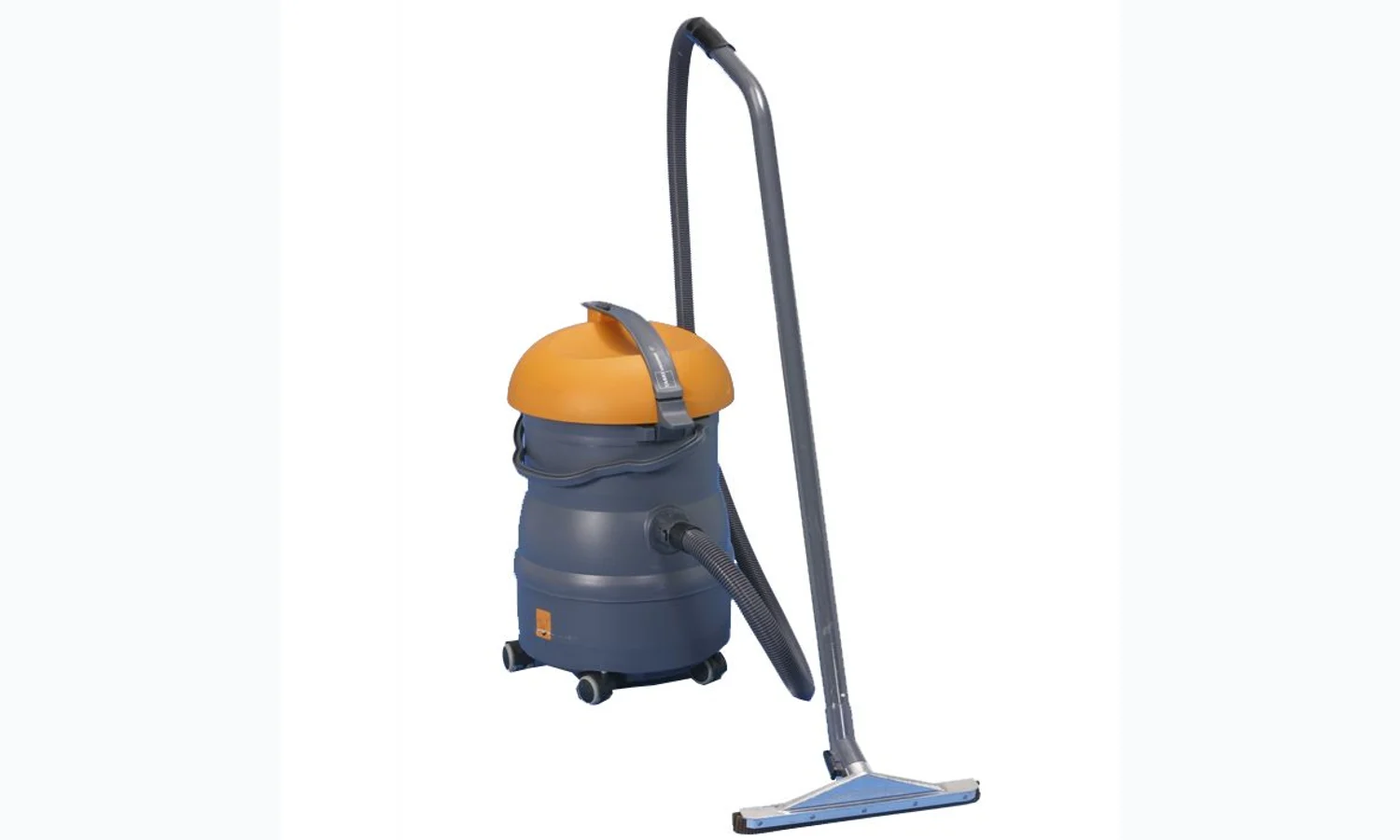
TASKI vacumat 22 commercial wet and dry vacuum
Official field reference

Official TASKI product image illustrating a compact commercial format. Approved substances, filter setup and electrical configuration must be checked for the intended task.

Buyer focusTreat the photographed setting as context only. Validate aisle and turn dimensions, occupied-space noise, residual moisture, floor finish and the planned cleaning window on site.

Official image source

Facility maintenance

EvidenceManufacturers position reviewed wet/dry vacuums for general commercial cleaning and maintenance.

ScopeOrdinary non-hazardous material within manual limits.

Verified2026-08-08

Sourcestennant-vwd, nilfisk-vl500-35, taski-vacumat22

WCB assessment

A versatile machine still needs explicit mode-change, filter and disposal procedures.

Basis
Official product functions and accessory architecture.
Limitations
No universal material compatibility is established.
Buyer action
List every intended pickup substance and obtain written configuration approval.

Workshops and light industrial areas

EvidenceOfficial pages position selected models for workshop or industrial cleaning.

ScopeNon-hazardous debris and liquid; process dusts require separate assessment.

Verified2026-08-08

Sourceskarcher-nt55, nilfisk-vl500-brochure

WCB assessment

Dust identity and ignition risk must be assessed before equipment selection.

Basis
IEC scope, OSHA guidance and manufacturer product boundaries.
Limitations
This profile does not classify the user's dust or atmosphere.
Buyer action
Have a competent safety professional classify the material and location before procurement.

Hospitality and public buildings

EvidenceCommercial wet/dry product materials include institutional and general cleaning uses.

ScopeApproved indoor tasks and regional electrical configuration.

Verified2026-08-08

Sourcestennant-vwd, taski-vacumat22

WCB assessment

Noise, cable routing, storage and cleanability should be tested in occupied routes.

Basis
Official size and commercial-use positioning.
Limitations
Suitability during public occupancy is site-specific.
Buyer action
Run an occupied-route trial and approve cable and wet-floor controls.

Spill response

EvidenceReviewed machines include wet-pickup configurations and liquid-handling features.

ScopeOnly non-flammable, non-hazardous liquids permitted by the exact manual.

Verified2026-08-08

Sourcesnilfisk-vl500-brochure, taski-vacumat-manual, karcher-nt48

WCB assessment

Liquid identity, volume, temperature, foam and disposal path determine suitability.

Basis
Mode-specific manufacturer instructions and safety boundaries.
Limitations
No reviewed evidence supports flammable or unknown-liquid pickup.
Buyer action
Create an approved-liquid list and disposal method before deployment.

System component map

Component families and compatibility boundaries

Component families are labels only. No component link or cross-model compatibility is claimed.

WCB wet and dry vacuum component verification map
WCB technical diagram

WCB diagram of pickup, filtration, container and electrical interfaces to verify before specifying a wet/dry vacuum.

Buyer focusBefore substitution or service work, match the current manual, model and serial range, part number, physical interface, approved material or chemistry, and electrical configuration.

Evidence sourcesiec-wet-dry, tennant-vwd, nilfisk-vl500-brochure, taski-vacumat-manual

Floor tools and nozzles

Interface with dry debris, liquid or detail-cleaning surfaces.

Common variants
  • Dry floor tool
  • Wet squeegee tool
  • Crevice and upholstery tools
Critical checks
  • Exact accessory part number
  • Width and coupling
  • Material and task approval

EvidenceOfficial sources identify mode- and task-specific tools.

ScopeNo cross-model tool compatibility is implied.

Verified2026-08-08

Sourcestennant-vwd, taski-vacumat-manual

Hose, tubes and couplings

Carry material and airflow to the container.

Common variants
  • Standard conductive or non-conductive hoses
  • Different diameters and lengths
Critical checks
  • Diameter and coupling
  • Length and pressure loss
  • Antistatic requirement
  • Seal condition

EvidenceOfficial manuals and specifications define model-specific hose systems.

ScopeExact machine and application.

Verified2026-08-08

Sourcesnilfisk-vl500-brochure, taski-vacumat-manual

Filters, bags and wet-mode protection

Separate dry dust and protect the motor during wet pickup.

Common variants
  • Cartridge or cassette filter
  • Dust bag
  • Wet filter or float shutoff
Critical checks
  • Filter class and part number
  • Wet/dry mode setup
  • Seal and float operation
  • Disposal method

EvidenceOfficial sources distinguish filter and wet-pickup arrangements.

ScopeFamily labels do not establish certification or compatibility.

Verified2026-08-08

Sourcesnilfisk-vl500-brochure, karcher-nt55, taski-vacumat-manual

Container and drain system

Stores collected material and enables controlled emptying.

Common variants
  • Plastic or stainless container
  • Lift-out, tip or drain-hose emptying
Critical checks
  • Gross and usable capacity
  • Drain arrangement
  • Gaskets and latches
  • Handling mass

EvidenceManufacturer sources publish container materials, capacities and emptying features.

ScopeNamed configurations.

Verified2026-08-08

Sourcestennant-vwd, nilfisk-vl500-brochure, karcher-nt55

Vacuum motor and electrical system

Generates airflow and supplies controls or automatic filter cleaning.

Common variants
  • Single motor
  • Dual motor
  • Single-phase regional electrical packs
Critical checks
  • Voltage, frequency and plug
  • Motor count and control
  • Cable and protection
  • Service part number

EvidenceOfficial specifications publish regional power and motor data.

ScopeExact product number and market.

Verified2026-08-08

Sourceskarcher-nt48, karcher-nt55, taski-vacumat22

Verified relationships

Related brands and representative models

Representative, not exhaustive. A link means the official source connects the named brand and model; it does not establish a factory, OEM or component-supplier relationship.
8 verified models
Representative floor scrubber models
BrandModelSubtypeOfficial specification referenceMarket scopeVerifiedSource
TennantV-WD-9Compact single-motor wet/dry vacuum
  • 9-gallon class container
  • wet and dry commercial format
  • portable canister architecture
Tennant North America brochure2026-08-08tennant-vwd
TennantV-WD-24PLarge wet/dry vacuum with pump-out option
  • 24-gallon class container
  • pump-out configuration
  • commercial wet and dry pickup
Tennant North America brochure2026-08-08tennant-vwd
NilfiskVL500 35Medium wet/dry canister
  • 35 L container class
  • dual filtration concept described by Nilfisk
  • commercial trolley format
Nilfisk global product page2026-08-08nilfisk-vl500-35
NilfiskVL500 55Large wet/dry canister
  • 55 L container class
  • separate wet and dry filters
  • commercial wheeled format
Nilfisk global page and brochure2026-08-08nilfisk-vl500-55, nilfisk-vl500-brochure
KärcherNT 48/1Single-motor commercial wet/dry vacuum
  • 48 L container
  • single-motor configuration
  • drain hose feature on reviewed page
Kärcher US commercial page2026-08-08karcher-nt48
KärcherNT 55/2 Tact² Me IDual-motor wet/dry vacuum
  • 55 L stainless-steel container
  • two-motor configuration
  • Tact² filter-cleaning system
Kärcher International page2026-08-08karcher-nt55
TASKIvacumat 22/22TCompact commercial wet/dry vacuum
  • 22 L class format
  • wet and dry use
  • trolley variant available
TASKI global page and information sheet2026-08-08taski-vacumat22
TASKIvacumat 44TLarge commercial wet/dry vacuum
  • 44 L class container
  • trolley format
  • commercial wet and dry application
TASKI global product page2026-08-08taski-vacumat44

WCB decision support

Procurement decision matrix

No composite score or brand ranking. Each row identifies a comparison trap and the next verification action.

WCB assessment

Mixed wet and dry facility work

Verify
Mode-change procedure and complete filter set
Comparison trap
Assuming one unchanged setup is valid for every pickup mode
Assessment
Specify and train the complete wet and dry configurations.
Basis
Filter and motor-protection arrangements change by mode.
Limitations
Exact procedures vary by model.
Buyer action
Include mode-change instructions, accessories and consumables in acceptance training.
Engineering check
Verify filter, bag, float and tool part numbers for each approved task.

EvidenceOfficial manuals describe mode-specific filters, bags or float protection.

ScopeNamed commercial machines.

Verified2026-08-08

Sourcesnilfisk-vl500-brochure, taski-vacumat-manual

WCB assessment

Dust-producing workshop cleanup

Verify
Dust classification and machine certification
Comparison trap
Treating wet/dry capability as hazardous-dust approval
Assessment
Classify the dust and atmosphere before selecting equipment.
Basis
Combustible and hazardous dust controls are not inferred from ordinary product naming.
Limitations
WCB does not classify the user's material or location.
Buyer action
Obtain a competent hazard assessment and written approval for the exact machine configuration.
Engineering check
Confirm filter class, antistatic system, grounding, certification and disposal workflow.

EvidenceIEC and OSHA materials require attention to material and hazard boundaries.

ScopeCommercial workplace procurement; exact local rules apply.

Verified2026-08-08

Sourcesiec-wet-dry, osha-dust, osha-vacuum

WCB assessment

Liquid spill pickup

Verify
Approved liquid, usable capacity and shutoff
Comparison trap
Using gross tank volume as recoverable liquid capacity
Assessment
Liquid identity and safe disposal precede capacity comparison.
Basis
Foam, float level and tank design affect usable volume.
Limitations
No evidence supports flammable, hot or unknown liquids.
Buyer action
Test shutoff and draining with an approved representative liquid.
Engineering check
Verify float, wet filter, drain and pump-out limits.

EvidenceOfficial sources distinguish container size and wet-pickup systems.

ScopeNon-hazardous liquids permitted by the manual.

Verified2026-08-08

Sourcestennant-vwd, nilfisk-vl500-brochure, taski-vacumat-manual

WCB assessment

Occupied-route cleaning

Verify
Sound, cable, hose and handling envelope
Comparison trap
Selecting from canister dimensions alone
Assessment
The operating envelope includes tools, hose, cable and collected mass.
Basis
Accessories and liquid load change route and handling demands.
Limitations
Site layouts and occupancy controls vary.
Buyer action
Trial the complete configured unit through doors, lifts, storage and drain points.
Engineering check
Confirm full-tank handling mass, cable inspection and circuit protection.

EvidenceOfficial sources publish machine dimensions and corded commercial configurations.

ScopeNamed models.

Verified2026-08-08

Sourcestennant-vwd, taski-vacumat22, karcher-nt48

Engineering validation

Checks before parts, configuration or service decisions

This checklist narrows verification work; it is not a compatibility guarantee or repair manual.

01

Substance and atmosphere classification

Combustible, toxic, hot or flammable materials can require specialized equipment or be prohibited.

Required actionClassify the material and location before requesting a quotation.

EvidenceIEC scope and OSHA guidance define safety boundaries around commercial vacuum use and combustible dust.

ScopeInternational standard plus US workplace guidance; local rules may differ.

Verified2026-08-08

Sourcesiec-wet-dry, osha-dust, osha-vacuum

02

Filter and mode configuration

Dry and wet pickup can require different filters, bags and protective devices.

Required actionVerify the manual-defined setup and exact part numbers for each mode.

EvidenceOfficial documentation describes distinct filtration and wet-mode protection.

ScopeExact model and serial range.

Verified2026-08-08

Sourcesnilfisk-vl500-brochure, taski-vacumat-manual

03

Electrical supply and cable

Regional voltage, plug, circuit protection and wet-environment controls matter.

Required actionMatch the quoted product number to the site electrical assessment.

EvidenceOfficial regional specifications publish electrical ratings.

ScopeNamed market configurations.

Verified2026-08-08

Sourceskarcher-nt48, taski-vacumat22

04

Accessory and hose compatibility

Couplings, diameter, antistatic properties and airflow are system-specific.

Required actionRequire all machine, hose, tube and tool part numbers in the quotation.

EvidenceOfficial sources list model-specific accessory systems.

ScopeNo visual or dimensional assumption of interchangeability.

Verified2026-08-08

Sourcestennant-vwd, taski-vacumat-manual

Standards boundary

Safety and performance references

IEC 60335-2-69:2021

JurisdictionInternational

Version2021

ApplicabilityParticular safety requirements for wet and dry vacuum cleaners, including power brush, for commercial use.

EvidenceIEC states the standard applies to motor-operated wet and dry vacuum cleaners intended for commercial indoor or outdoor use.

ScopeConfirm regional adoption, dust class, intended substances and exact product certification.

Verified2026-08-08

Sourcesiec-wet-dry

Technical developments

Selected changes in floor scrubber systems

  1. IEC commercial wet/dry vacuum safety edition published

    IEC published the 2021 edition of IEC 60335-2-69 for commercial wet and dry vacuum cleaners.

    EvidenceThe IEC catalogue records edition 6.0 and publication date.

    ScopeInternational base standard; regional implementation must be checked.

    Verified2026-08-08

    Sourcesiec-wet-dry

Evidence record

Sources

First published 2026-08-08 · Last verified 2026-08-08 · Last material modification 2026-08-08

  1. standard

    IEC 60335-2-69:2021

    International Electrotechnical Commission

    Open official source

    Accessed 2026-08-08 · Published 2021-06-17

  2. regulator

    Combustible Dust Guidance

    Occupational Safety and Health Administration

    Open official source

    Accessed 2026-08-08

  3. regulator

    OSHA Standard Interpretation: Portable Vacuum Cleaners and Combustible Dust

    Occupational Safety and Health Administration

    Open official source

    Accessed 2026-08-08 · Published 2003-08-22

  4. specification

    V-WD-9, V-WD-24 and V-WD-24P Wet/Dry Vacuum Brochure

    Tennant Company

    Open official source

    Accessed 2026-08-08

  5. manufacturer

    VL500 35 EDF 220-240V/50-60 EU Wet and Dry Vacuum Cleaner

    Nilfisk

    Open official source

    Accessed 2026-08-08

  6. manufacturer

    VL500 55 Wet and Dry Vacuum Cleaner

    Nilfisk

    Open official source

    Accessed 2026-08-08

  7. specification

    VL500 Wet and Dry Vacuum Brochure

    Nilfisk

    Open official source

    Accessed 2026-08-08

  8. manufacturer

    NT 48/1 Wet and Dry Vacuum Cleaner

    Kärcher

    Open official source

    Accessed 2026-08-08

  9. manufacturer

    NT 55/2 Tact² Me I

    Kärcher

    Open official source

    Accessed 2026-08-08

  10. manufacturer

    TASKI vacumat 22/22T

    TASKI

    Open official source

    Accessed 2026-08-08

  11. manufacturer

    TASKI vacumat 44T

    TASKI

    Open official source

    Accessed 2026-08-08

  12. manual

    TASKI vacumat User Manual

    TASKI

    Open official source

    Accessed 2026-08-08