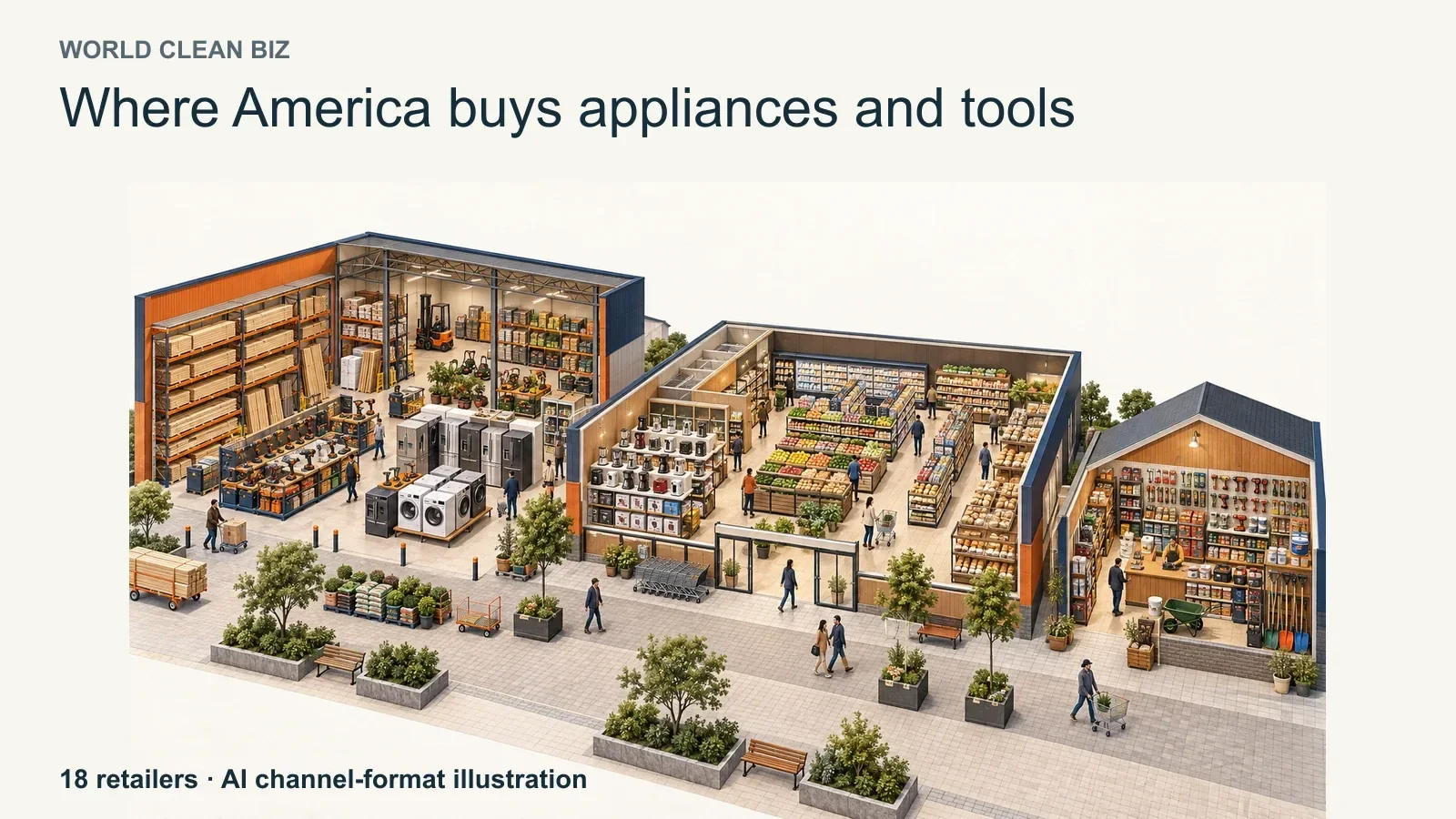
- Home Depot and Lowe's each reported more than $12 billion in annual appliance sales, including online sales.
- Home centers, mass merchants, warehouse clubs and tool specialists serve different shopping needs.
- Regional appliance retailers and independent hardware networks remain important alongside national chains.
In this article 18 sections
One of America's largest appliance retailers is a home improvement chain: Home Depot.
In fiscal 2025, Home Depot sold nearly $14 billion of appliances, while Lowe's sold approximately $12.9 billion. Best Buy, despite its association with electronics and appliances, generated approximately $4.2 billion in U.S. appliance revenue over a comparable annual period.
Americans do not necessarily visit a dedicated appliance store to buy a machine. A kitchen renovation can lead to an order for a refrigerator and washing machine at the home center. A weekend grocery run can end with a vacuum cleaner in the cart. Power tools travel through an equally varied retail network, from big-box home improvement stores to neighborhood hardware shops and industrial distributors.
Each store attracts a different customer, shaping which brands that customer is likely to encounter. The following 18 retailers offer a useful starting point for understanding the market.
All amounts are in U.S. dollars and use the most recently disclosed full fiscal years available for this article. Sales generally include online business. Appliance and tool figures follow each company's reporting definitions; total company revenue is not revenue from those two categories.
1. Home Depot
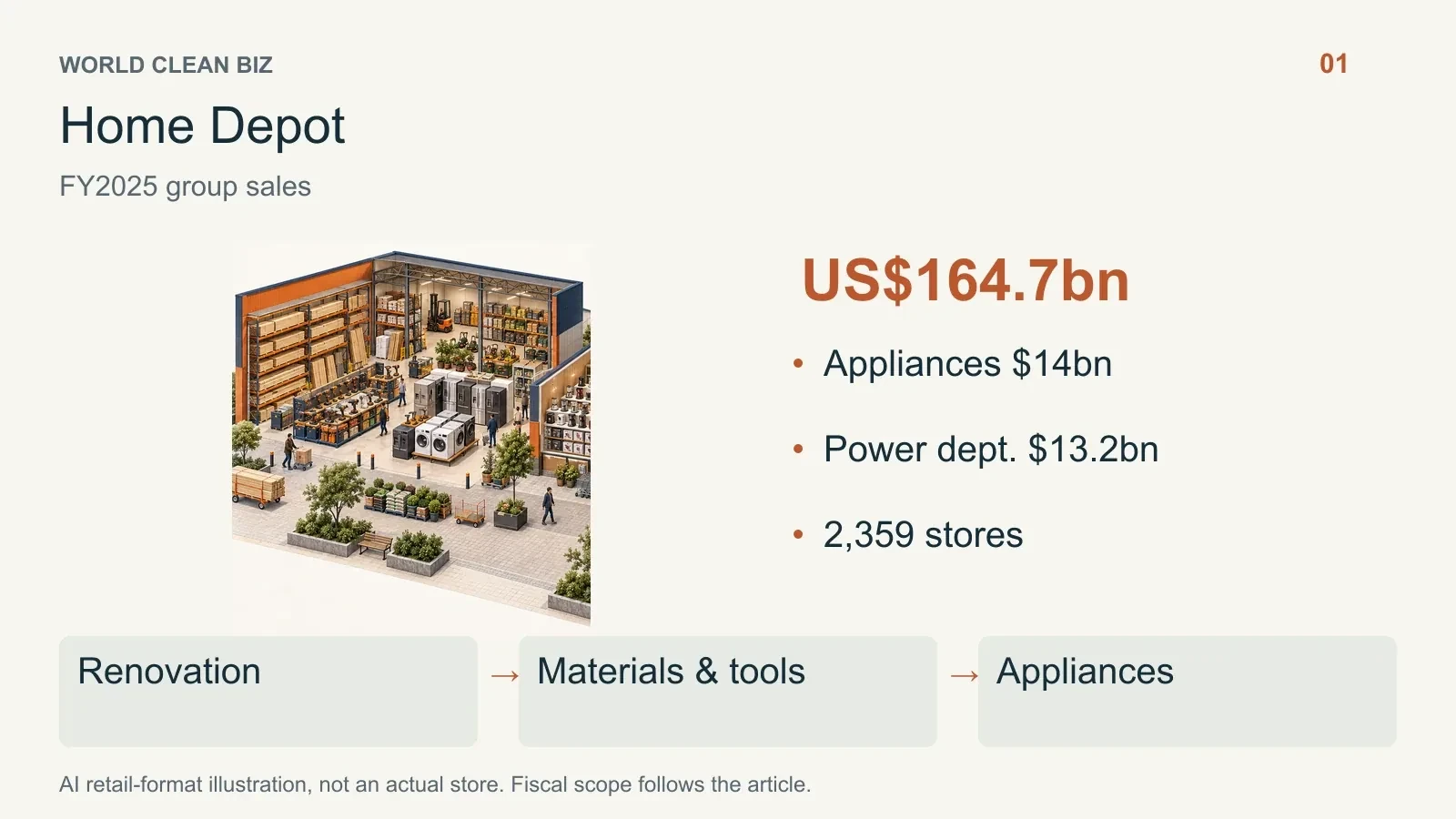
Home Depot is a major entry point into America's renovation and repair business. Its warehouse-style stores devote substantial space to lumber, building materials and tools, alongside displays of refrigerators, washing machines and other major appliances. Much of what a household needs to renovate a home can be purchased under one roof.
In fiscal 2025, Home Depot generated approximately $164.7 billion in sales and finished the year with 2,359 stores across the United States, Canada and Mexico. Appliances contributed approximately $14 billion, while its Power merchandising department generated approximately $13.2 billion. The latter is broader than handheld power tools alone. Home Depot annual report
Milwaukee, DeWalt and RYOBI are prominent names on its tool shelves, serving customers from professional tradespeople to home DIY users. After purchasing a cordless kit, a customer may continue adding machines that use the same batteries, turning an initial sale into a longer relationship with the platform.
What distinguishes Home Depot from a general merchandise store is how much demand comes directly from work in progress. A contractor may stop in for supplies needed that day. A homeowner renovating a kitchen may order cabinets and appliances together. Tools and appliances both sit within the wider business of building, improving and maintaining homes.
2. Lowe's
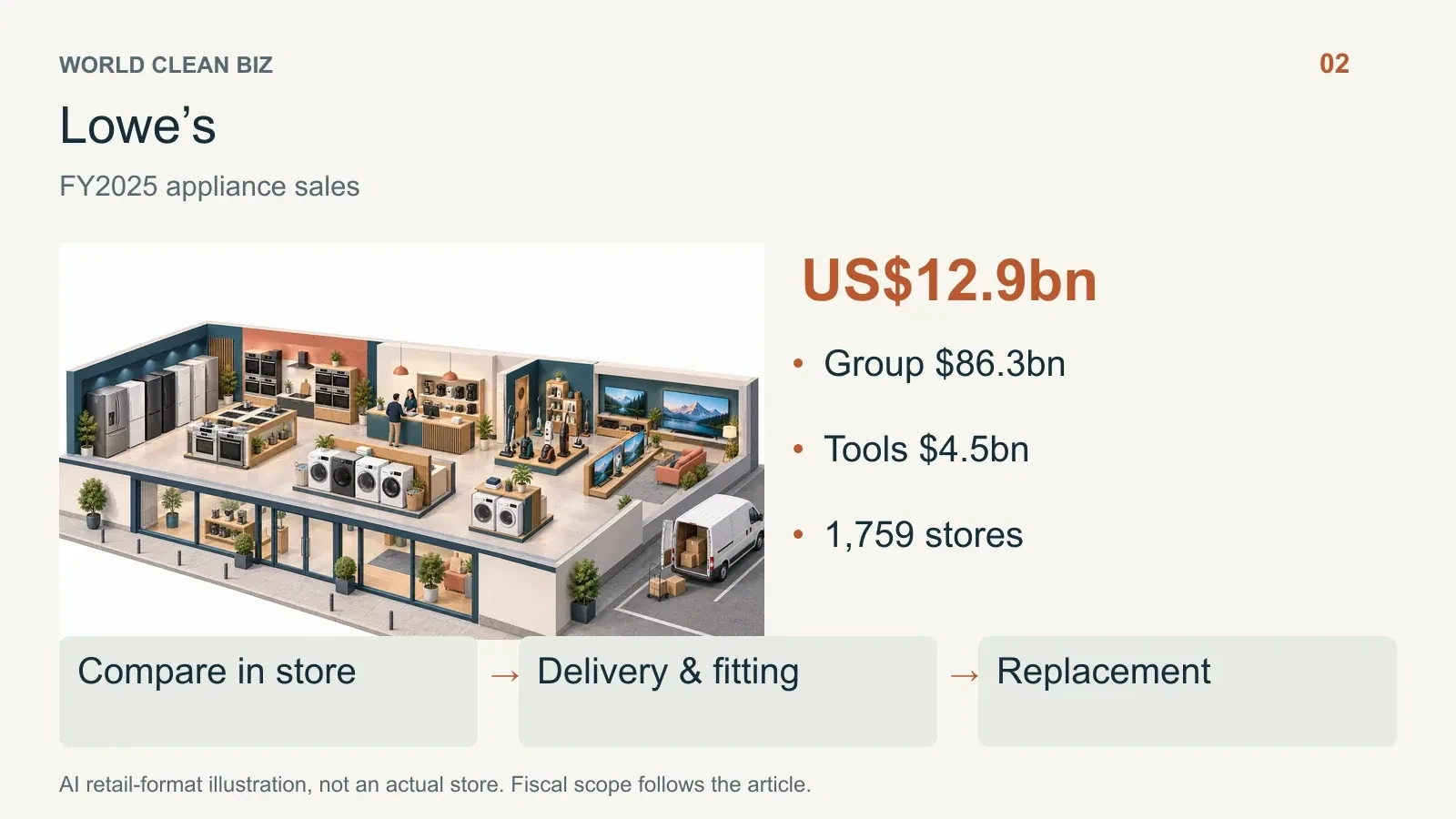
Lowe's is Home Depot's most direct competitor, but the gap between their appliance businesses is much smaller than the gap between their overall revenues.
In fiscal 2025, Lowe's generated approximately $86.3 billion in sales and operated 1,759 Lowe's-branded stores and outlets. Appliances contributed approximately $12.9 billion, or roughly 15% of sales. Its Tools category generated approximately $4.5 billion, with hardware and lawn and garden merchandise reported separately. Lowe's annual report
Major appliances invite in-person comparison and usually require delivery and installation. Lowe's connects these steps, making its stores an important destination when households replace large machines.
Its tool assortment includes the retailer's own Kobalt brand alongside DeWalt, FLEX and EGO. Like Home Depot, Lowe's brings the garage and yard into the same store, but with a different mix of brands. A customer's choice of battery platform can influence where the next purchase happens.
3. Menards
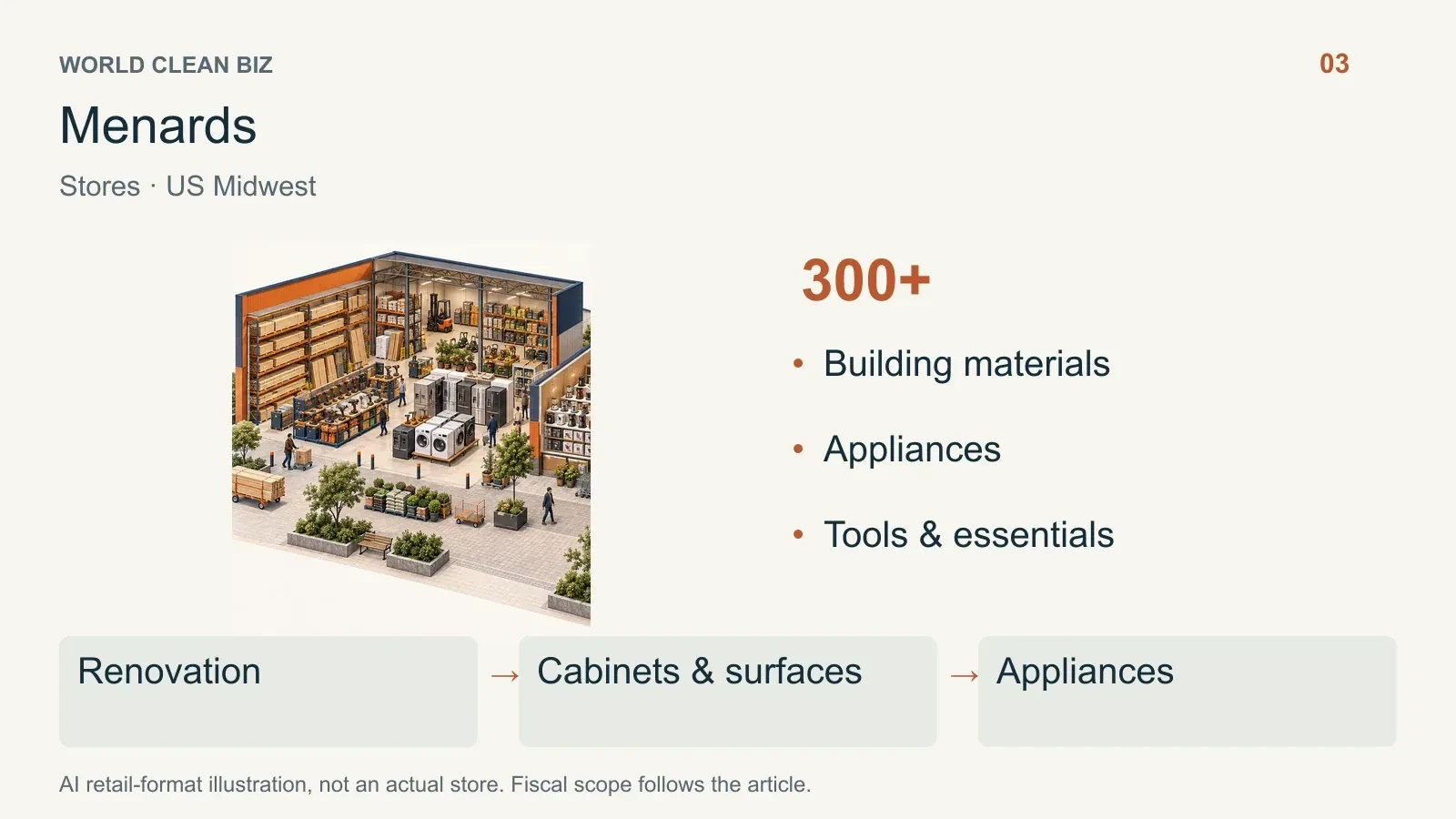
In the Midwest, Menards is an important home improvement retailer. Its more than 300 stores carry building materials and appliances, as well as groceries and everyday essentials. Menards supplier information
Appliance sales are closely connected to renovation. A household remodeling a kitchen can choose appliances while buying cabinets and countertops; tradespeople can pick up materials and tools. Menards has less international name recognition than Home Depot, but in the regions it serves, it is firmly embedded in many households' shopping routines.
4. Walmart
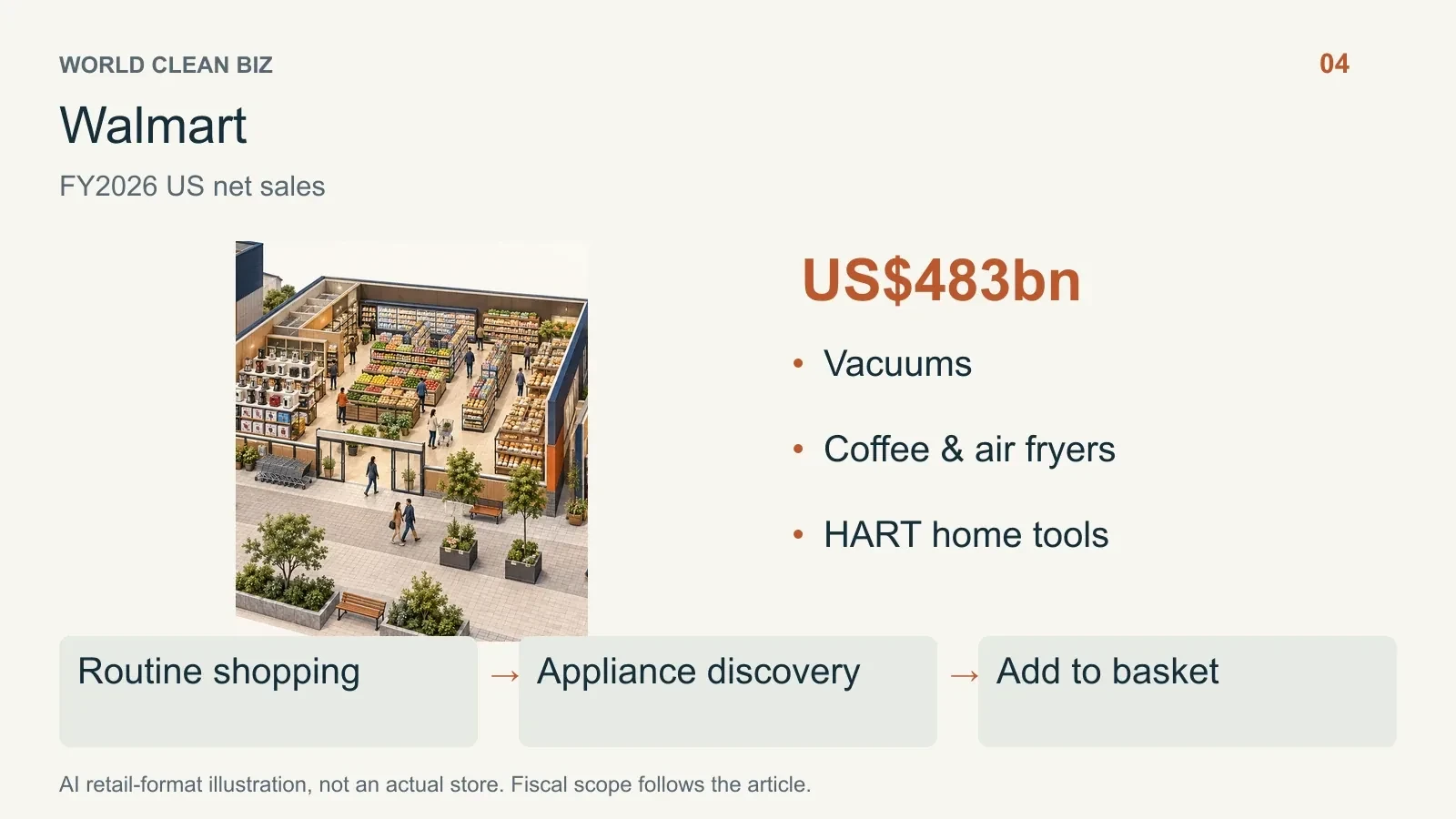
Walmart's appliance business sits closer to everyday shopping. Vacuum cleaners, coffee makers and air fryers join groceries and household essentials in the cart. In tools, HART addresses home repairs and DIY at mass-market prices.
For the fiscal year ended in January 2026, Walmart U.S. generated approximately $483 billion in net sales. By the end of July 2026, it operated more than 4,600 U.S. stores across several formats. Walmart annual report, location facts
That enormous flow of routine shopping traffic underpins its small-appliance business. Customers can encounter products on a weekly trip without arranging a separate visit to an appliance store. Machines with accessible prices and an immediately understandable purpose fit this environment.
Tools follow a similar logic. Many households need to assemble furniture or complete a straightforward repair. Their frequency of use and performance requirements differ from those of a tradesperson who uses tools every day. Walmart's introduction of HART
5. Target
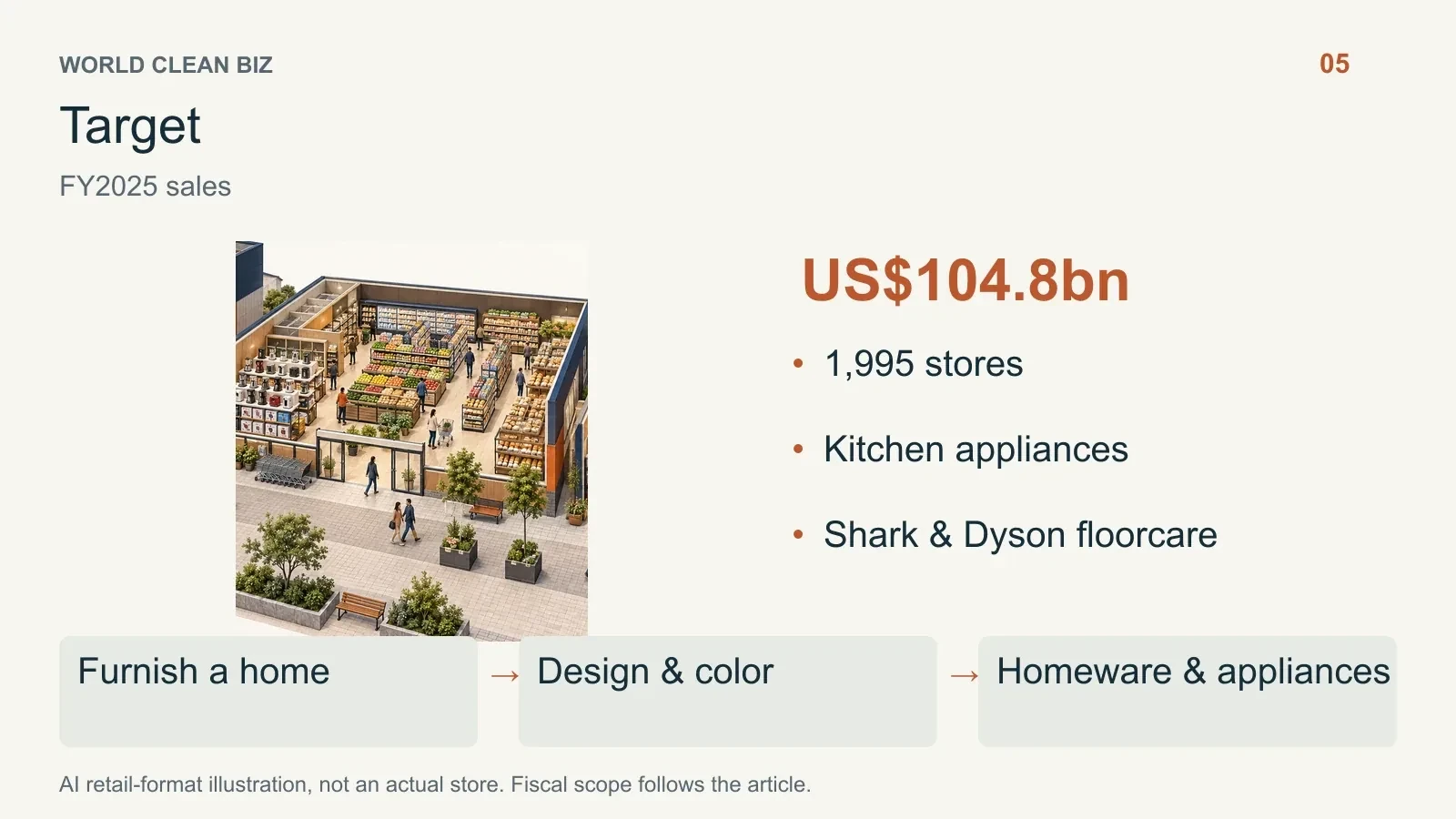
Target is also a general merchandise retailer, but its home assortment places greater emphasis on design. Kitchen appliances and floorcare products sit within a broader setting of storage, furnishings and home decor.
Target generated approximately $104.8 billion in sales in fiscal 2025 and finished the year with 1,995 stores. Shark and Dyson are among the cleaning brands in its assortment. Target annual financial summary, floorcare assortment
Customers may be furnishing a first apartment or replacing kitchen equipment. Beyond function and price, appearance, color and fit within the home can influence the purchase. Small appliances and home goods have a stronger presence here than power tools.
6. Costco
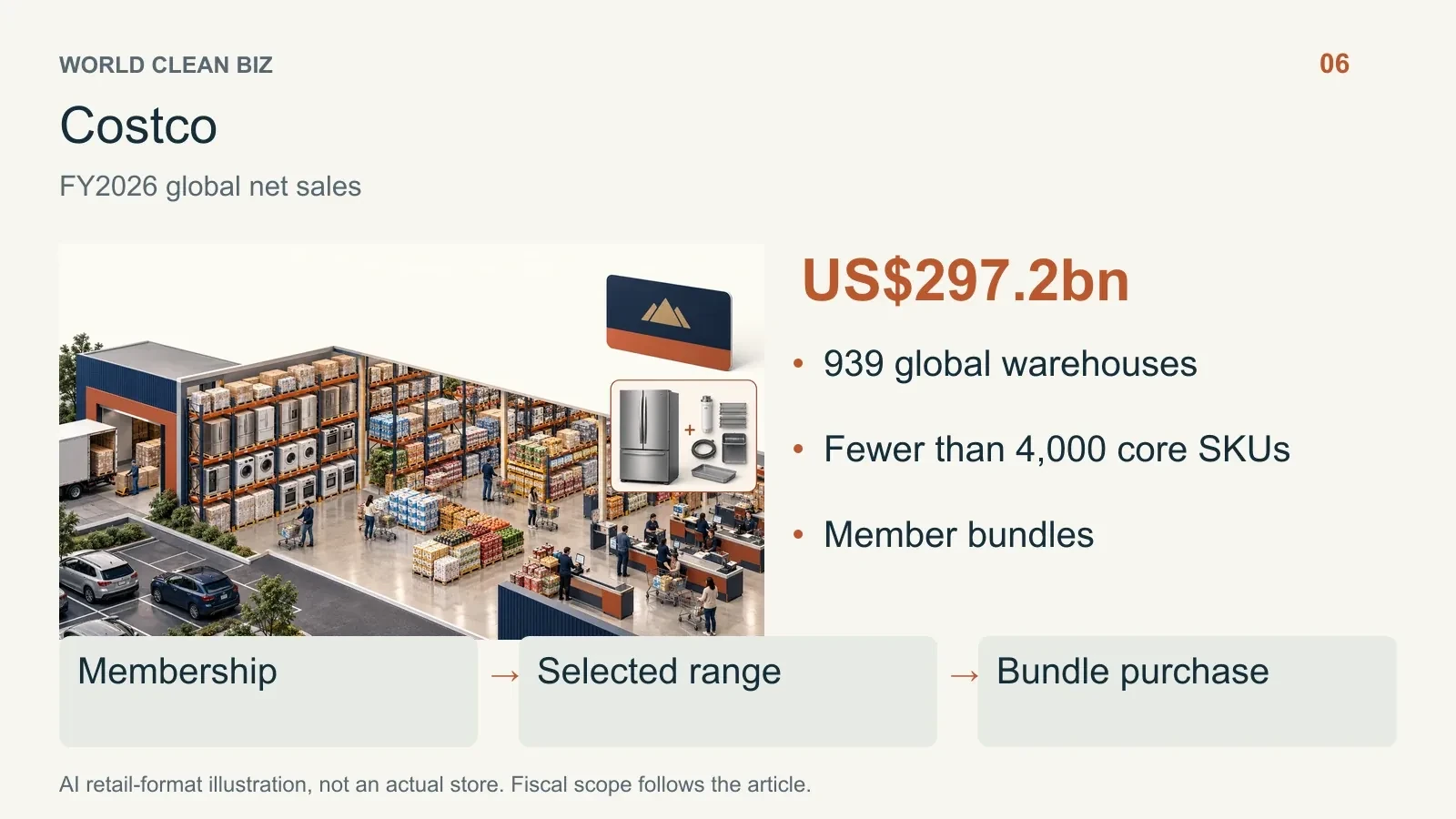
Costco's warehouses are large, but its assortment is selective. The company reports that a typical core warehouse carries fewer than 4,000 active stock-keeping units. Rather than continually adding models within a category, it gives a narrower selection concentrated exposure. Costco FY2025 annual report
Appliances often appear as member offers or bundles. A vacuum might include additional cleaning heads, while a tool kit might add a battery, making the value of the package easier to see.
Costco's global net sales reached approximately $297.2 billion in fiscal 2026. At its September results announcement, it operated 939 warehouses, including 647 in the United States and Puerto Rico. Costco FY2026 results
Its assortment includes kitchen appliances, floorcare and major appliances, while tools and outdoor products vary with the season and promotional calendar. Customers are often willing to choose from a limited range, provided the specification and price are compelling.
7. Sam's Club
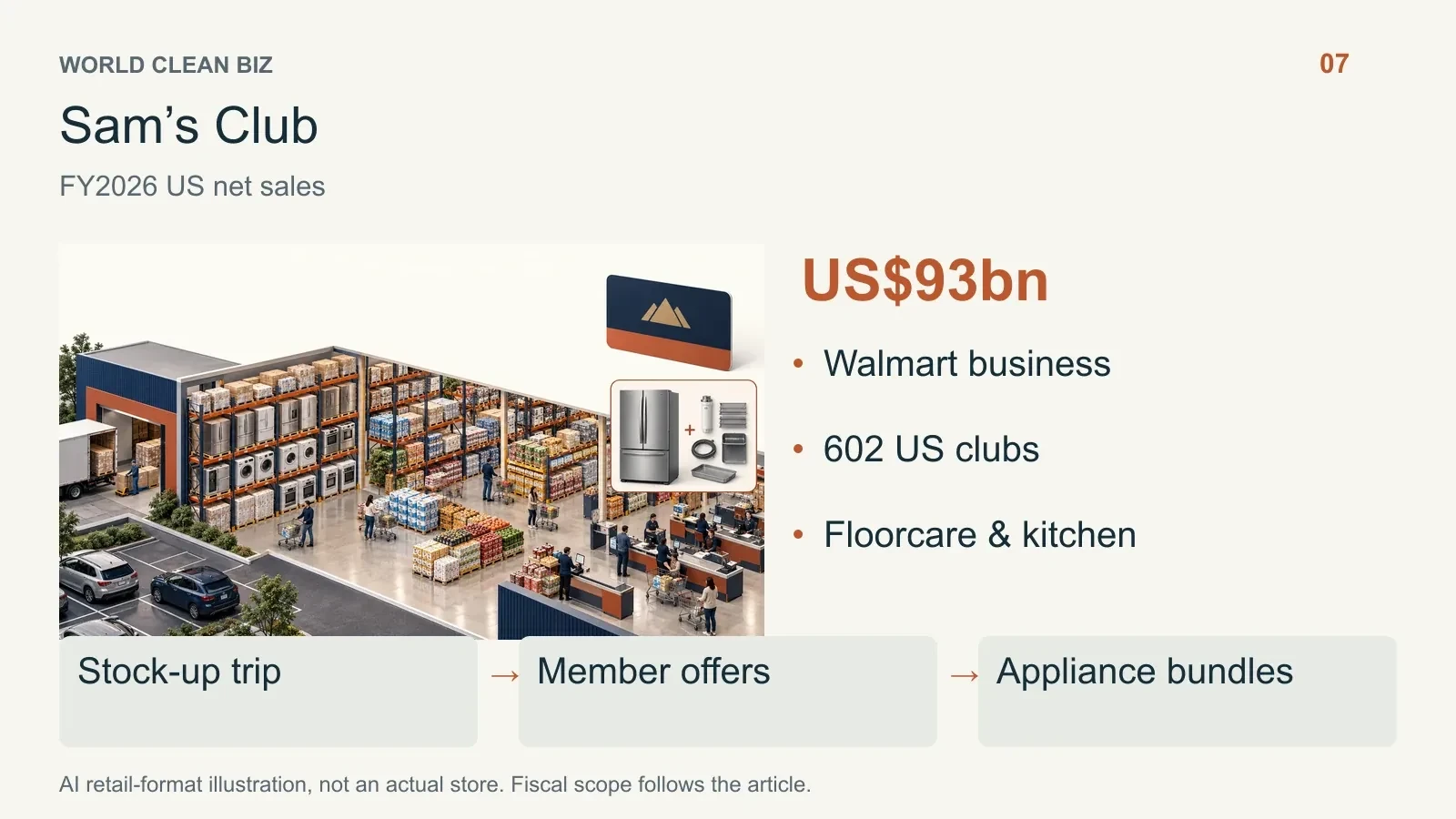
Sam's Club belongs to Walmart and operates a membership warehouse model. Its U.S. business generated approximately $93 billion in net sales in the fiscal year ended in January 2026. By the end of July 2026, it had 602 U.S. clubs.
Stock-up shopping brings regular household traffic, and member promotions put small appliances on the shopping list. Floorcare and kitchen equipment can be purchased alongside groceries and everyday supplies, while bundles distinguish the offer from conventional stores.
Sam's Club and Costco serve similar household purchasing needs, but run separate merchandising systems. Customers encounter different brand selections in each.
8. BJ's Wholesale Club
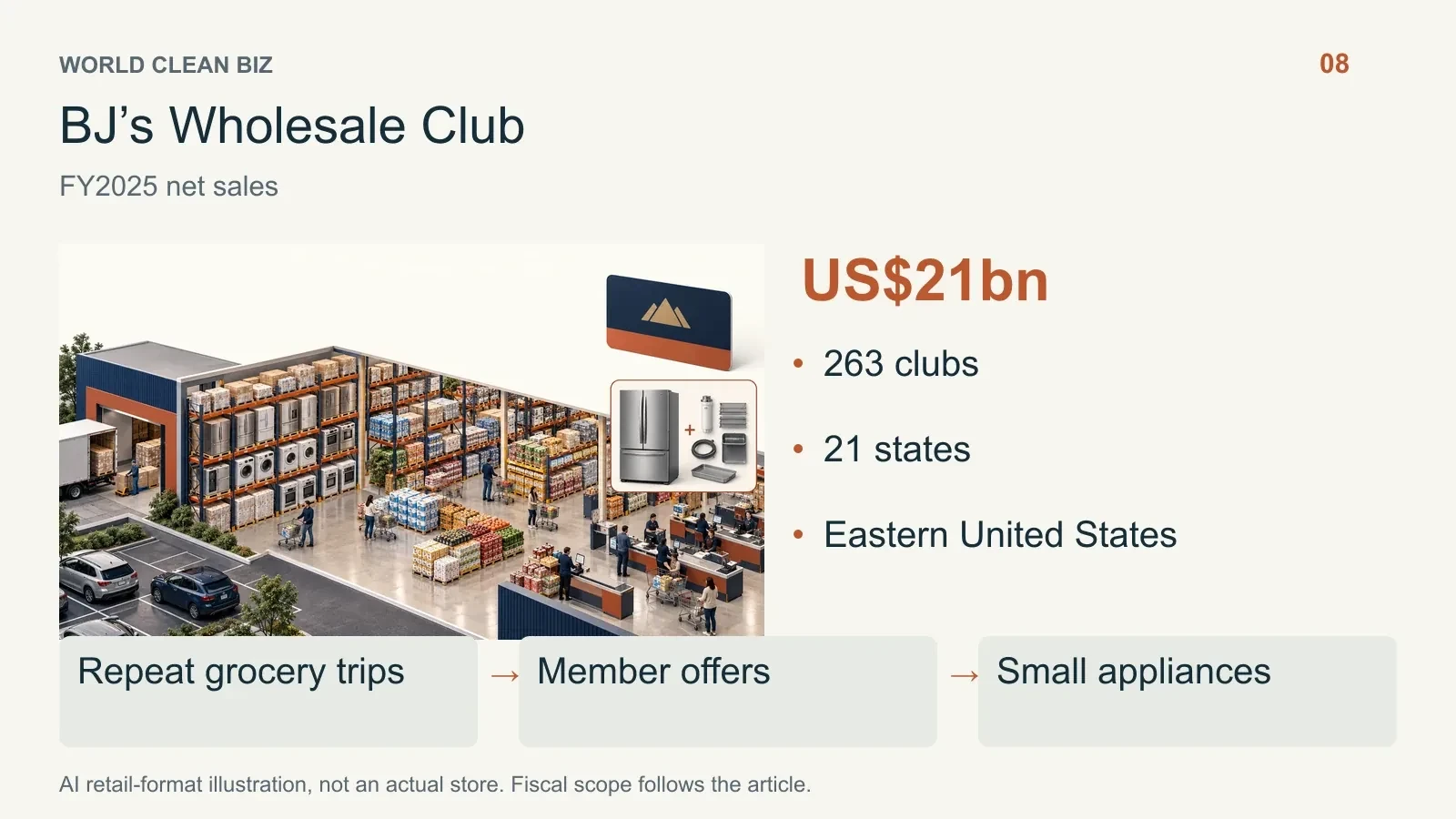
BJ's is an important membership warehouse retailer in the eastern United States. Net sales were approximately $21 billion in fiscal 2025. At its March 2026 results announcement, it operated 263 clubs across 21 states. BJ's annual results
Groceries and household essentials likewise generate repeat traffic, while member offers help sell products such as vacuums and kitchen appliances. BJ's is smaller than Costco and Sam's Club, but its more concentrated regional footprint makes it an important channel in the eastern U.S.
9. Best Buy
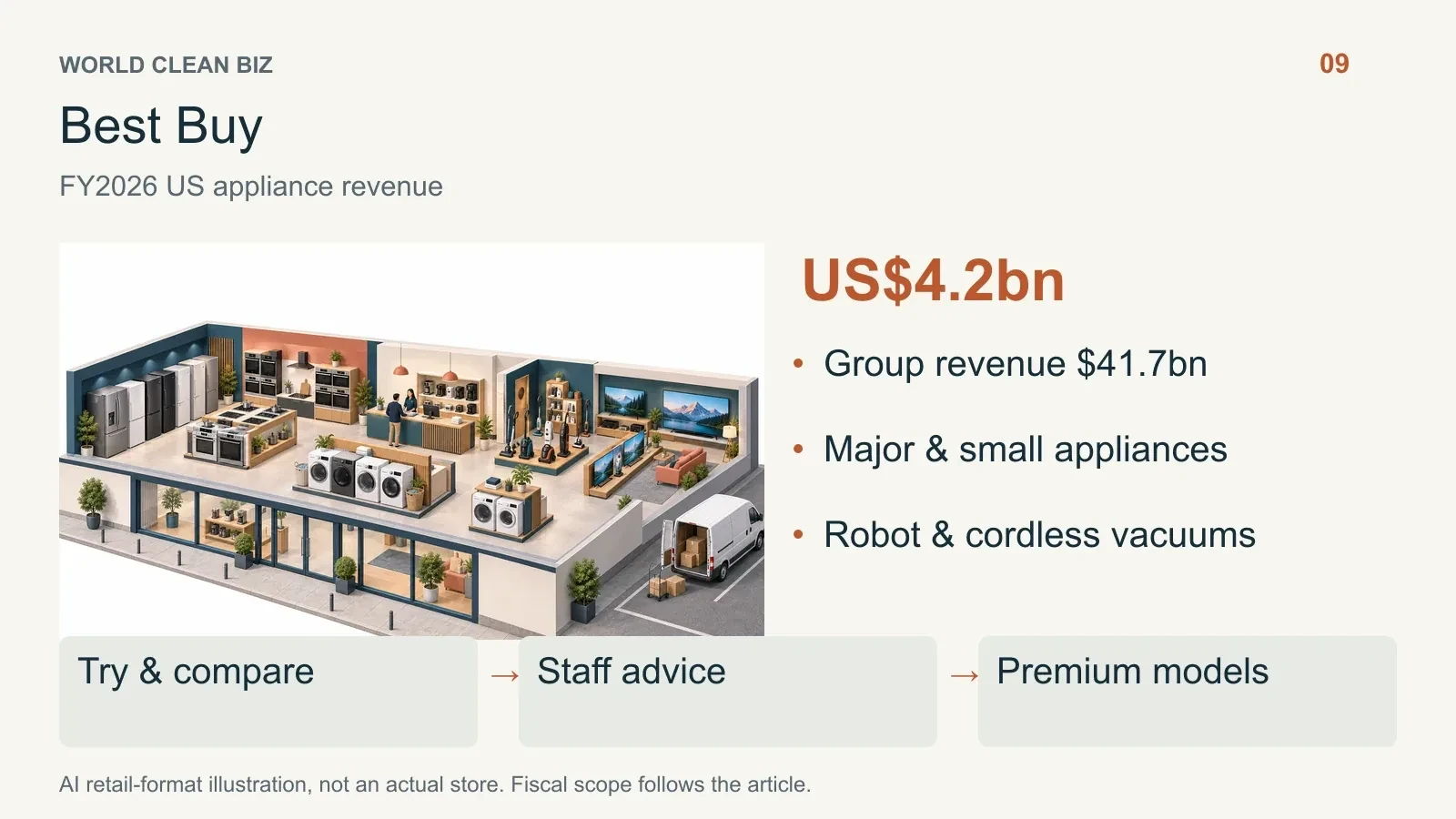
Best Buy is most readily associated with computers and televisions, but appliances are a substantial business too.
For the fiscal year ended in January 2026, group revenue was approximately $41.7 billion, including approximately $4.2 billion from U.S. appliances. That category covers refrigerators and washing machines as well as vacuums, coffee makers and personal care appliances. Best Buy annual report
Compared with a general merchandise store, Best Buy is better suited to shoppers who want to pause and compare machines. Displays and staff explanations can make differences between models more tangible, providing room to demonstrate higher-priced appliances.
Robot vacuums and premium cordless vacuums fit that setting. Customers may already be researching connected devices and taking an interest in navigation, automation and software. Best Buy's established consumer electronics audience provides a natural entry point for these cleaning products.
10. Harbor Freight
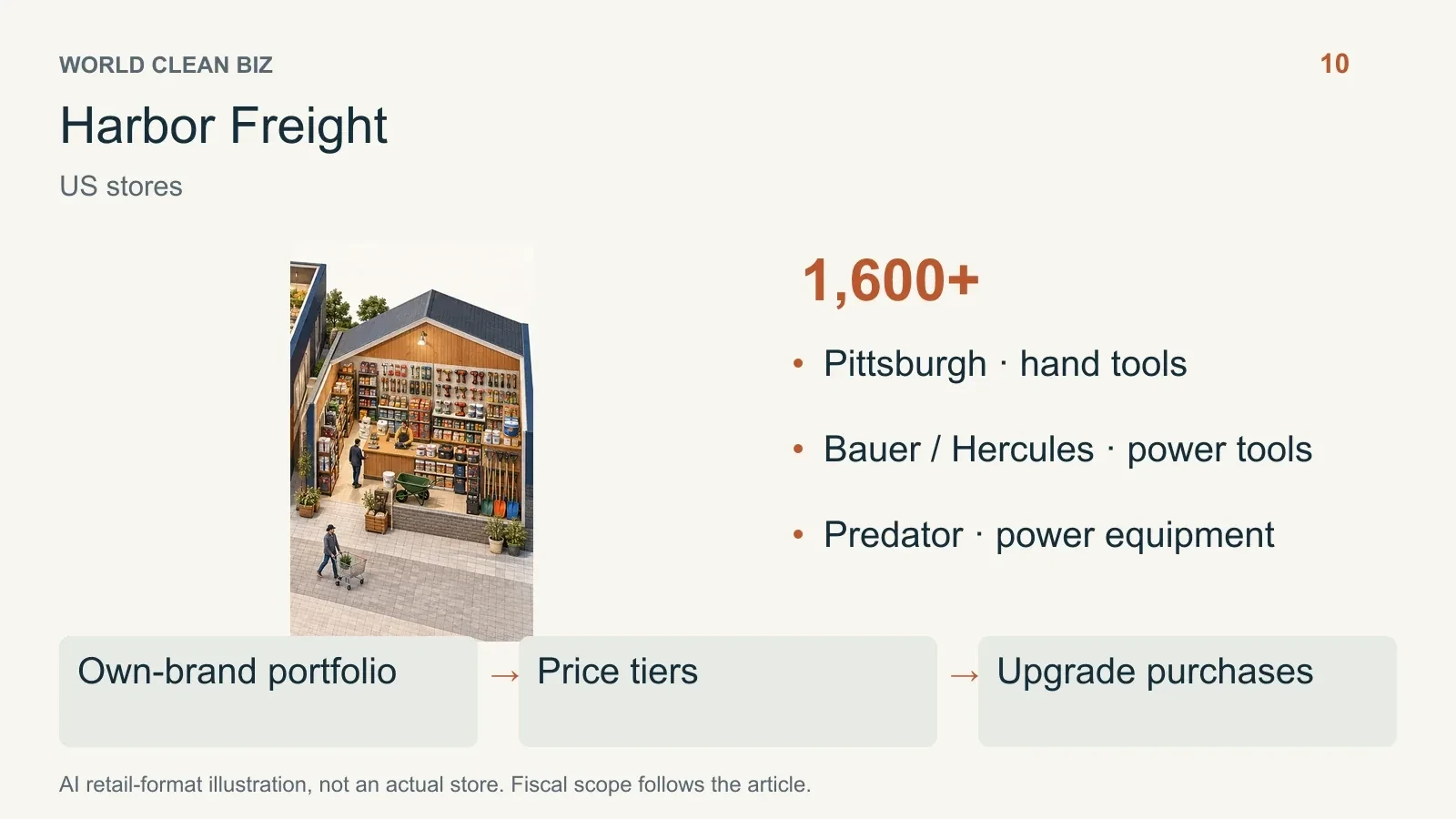
Harbor Freight has a distinctive position in American tool retail: it covers a wide range of needs through its own brand portfolio.
The company has more than 1,600 U.S. stores, selling hand tools, power tools and equipment such as generators and air compressors. Pittsburgh, Bauer, Hercules and Predator occupy different categories and price tiers. Harbor Freight store directory, brands
Home users can equip themselves on a relatively modest budget, while customers with more demanding requirements can find other options within the portfolio. By expanding its product tiers, Harbor Freight gives customers reasons to stay within its retail system as their needs change.
The retailer largely controls the brands and product positioning. That differs from Home Depot's approach of putting multiple outside tool brands in competition on its shelves. For manufacturers, it represents another important route into the U.S. tool business.
11. Ace Hardware
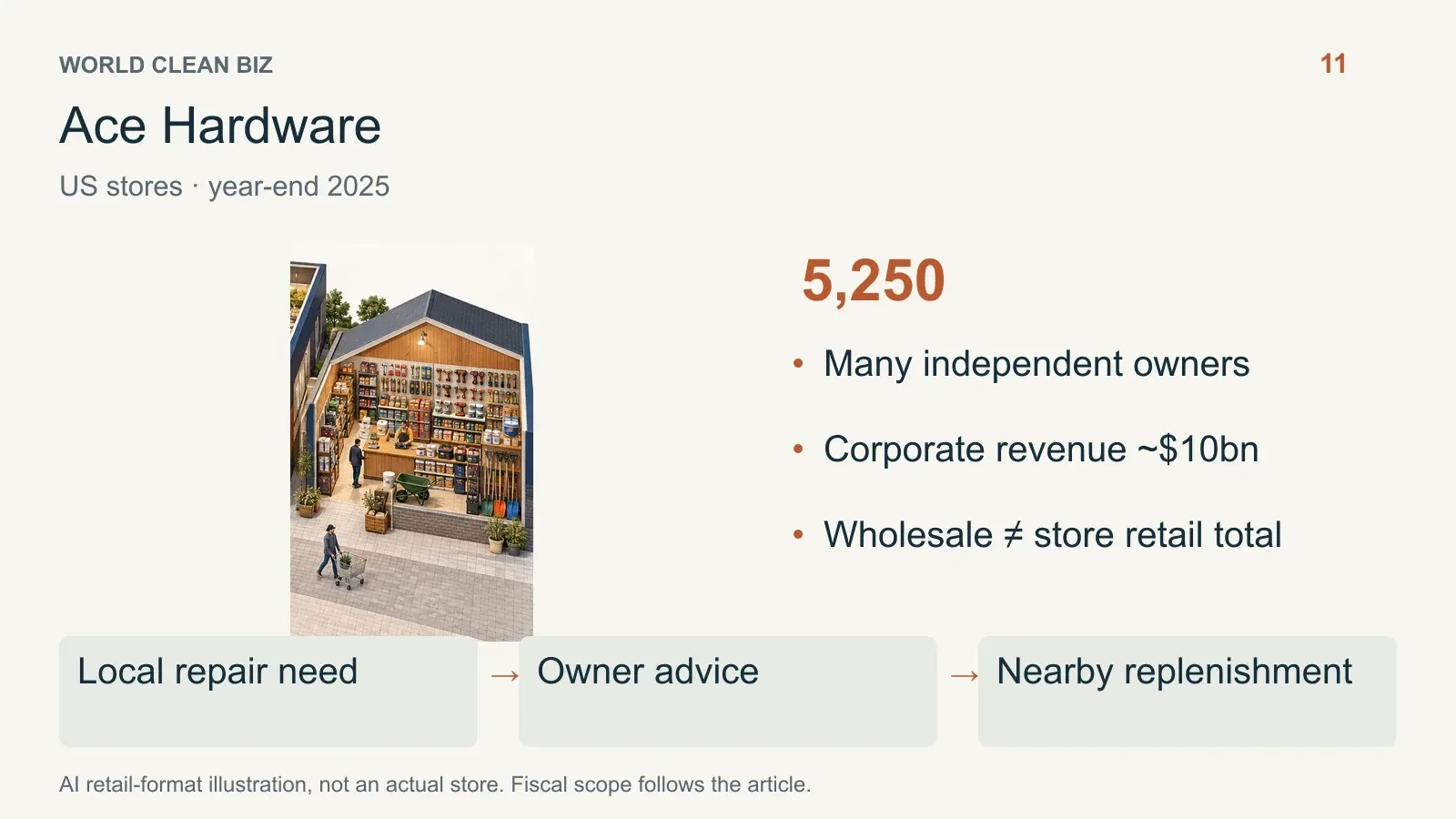
Ace is closer to the neighborhood hardware store. Its locations are generally smaller than Home Depot, but may be much closer to home.
At the end of fiscal 2025, Ace had 5,250 U.S. stores, many independently operated. Ace reported approximately $10 billion in corporate revenue, primarily from supplying stores through its wholesale business—not the combined consumer retail sales of every Ace location. Ace annual results
Customers can get help nearby when they need a repair part or do not know which tool to buy. Independent owners can also adapt their assortment to local households, giving stores under the same banner a degree of neighborhood character.
12. Do it Best / True Value
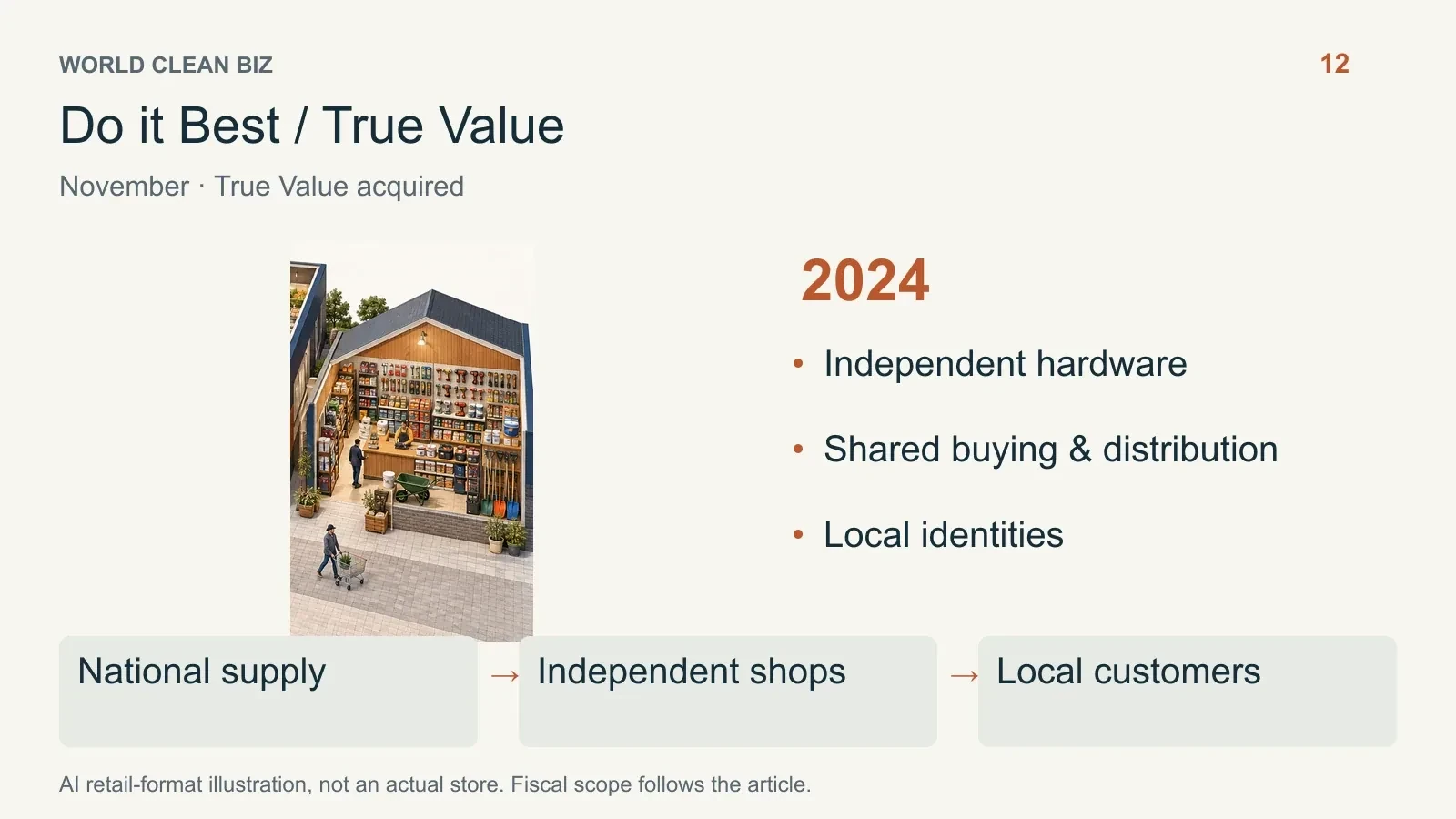
Do it Best and True Value connect another group of independent hardware retailers. Do it Best completed its acquisition of True Value in November 2024. Acquisition announcement
Customers may see a Do it Best sign, a True Value sign or a local owner's own store name. Shared purchasing and distribution systems supply these stores while allowing them to retain their individual character.
Some concentrate on repair tools; others lean toward building materials or lawn and garden products. Behind the dispersed storefronts sits a national supply network that supports their continued operation.
13. Northern Tool + Equipment
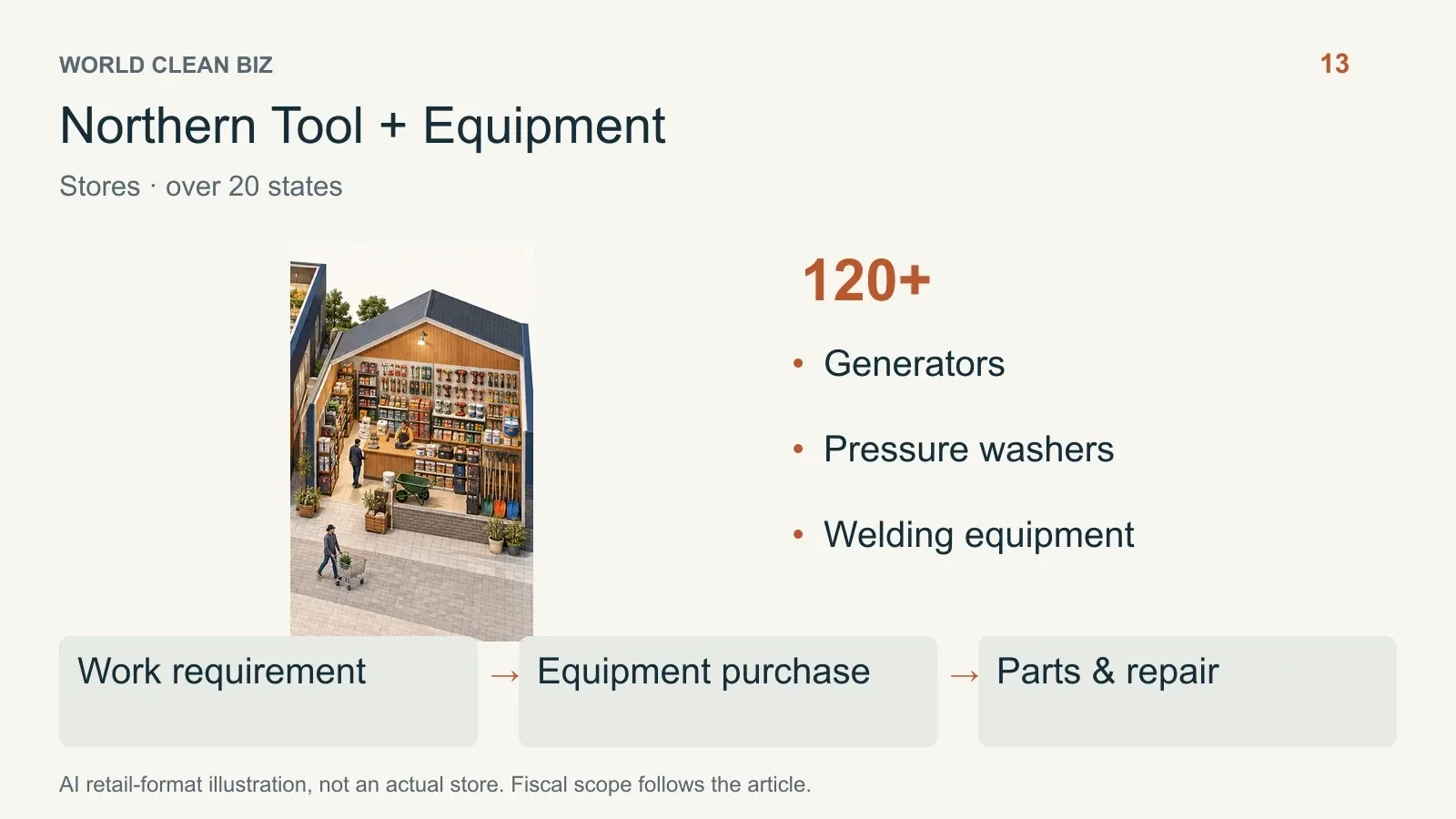
Northern Tool's assortment is oriented toward getting work done, with a strong presence in generators, pressure washers and welding equipment. It operates more than 120 stores across over 20 states, alongside online sales. Northern Tool company information
Customers include home DIY users, contractors and small businesses. Many machines are bought for work, making sustained operation and repair parts important considerations. This separates the offer from the household tool aisle of a general merchandise store.
14. Tractor Supply
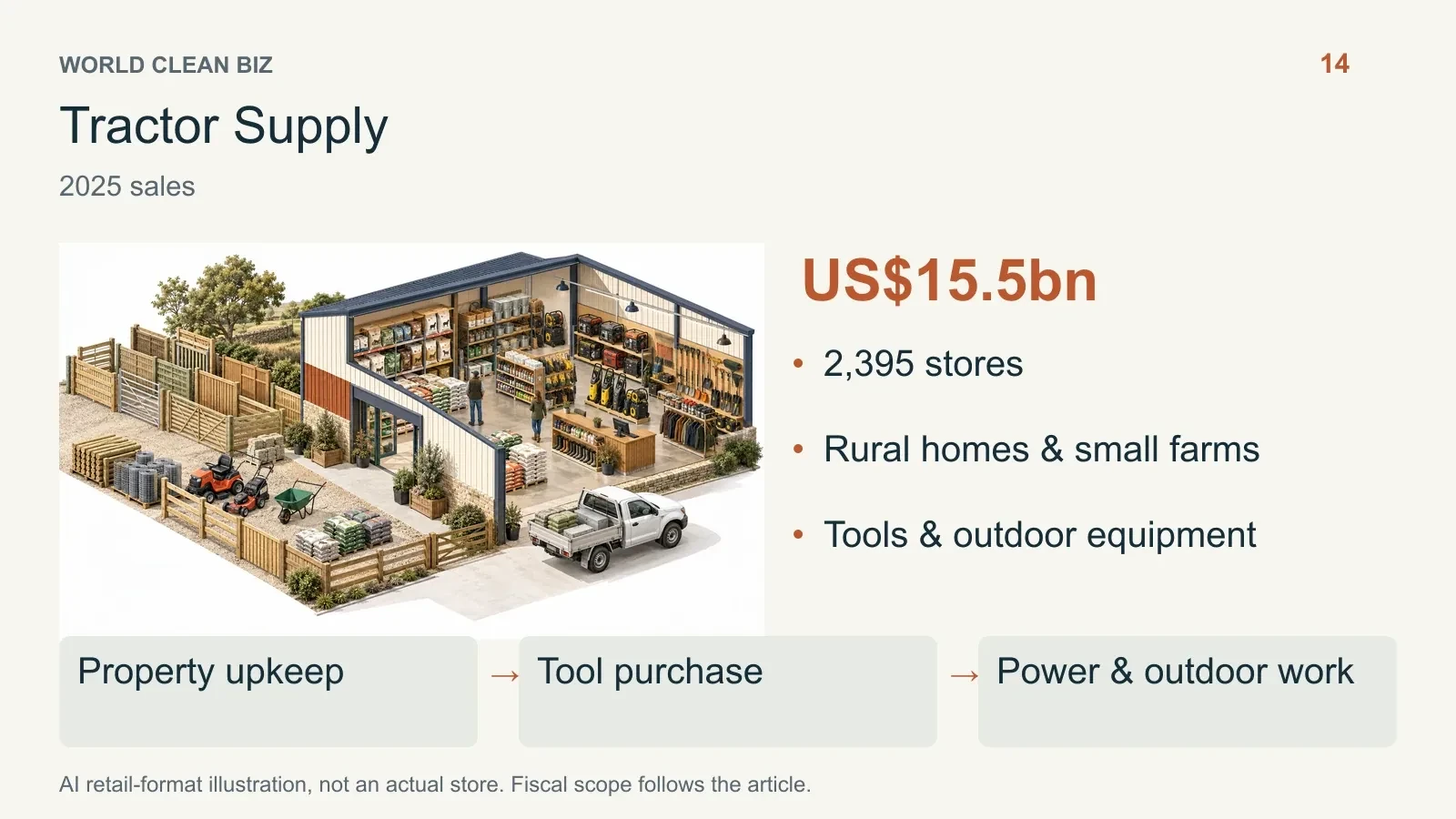
Tractor Supply serves rural households and small farms through products for pets, livestock and outdoor work. Despite its name, selling tractors is not the center of the business.
The company generated approximately $15.5 billion in sales in 2025 and finished the year with 2,395 Tractor Supply stores. Tractor Supply annual results
Its customers may need to maintain larger properties, repair fences or prepare for a power outage. Tools and outdoor equipment have specific, recurring uses here, giving brands access to a rural market that urban general merchandise stores do not fully reach.
15. Abt
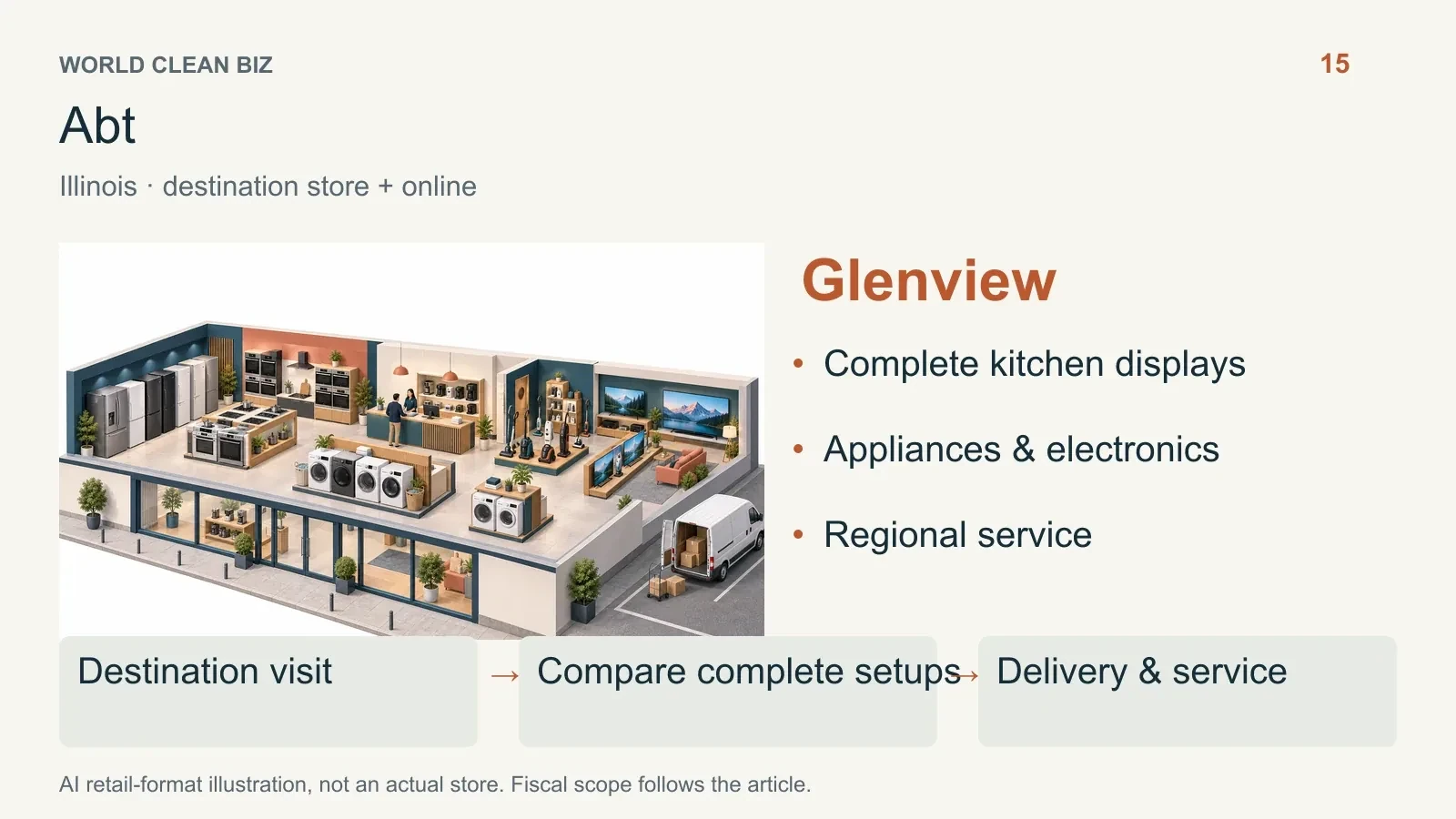
Based in Glenview, Illinois, Abt operates around one large physical store and extends its reach online. It sells appliances and consumer electronics, with space for shoppers to compare complete kitchen packages in person. About Abt
Abt illustrates another model for regional appliance retail: an extensive display and a long-standing service reputation can attract customers from a wide area without a large branch network.
16. P.C. Richard & Son
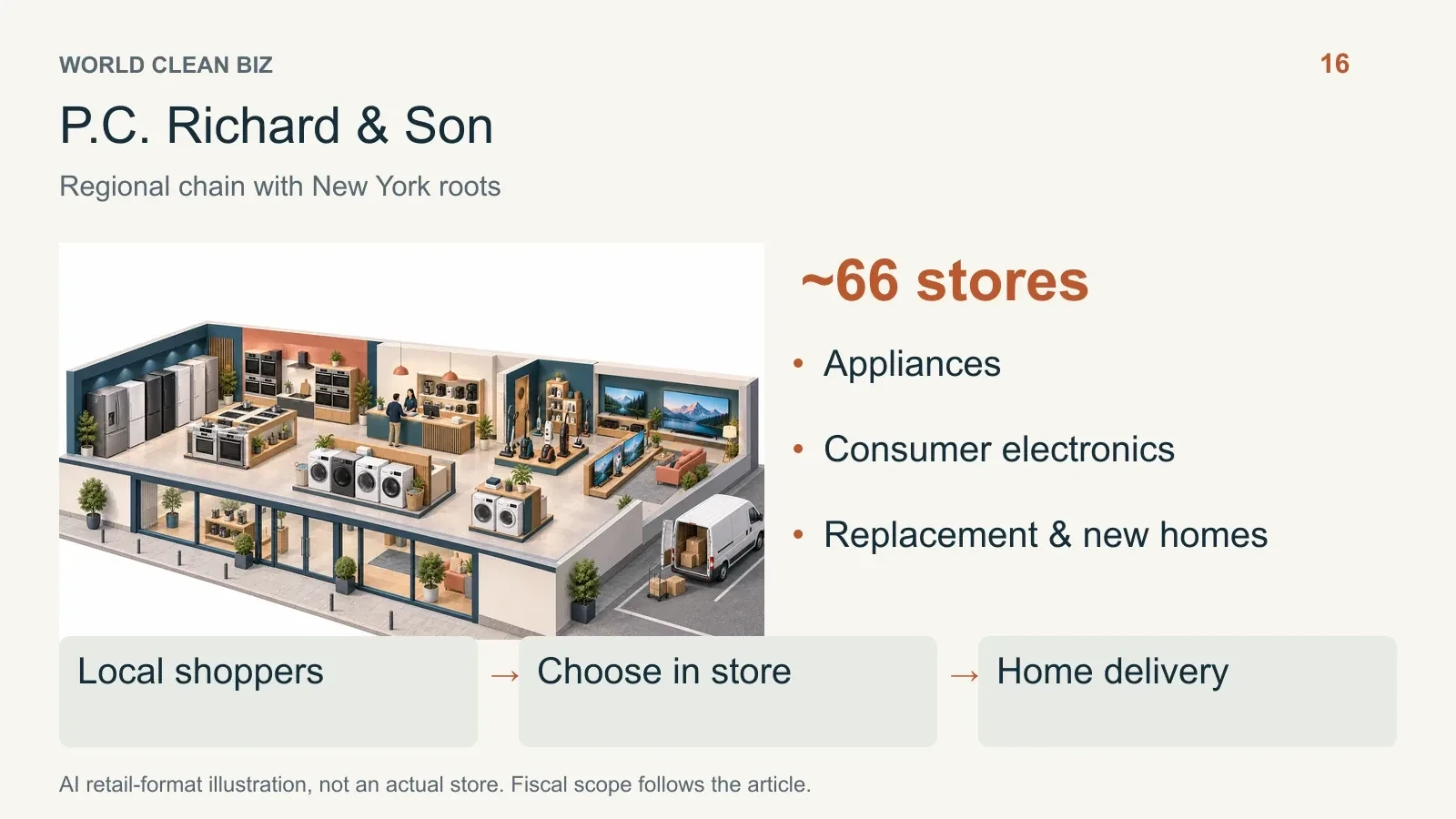
P.C. Richard & Son grew out of the New York area and operates approximately 66 stores, with appliances and consumer electronics at the center of its assortment. Company history, store information
Its network is geographically concentrated. Local shoppers can compare refrigerators and washers, or furnish a new home, before arranging delivery. A regional appliance chain's relationship with a household can continue across successive replacement purchases.
17. NFM: Nebraska Furniture Mart
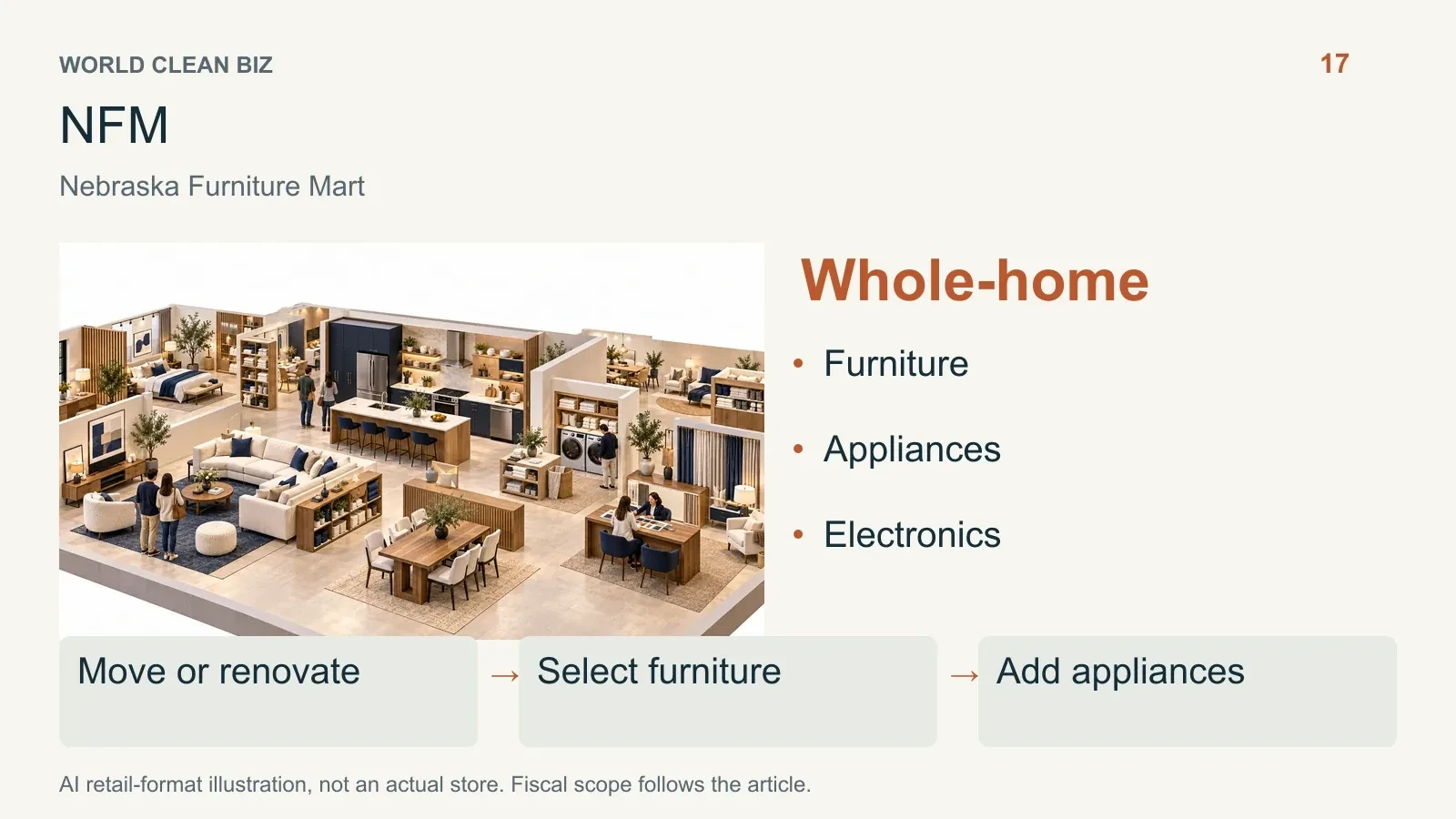
NFM brings furniture, appliances and consumer electronics together in large stores, serving customers shopping for an entire home. About NFM
Someone choosing a sofa may also settle on equipment for the kitchen or laundry room. Appliance purchases are closely linked to moving and renovation, and the large display space lets customers consider their plans for the home together.
18. RC Willey
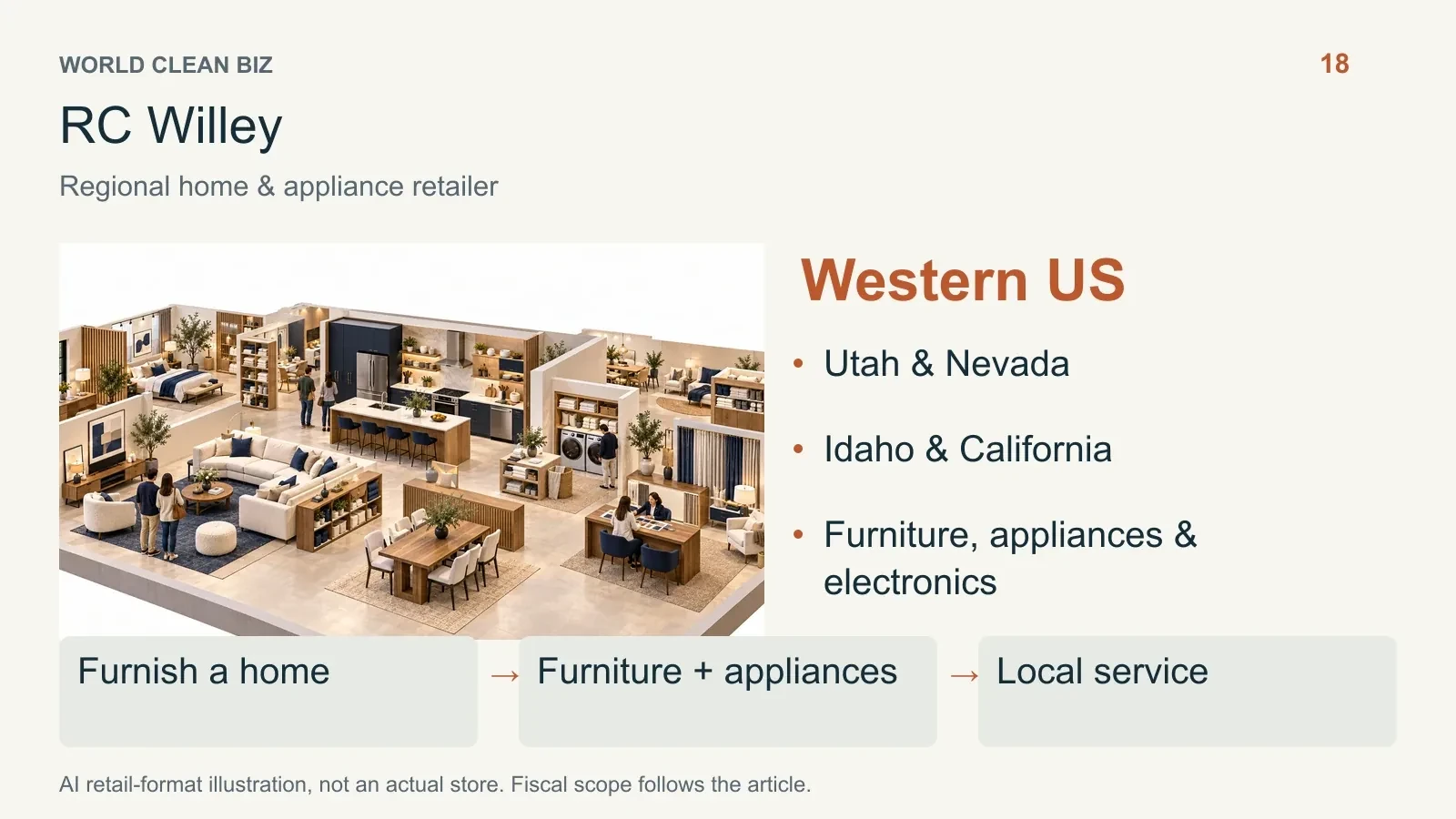
RC Willey sells furniture, appliances and consumer electronics in the western United States, with a presence in states including Utah, Nevada, Idaho and California. RC Willey appliances
Like NFM, it places appliances within a broader home-furnishing environment. Alongside the national chains, regional retailers with long operating histories continue to hold established local customer relationships.
Other organizations support U.S. retail without presenting consumers with a single uniform storefront. Nationwide Marketing Group and BrandSource provide purchasing and business support to independent retailers, including appliance dealers. Orgill supplies hardware stores through a wholesale distribution network. Nationwide Marketing Group, BrandSource, Orgill
Industrial customers have another purchasing system. Grainger and Fastenal primarily serve business maintenance and industrial demand, generating approximately $17.9 billion and $8.2 billion respectively in total 2025 sales. Tools are only part of each company's assortment. Grainger results, Fastenal results
An American household might buy a vacuum at Costco, replace a refrigerator at Lowe's and visit the nearby Ace for repair tools. Several different retail networks serve the same family. The American market is enormous, but few stores can capture all of that household's spending.
