- North America accounts for an estimated €9.3 billion, or 53%, of the global pool-equipment and related-products market.
- The United States has more than 5.4 million residential in-ground pools, while annual new construction is only about 58,000; maintenance and upgrades drive most industry revenue.
- Robotic pool cleaners represent roughly 20% of global pool cleaning and maintenance spending, but long-term growth in North America still depends on professional distribution, parts and repair.
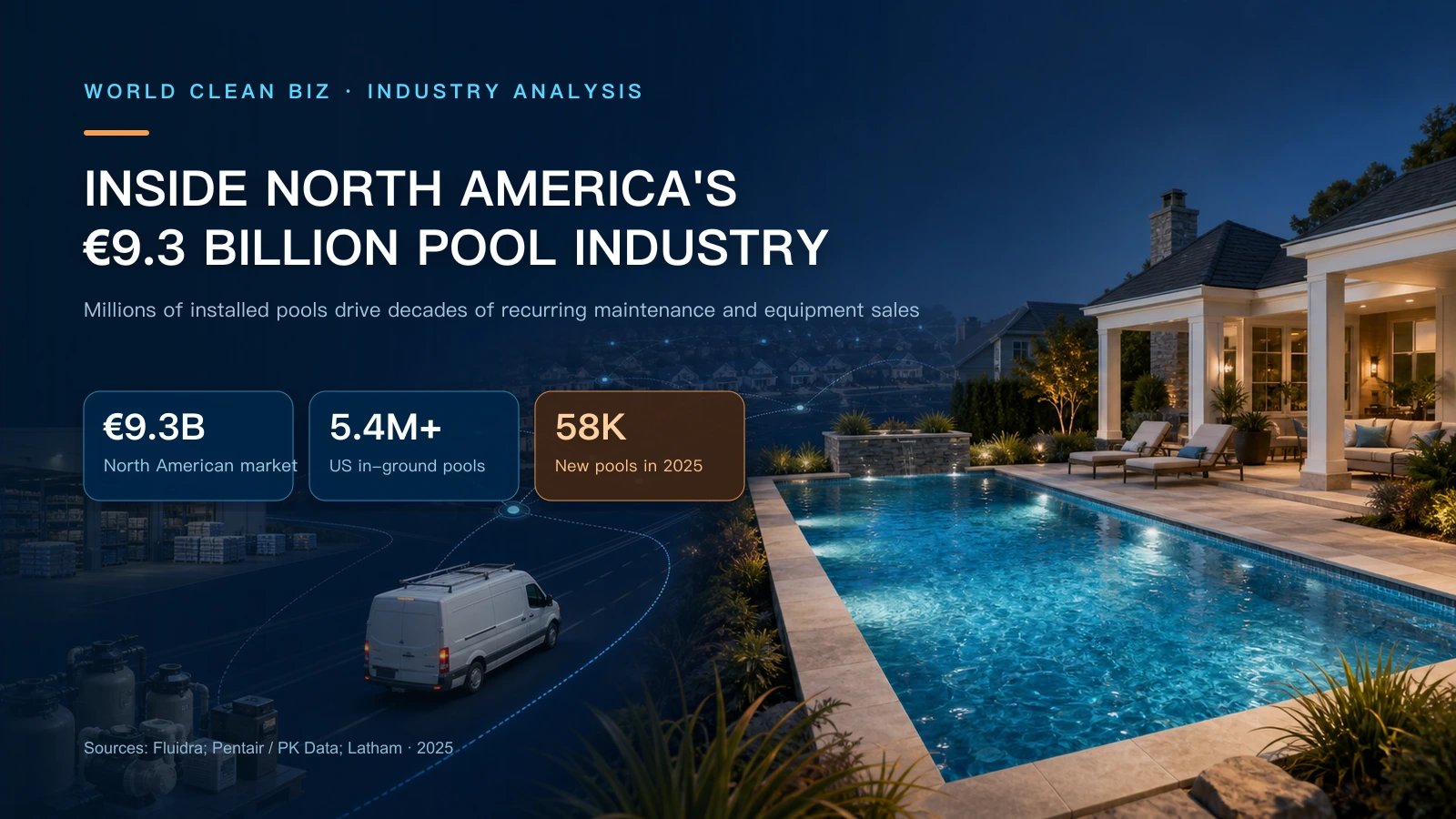
Fluidra's 2025 annual report estimated the global market for pool equipment and related products at roughly €17.4 billion. North America accounted for €9.3 billion, or 53% of the total. The estimate does not include every dollar spent on construction and labor, yet North America is still the most important pool market in the world.
That €9.3 billion business is supported by millions of pools that have already been built.
Pentair, citing PK Data, says the United States has more than 5.4 million residential in-ground pools. Only about 58,000 new in-ground pools were built in 2025—roughly 1% of the installed base and well below the 25-year average of around 100,000. Latham expects another 58,000 in 2026.
New construction has remained weak, but POOLCORP's revenue has not fallen with it. In 2025, the world's largest pool-products distributor generated about 64% of its sales from maintenance and minor repairs, 22% from renovation and upgrades, and only 14% from new pool construction.
Once a pool is built, chemicals have to be replenished and pumps and filtration equipment eventually enter replacement cycles. Leslie's calculates that a residential in-ground pool generates about $900 a year in essential chemical, equipment and parts sales over a 30-year life, giving it an aftermarket lifetime value of roughly $27,000. That figure excludes the original construction cost, professional cleaning services, water and electricity.
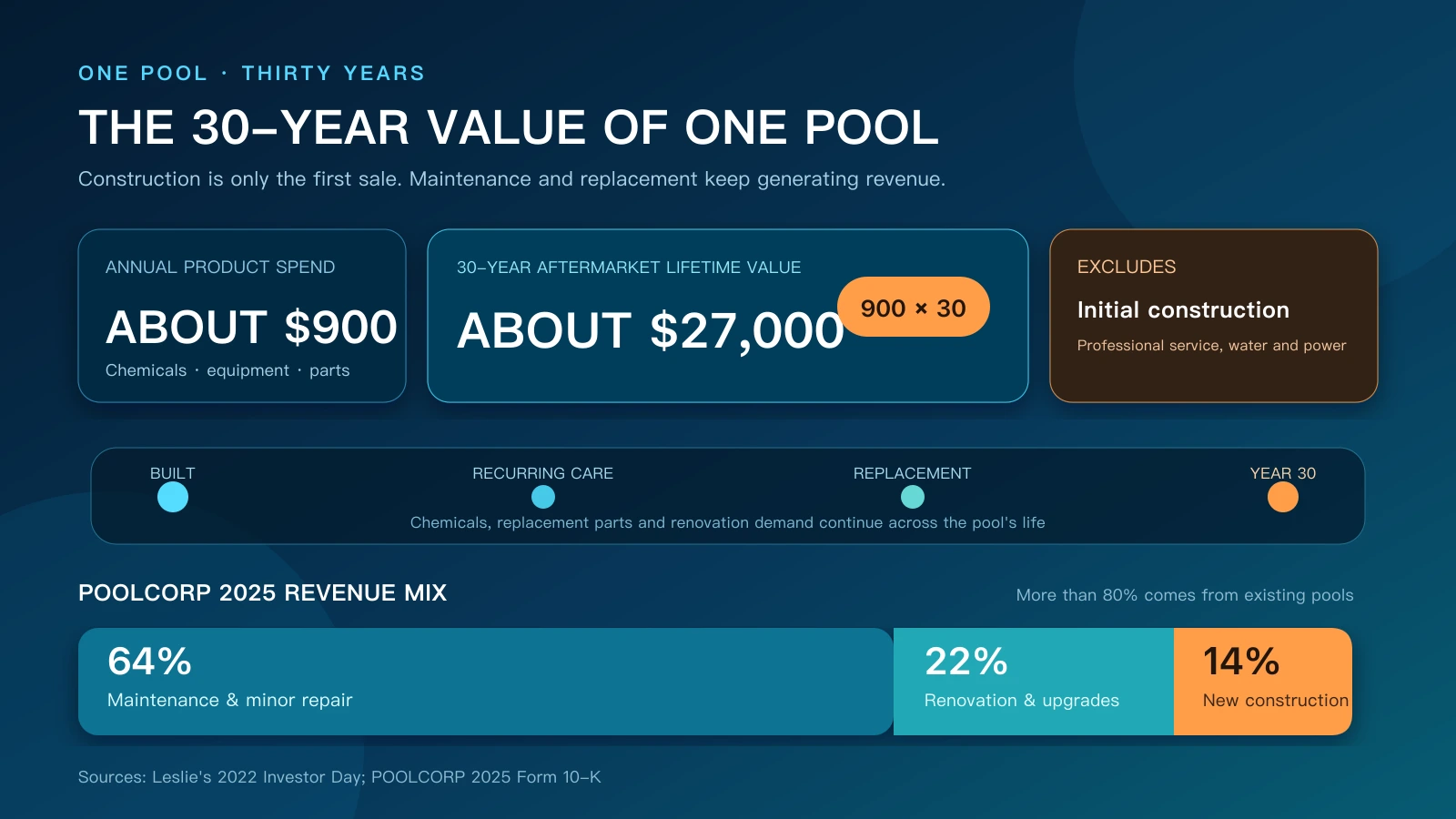
This decades-long revenue stream leaves the North American pool industry far less dependent on new construction than it first appears. POOLCORP generated $5.289 billion in 2025, essentially flat from 2024. Revenue then rose another 2% in the second quarter of 2026 to about $1.8 billion. New construction and discretionary spending remained soft, but the maintenance needs of the installed base did not disappear.
Chemicals accounted for 14% of POOLCORP's 2025 revenue. Pumps, filters, automation and other equipment contributed a combined 31%, while building materials represented about 12%. Pentair, Hayward and Fluidra make much of the equipment; POOLCORP moves those products to a fragmented network of builders, service companies and specialist retailers across North America.
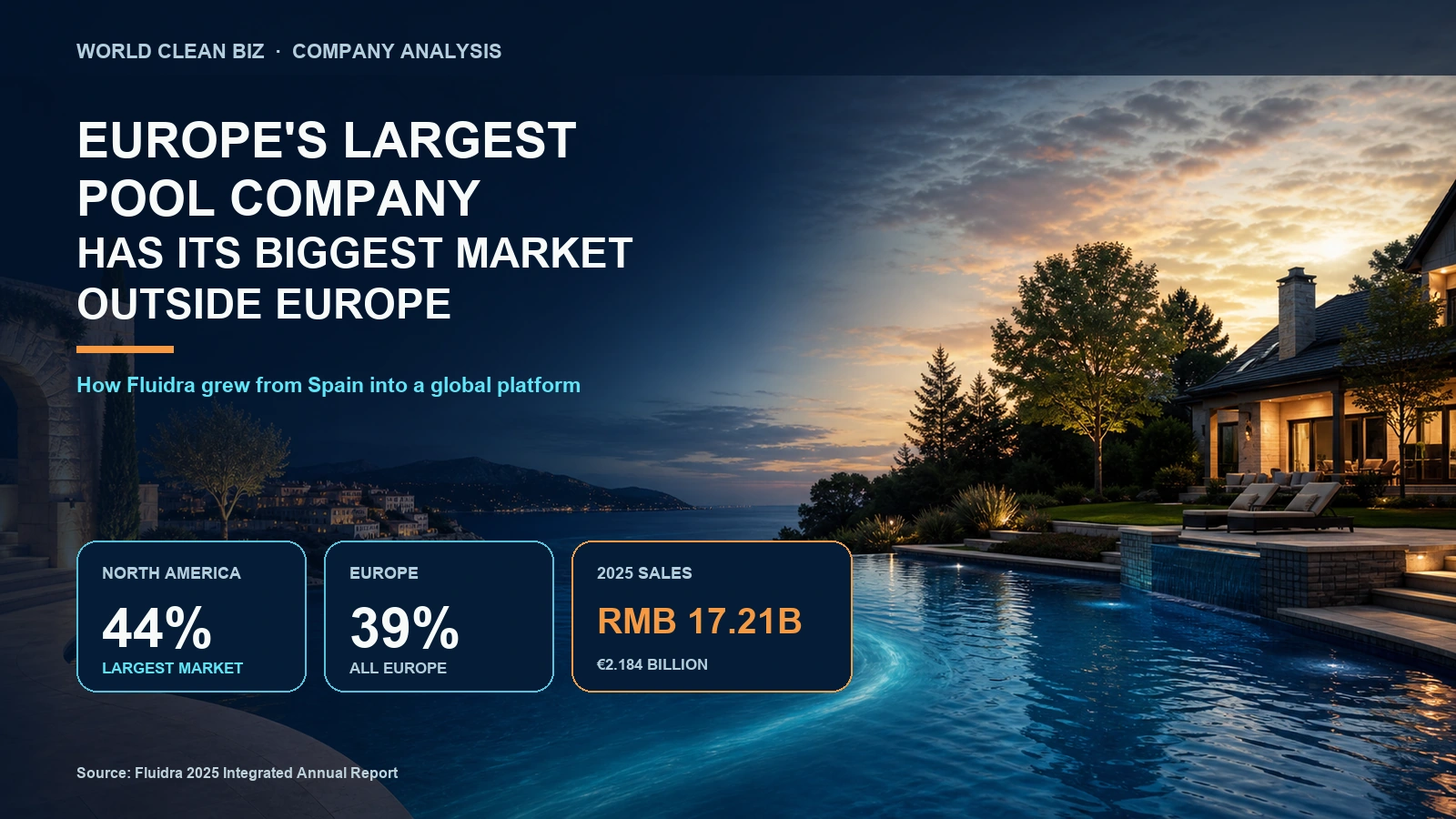
Pentair's pool business generated $1.559 billion that year, Hayward reported $1.122 billion and Fluidra produced €2.184 billion in total revenue. POOLCORP alone reached $5.289 billion, more than any individual equipment company.
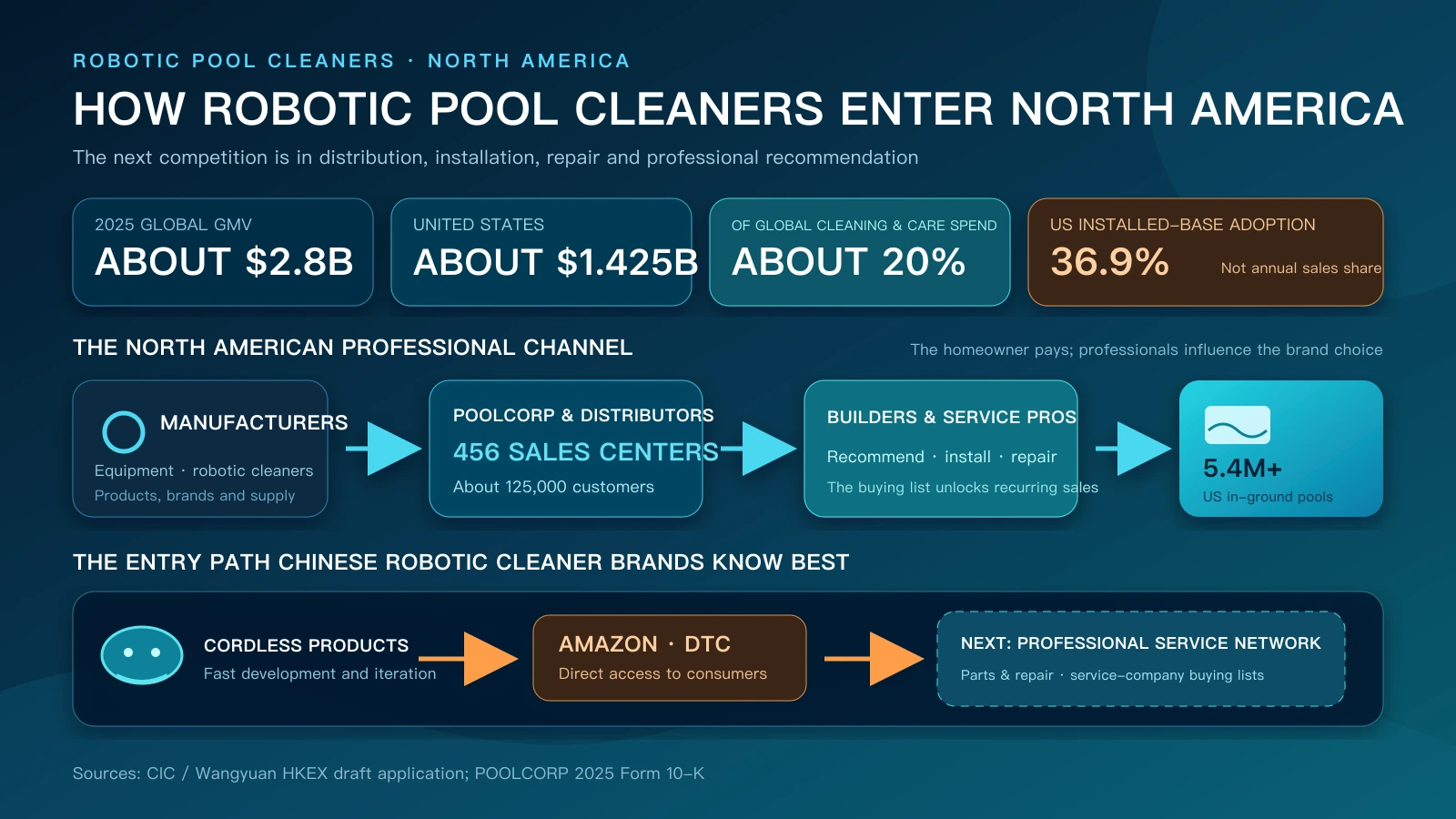
By the end of 2025, POOLCORP operated 456 sales centers, carried more than 200,000 products and served roughly 125,000 customers. About 95% of its revenue came from North America, putting the region close to $5 billion by that measure.
A local pool service company cannot stock complete product ranges for every brand or buy directly from thousands of manufacturers. When a pool fails, the technician may need the correct pump or replacement part the same day. POOLCORP keeps that inventory close to the customer and solves one of the industry's most practical distribution problems.
Pentair, Zodiac and Hayward accounted for approximately 20%, 12% and 11% of POOLCORP's cost of products sold in 2025. A small group of large manufacturers supplies a highly fragmented base of builders and service companies. POOLCORP controls the connection between them.
Hayward estimates that about 80% of US residential pool equipment is sold through distributors, with 15% going directly to retailers and only 5% directly to builders. The homeowner pays for the equipment, but the builder or long-term service provider often decides which brand is installed.
That recommendation dynamic makes pool equipment difficult to sell like an ordinary home appliance through Amazon alone. Pumps, filters and cleaners require installation and repair, and service companies carry responsibility for what happens after the sale. Getting onto the professional channel's buying list often matters more than the awareness created by advertising.
POOLCORP is also moving this offline network online. Its POOL360 digital platform accounted for 18% of sales in the second quarter of 2026. Service companies use the platform to order products while managing customers and service routes. E-commerce has not bypassed the professional pool channel in North America. The largest distributor has absorbed it into the existing system.
Robotic pool cleaners are now entering that network.
From 2019 to 2022, POOLCORP's robotic pool-cleaner unit sales rose 120% and revenue increased 135%. Over the same period, unit sales and revenue for traditional pressure- and suction-side cleaners rose 70% and 80%, respectively. At the time, the average wholesale value of a robotic cleaner was about $700, compared with roughly $430 for a pressure-side cleaner.
By 2025, global robotic pool-cleaner GMV had reached about $2.8 billion, including approximately $1.425 billion in the United States. Against global pool cleaning and maintenance spending of roughly $13.8 billion, robots represented about 20%. Around 36.9% of US pools were already using robotic cleaning. Sales value and installed-base adoption measure different things, but they lead to the same conclusion: robotic cleaners are no longer a fringe category.
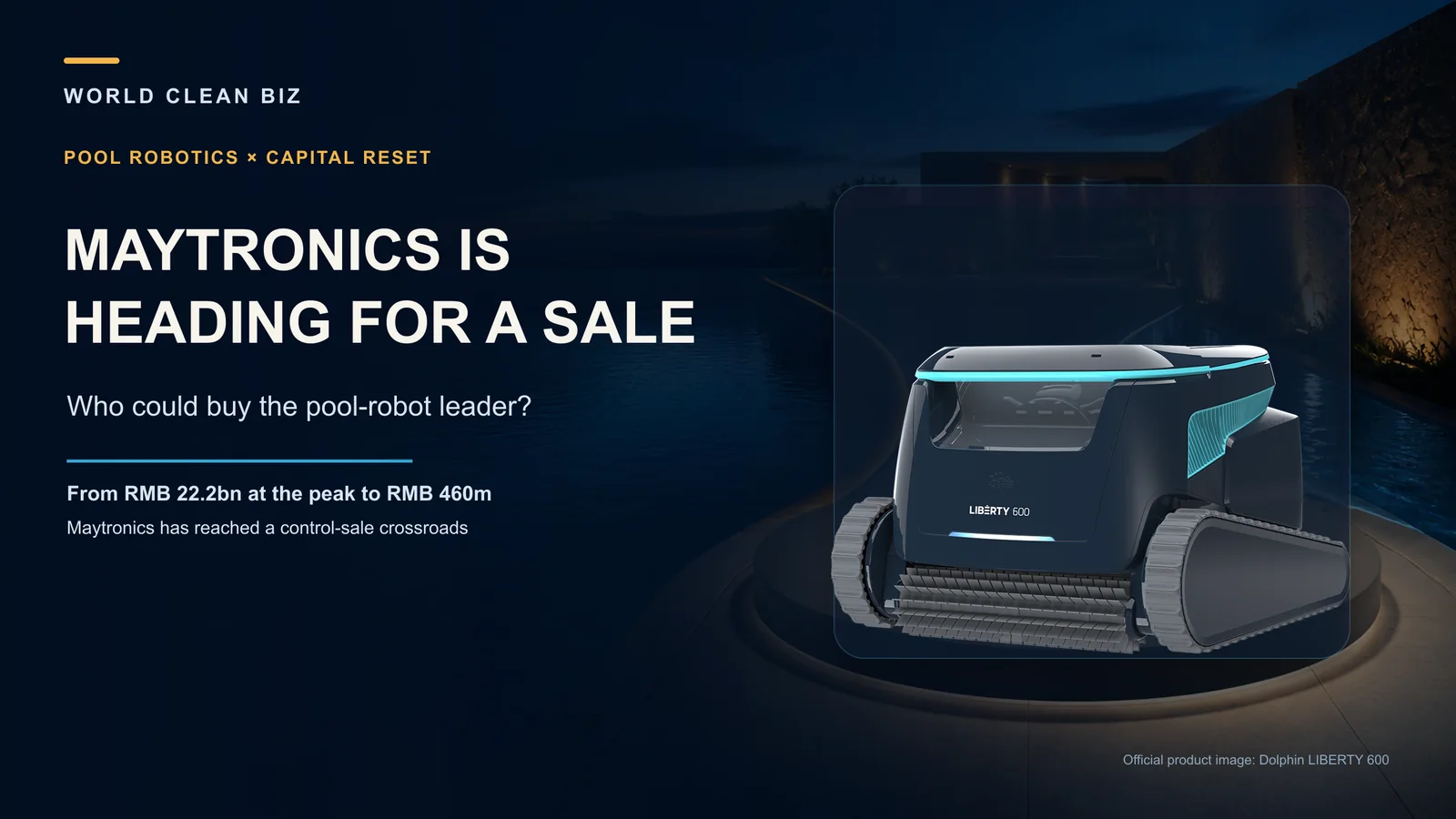
Maytronics' Dolphin and Fluidra's Polaris have long held strong positions in the professional market. In recent years, Aiper, Beatbot and WYBOT have entered North America quickly with cordless products and online distribution, pushing robotic cleaners further into the mainstream consumer market.
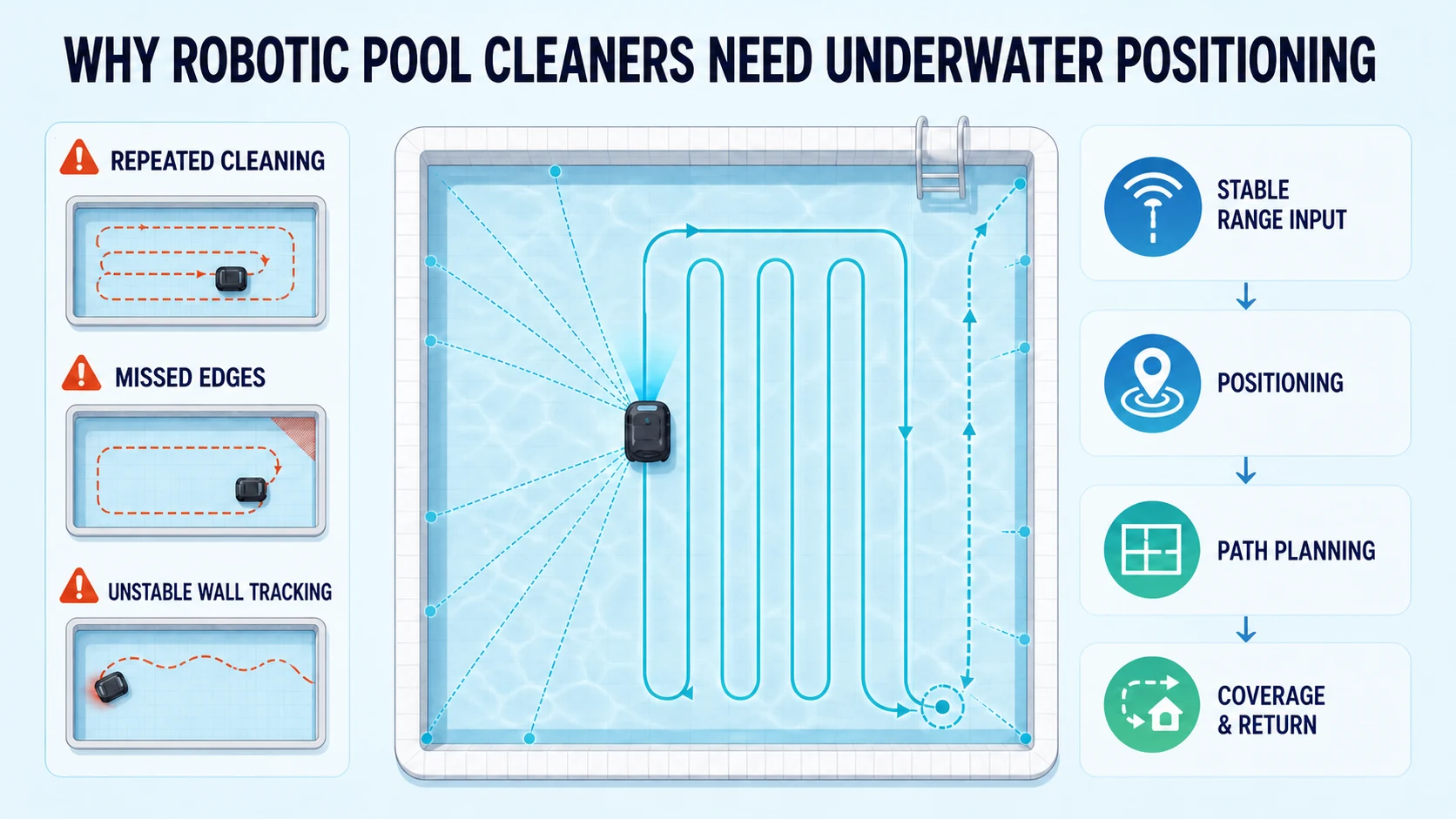
Online channels can scale a new product quickly, but they cannot independently solve repairs and parts. For a robot that spends its working life underwater, who diagnoses a failure and where the unit is repaired will influence whether dealers keep recommending the brand—and whether the brand remains in the market.
Fluidra completed its initial 27% investment in Aiper in 2025. Fluidra added cordless robotic products to its capabilities, while Aiper began connecting with an established pool-equipment company and its professional channels. The partnership offers one route for a new brand to enter the core North American network.
Chinese robotic pool-cleaner companies have already completed the first stage of the competition: develop cordless products, then sell them to consumers through Amazon and their own websites. The next stage is to enter service companies' purchasing lists and build durable parts and repair capabilities.
North America adds only about 58,000 residential in-ground pools each year, against an installed base of more than 5.4 million. The first equipment sale attached to a new pool is relatively small. The following 30 years of maintenance, repair and upgrades make up the core of the market.
Chinese robotic pool-cleaner companies have already entered this €9.3 billion market. What they need to win next is the part of the business that lasts the longest—and is the hardest to enter.