- The legal right to an IEEPA tariff refund follows the importer of record and the customs entry, not the seller's nationality or marketplace GMV.
- Walmart, Amazon, GM, SharkNinja and Stanley Black & Decker represent different refund stages, from estimates and accepted claims to cash received and gains recognized.
- Chinese suppliers that shared the original tariff burden may try to negotiate for part of the refund, but obtaining it in practice will be difficult.
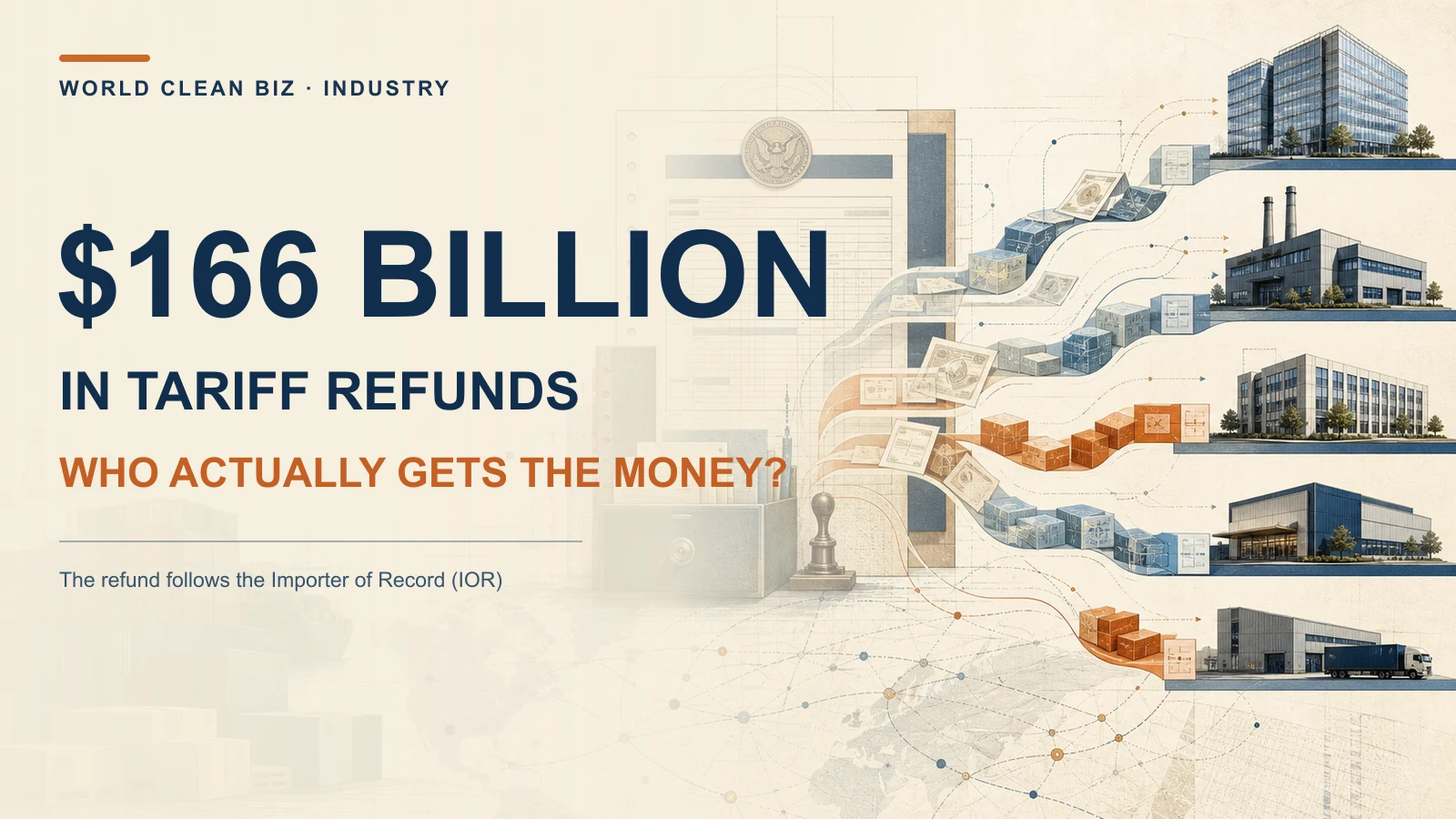
Amazon disclosed on its second-quarter earnings call that it had received approximately $600 million in IEEPA tariff refunds.
Amazon's marketplace hosts a vast number of Chinese sellers, so the disclosure raised an obvious question: should some of that $600 million belong to Chinese cross-border merchants?
The answer starts with the customs entry.
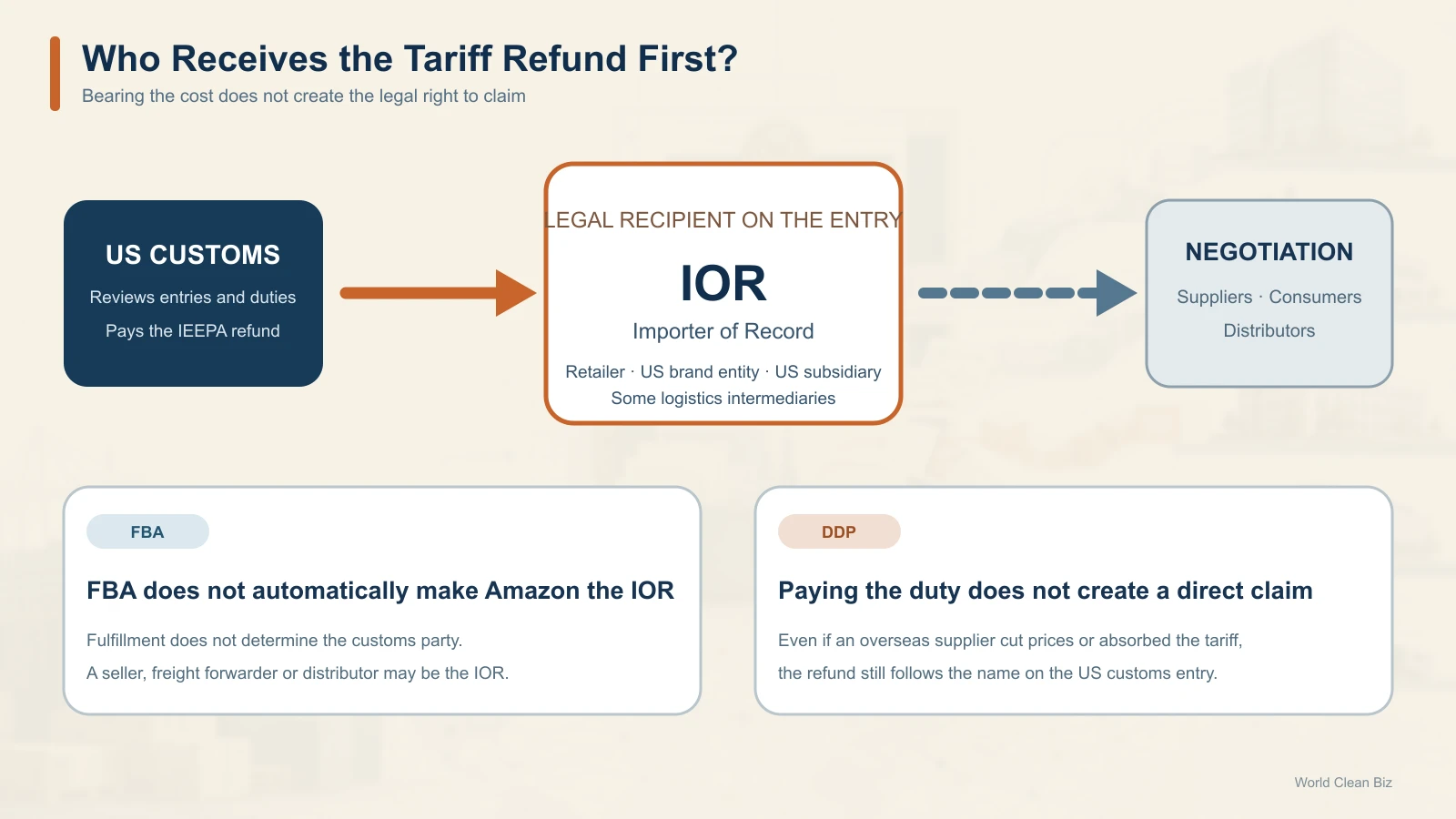
These refunds do not follow the nationality of the brand, whether American, Chinese or British. Nor do they follow a company's sales volume on Amazon. They follow the name on the US customs entry: the Importer of Record, or IOR, and the party that actually paid the IEEPA tariff to US Customs and Border Protection.
Amazon, Walmart, SharkNinja, Stanley Black & Decker and a Chinese marketplace seller may all sit in the same supply chain. If their import structures differ, however, their access to the refund differs as well.
In February 2026, the US Supreme Court ruled that certain tariffs imposed under the International Emergency Economic Powers Act were unlawful. The Bureau of Economic Analysis estimates that approximately $166 billion must be returned to affected importers and businesses in the United States and Puerto Rico, excluding interest.
This is not a new corporate subsidy. BEA classifies the money as a one-time capital transfer because it refunds tariffs paid in the past rather than rewarding current production or imports.
Once received, the money may increase cash, reverse costs attached to goods already sold, or reduce the value of tariff costs still sitting in inventory. It can materially improve short-term profit. It does not mean products are selling better, and it does not permanently lift a company's future gross margin.
The refund also applies only to the IEEPA tariffs invalidated by the court. Existing Section 301 duties on Chinese goods, Section 232 tariffs affecting steel, aluminum and automobiles, and ordinary import duties do not disappear with this decision.
That is why a company that once described its tariff exposure as $100 million cannot automatically expect a $100 million refund. It first has to separate tariffs imposed under different legal authorities, then determine which customs entries qualify.
Walmart has disclosed one of the largest figures so far. The retailer anticipates approximately $2.4 billion in refunds and plans to use part of the benefit for price rollbacks. But this remains an estimate, not cash already received.
Amazon is one step further along. The company says it received approximately $600 million in the second quarter. Amazon operates both a first-party retail business and a third-party marketplace. The $600 million relates primarily to merchandise for which Amazon itself was the importer. It is not a common refund pool belonging to Marketplace sellers.
General Motors expects approximately $500 million. GM represents a different case: manufacturing in the United States does not mean operating without imports. Automakers source components and materials globally, and a US company that appears as the IOR can qualify for a refund just like a retailer.
In July, SharkNinja submitted approximately $247.1 million in refund claims, which CBP accepted. The company expects to recognize the amount as a reduction in cost of sales in the third quarter, while the timing of the cash payment still depends on customs processing.
Stanley Black & Decker recognized a $118 million pretax gain related to first-phase IEEPA refunds in the second quarter and recorded it in cost of sales. The refund lifted gross margin, but the company also accrued $83.4 million for incentive compensation and growth investment. Even a refund already recognized in earnings does not translate dollar for dollar into additional net profit.
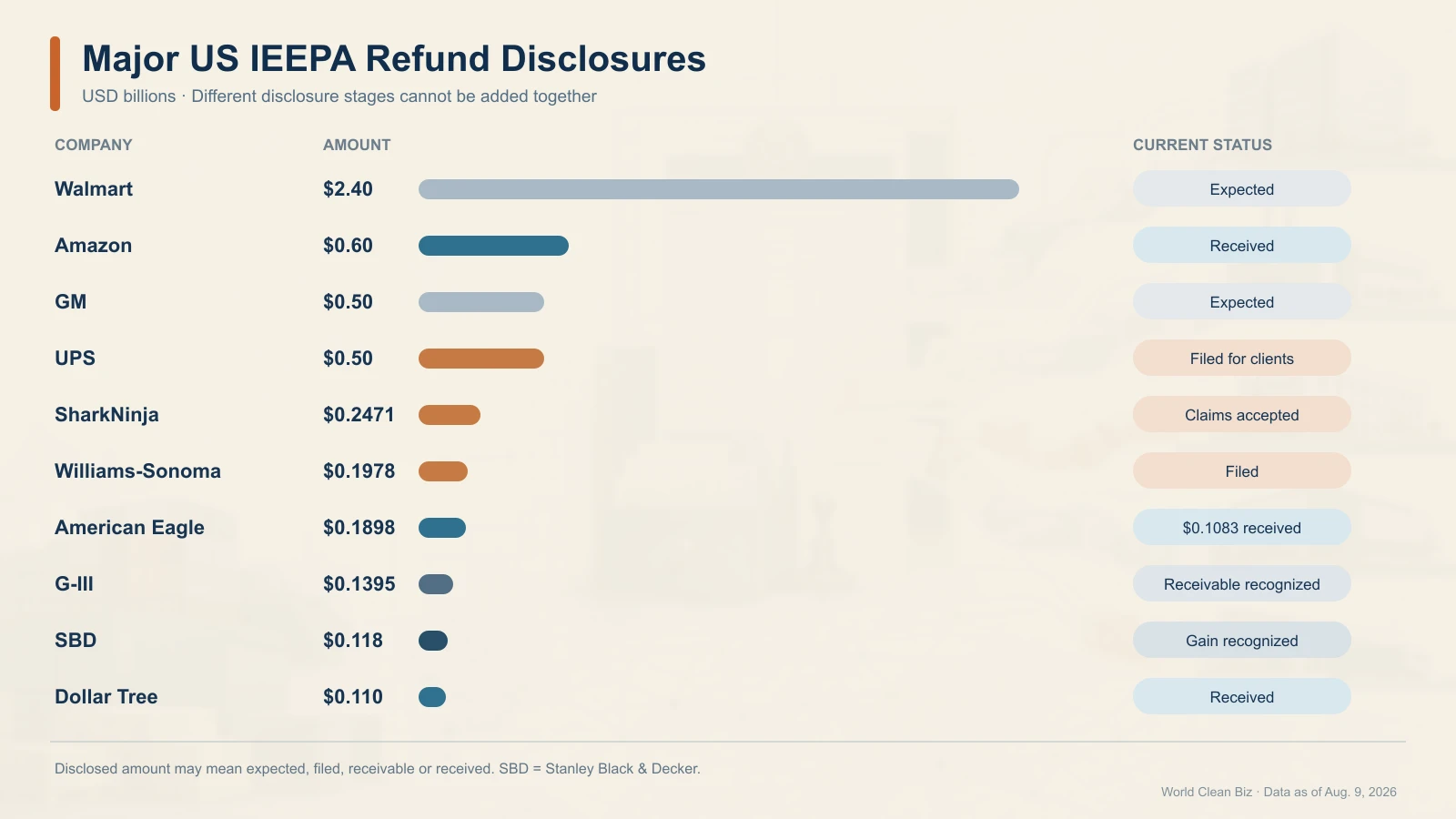
These five companies occupy different positions. Walmart is a major retail importer. Amazon combines first-party retail with a third-party platform. GM is a US manufacturer. SharkNinja is a consumer-appliance brand. Stanley Black & Decker represents power tools and outdoor power equipment.
Their different positions lead back to the same point: the refund follows the import structure, not the country printed on the brand's corporate identity.
Amazon's first-party purchases and Amazon Marketplace are two very different import relationships.
If Amazon buys a product from an overseas factory and an Amazon US entity handles the import, Amazon is the IOR and the refund goes to Amazon first. Whether Amazon later passes some of it to consumers or suppliers through lower prices, rebates or renegotiated contracts is a commercial decision.
Using FBA does not automatically make Amazon the importer. FBA handles storage, delivery and order fulfillment. The customs structure remains separate. The IOR could be the seller's US company, a freight forwarder, a logistics provider or an American distributor.
UPS has filed approximately $500 million in first-phase refund claims for eligible customer entries. But UPS mainly acts as the customs intermediary in these transactions, advancing duties and then charging them back to customers. The $500 million is closer to a pool of refunds being processed on customers' behalf than income that belongs entirely to UPS.
For Chinese brands and cross-border sellers, the real question is not how much tariff pressure they felt. It is how they structured the import.
If a Chinese brand's US subsidiary imported the product itself, the refund can first enter that subsidiary and then flow through the group's accounts. If Walmart, Costco or another retailer imported the merchandise, the retailer owns the refund right. The brand can share in the benefit only through its contract or a later negotiation.
DDP transactions create even more room for disputes.
Some Chinese suppliers cut prices to protect orders or absorbed tariffs in a DDP quote. But bearing the economic cost is not the same as owning the legal refund right. If the IOR named on the customs entry was a logistics company or a US customer, CBP will not send the refund directly to an overseas supplier merely because that supplier previously reduced its price.
Legally, the money goes to the IOR first. Commercially, who ultimately keeps it has to be negotiated again.
If a US importer absorbed the tariff without raising prices, the refund can reasonably be treated as compensation for profit lost in the past. If it explicitly passed the cost on through a tariff surcharge, customers and consumers have a stronger argument for receiving something back.
When tariffs rose, most buyers asked Chinese suppliers to share part of the burden. Now that the refund is returning to US importers, will they share it with those suppliers? In theory, it is possible. In practice, it will probably be difficult.
The refund will not remain a line item in corporate accounts. It will enter the next round of negotiations between brands and retailers, importers and suppliers, and platforms and consumers.
The process is far from finished.
CBP launched the CAPE refund system on April 20. Phase One primarily covers entries that have not been finally liquidated or remain within a reliquidation window. Phase Two began in late June and expanded the process to some reconciliation entries and more complicated import records.
The most difficult group consists of older entries that have already been finally liquidated.
In July, the US Court of International Trade clarified that importers in this group cannot simply wait for the CAPE system to open. They need to file suit at the Court of International Trade and establish refund eligibility for their own entries before they can enter a third phase.
The next group of companies will therefore not be a simple continuation of the first list. As more historical customs entries enter the process, new refund disclosures will keep appearing.