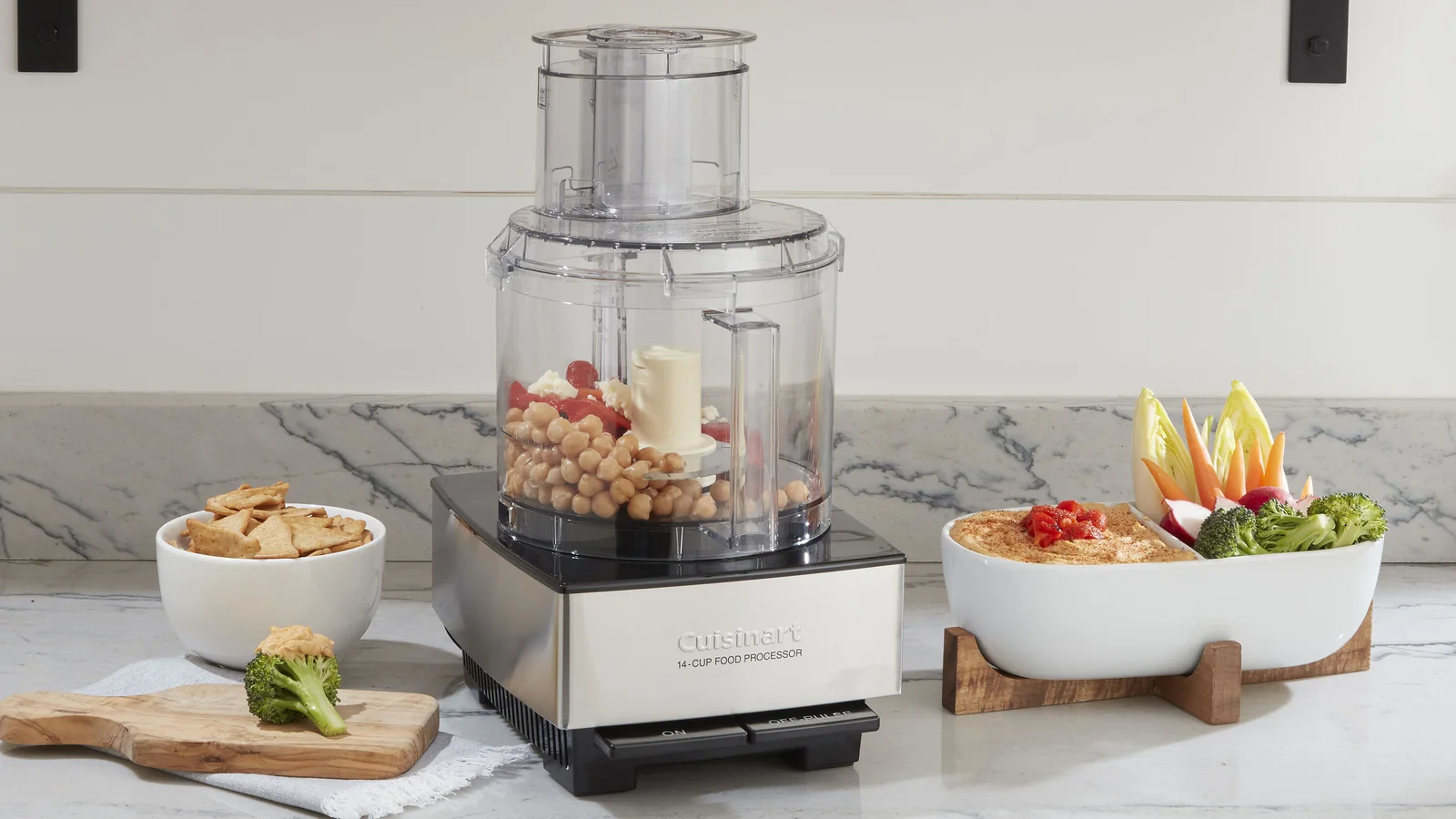
- Cuisinart gave Conair an established name that consumers already trusted in the kitchen.
- BaByliss and Waring brought distinct customer relationships and markets into the group.
- Shared distribution provides a documented group benefit, while product decisions still depend on understanding each brand's users.
In 1959, Leandro Rizzuto sold his Cadillac. According to the founding story Conair tells today, he had just $100 left after paying off his debts. With that money, he and his parents started a business selling hair rollers and dryers. Conair's founding story
At the time, the business revolved around hair. The pistol-shaped dryer Conair later introduced allowed consumers to style their own hair at home. It addressed a specific demand: making something that had required a visit to a salon affordable and manageable as part of everyday life.
Decades later, the company's products had reached the kitchen. Cuisinart food processors and coffee makers, BaByliss hair tools and Waring commercial kitchen equipment all became part of Conair's portfolio. Consumers might recognize several of those names without realizing they belonged to the same group.
How does a company that sells hair dryers earn the right to help consumers equip their kitchens? One decision was central to Conair's expansion: when it entered a new field, it was willing to let another name take the lead.
*Cover photograph: Cuisinart. A contemporary kitchen product illustrates the brand's role in the group; it is not a photograph of the original 1973 machine.*
Go back to the 1980s, and Conair was already trying to build a kitchen business of its own. Its Conair Cuisine line included food processors, hand mixers and toasters. Adding such products was an understandable step for a company with experience in small appliances. But making a machine and persuading consumers to put it in their kitchens are different tasks. Recognition earned from hair dryers does not necessarily translate into trust in cooking equipment. Conair company history, International Directory of Company Histories
In 1989, a brand that already possessed that trust ran into trouble.
Cuisinart founder Carl Sontheimer had introduced its food processor to the American market in 1973. Endorsements from culinary figures such as Julia Child associated the machine with serious cooking and better meals at home. Its appeal was easy to understand: let a machine handle time-consuming preparation such as chopping and mixing, and home cooks could make dishes that had previously seemed like too much work. Cuisinart's brand history
Fame did not guarantee a healthy business. Cuisinarts filed for bankruptcy protection in 1989; Conair subsequently acquired its product lines, trademarks, patents and other assets. The acquisition brought Conair a name with an established reputation in the kitchen. Contemporary transaction report
That changed the problem Conair had to solve. It no longer had to explain from scratch why chefs and cooking enthusiasts should trust a hair dryer company. It could develop kitchen products around the credibility Cuisinart had already earned. Over time, the brand expanded into coffee makers, toasters, cookware and other kitchen goods. The range grew, while consumers continued to see a familiar kitchen name. Cuisinart's brand overview
To me, this is the most important step in understanding Conair. Growth after an acquisition does not necessarily require consumers to get to know a new parent company. For someone shopping for a coffee maker, Cuisinart's history in the kitchen is more persuasive than a list of its owner's other businesses. Keeping that name also preserves the opportunity to sell additional products to the same customers.
Subsequent acquisitions followed a similar direction, though each brought something different.
In 1995, Conair acquired France's BaByliss. Company filings from that year show that BaByliss was already operating in France, the United Kingdom, Germany and other European markets, with distributors taking its products further afield. The deal added hair appliances, along with established local recognition and sales networks. Today, BaBylissPRO still presents its products around the needs of professional stylists and barbers, emphasizing cutting performance, precision and comfort in use. Conair's 1995 filing, BaBylissPRO's brand overview
Waring, acquired in 1998, extended the kitchen business further into professional settings. It now supplies commercial blenders, food processors and heating equipment for foodservice and other industries. A household choosing a machine for weekend use has different concerns from a restaurant buying equipment that will work repeatedly throughout the day. Waring's professional identity allows the group to serve those customers without asking the Cuisinart name to carry every positioning. Conair Korea's official history, Waring's brand overview
Viewed this way, Conair's portfolio is more than a list of acquisitions. Cuisinart helped it establish a presence in home kitchens; BaByliss broadened the geographic and professional reach of its hair business; Waring added commercial kitchens. Each connected to existing operations while bringing customers Conair had not fully reached. The group expanded, while the relationship between each brand and its users could continue along its existing course.
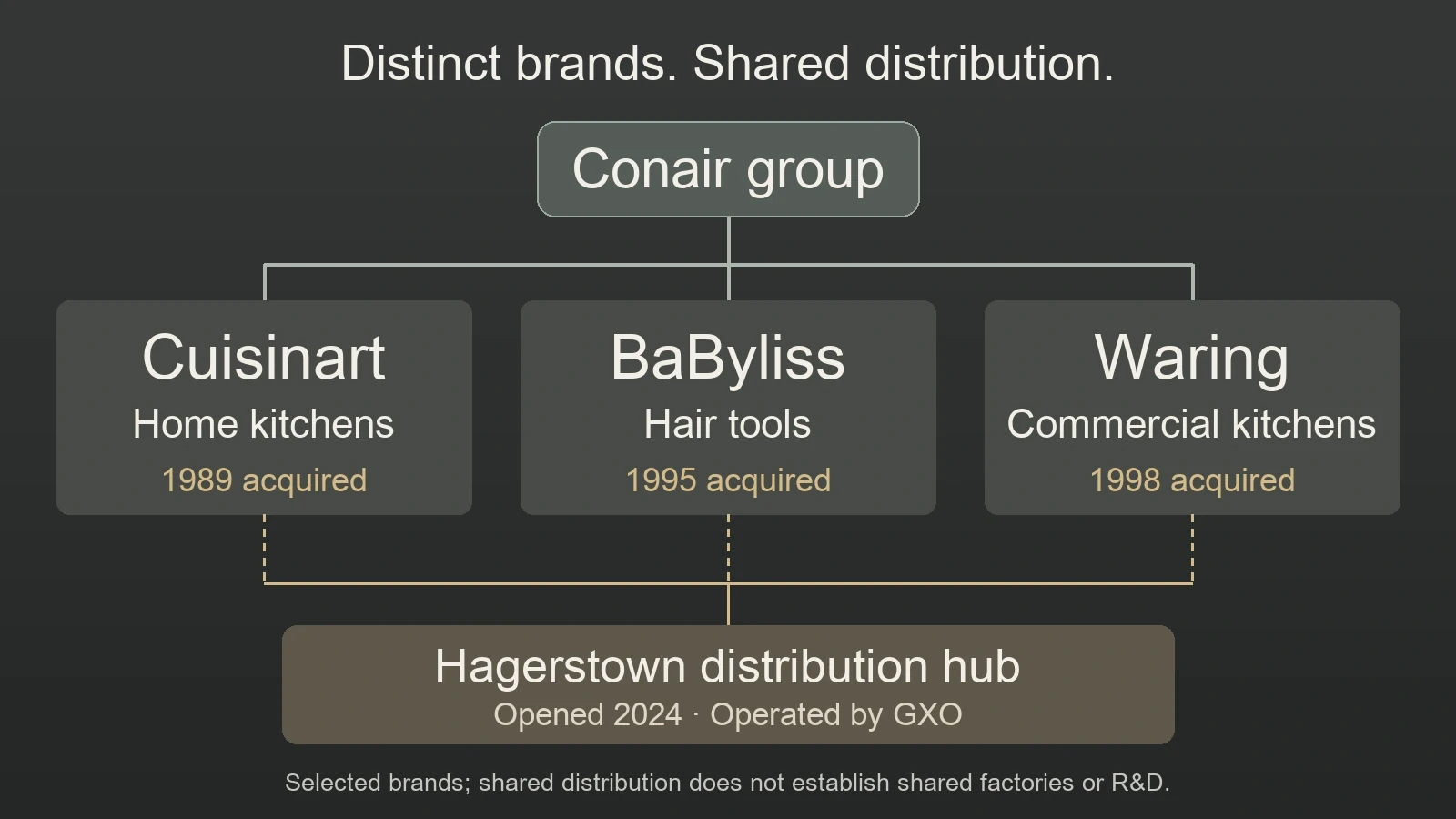
*Selected brands discussed in the article. Ownership and shared distribution are documented; the diagram does not imply common factories or R&D.*
But if each brand retains its own name, products and customers, what does the group contribute?
The answer is easier to find behind the shelf than in an advertisement.
In 2024, Conair and logistics provider GXO opened a new distribution center in Maryland. The facility totals approximately 2.1 million square feet, or 195,000 square meters. GXO's announcement explicitly names the brands it supports: Cuisinart, Conair, BaByliss, Scünci and Waring. Hair and beauty tools, kitchen appliances, cookware and accessories can maintain distinct identities in front of consumers while sharing support from a large distribution facility. GXO's distribution center announcement
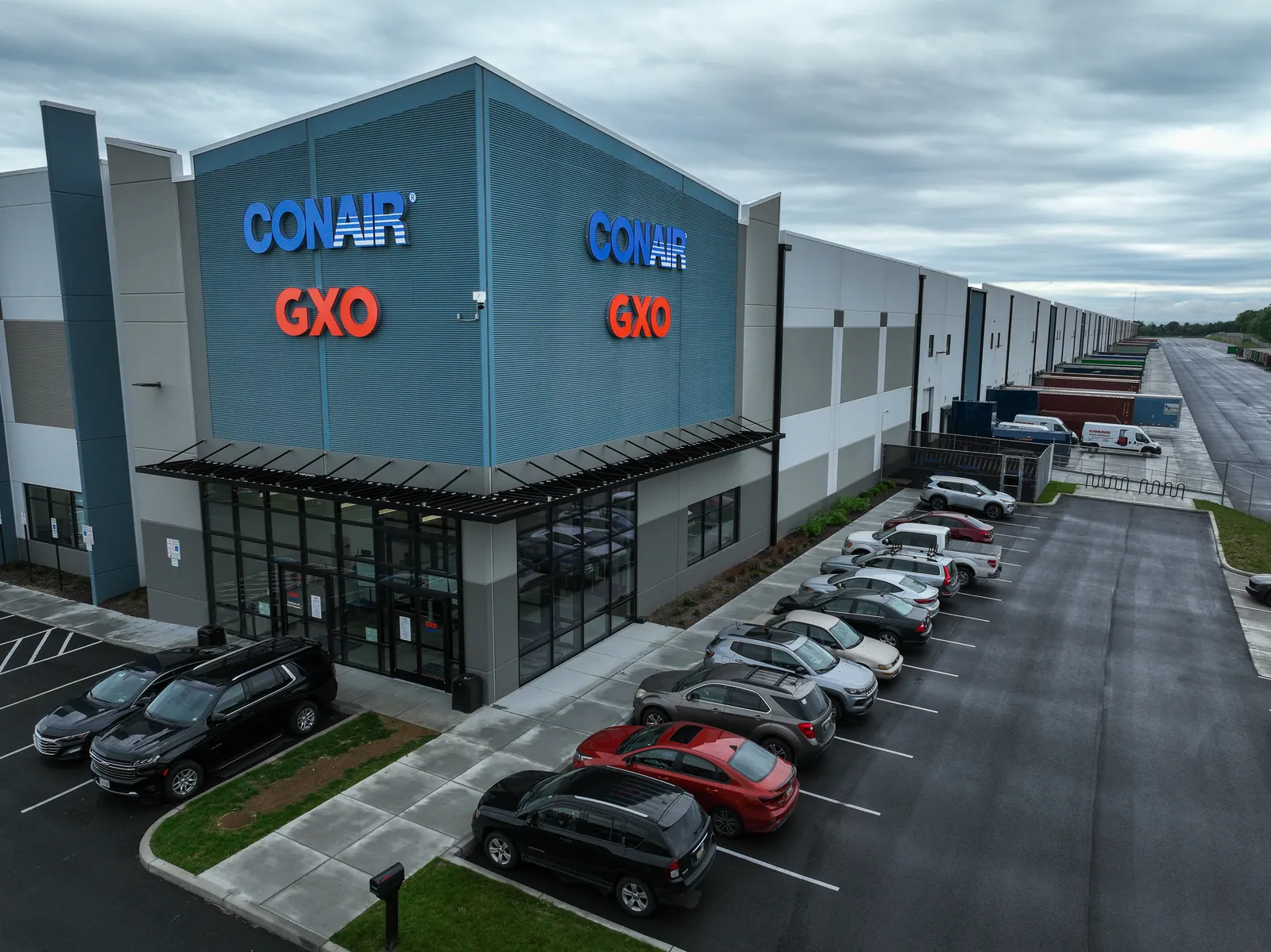
*Conair's Hagerstown distribution center, opened in 2024. Photograph: GXO Logistics, distributed through GlobeNewswire.*
That is a tangible benefit of belonging to a group. Consumers do not need to know who manages the warehouse. Retailers need goods to arrive on time, brands need to fulfill orders across regions, and new products need access to distribution. Existing scale creates an opportunity for those investments to support more businesses. How much the brands share factories, procurement or research and development cannot be inferred simply from common ownership. Shared logistics is documented; product development and customer needs still have to be considered separately.
Conair has also moved well beyond its beginnings as a family startup. In 2021, affiliates of private equity firm American Securities completed their acquisition, with certain Rizzuto family members retaining minority stakes. Conair remains in the firm's portfolio. The company that began with the proceeds of a car sale has become a multi-brand consumer products business held by another investor. Acquisition completion announcement, American Securities' portfolio
The new owner's challenge still lies in the differences between those brands. A distribution center can handle both hair dryers and kitchen appliances. It cannot decide for Cuisinart whether the next machine deserves space on a kitchen counter, or tell BaByliss how a tool feels after a barber has used it for hours. The more a group seeks savings through scale, the more carefully it needs to distinguish work that can be combined from decisions that must remain with people who understand the user.