- Chunguang grew revenue in the first nine months of 2026 but reported a net loss as pricing, material costs and currency movements squeezed its business.
- Ecovacs and Roborock are committing more money to components and inventory as they prepare for growth and peak-season sales.
- US equipment authorization rules and the EU investigation into Chinese robotic mowers are adding new pressures to overseas plans.
In the first nine months of 2026, Chunguang Technology's revenue rose 26.63% to RMB 2.365 billion.
The cleaning appliance supplier was doing more business than a year earlier. It still reported a net loss attributable to shareholders of RMB 119 million.
In its quarterly report, Chunguang gave several reasons: intense competition, lower selling prices for some products, rising raw-material costs and growing exchange losses.
Chunguang is not alone. Recent filings from listed companies show how pressure on profits is spreading across cleaning appliance brands, manufacturers and component suppliers.
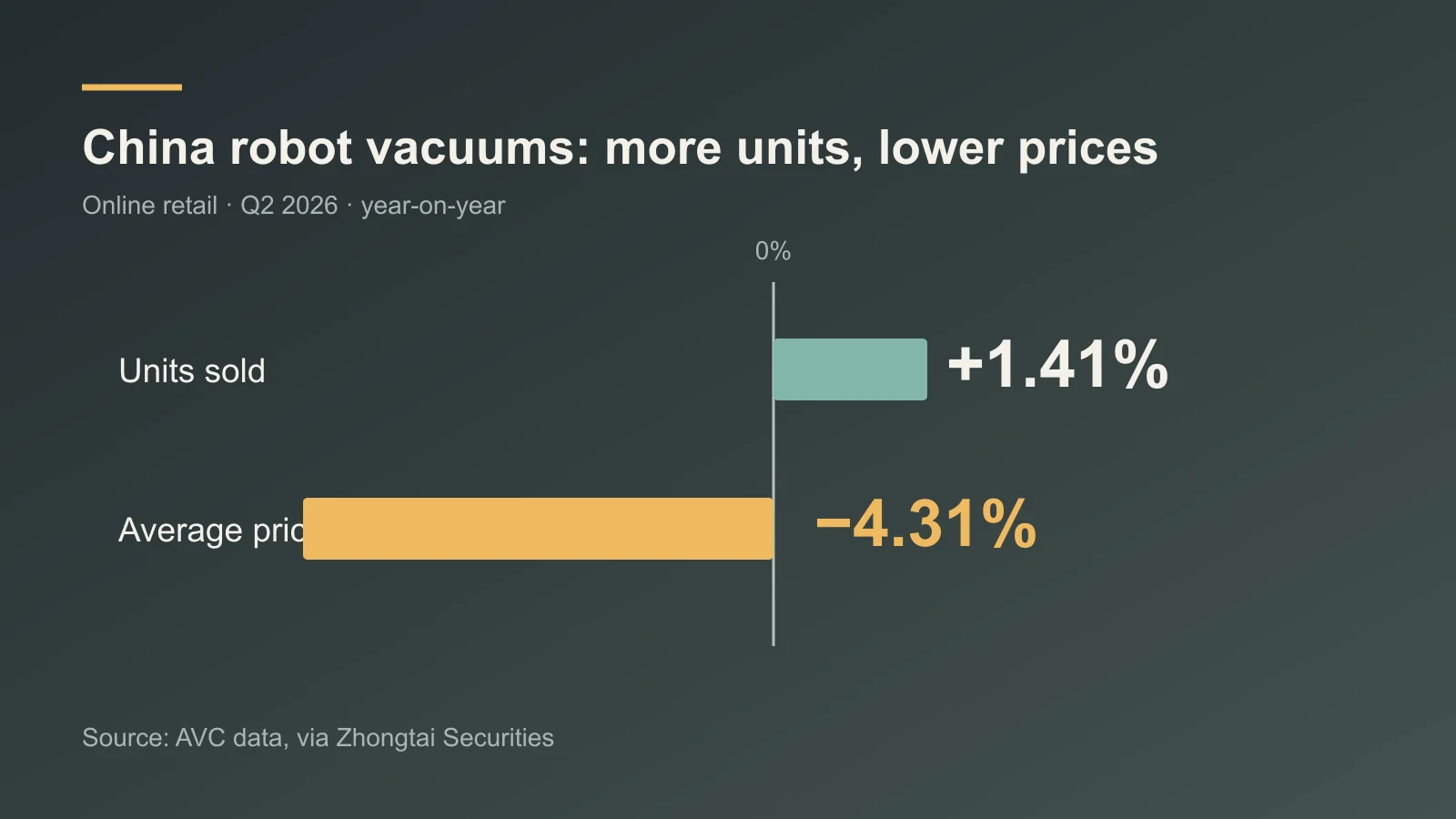
According to AVC data, China's online robot vacuum sales volume rose 1.41% year on year in the second quarter of 2026, while sales value fell 2.96%. The average selling price was RMB 3,235, down 4.31%.
Brands need competitive products and prices to win sales. When materials become more expensive, they cannot always raise retail prices by the same amount. With less margin left at the point of sale, purchasing teams turn to suppliers for cost reductions.
At the factory, materials and components have already become more expensive. Customers can compare quotes from different manufacturers, so suppliers trying to keep an order may have to absorb part of the increase themselves.
Exporters face another pressure from currency movements. Many factories quote in US dollars but pay workers, rent and many purchasing costs in renminbi. When the renminbi strengthens, the same dollar payment converts into fewer yuan.
Take a $1 million order. At RMB 7.2 to the dollar, it is worth RMB 7.2 million. If the rate is 7.0 when payment arrives, it is worth RMB 7 million: RMB 200,000 less for the same dollar amount.
For an ODM operating on thin margins, a movement like that can consume more than half the profit on an order.
Xinbao makes small appliances including vacuum cleaners and coffee machines. In the first nine months, revenue fell 2.86% to RMB 11.932 billion, while net profit attributable to shareholders fell 73.60% to RMB 222 million. The company reported that exchange losses in its financial expenses increased by approximately RMB 180 million from a year earlier.
Ningbo Dechang's revenue was still growing. It rose 11.48% in the first nine months, while net profit attributable to shareholders fell 59.93% to approximately RMB 64.89 million. Dollar exchange-rate movements and higher raw-material prices both weighed on the vacuum cleaner manufacturer.
Ecovacs reported first-nine-month revenue of RMB 14.988 billion, up 16.39%. Its net profit attributable to shareholders in the third quarter was RMB 121 million, down 72.43% from a year earlier.
The company attributed the quarterly decline to higher memory-chip purchase prices and a drop in the fair value of some external investments. Net profit excluding non-recurring items fell 46.77% in the quarter; chip costs and a stronger renminbi both affected gross margin.
Worried that chips may become more expensive, companies have to place orders early. Machines need to reach warehouses before Singles' Day and Black Friday, so factories must buy materials and arrange production in advance. Cash goes out before the products are sold.
Ecovacs recorded negative operating cash flow of RMB 342 million in the first nine months. The company said the comparison was affected by the recovery of a significant amount of government-subsidy receivables a year earlier and advance purchases of memory and other semiconductor components this year.
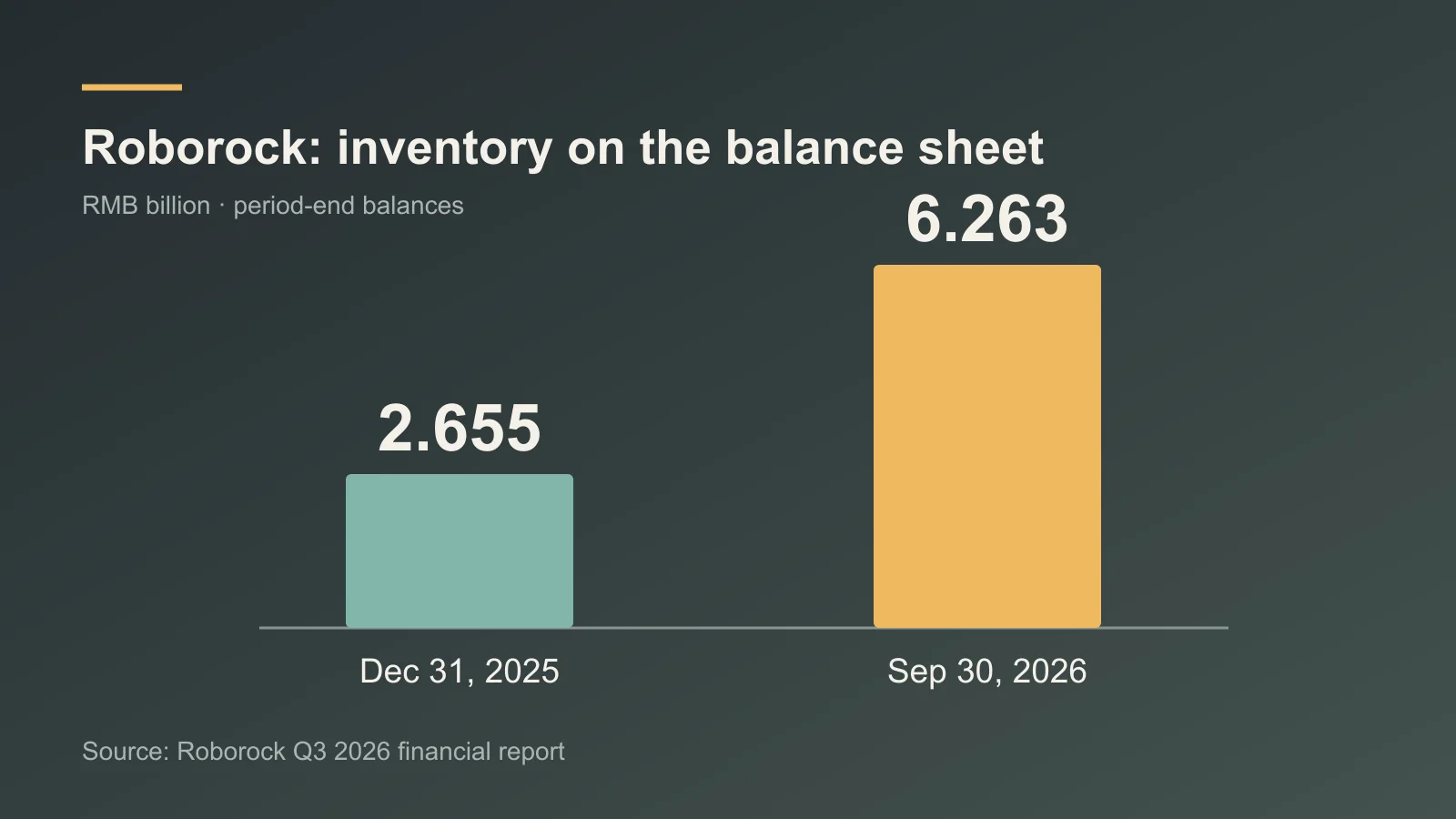
Roborock is also committing more capital to growth. By the end of September, its inventory had reached RMB 6.263 billion, compared with RMB 2.655 billion at the end of last year. As sales expand, the company must finance the process from purchasing and production through to collecting payment.
Roborock's first-nine-month revenue rose 30.10% to RMB 15.699 billion, and net profit attributable to shareholders rose 41.23% to RMB 1.466 billion. By the end of September, the company had received approximately $39.88 million in US IEEPA tariff refunds, of which approximately $31.19 million was recognized in profit and loss during the first nine months, supporting the period's results.
For brands, too little inventory can mean missed orders during peak season. Too much ties up capital. Cleaning appliances are being updated faster, and an older generation left in the warehouse may have to be discounted before it sells.
In July, the US Federal Communications Commission added foreign-produced advanced robotic devices meeting its definition to the Covered List. Some new robot vacuum models now face an additional equipment authorization hurdle in the United States. Previously authorized existing models can generally continue to be sold; eligible new products can apply for conditional approval.
In Europe, the EU is investigating imports of robotic lawn mowers originating in China for alleged dumping. Cleaning appliance companies including Roborock and Ecovacs are entering the yard robotics market, and Europe is an important market for robotic mowers. If definitive anti-dumping duties are imposed, the cost of bringing the affected Chinese-made products into Europe will rise.
Husqvarna said in October that it had received the European Commission's disclosure of the facts and considerations in the investigation. The investigation remains ongoing, and final duty rates have not been determined.
Companies have already begun arranging overseas production. Ninebot previously disclosed that its overseas factory had begun trial production of robotic mowers and was ramping up capacity. Changing manufacturing and supply chains requires more investment before new products are sold.
Consumers want lower prices, brands want suppliers to charge less, and factories are waiting for relief from material and currency pressures. Revenue in the financial reports is still growing, but profits are no longer as easy to keep across the supply chain.