- The robotic mower market is built on recurring lawn maintenance, not gadget hype.
- Europe leads today, but North America’s lawn base leaves room for a larger adoption curve.
- Robotic mowing may become the first commercial entry point for broader yard automation.
Many people see a robotic mower for the first time and think of it as a small toy for European and American households with yards. It does look like an outdoor version of a robot vacuum, and it is not cheap. Many models still sit in the range of several thousand to tens of thousands of RMB. But once the lens moves from a single device to lawns, labor, yard spending, and outdoor electrification, the market starts to look very different.
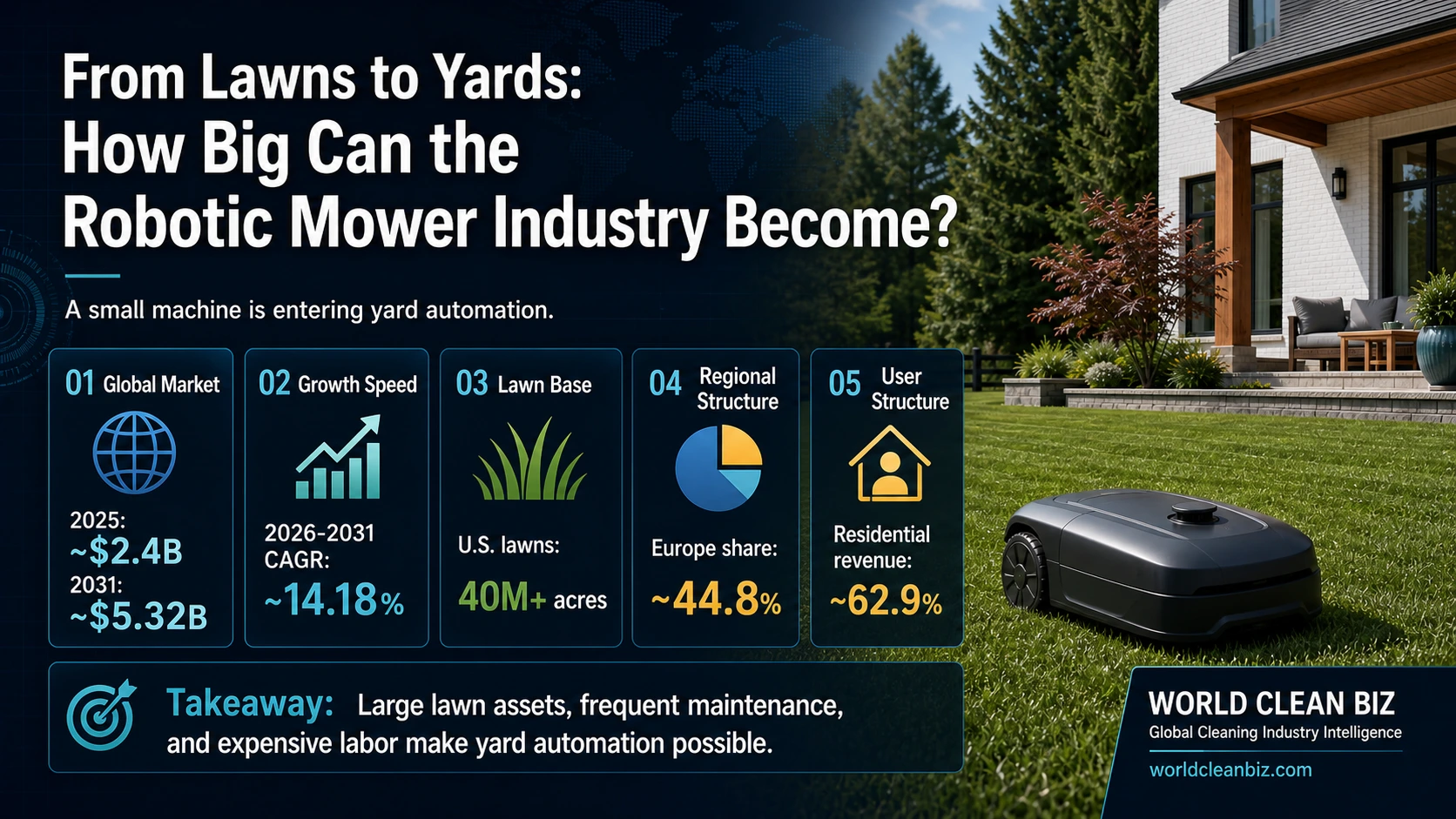
Behind robotic mowers is an enormous lawn base. The United States is the clearest example. AP, citing NASA research, noted that lawns in the contiguous United States cover more than 40 million acres, or about 162,000 square kilometers. That number is hard to picture, but it is roughly the size of a mid-sized country. A lawn is not an occasional decoration. It is a maintenance asset. During the spring and summer growing season, mowing every week or every two weeks is a routine task for many detached homes, communities, schools, business parks, and golf courses.
This is why robotic mowers are different from many smart hardware categories. They address a labor scene that is repetitive, time-consuming, dependent on human work, noisy, and under growing pressure from emissions rules. A conventional lawn mower sells a machine. A robotic mower sells the possibility of handing that labor to a machine.
In market size terms, robotic mowers are not yet the center of the outdoor power equipment industry, but they have entered a steadier expansion phase. Mordor Intelligence estimates the global robotic lawn mower market at about RMB 17.3 billion ($2.4 billion) in 2025, about RMB 19.7 billion ($2.74 billion) in 2026, and about RMB 38.3 billion ($5.32 billion) by 2031, with a projected CAGR of 14.18% from 2026 to 2031. That is not a short-term hype curve. It looks more like a durable goods category gradually replacing labor and traditional equipment in residential and commercial settings.
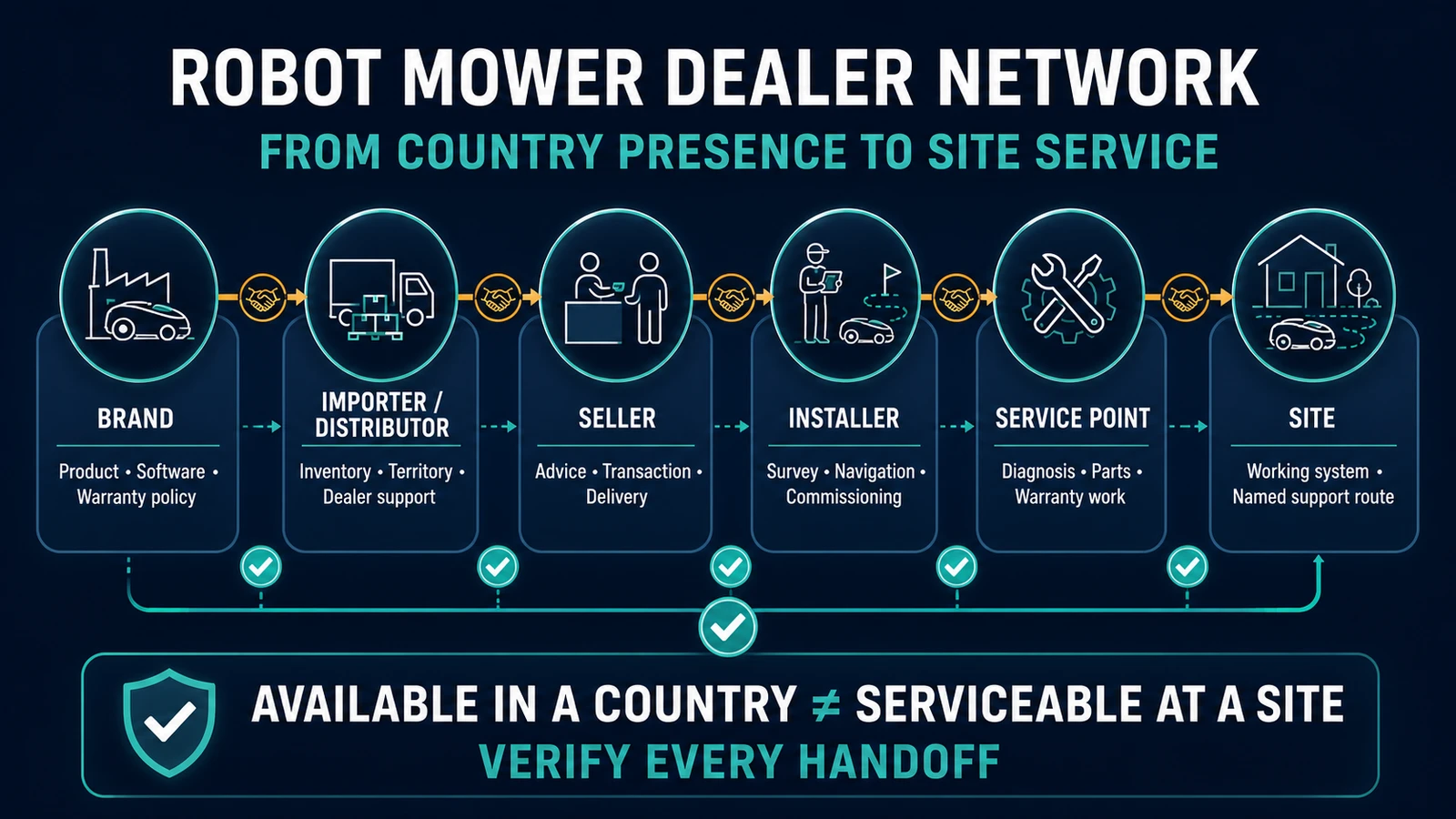
Structurally, Europe remains the largest market, with an estimated 44.8% share in 2025. This is tied to detached housing, gardening culture, labor costs, and environmental rules. Earlier robotic mowers often required boundary wires, installation was not simple, and maintenance depended on dealer support. Europe’s more mature dealer and garden-service system helped the market develop first. North America has a huge lawn base but relatively lower penetration, which leaves more room for market expectations to change. American yards are larger and more complex, so machines need stronger mobility, positioning stability, and obstacle avoidance. Once the product experience crosses that threshold, the addressable market may be recalculated.
The price bands are also changing. Early robotic mowers were often high-end garden equipment, requiring users to accept high prices, installation work, and service complexity. Newer products are trying to lower both cost and usage barriers. Segway Navimow’s X3 series in the United States covers lawns from 0.4 to 2.5 acres, priced at about $2,299 to $4,999, or roughly RMB 16,500 to 36,000. Husqvarna’s 2026 entry-level models for small and mid-sized gardens start at about £999 in the UK, roughly RMB 9,100. Dreame’s A2 1200, designed for standard gardens up to 1,200 square meters in Europe, is priced at about €1,399, roughly RMB 10,800.
These products are still not cheap. But the direction is clear: large lawns get premium machines, smaller gardens get entry-level models, and brands are segmenting product lines by yard size. Robotic mowers are moving from enthusiast consumption into the yard budgets of ordinary middle-class households.
Another signal is the increasingly crowded player base. Husqvarna, STIHL, Bosch, Honda, and John Deere represent the traditional outdoor power equipment and garden machinery camp, with dealer networks, service systems, and brand trust. Segway Navimow, Mammotion, Dreame, Eufy, and Sunseeker look more like consumer electronics and robotics companies, with strengths in positioning, vision, algorithms, app experience, and online channels. Robotic mowers are shifting from mechanical equipment to outdoor mobile robots. Competition is moving beyond blades, battery life, and lawn area toward boundary-free navigation, obstacle avoidance, map management, multi-zone scheduling, and remote service.
This matters especially for Chinese companies. In the past, Chinese brands in yard equipment were more often associated with manufacturing and supply chains. Now they are re-entering European and American households through robotic products. Robot vacuums have already proved one thing: once a traditional household task is rebuilt around sensors, path planning, batteries, and mobile apps, supply chain speed and software iteration become core competitive capabilities. Robotic mowers are harder than robot vacuums because the outdoor environment includes rain, slopes, shade, toys, pets, and irregular boundaries. But that difficulty also creates a higher product barrier.
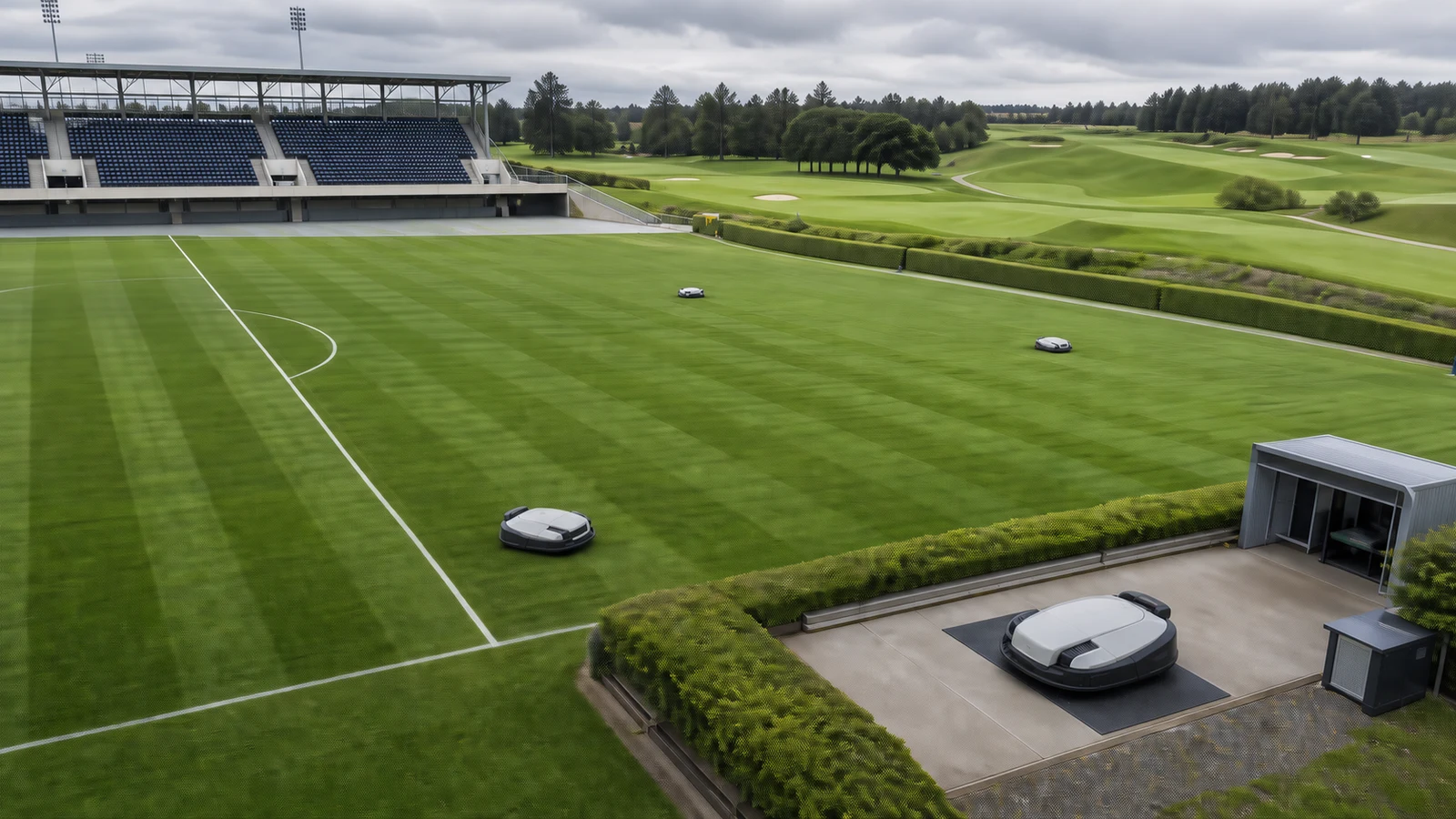
Commercial use will further expand the category. Residential users buy time savings. Property managers, schools, sports fields, parks, and golf courses buy labor stability and operating efficiency. Mordor Intelligence estimates that residential users generated about 62.9% of revenue in 2025, while commercial installations are expected to grow faster, at about 16.6% CAGR through 2031. When an organization needs to maintain a large lawn area, the robot is not just replacing a mower. It affects scheduling, labor, energy use, and maintenance workflows.
The real scale of the robotic mower industry should not be measured only by how many units are sold today. It is connected to a long-standing lawn culture in Europe and North America, household outdoor spending, labor pressure in landscaping services, and the migration from gasoline-powered equipment to electric and intelligent systems. Today’s market is still only a few billion dollars. But it addresses a maintenance scene that is recurring, high-frequency, fragmented, and increasingly expensive to staff.
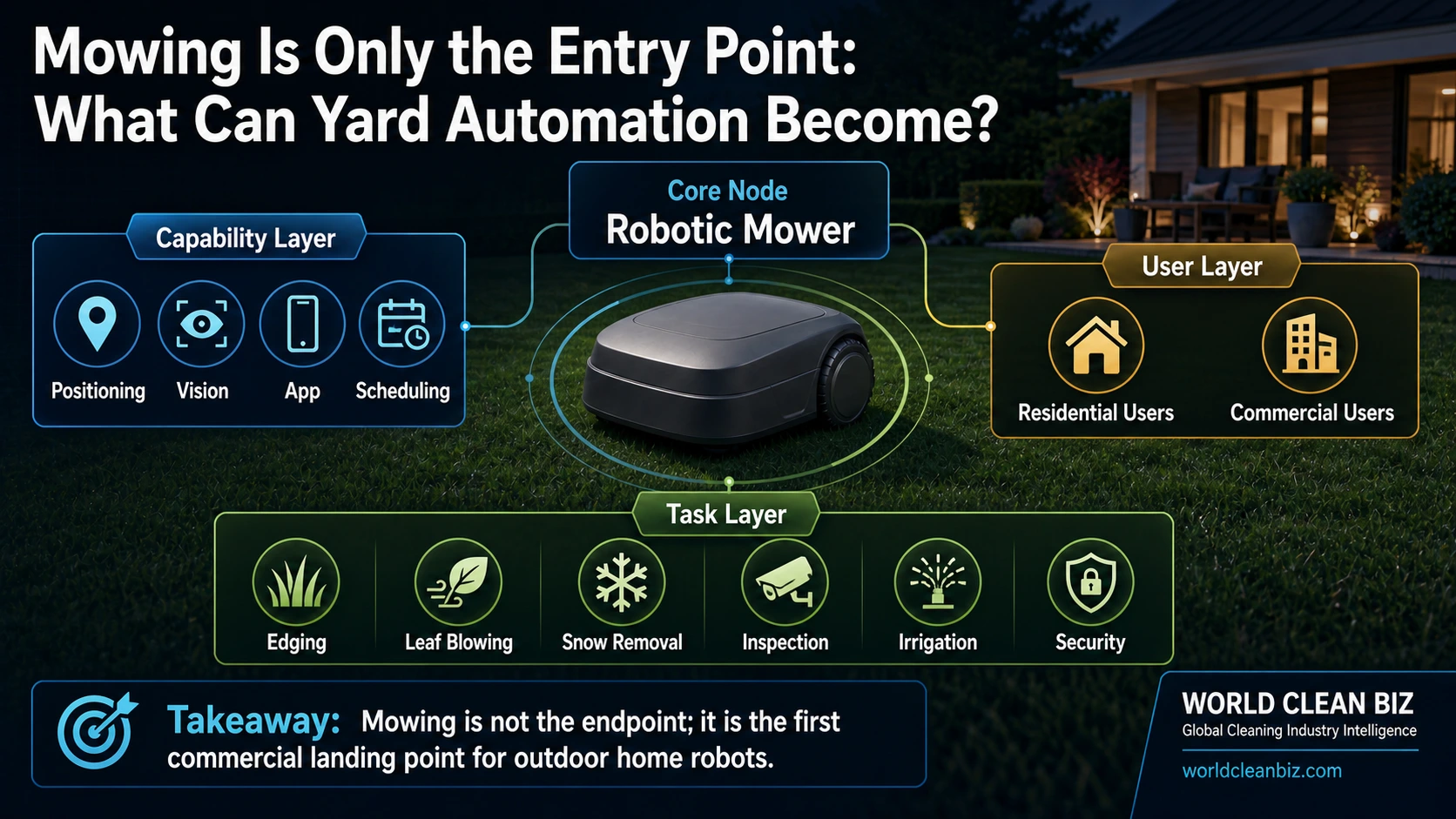
If robot vacuums removed floor cleaning from household chores, robotic mowers are trying to remove yard maintenance from weekend labor. The lawn is only the entry point. In the same yard, there are also edging, leaf blowing, snow removal, inspection, fertilization, irrigation, and security. Robotic mowing is the first clear commercial landing point for outdoor home robots.
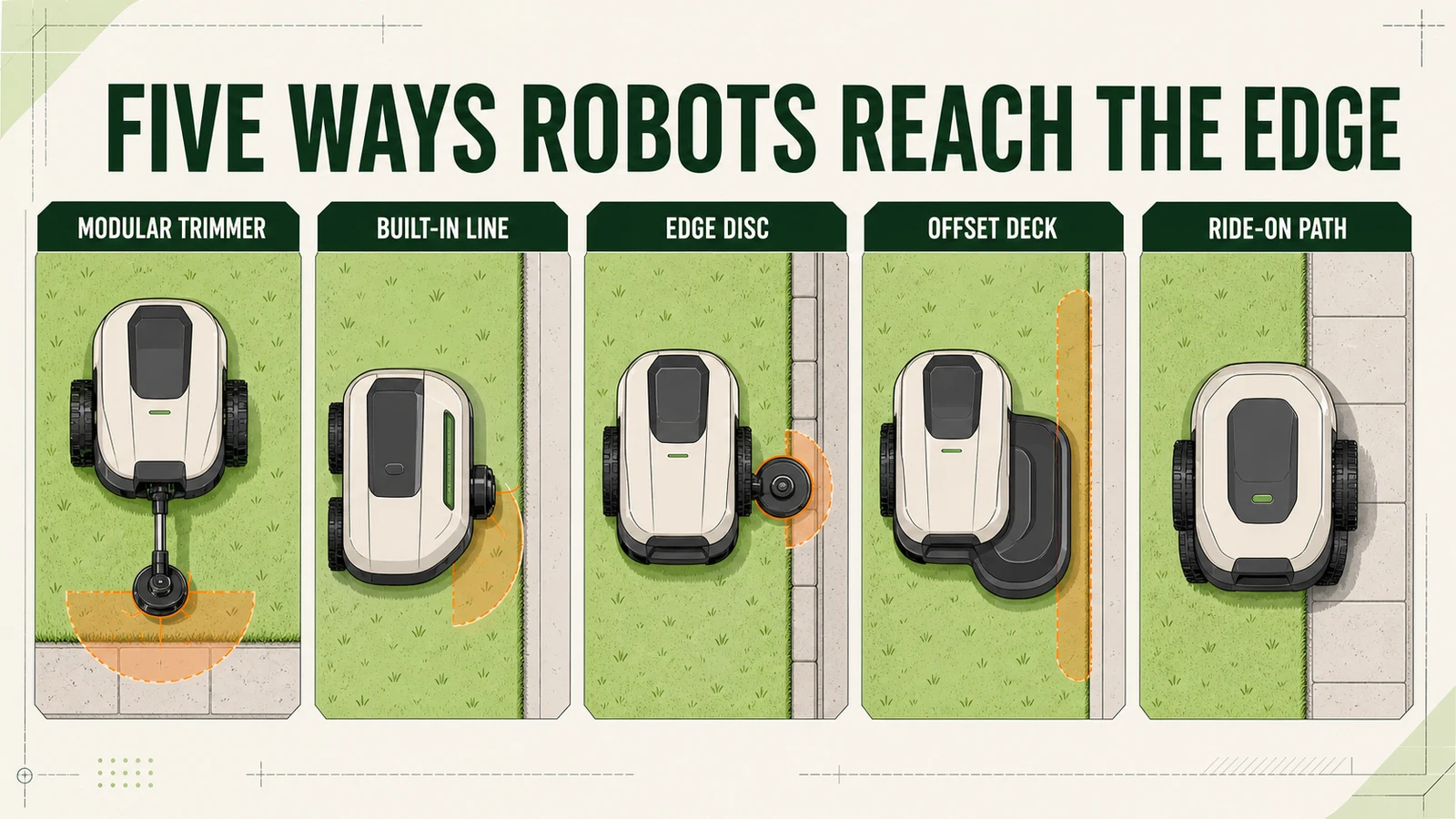
The category is still early, and the user experience is not fully mature. Complex terrain, positioning under shade, edge trimming, safety avoidance, and after-sales service will continue to filter out weaker products. But the scale foundation already exists: there are enough lawns, maintenance is frequent enough, labor is expensive enough, and users are willing enough to pay for doing one less annoying task. A robotic mower may look like it is cutting a patch of grass. In reality, it is entering a much larger yard automation market.
Sources
- Mordor Intelligence, Robotic Lawn Mower Market Size & Share Analysis - Growth Trends and Forecast (2026-2031)
- AP, How to find that tricky balance between lawn and not-lawn. And care for it sustainably
- The Verge, Segway robot mower for massive lawns hits the US
- T3, Husqvarna unveils 3 entry-level robot lawn mowers for small and mid-size gardens
- T3, Dreame new robot lawn mower is finally made for standard gardens