- Chinese brands are no longer only competing in robot vacuums; they are shaping product definition across multiple cleaning categories.
- Outdoor, pool, carpet, and commercial cleaning are becoming part of the same broader cleaning automation story.
- The next phase of competition will depend less on single specifications and more on system capability.
<!-- Source: 20-写作系统/09-写作发布Loop/01-进行中/2026-06-20_清洁行业新闻联播.md / v1.0 -->
This round of cleaning industry news is not about one isolated headline. It is a cross-section of how the category is changing.
Robot vacuums continue to move toward Chinese brand leadership. Smart hardware companies such as Anker and Pudu are moving deeper into capital-market visibility. Robotic mowers, robotic pool cleaners, and carpet cleaners are pushing cleaning into yards, pools, and more specific household scenarios. Commercial cleaning robots are also entering property, industrial, hotel, and other real operating environments.
The boundary of the cleaning industry is being redrawn.
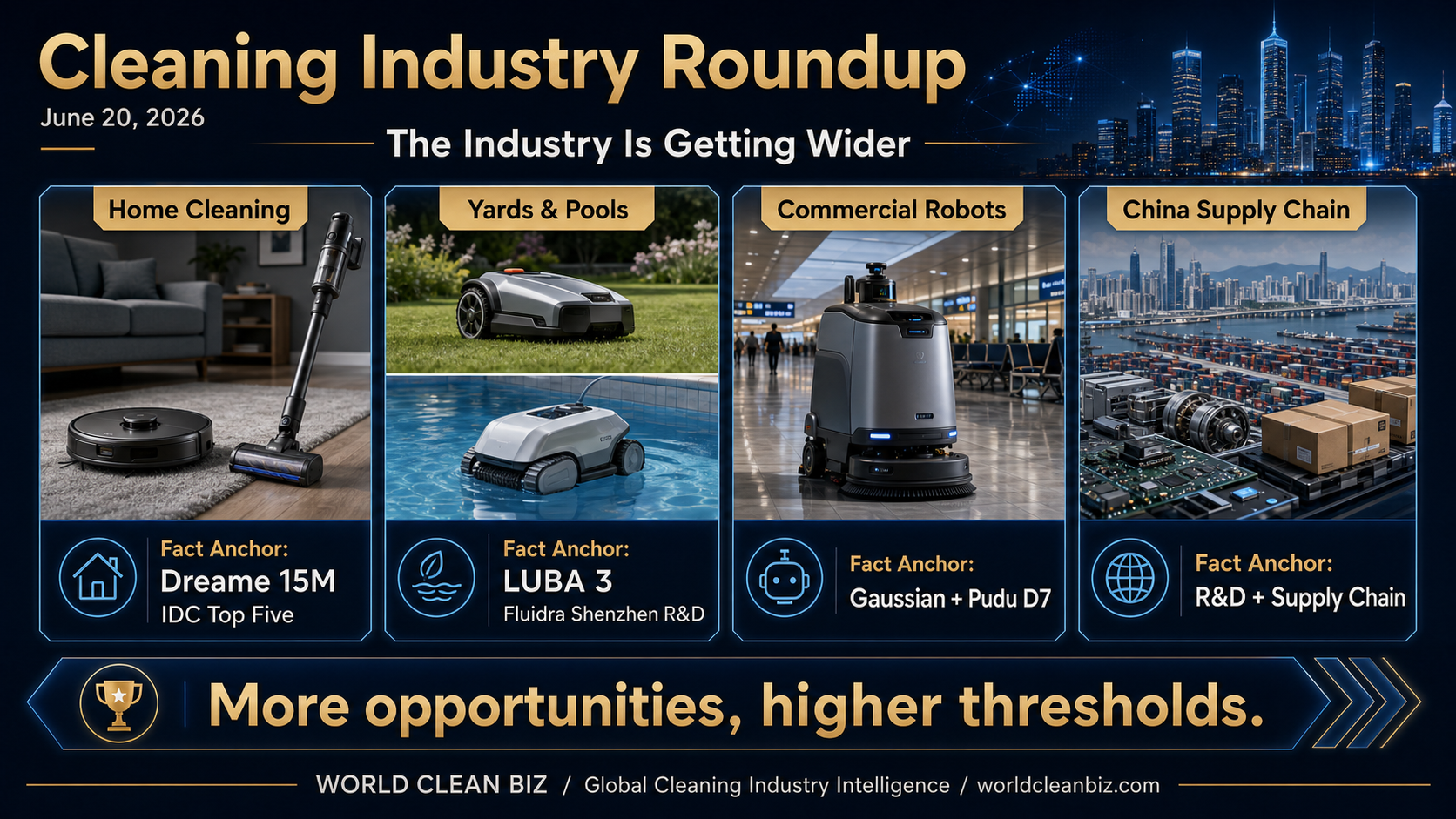
Dreame Vacuum Shipments Pass 15 Million Units
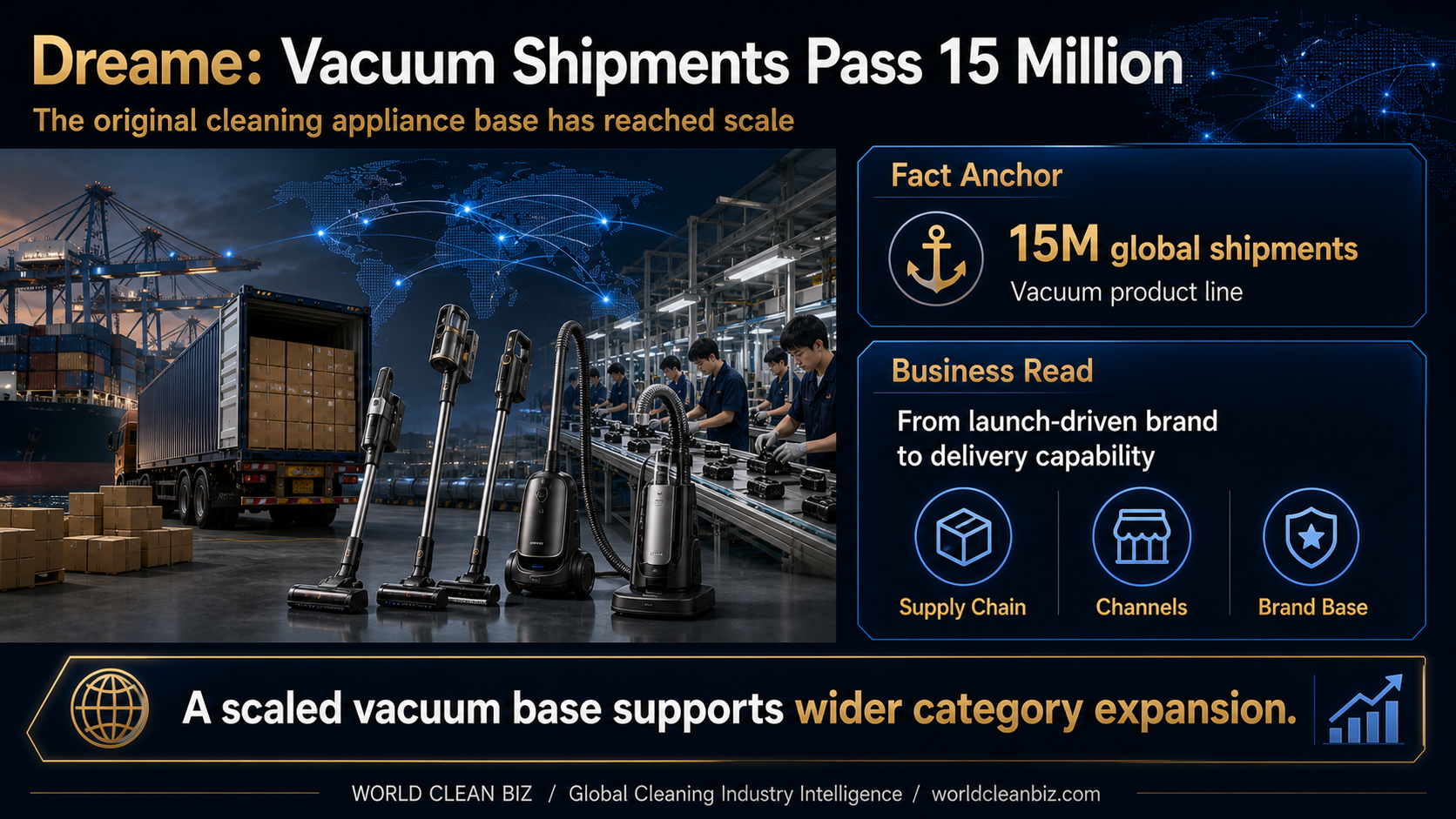
Dreame recently said that global shipments of its vacuum product line had passed 15 million units.
The number first shows that Dreame's original category has reached meaningful scale. The company entered cleaning appliances through high-speed digital motors and cordless vacuums. A 15 million-unit shipment base means Dreame has built a foundation in supply chain, channels, and brand recognition around vacuums.
Of course, shipments are not the same as end-user sell-through, and the number may include channel inventory. But the scale is still enough to show that Dreame is no longer only a launch-driven brand. It is becoming a global cleaning appliance company with sustained delivery capacity.
That also helps explain why Dreame keeps expanding into hard floor washers, robot vacuums, robotic mowers, home appliances, and a wider set of smart hardware categories. It has a cleaning appliance base that has already worked.
DJI ROMO 2 Moves From Launch to Market Test
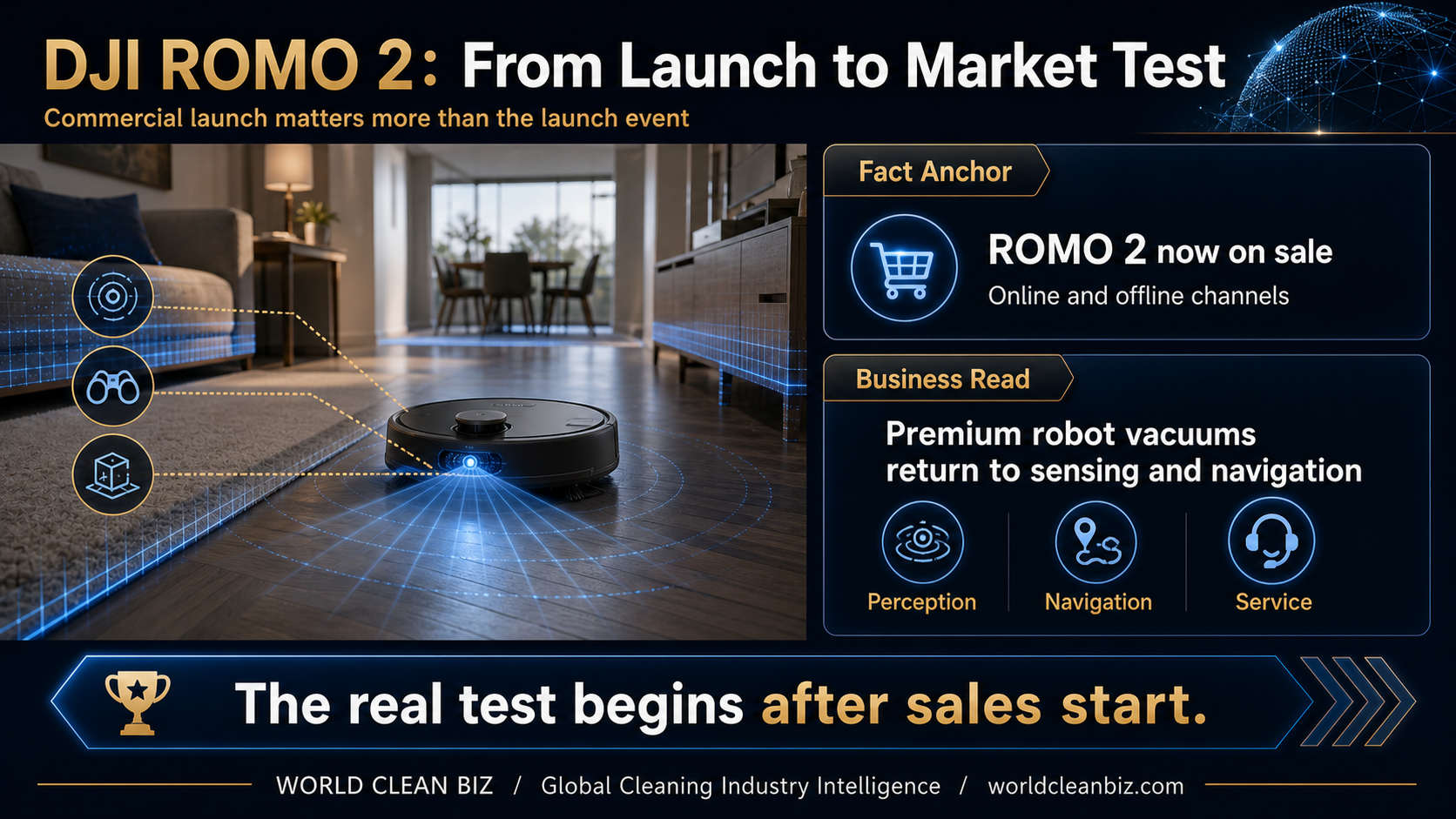
DJI's ROMO 2 robot vacuum and mop series is now available through online and offline channels. For the industry, the commercial launch matters more than the launch event.
At the launch stage, the market looks at specifications, storytelling, and brand attention. After sales begin, the questions are different: whether users actually buy, whether the long-term experience is stable, and whether service and channels can support a premium price band. ROMO 2's core appeal still comes from DJI's sensing capability, including LiDAR, binocular vision, millimeter-level obstacle recognition, high suction, and a highly automated base station.
Robot vacuums are no longer a category short of players. Dreame, Roborock, Ecovacs, Narwal, Xiaomi, eufy, Shark, and others are all competing in higher-end segments. DJI may not immediately change sales rankings, but it can bring perception and navigation back to the center of premium robot vacuum competition.
It is not just another product launch. It is a repricing of what high-end intelligence in robot vacuums should mean.
IDC Q1 Report: Chinese Brands Take the Global Top Five in Robot Vacuums
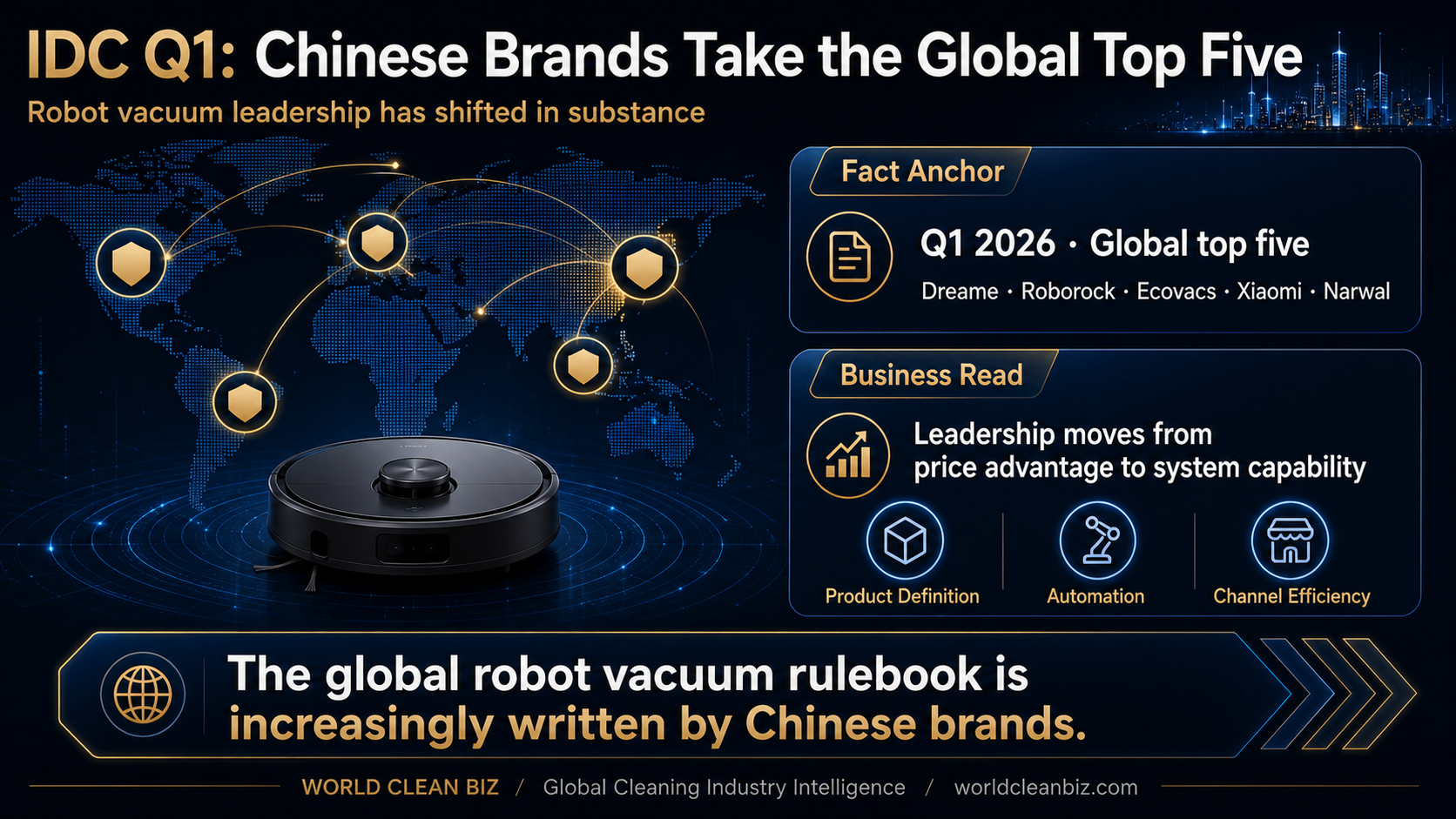
IDC's Q1 2026 global home intelligent robot vacuum tracking report shows that, for the first time, the global top five by sales volume were all Chinese brands, involving Dreame, Roborock, Ecovacs, Xiaomi, and Narwal.
This is an industry line-crossing moment.
Chinese brands used to be challengers in robot vacuums, moving upward through supply-chain speed, price competitiveness, and feature iteration. When the global top five are all Chinese brands, the leadership structure has changed in substance.
Chinese companies are no longer winning only in selected price bands. They are leading more broadly in product definition, automated base stations, mopping systems, navigation and obstacle avoidance, channel efficiency, and new-product iteration.
That puts more pressure on traditional overseas brands. iRobot's decline already showed that first-mover advantage is hard to defend against systematic iteration. The next phase of robot vacuum competition will keep revolving around two questions: who can deliver a more reliable fully automated cleaning experience, and who can sell that experience consistently across more countries.
Anker Clears Hong Kong Listing Hearing, Making the eufy Robotics Path Clearer
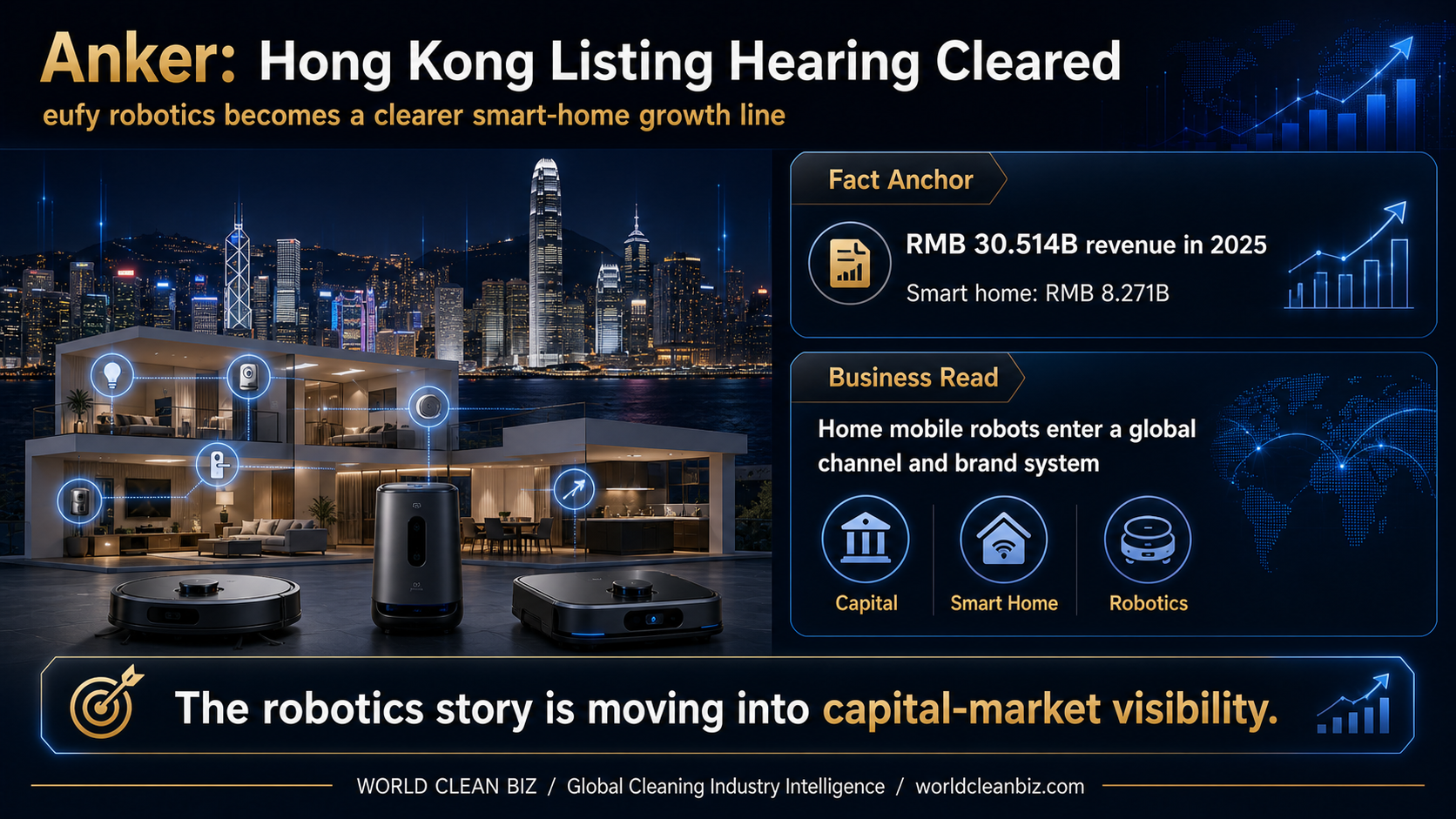
Anker Innovations passing its Hong Kong listing hearing is an important capital-market signal for consumer electronics and smart hardware.
Anker is not a pure cleaning appliance company, but eufy has become an important brand within its smart home business. According to archived materials, Anker generated RMB 30.514 billion in revenue in 2025, and RMB 7.607 billion in Q1 2026, up 26.93% year over year. Its smart home business, represented by eufy, generated RMB 8.271 billion in 2025, accounting for 27.1% of total revenue.
Those figures show that cleaning robots, security products, smart home devices, and household scenario hardware are becoming a key part of Anker's move from a charging accessories company into a broader consumer hardware platform.
Anker's robotics route is also worth watching. It treats eufy's floor-moving products, including robot vacuums and robotic mowers, as an early step toward embodied intelligence. That framing is pragmatic: start with scalable, deliverable home mobile devices with clear user demand, then move toward more complex household robot capabilities.
If that route works, Anker's value is not simply that it has built another robot vacuum brand. It is that it can bring home mobile robots into its global channel and brand system.
SharkNinja Launches CarpetForce and Keeps Mining North American Cleaning Pain Points
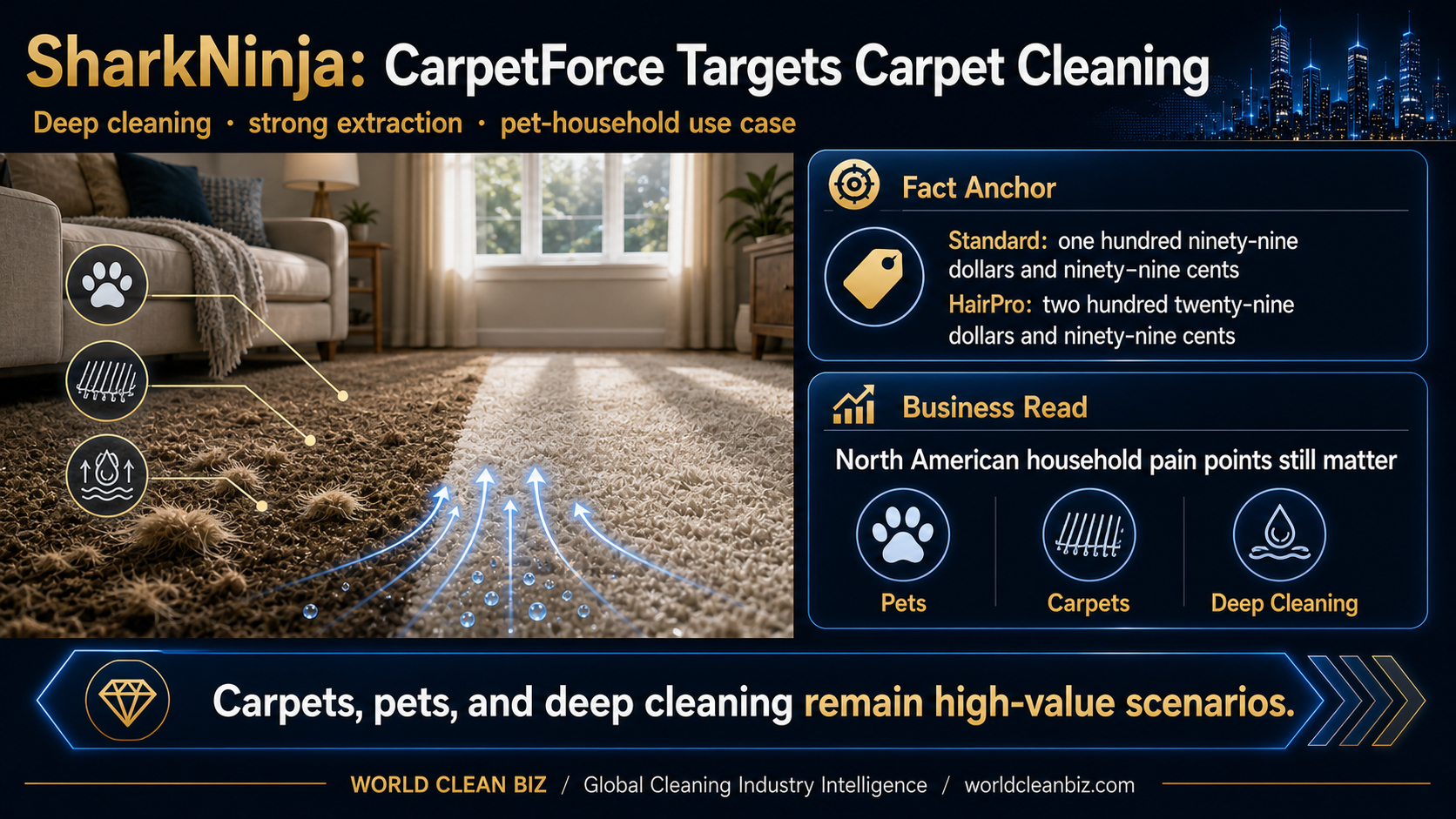
SharkNinja has launched the CarpetForce carpet cleaner series, with the standard version priced at $199.99 and the HairPro version at $229.99.
This move is typical of SharkNinja's product method. It is not chasing abstract concepts. It continues to build around concrete North American household cleaning scenarios: carpets, pet hair, deep cleaning, fast drying, and lighter everyday use.
Traditional carpet cleaners have obvious pain points. They are heavy, inconvenient to take out, used infrequently, and often reserved for major cleaning sessions. CarpetForce points in another direction: making deep cleaning lighter and more routine. The HairPro version further targets pet households, a long-standing high-value user group in North American cleaning appliances.
SharkNinja's strength is its ability to connect user pain points, channel language, and demonstrable product effects. Carpet cleaning may not be the largest category, but it is well suited to TV shopping, in-store demonstrations, short video, and e-commerce product pages.
That is exactly where SharkNinja tends to be strong.
Mammotion LUBA 3 Tops Amazon U.S. Robotic Mower Best Seller List
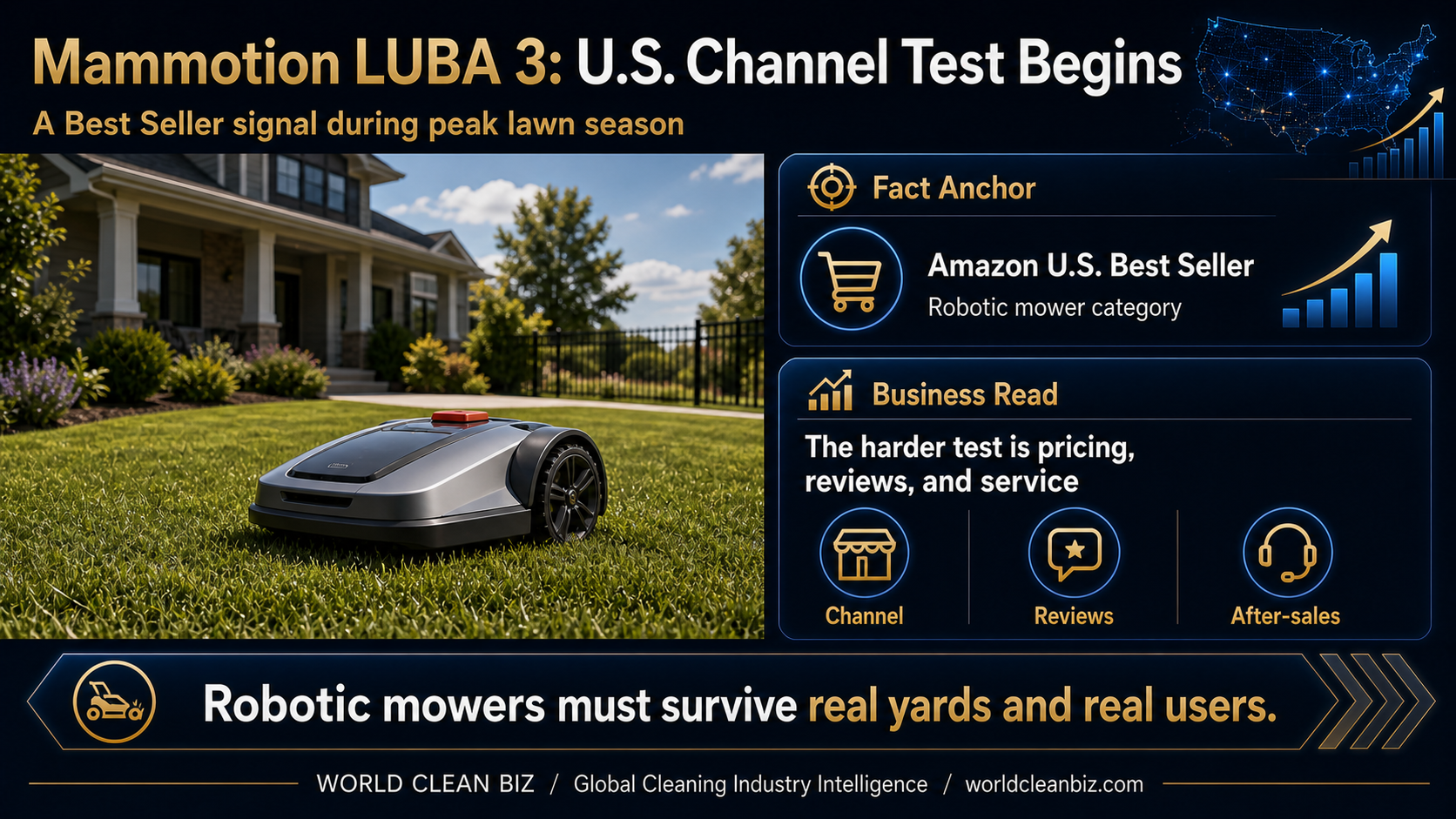
Mammotion's LUBA 3 AWD reaching the Best Seller position in Amazon's U.S. robotic mower category is a signal worth tracking in smart yard equipment.
Robotic mowers have had stronger awareness in Europe, while U.S. penetration is still relatively low. The U.S. has large yards, a strong lawn culture, and established manual mowing and traditional outdoor power equipment channels. For Chinese brands to open the U.S. market, technical specifications are not enough. They need to prove that products can work reliably in real yards and survive user reviews across Amazon, offline retail, and after-sales systems.
LUBA 3 becoming a Best Seller at least shows that a Chinese robotic mower brand has started to convert demand during the U.S. peak season. That signal is harder than simply attending a trade show, winning an award, or announcing a new product.
The next metrics are straightforward: whether pricing holds, whether reviews hold, and whether service keeps up. Robotic mowers face more service pressure than robot vacuums because they operate outdoors, across complex terrain, with installation guidance and long-term maintenance needs.
Fluidra Opens Shenzhen R&D Center as Pool Equipment Moves Closer to China's Supply Chain
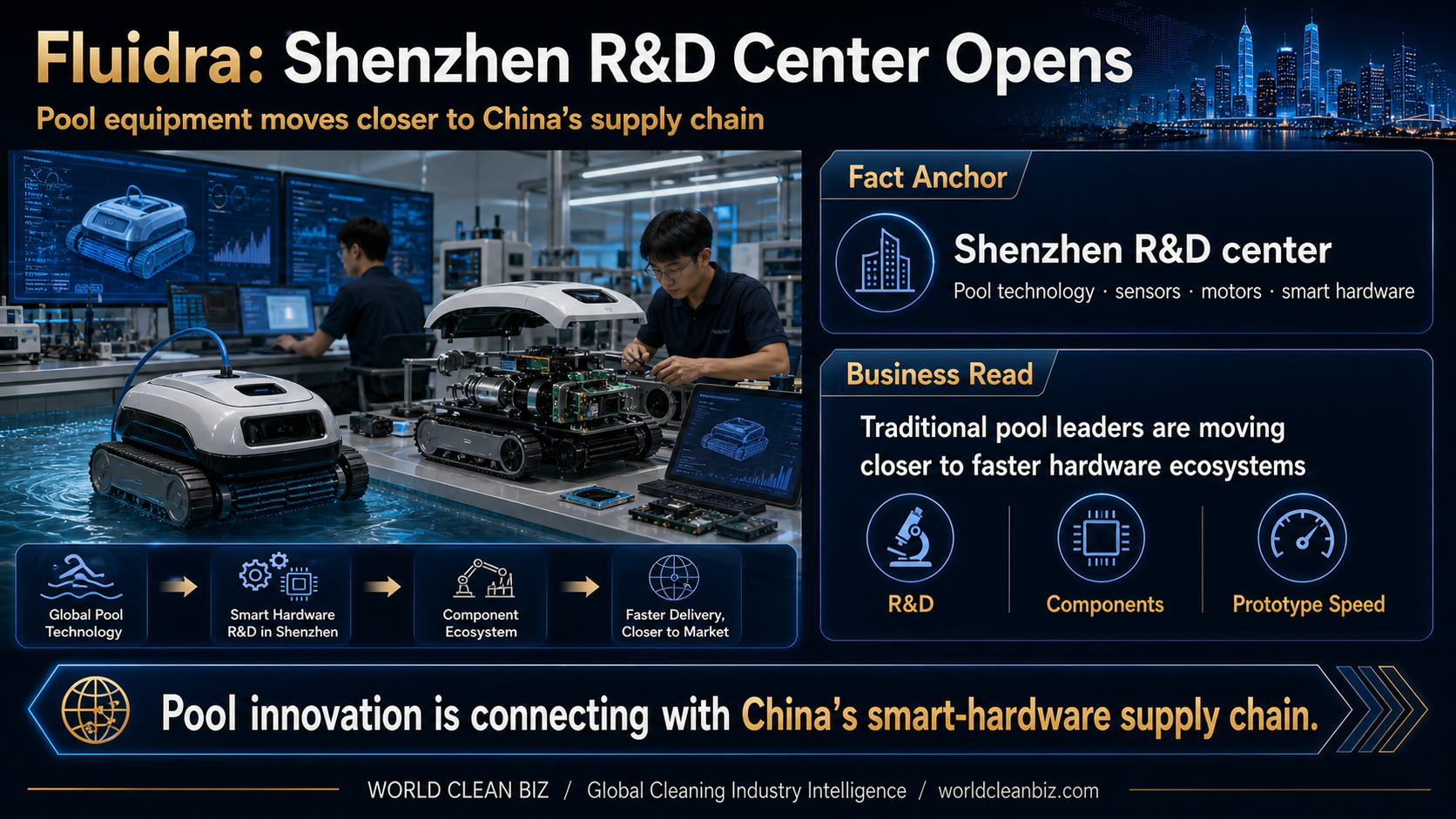
Fluidra opening a new R&D center in Shenzhen should be viewed together with robotic pool cleaners and smart yard equipment.
Fluidra is a global leader in pool technology. Its Shenzhen R&D center suggests that a traditional pool equipment leader is actively moving closer to China's R&D, supply-chain, and emerging technology ecosystem. Shenzhen's advantage is not only manufacturing cost. It also includes sensors, controllers, motors, structural parts, smart hardware engineering, and faster prototype validation.
The pool industry used to look more like a traditional equipment business, with pumps, filtration, water treatment, heating, and channel service forming the core of competition. Now cordless robotic pool cleaners, smart sensors, water-saving systems, and automated maintenance are changing the industry. Chinese companies have already been active in robotic pool cleaners, with brands such as Aiper, Beatbot, and WYBOT pushing cordless designs, AI navigation, and premium pool cleaning into the North American market.
Fluidra's choice of Shenzhen shows that traditional leaders also see the value of this supply chain. Future pool industry innovation may not happen only at European and U.S. brand headquarters. It may also happen in Shenzhen, Suzhou, Ningbo, Dongguan, and other places where smart hardware and cleaning appliance supply chains are dense.
Gaussian and Pudu Show Commercial Cleaning Robots Entering Real Scenes
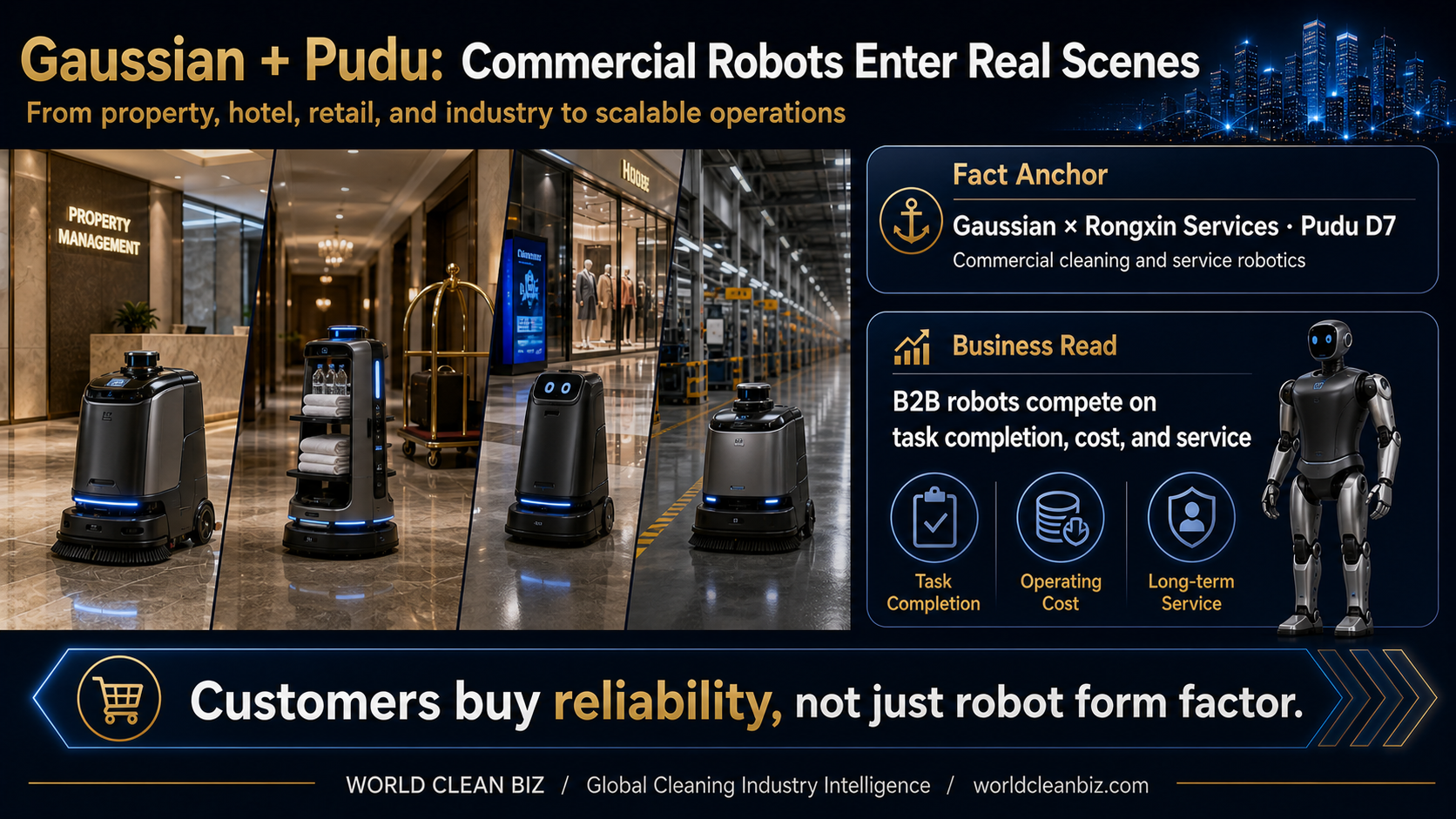
Gaussian Robotics signing a strategic cooperation agreement with Rongxin Services, and Pudu launching its industrial humanoid robot D7 while moving toward a Hong Kong listing, together signal that commercial cleaning and service robots are entering real environments.
Gaussian's value lies in cleaning robots already reaching property parks, commercial complexes, hotels, hospitals, transport hubs, and other high-frequency environments. Commercial cleaning robots do not succeed through a one-time purchase in the same way consumer products do. They depend more on task completion rate, operating cost, scheduling efficiency, and long-term service capability. A property company willing to cooperate suggests that robotic cleaning is moving from technical demonstration to operating tool.
Pudu's move is broader. It has expanded from restaurant delivery and hotel service into commercial cleaning, industrial delivery, and embodied intelligence. Whether an industrial humanoid robot such as D7 can scale still needs time to prove. But Pudu already has one important foundation: a large set of real B2B scenarios and channel networks.
B2B robot competition will become increasingly pragmatic. Customers will not buy simply because a robot looks human. The final questions are whether it can perform tasks reliably, reduce cost, lower management difficulty, and generate data feedback through long-term operation.
The Cleaning Industry Is Getting Wider
Taken together, these eight news items point to one clear change: the cleaning industry is getting wider.
In home cleaning, Chinese brands have gained more initiative across robot vacuums, vacuums, hard floor washers, and related categories. In yards and pools, robotic mowers, robotic pool cleaners, and traditional pool equipment are beginning to share supply-chain, channel, and smart hardware capabilities. In commercial cleaning, robots are entering property, retail, hotel, industrial, and other real scenarios. Capital markets are also paying closer attention to companies such as Anker, Pudu, and Dreame.
That means cleaning industry competition will not stop at single specifications such as suction, runtime, base stations, or obstacle avoidance. The next phase will depend more on system capability: product definition, supply-chain speed, channel coverage, brand communication, after-sales service, scenario data, and capital endurance.
For Chinese cleaning companies, there are indeed more opportunities.
The threshold is also higher.
Sources
- Obsidian archived Chinese roundup materials, June 2026
- IDC Q1 2026 global home intelligent robot vacuum tracking report, as archived in the Chinese source note
- Company and product updates archived in the Chinese source note: Dreame, DJI, Anker Innovations, SharkNinja, Mammotion, Fluidra, Gaussian Robotics, Pudu Robotics