- The iRobot comparison is less about short-term losses and more about losing product definition power.
- Robotic pool cleaners are moving from standalone cleaning devices toward broader pool maintenance systems.
- Chinese brands may accelerate if Maytronics faces delivery pressure, but they still need reliability, service and channel trust.
Will Maytronics become the next iRobot?
The question is not about whether this year's financial results are good or bad. The real comparison is about product definition power.
iRobot once defined the home robot vacuum. But when the category moved into LiDAR navigation, stronger mopping, self-cleaning docks and full-service base stations, Chinese companies redefined what consumers expected from a robot vacuum. iRobot did not lose because it forgot how to make robots. It lost ground because the category changed faster than its product cycle.
Maytronics may be facing a similar moment in robotic pool cleaners.
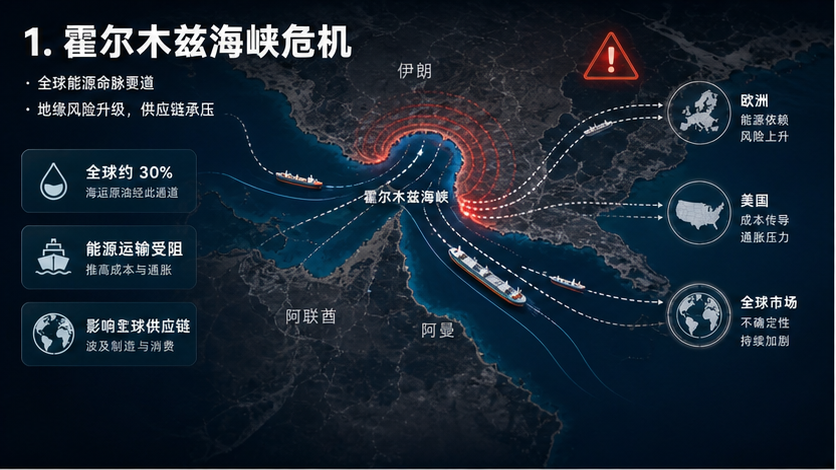
The external risk is not the core issue
Geopolitical and logistics risks can affect any company with concentrated operations, and Maytronics is an Israeli company. In a seasonal category such as pool robots, any delivery uncertainty can push distributors and end users to consider alternatives more quickly.
That may create opportunities for Chinese companies such as Aiper, Beatbot, WYBOT and Vactronics. These companies have been catching up through product design, pricing, online channels and supply chain efficiency.
But geopolitics is not the fundamental issue.
The deeper change is that the robotic pool cleaner industry is moving from a professional pool equipment era into an intelligent outdoor robotics era.
Maytronics built its moat on underwater cleaning experience, professional channels and the Dolphin brand. New competitors are entering with sensors, algorithms, cordless structures, base stations, Amazon, TikTok and Chinese supply chains.
They are trying to redefine the category.
The next pool robot is not only about cleaning
Maytronics is not an ordinary pool equipment company. It launched one of the earliest robotic pool cleaners in the 1980s, and Dolphin has long been a representative brand in Europe and North America.
Its advantages were built in the previous product cycle: floor cleaning, wall cleaning, waterline cleaning, filtration, waterproofing, motors, reliability and professional channel support.
That solved the problem of making the pool clean.
The next cycle asks a wider question: how little does the user need to participate in pool maintenance?
Users increasingly care about whether they still need to bend down to retrieve the robot, empty a filter basket frequently, worry about charging, manage waterline and surface cleaning separately, or manually judge when the pool needs service.
This opens the door to automatic docking, base stations, path planning, dirt detection, surface cleaning, water quality monitoring and chemical management.
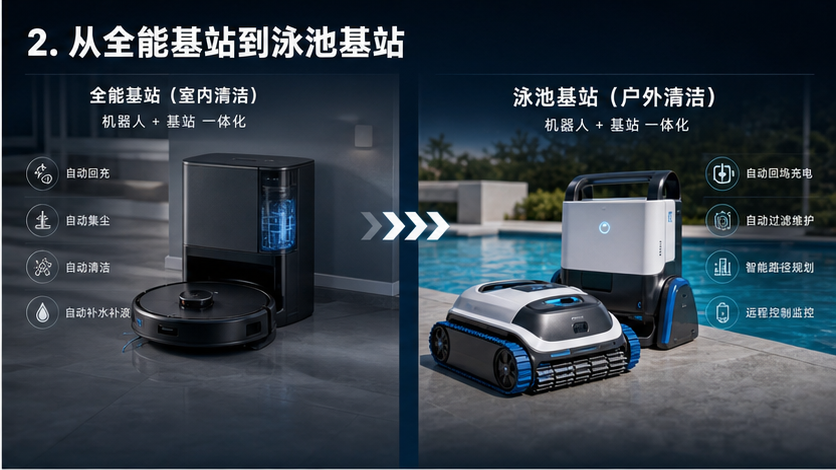
Base stations may become a definition battle
In robot vacuums, the base station changed the category. A robot vacuum moved from "a machine that can clean by itself" to "a home cleaning system that reduces human intervention."
That shift hurt iRobot because Chinese brands moved quickly into docking automation, mop washing, dust collection, drying and more complete floor care systems.
Pool robots may face a similar shift.
When Beatbot, Aiper and other Chinese brands push products with docking concepts, multi-zone cleaning and higher automation, they are not just adding accessories. They are competing for the definition of the next-generation robotic pool cleaner.
Maytronics still has strong brand equity, but it needs an equally clear answer in this new cycle.
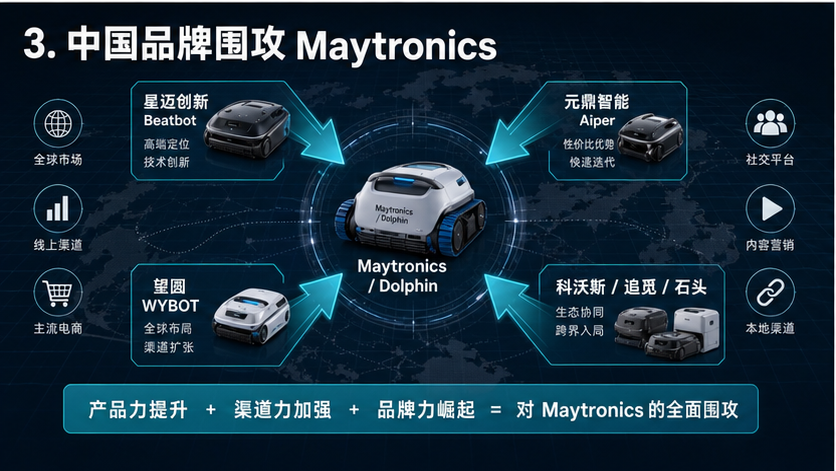
Chinese competitors are broadening
Maytronics is not only facing dedicated pool robot companies.
Indoor cleaning robot companies such as Ecovacs, Dreame, Roborock and MOVA, as well as garden robot companies such as Mammotion, Segway Navimow and Sunseeker, may extend capabilities from indoor cleaning, lawn mowing and intelligent outdoor devices into pool scenarios.
The boundaries between pool, lawn and yard robots are becoming less fixed.
For Chinese companies, the opportunity is clear: product iteration is faster, supply chains are deeper, online channels are stronger and consumer electronics-style branding is more familiar.
But the difficulty is also clear. Pool robots work underwater. Failure is expensive. Seasonality is severe. After-sales service can destroy margins. A company can win early attention through product features, but long-term trust depends on reliability and service.
The iRobot question
Maytronics does not need to be replaced by one Chinese company to face an iRobot-like risk.
The risk is that the category standard moves away from the rules Maytronics is strongest at. If the market begins to reward cordless convenience, automation, base stations, online selling, faster updates and lower use friction, then Maytronics must compete in a different rhythm.
That does not mean the company is finished. Dolphin, professional channels and service experience are still valuable. In a category with water, electronics and seasonal demand, those assets matter.
The question is whether Maytronics can redefine itself before the next cycle is fully defined by others.
The robotic pool cleaner market is not only asking who sells more this season. It is asking who will define what a pool robot should become.